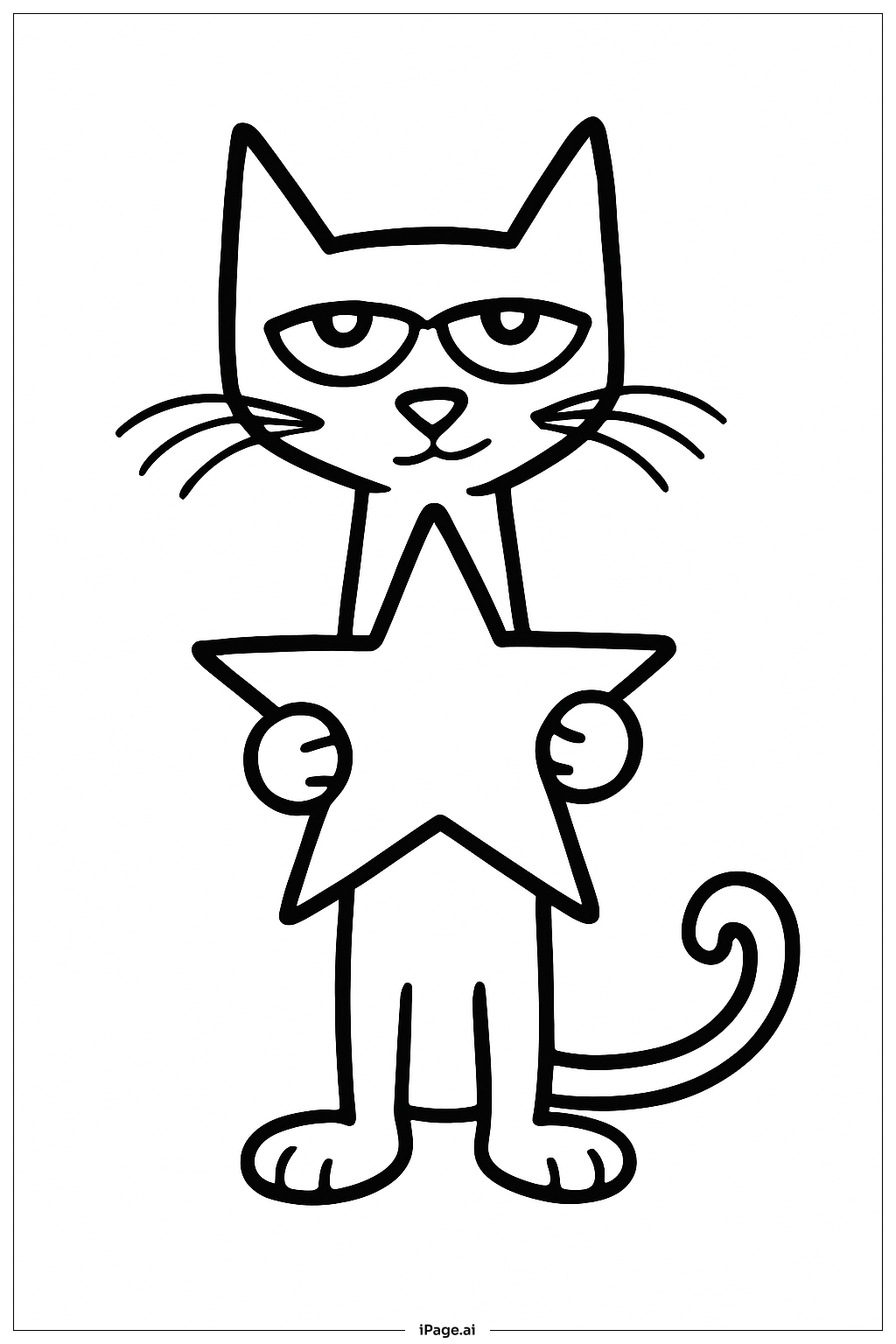
Coloring tips: How to color Pete The Cat With Star coloring page well?
For Pete the Cat, consider using his traditional blue color for his fur, though children can certainly explore other creative options like purple, green, or even rainbow patterns. The star can be colored in bright yellow or gold to make it shine, or try silver for a nighttime effect. Pete's iconic red shoes are a signature element, but experimenting with different sneaker colors can be fun too. The striped shirt offers a great opportunity to use alternating colors like red and white, blue and yellow, or any combination that appeals to the young artist. For the buttons, small pops of contrasting colors work well. Don't forget to add some shading around Pete's whiskers and facial features to bring dimension to his cool cat expression. The background can be left white or filled with a soft color to make Pete and his star stand out even more.
Coloring challenges: Which parts are difficult to color and need attention for Pete The Cat With Star coloring page?
• Star Shape and Angles: The five-pointed star requires careful attention when coloring to maintain clean, sharp points at each angle. Young colorists may find it challenging to stay within the lines where the points meet, as these are narrow spaces that require steady hand control. Using the tip of a crayon or marker helps achieve precision in these tight corners.
• Shirt Stripes: The horizontal stripes on Pete's shirt present a moderate challenge for maintaining straight, even coloring across each band. Children need to switch colors consistently and keep the boundaries between stripes neat. This repetitive pattern-work helps develop color-switching skills and the ability to follow linear patterns without crossing over into adjacent stripes.
• Small Detailed Features: Pete's whiskers, facial features, buttons, and shoe details like laces and sole lines contain small, intricate spaces that require careful coloring. The whiskers are particularly delicate thin lines that young artists must color around carefully. The four buttons and shoe laces demand precision and patience, making them suitable challenges for developing fine motor control.
• Curved Body Contours: Pete's body features multiple curved lines including his tail, the rounded edges of his body, arms, and legs. Coloring smoothly along these curves without leaving white gaps or going outside the lines requires good hand-eye coordination and controlled movements, especially where curves change direction or meet other elements.
Benefits of coloring books: Advantages of drawing Pete The Cat With Star coloring page
Coloring this Pete the Cat image offers numerous developmental benefits for young artists. The combination of large areas like Pete's body and smaller details such as buttons and whiskers helps children practice both broad strokes and fine motor precision. The star shape introduces basic geometry concepts while developing spatial awareness. Following the stripes on Pete's shirt reinforces pattern recognition and sequential thinking skills. The character's friendly, recognizable appearance makes the activity emotionally engaging, which increases focus and completion rates. As children choose colors for different elements, they exercise decision-making skills and creative expression. The varied difficulty levels within one image mean that colorists of different skill levels can find appropriate challenges, building confidence as they successfully complete each section. This particular image also connects to the beloved Pete the Cat book series, making literacy connections and encouraging positive associations with reading and creative activities.