Coloring tips: How to color Pete The Cat Waving coloring page well?
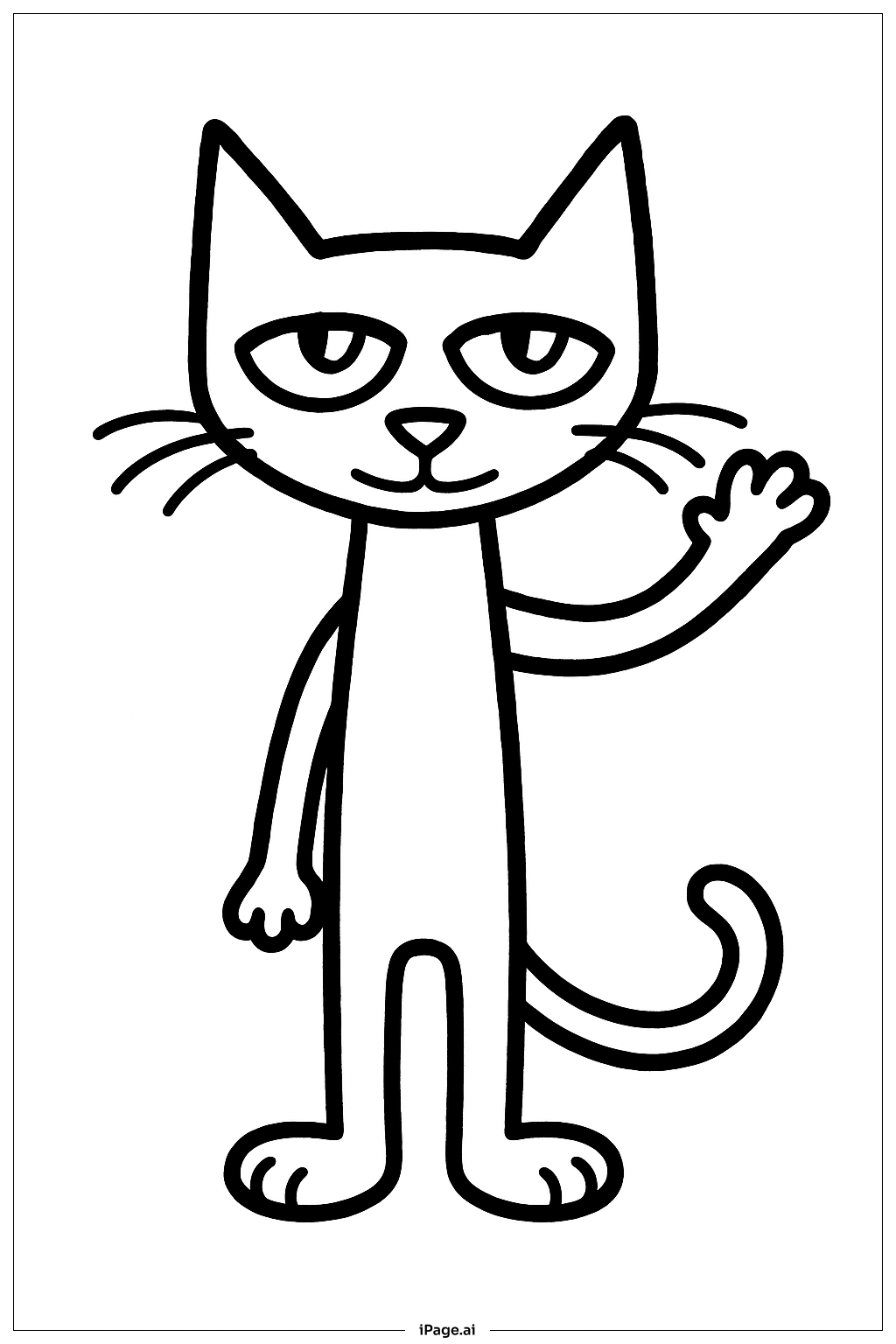
Try coloring Pete’s body in a bright, eye-catching color like blue, which is his classic look. Use a slightly lighter or darker shade to add some shadows or highlights on the ears and tail to give a 3D effect. For the whiskers and the raised hand, use a clear color that stands out, such as white or a lighter tone. You can also add colorful details to the background or Pete’s nails to make the picture more lively. Remember to use bold, even strokes for the bigger areas and take your time around the thinner lines to keep the colors neat and inside the lines.
Coloring challenges: Which parts are difficult to color and need attention for Pete The Cat Waving coloring page?
1. The thin lines of the whiskers require precise coloring to avoid going outside the lines.
2. Coloring the raised hand can be tricky because of the small spaces between the fingers.
3. Keeping the color consistent on Pete’s long body might be a challenge for younger kids.
4. The curved tail needs careful attention to follow its shape evenly without skipping spots.
5. Staying inside the outlines of Pete’s feet and ears may require patience and control, especially since they have small details.
Benefits of coloring books: Advantages of drawing Pete The Cat Waving coloring page
Coloring this picture helps children improve fine motor skills by practicing careful hand movements in small areas like the whiskers and fingers. It encourages focus and patience as kids work to stay inside the lines. The image of Pete the Cat is fun and familiar, which motivates children to enjoy the activity and be creative. Adding colors develops their understanding of shades and contrast, while also boosting confidence as they complete the artwork. Overall, it’s an enjoyable way to develop artistic skills and hand-eye coordination.