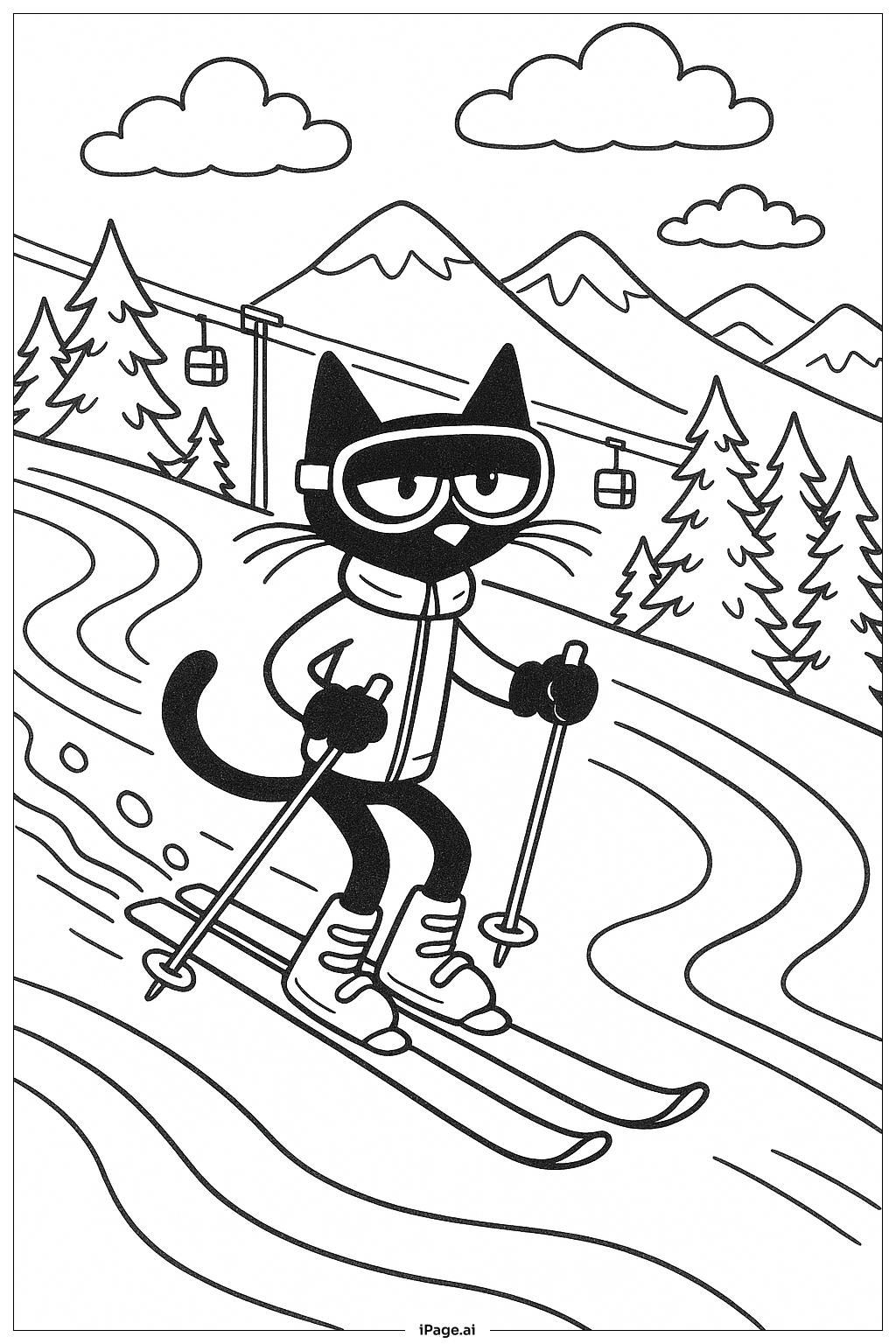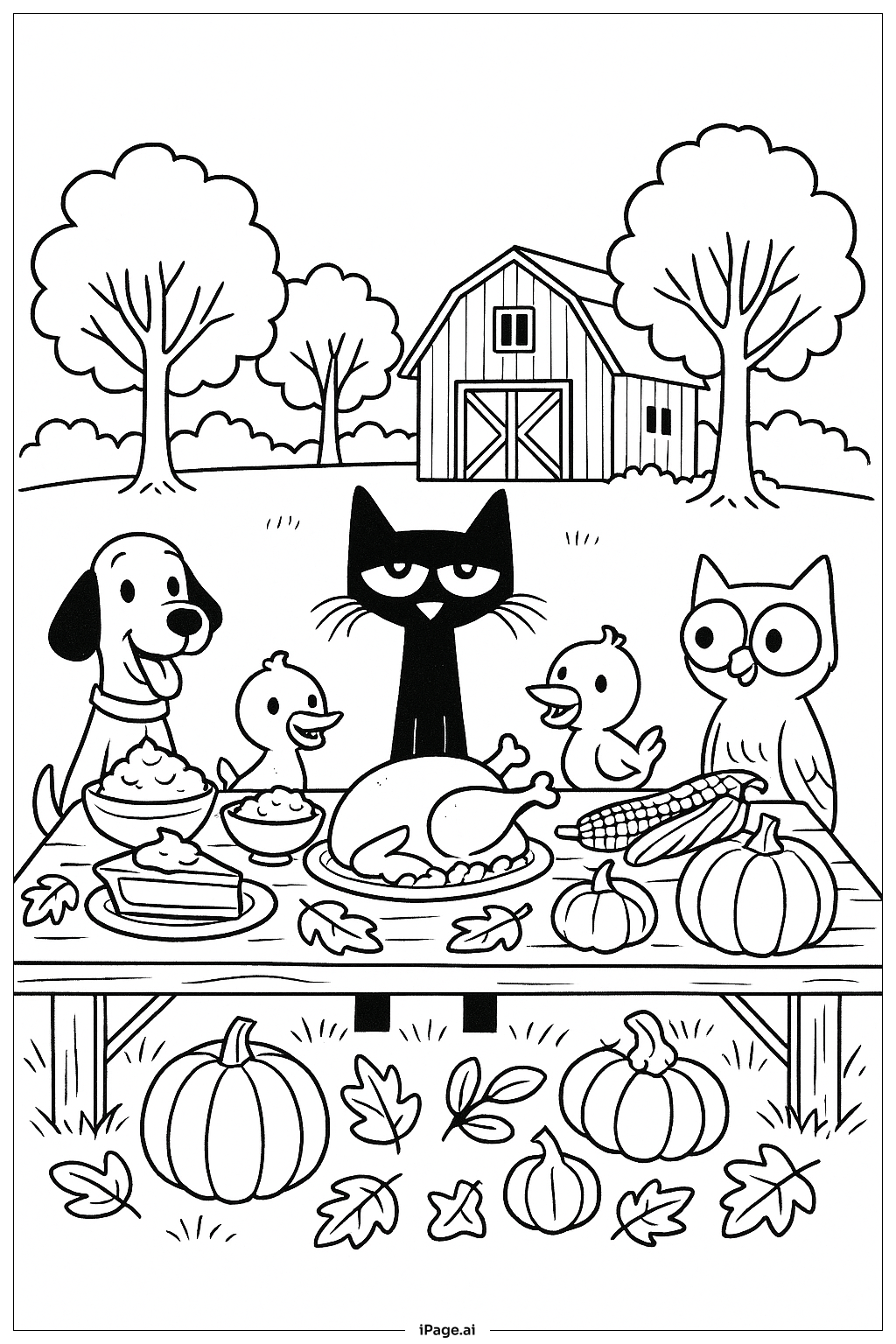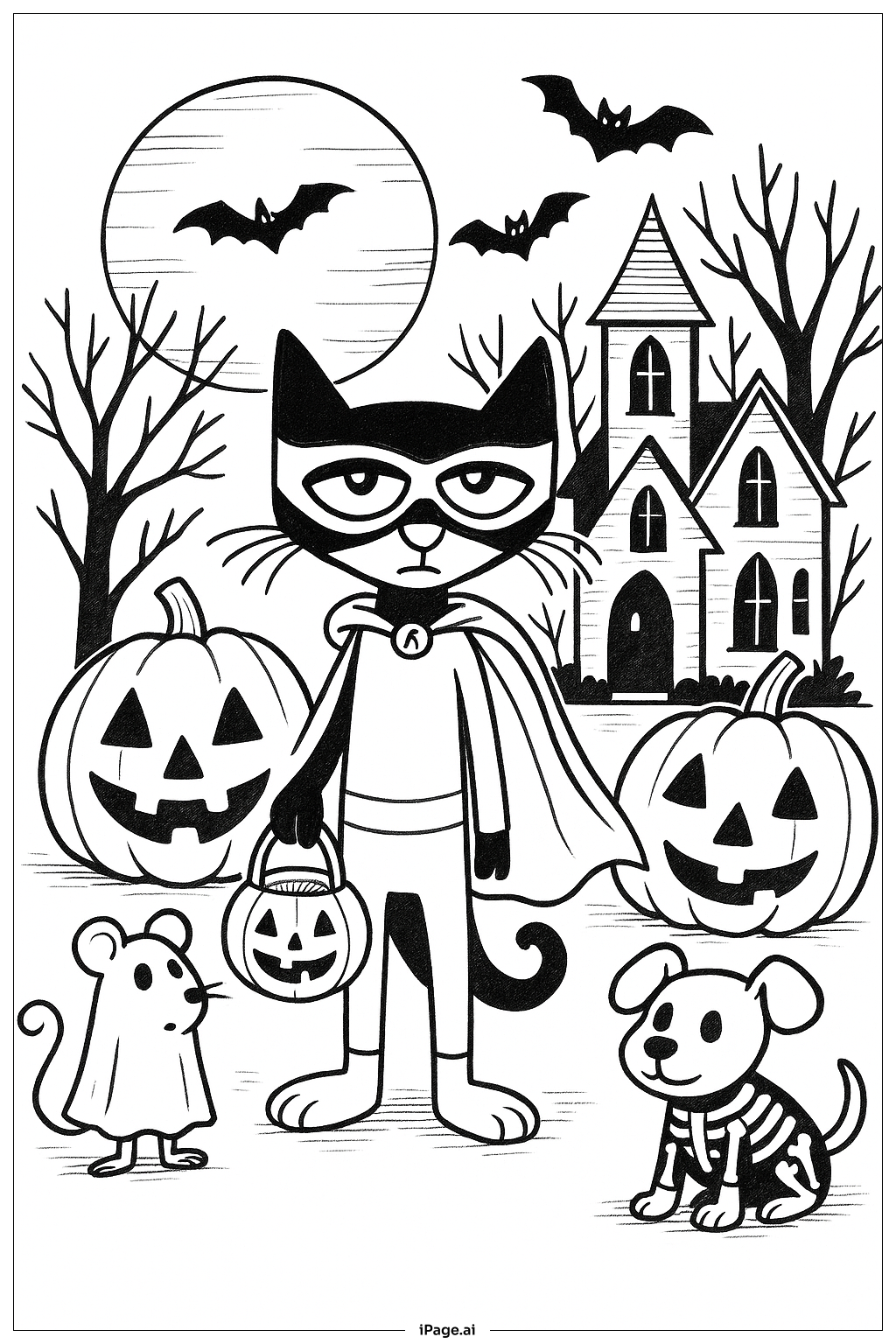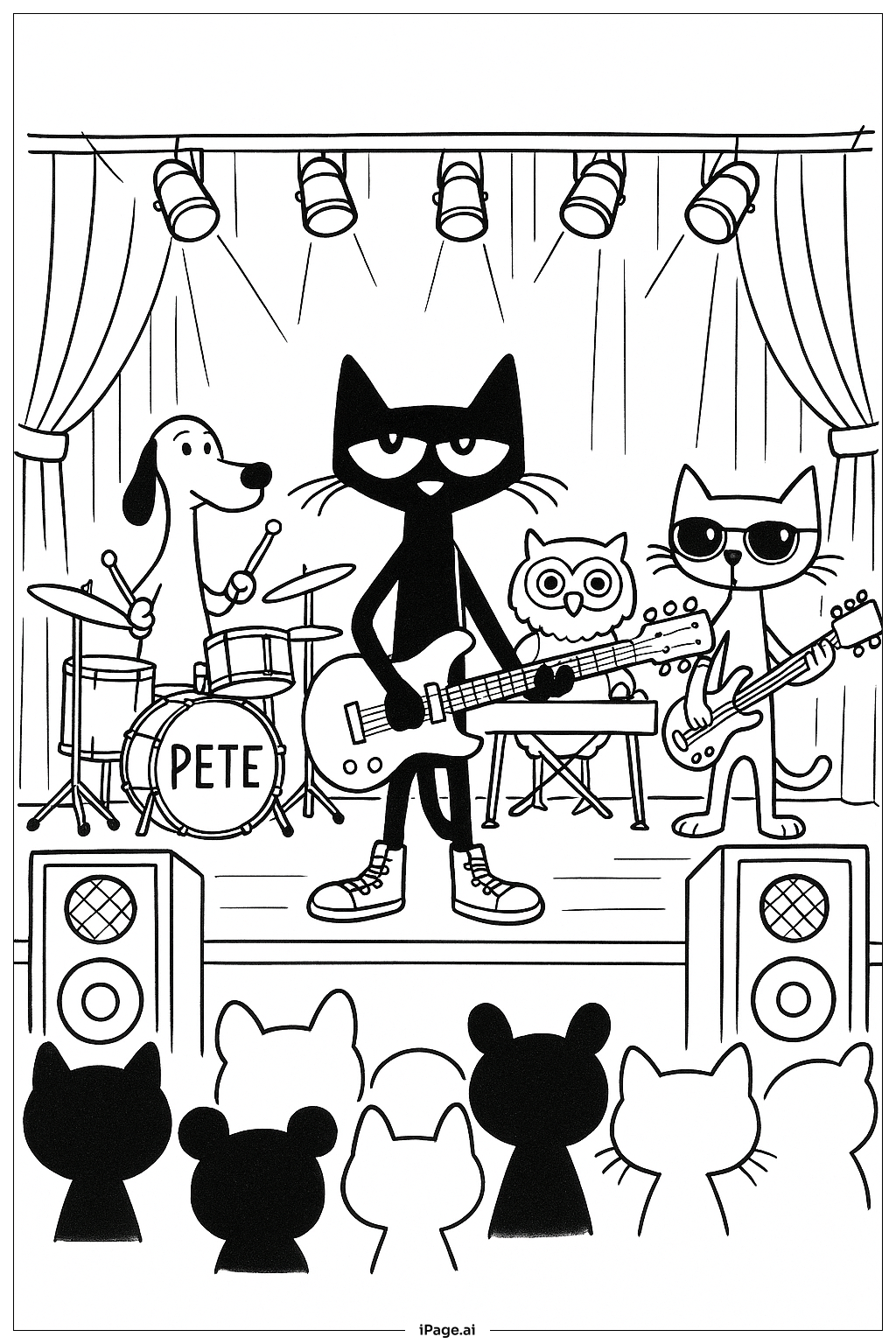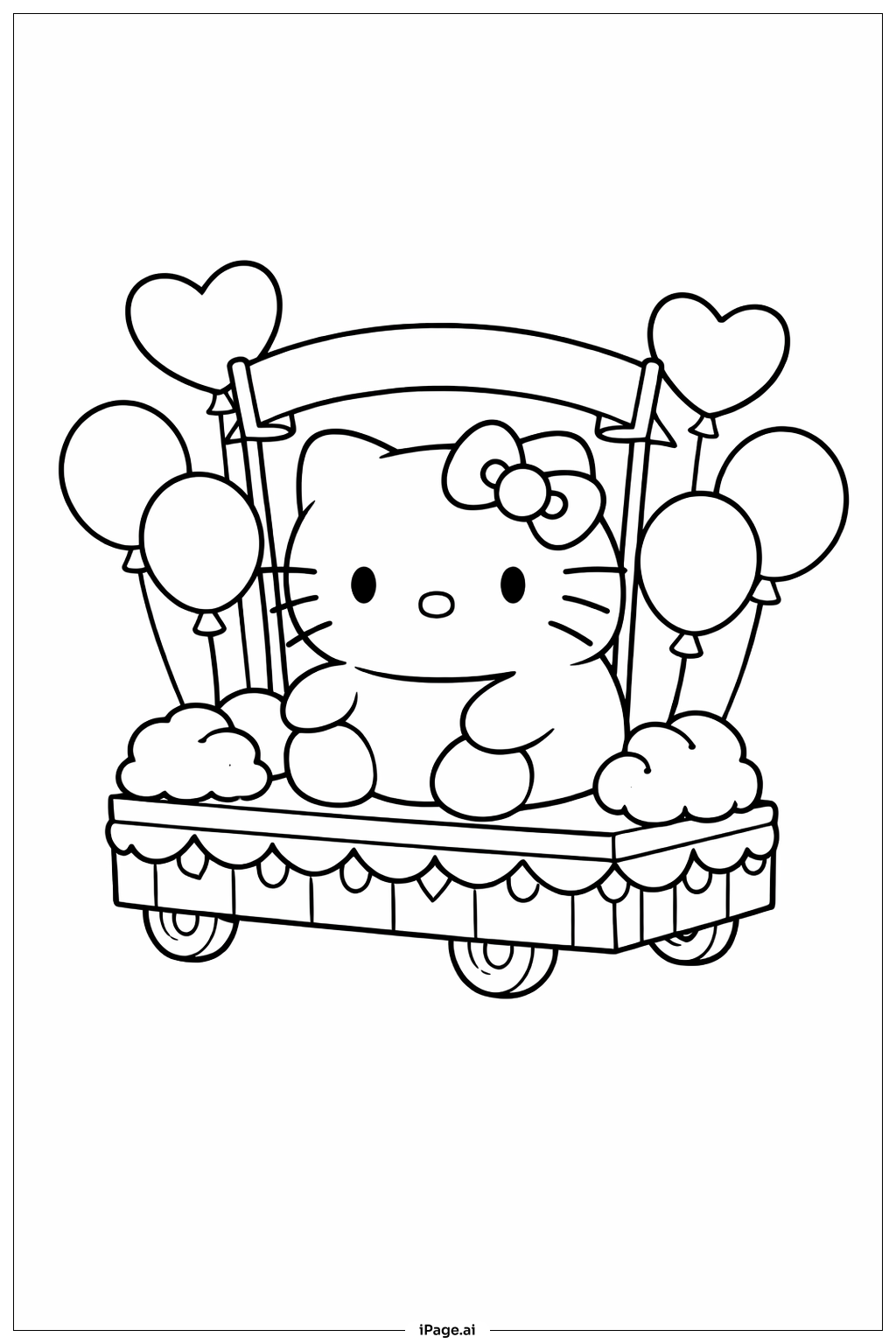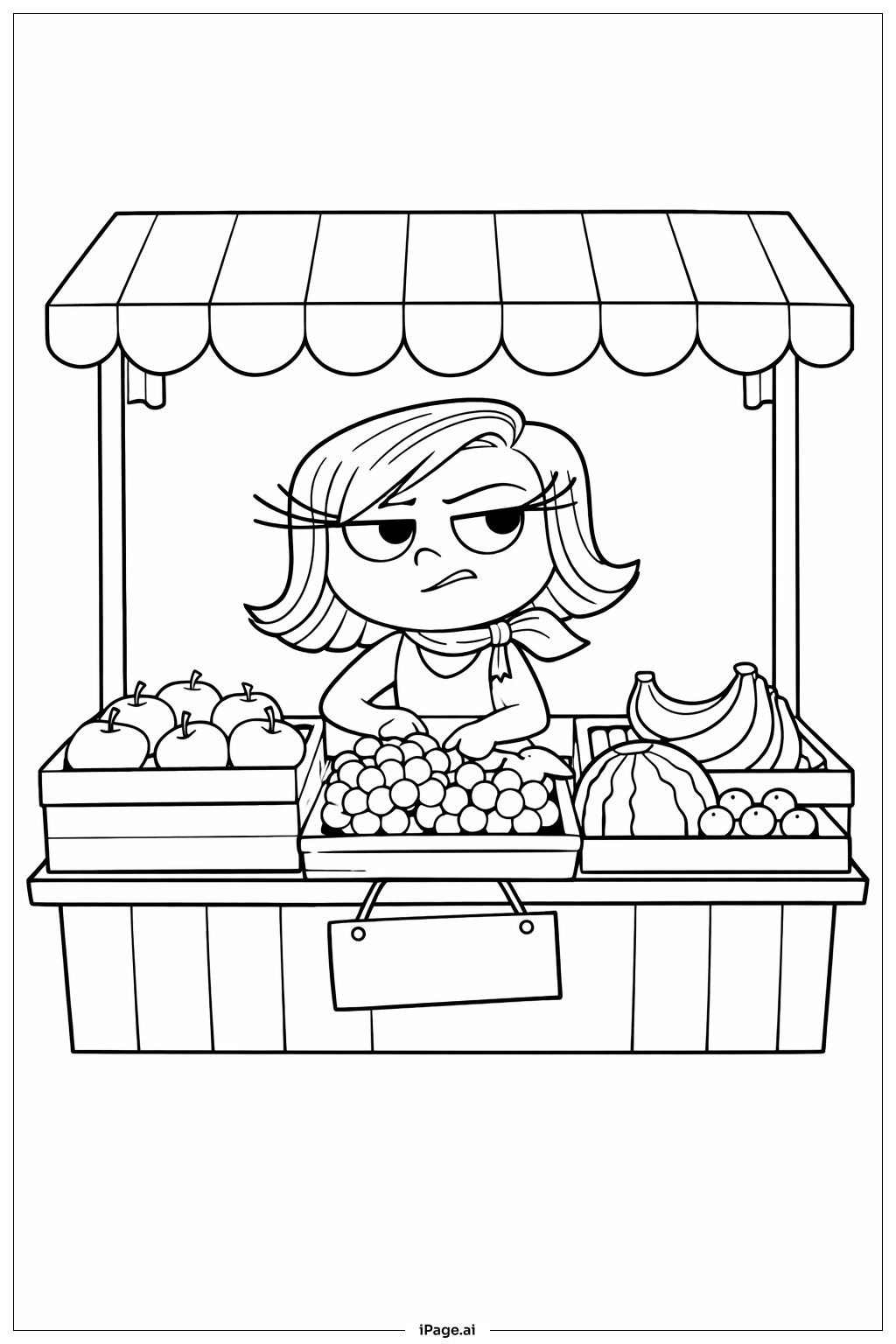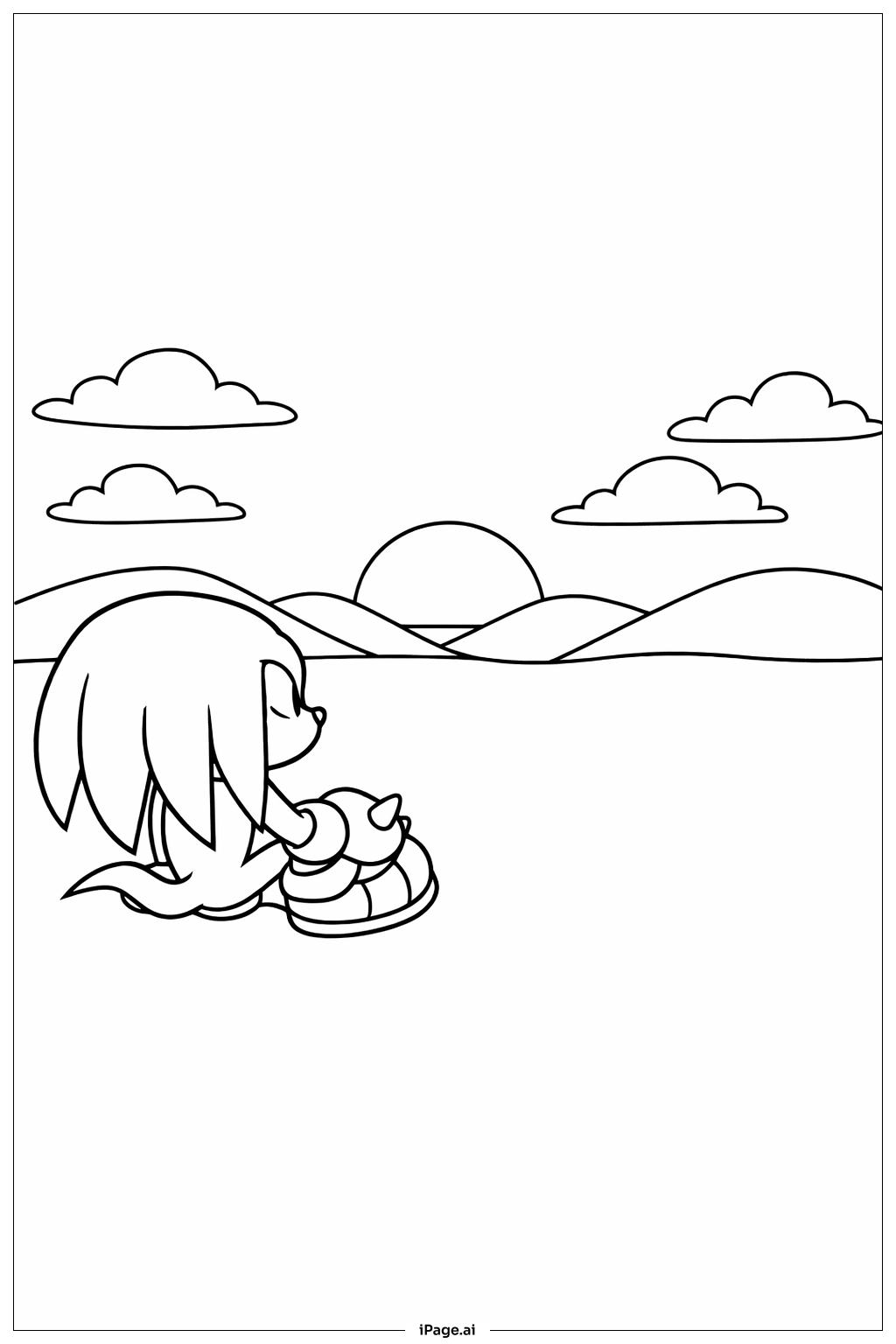
Coloring tips: How to color Pete The Cat Smiles coloring page well?
Start with Pete's fur using a bright blue crayon or marker, as this is his iconic color. For his eyes, use yellow or green to make them stand out against his blue face. Color his nose pink or red, and add a little pink inside his ears too. His clothing can be colored in your favorite shades—try yellow for his shirt to create a nice contrast with his blue fur. Use black or dark brown for his whiskers and outline details. For his paws, you might choose white or a lighter shade of blue. Consider adding a colorful background like a sunny sky with yellow and orange, or a grassy ground with green. Don't forget to color his big smile with a red or pink tongue peeking out!
Coloring challenges: Which parts are difficult to color and need attention for Pete The Cat Smiles coloring page?
• Staying Within Lines: Pete's curved body shape and rounded features require careful coloring to stay within the boundaries. His paws, tail, and facial features have smooth, flowing lines that can be challenging for younger children who are still developing fine motor control. Take your time around the whiskers and smaller details.
• Clothing Details: Pete's shirt and any buttons or patterns on his clothing need attention to small spaces. These areas require switching between colors and being precise with coloring tools. Children may find it tricky to color these tiny sections without going outside the lines or mixing colors unintentionally.
• Facial Expression: Pete's signature smile and eye details are central to his character. Coloring his eyes evenly and making sure his smile looks happy requires focus. The whiskers are thin lines that need to remain visible, so choosing the right colors for his face that don't overwhelm these delicate features is important.
• Uniform Color Application: Keeping Pete's blue fur consistent across his entire body can be challenging. Children need to apply even pressure and use the same color throughout larger areas like his head, body, and tail. Avoiding streaks or patches takes practice and patience, especially when coloring bigger sections.
Benefits of coloring books: Advantages of drawing Pete The Cat Smiles coloring page
Coloring Pete the Cat helps children develop essential fine motor skills through controlled hand movements. As they carefully color within Pete's lines and details, kids strengthen the small muscles in their hands and fingers, which prepares them for writing. This activity also encourages focus and patience, teaching children to complete tasks from start to finish. Pete's cheerful expression promotes positive emotions and creativity, allowing young artists to experiment with color choices and express their own style. Recognizing and coloring a beloved character builds confidence and provides a sense of accomplishment. Additionally, this coloring page can spark conversations about emotions, friendship, and staying positive—values that Pete the Cat represents in his stories. It's a fun, screen-free activity that both calms and engages young minds.