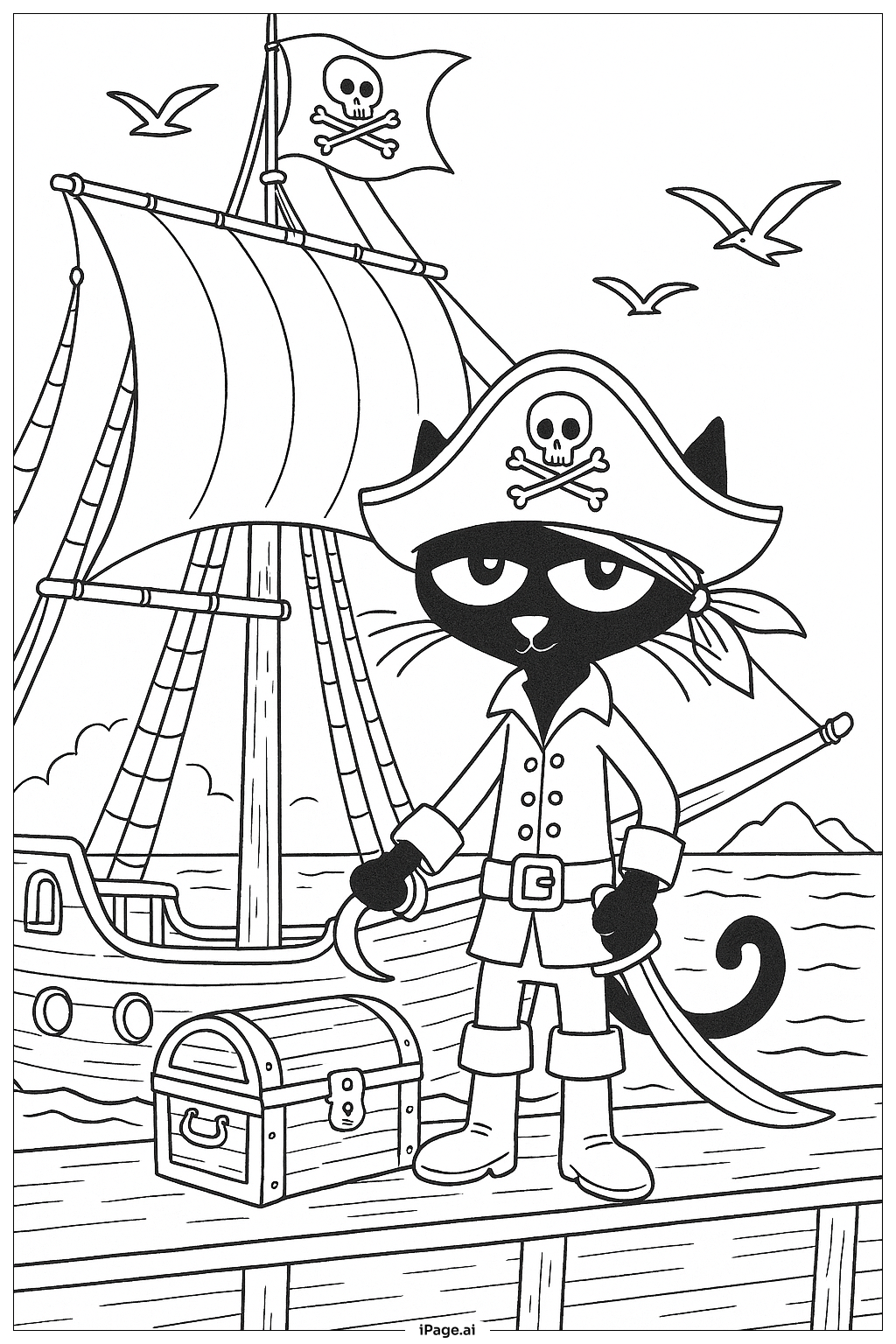
Coloring tips: How to color Pete The Cat Pirate Ship coloring page well?
For Pete The Cat, use his signature blue color for his fur, keeping it bright and cheerful. His pirate bandana can be red or any bold color you choose. The pirate ship's wooden deck and hull work beautifully in shades of brown, from light tan to deep walnut, with darker lines to show the wood grain. Paint the sails in crisp white or cream, perhaps adding some shading with light gray. The ocean can be colored in various shades of blue and turquoise, with white caps on the waves for extra movement. Make the sky a soft blue with white or pink-tinted clouds. Add golden yellow or bright red accents to flags or pirate details. Consider using metallic colors like silver or gold for any treasure or ship hardware to make them sparkle and stand out.
Coloring challenges: Which parts are difficult to color and need attention for Pete The Cat Pirate Ship coloring page?
• Intricate Rigging and Ropes: The pirate ship includes numerous ropes, rigging lines, and nautical details that crisscross the image. These thin lines require careful attention and a steady hand to color without going outside the boundaries. Young colorists may find it challenging to distinguish between overlapping rope sections and to choose contrasting colors that make each element visible and distinct from surrounding details.
• Wave Patterns and Water Texture: Creating realistic ocean waves involves blending multiple shades of blue and adding highlights to suggest movement and depth. The curved, flowing lines of the waves require smooth color transitions and an understanding of light and shadow. Children may struggle with maintaining consistent direction in their coloring strokes to achieve a natural water effect, and deciding where to place darker and lighter tones can be tricky.
• Wooden Plank Details: The ship's deck and hull feature individual wooden planks with grain patterns and shadows between boards. Coloring each plank to look three-dimensional while maintaining variety requires planning and patience. Younger artists might find it difficult to create the subtle color variations needed to make the wood look realistic rather than flat, especially when working with limited color selections.
• Pete's Character Details: Pete The Cat has distinctive features including facial expressions, clothing folds, and fur texture that require precision coloring. Small areas like eyes, whiskers, and paw details need careful work with fine-tipped coloring tools. Maintaining consistent color within Pete's body while preserving the line work that defines his cheerful character can challenge colorists who are still developing fine motor control.
Benefits of coloring books: Advantages of drawing Pete The Cat Pirate Ship coloring page
Coloring this Pete The Cat Pirate Ship page offers excellent fine motor skill development as children carefully navigate the detailed rigging, ropes, and ship components. The variety of elements, from large sail areas to tiny nautical details, helps build hand-eye coordination and pencil control at different scales. This image encourages creative decision-making as kids choose color schemes for the ship, ocean, and sky, fostering artistic confidence and personal expression. The nautical theme sparks imagination about pirate adventures and ocean voyages, supporting storytelling skills and creative thinking. Working with the different textures, wood grain, water, and fabric sails, teaches children about representing various materials through color choices and shading techniques. The calming, focused activity of coloring promotes relaxation and concentration while celebrating the beloved Pete The Cat character that many children already know and love.