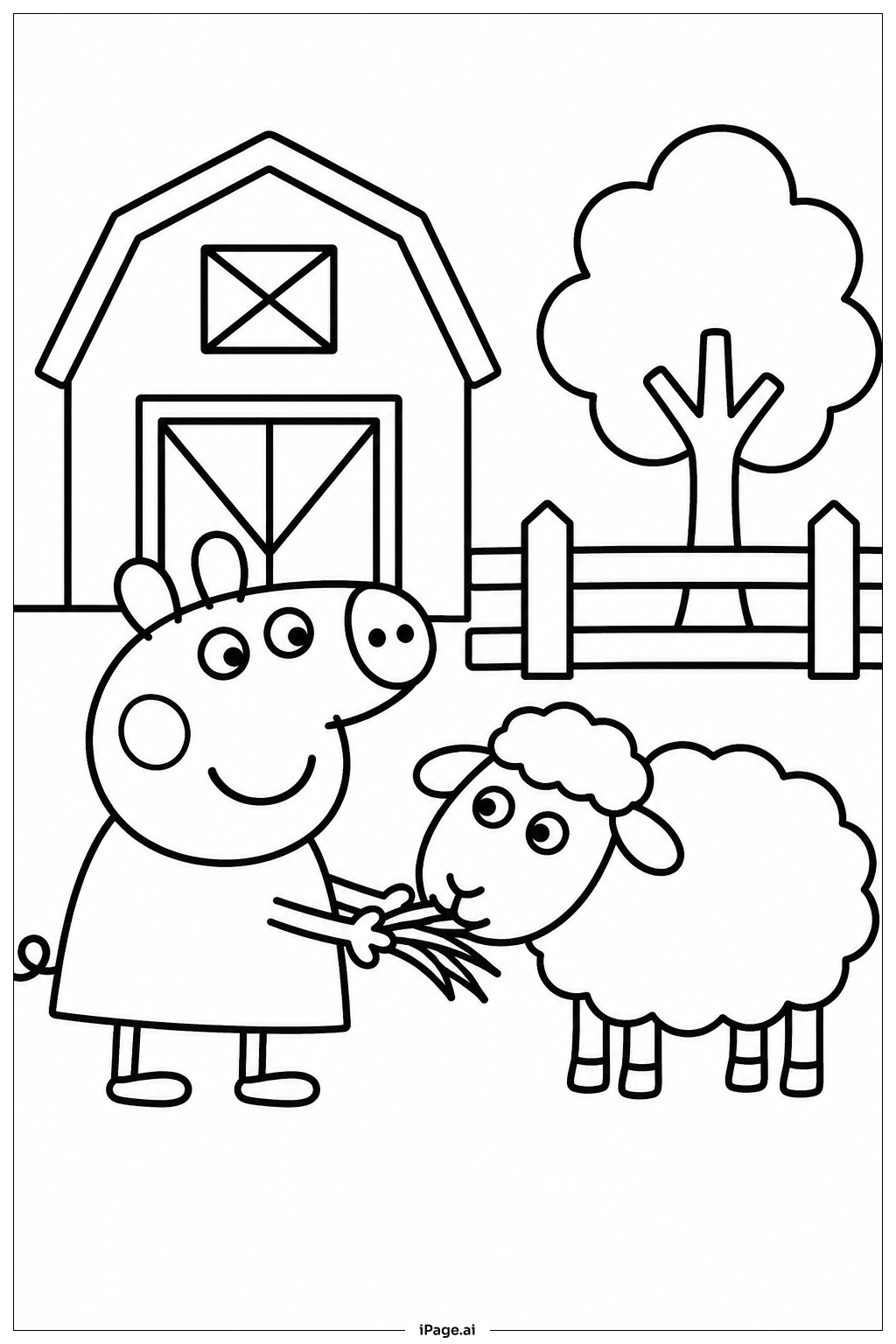
Coloring tips: How to color Peppa Pig Farm Visit coloring page well?
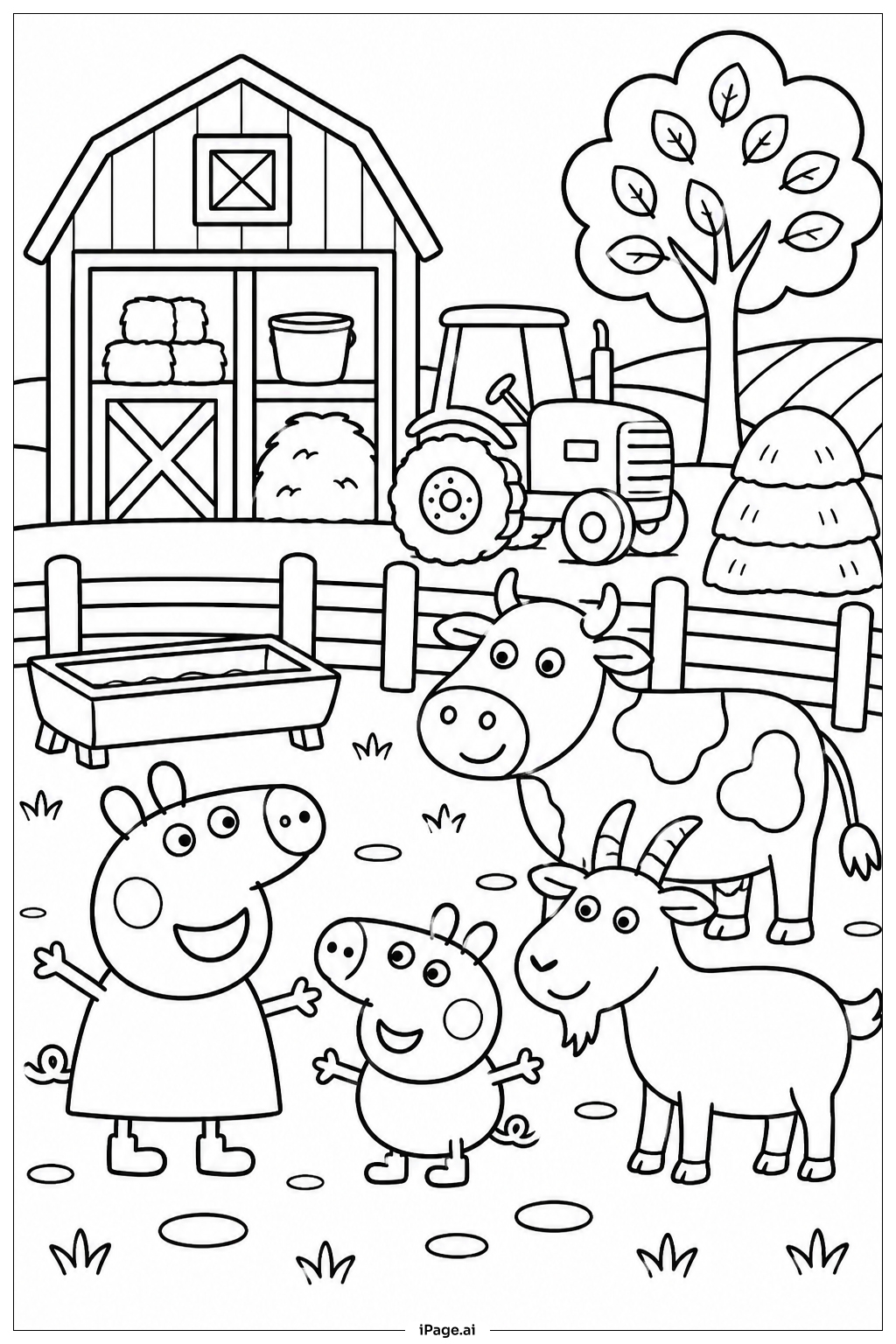
Start with Peppa's dress and color it her classic red shade. Her skin is a soft, light pink — great for practicing smooth, even strokes. Use warm brown and red tones for the barn, and bright yellows for the sunflowers and hay. The cow can be white with black patches, or let kids get creative with fun colors. Give the chickens golden-yellow bodies and orange beaks. Color the muddy puddles in shades of brown and gray. Use lush greens for the grass and hills in the background, and a cheerful light blue for the sky. Encourage kids to add their own touches — maybe purple flowers or a rainbow overhead. There are no strict rules here. The goal is to have fun and make the farm scene come alive with color. Younger children can focus on filling in large areas, while older kids can try adding shading or texture to the grass and wooden fence to make it feel more realistic.
Coloring challenges: Which parts are difficult to color and need attention for Peppa Pig Farm Visit coloring page?
• Peppa's Facial Features: Peppa's face has small, closely spaced details — her eyes, nostrils, and smile are all near each other. Coloring neatly inside these tiny areas can be tricky, especially for younger children. Using a fine-tipped colored pencil or a thin marker will help keep the lines clean and avoid smudging across her face.
• Animal Details: The cow, chickens, and any other animals in the scene each have their own shapes, textures, and markings. Switching between different colors for spots, beaks, feathers, and hooves requires patience and careful tool selection. Rushing through these sections can cause colors to bleed into one another.
• The Wooden Fence and Barn: The fence consists of multiple thin, repeating slats, and the barn has overlapping plank lines and window frames. Coloring these narrow sections evenly without going outside the lines takes steady hands and concentration. A light hand with colored pencils works better than heavy marker strokes here.
• Background Depth: The rolling hills, sky, and ground all sit in layers behind the main scene. Blending greens from bright foreground grass to softer distant hills, and transitioning the sky from deeper to lighter blue, adds visual depth but requires some color-mixing skill. Beginners may find it easier to keep each area a single flat tone.
• Muddy Puddles and Ground Texture: The puddles and soil patches involve mixing browns, grays, and tans without making the whole ground look muddy and dull. Finding the right balance of warm and cool earth tones keeps the scene looking lively rather than flat.
Benefits of coloring books: Advantages of drawing Peppa Pig Farm Visit coloring page
Coloring this Peppa Pig Farm Visit scene offers a wonderful range of benefits for children of all ages. First, it builds fine motor skills. Staying inside the lines, controlling pencil pressure, and switching tools all strengthen the small muscles in a child's hands — skills that directly support handwriting and other everyday tasks.
Second, it encourages creativity. Choosing colors for the barn, animals, and sky gives children a sense of ownership over their artwork. There are no wrong choices, which builds confidence and self-expression.
Third, it introduces children to the natural world. The farm setting — with its animals, crops, and open landscape — sparks curiosity about where food comes from and how farms work, turning a simple coloring activity into a gentle learning moment.
Fourth, it supports focus and patience. Working through a detailed scene like this teaches children to slow down, pay attention to small areas, and follow through to completion — habits that benefit them in school and daily life.
Finally, it's simply fun. Spending time with a beloved character like Peppa Pig in a familiar, joyful setting makes coloring feel like play rather than practice. It's a relaxing, screen-free activity that children and parents can enjoy together.