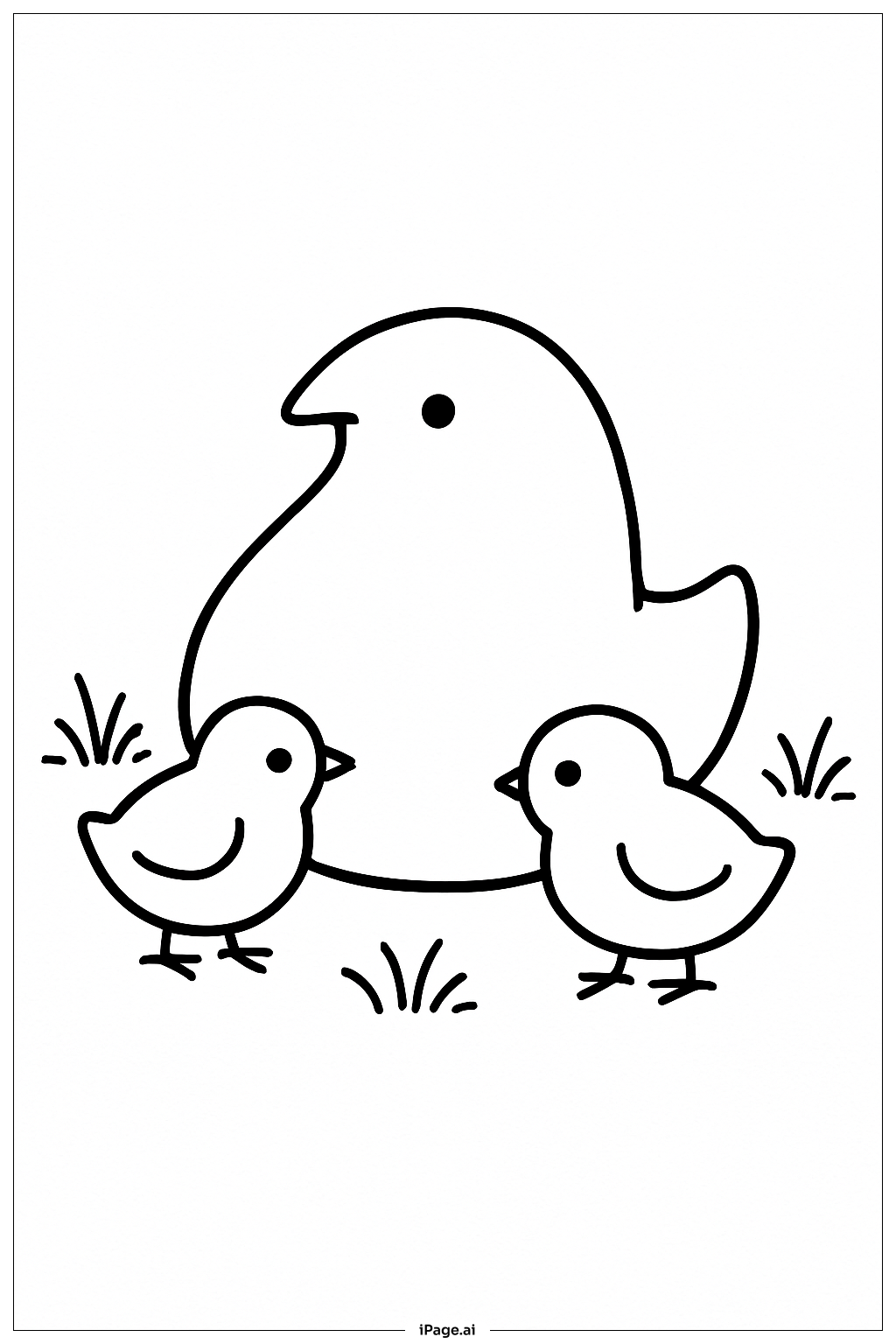
Coloring tips: How to color Peep With Friends coloring page well?
For Peep, try using bright yellow or golden tones for his fluffy body, with a small orange beak and feet to create that classic chick appearance. His friend the duck could be colored in soft white or light gray, with an orange or yellow bill to distinguish it from Peep. The third friend offers creative freedom—consider using purple, blue, or even pink to add variety and visual interest to the group. For added dimension, use slightly darker shades around the edges of each character to create depth and make them pop off the page. The characters' eyes can be colored black or dark brown, with a tiny white highlight dot to make them sparkle with life. Consider adding subtle shading under each character to suggest they are standing on ground, which helps anchor the composition and adds realism to this charming friendship scene.
Coloring challenges: Which parts are difficult to color and need attention for Peep With Friends coloring page?
• Character Differentiation: The main challenge lies in choosing distinct color schemes for each of the three friends so they stand out individually while still looking harmonious as a group. Young colorists need to plan their palette before starting to ensure Peep and his friends do not blend together visually, which requires some strategic thinking about color relationships and contrast.
• Staying Within the Lines: With three separate characters positioned close together, maintaining neat boundaries between each friend requires careful control and attention. The areas where characters might overlap or stand very near each other demand extra concentration to avoid accidentally coloring one character with another character's colors, which can be particularly challenging for younger children still developing fine motor control.
• Consistent Coloring in Rounded Shapes: Each character features large, rounded body areas that need even, consistent coloring to look polished and professional. Avoiding streaks, gaps, or uneven pressure while filling these substantial curved spaces takes patience and technique, especially when using crayons or colored pencils that require multiple strokes to achieve solid coverage.
• Facial Feature Details: The small facial features—eyes, beaks, and expressive details—require precision coloring with careful color choices. These tiny elements are crucial for bringing personality to each character, but their small size makes them tricky to color neatly without going outside the lines or obscuring the expressions that make this friendship scene so appealing.
Benefits of coloring books: Advantages of drawing Peep With Friends coloring page
Coloring this friendship scene offers wonderful social-emotional learning opportunities as children engage with themes of companionship, kindness, and togetherness while they create. The image naturally sparks conversations about friendship, helping friends, and playing nicely with others—valuable lessons for young children. The three-character composition provides an excellent exercise in color planning and decision-making, as children must think ahead about how their color choices will work together across multiple figures. This develops cognitive skills and visual planning abilities. The varied but manageable shapes offer an ideal balance of challenge and accessibility, building confidence as children successfully complete each character. The rounded, friendly forms are forgiving for beginners while still providing enough detail to keep more experienced young artists engaged. This coloring page also encourages storytelling and imagination, as children might create narratives about what Peep and his friends are doing, where they are going, or what they are discussing, which enhances language development and creative thinking skills.