Coloring tips: How to color Peep Space Mission coloring page well?
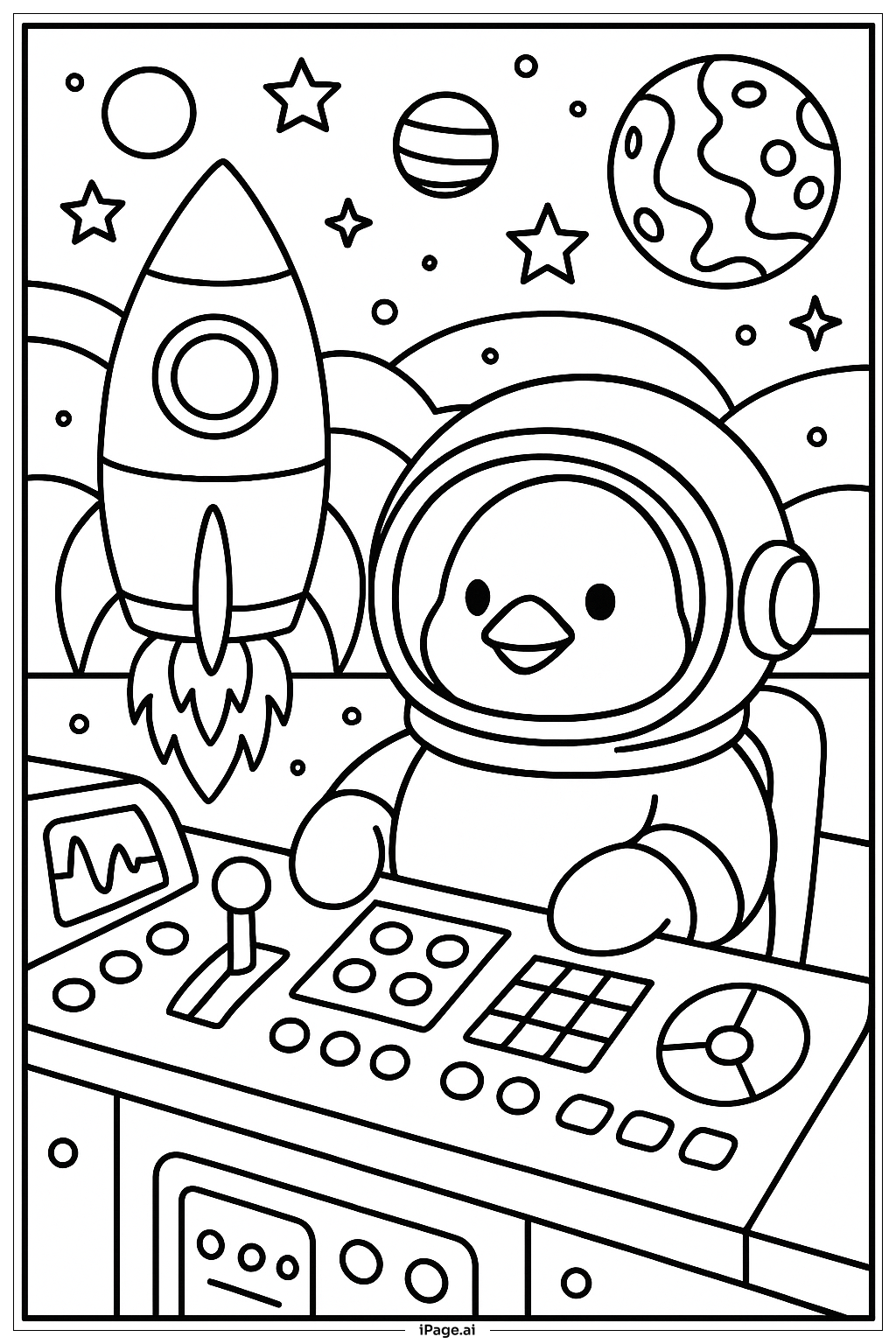
For Peep's astronaut suit, consider using white or silver with gray shading to create a metallic appearance. The helmet visor can be colored with light blue or teal to suggest reflective glass. Peep himself can be colored in traditional yellow or golden tones for a classic chick look. The rocket ship offers wonderful opportunities for bright, bold colors like red, white, and blue, or you can create a futuristic design with metallic silvers and blues. Color the flames at the rocket's base with warm oranges, yellows, and reds blending together. The moon surface can be various shades of gray and brown, while the background planet might be colored in blues, greens, or purples. Stars can be left white or colored yellow. Use darker blues and purples for the space sky to create contrast and make the stars pop.
Coloring challenges: Which parts are difficult to color and need attention for Peep Space Mission coloring page?
• Astronaut Suit Details: The space suit contains many technical elements including tubes, patches, pockets, and equipment that require careful attention to small spaces. Young colorists may find it challenging to stay within the lines of these intricate components while maintaining consistent colors throughout the suit.
• Rocket Ship Complexity: The rocket features multiple sections, windows, fins, and mechanical details that need different colors to show depth and structure. Deciding on a color scheme that makes each part distinguishable while keeping the overall design cohesive can be challenging for children.
• Flame and Smoke Effects: Creating realistic-looking rocket flames and exhaust clouds requires blending multiple colors smoothly. Children may struggle with the gradient effect needed to show flames transitioning from hot white and yellow centers to orange and red edges, as well as the wispy nature of the smoke clouds.
• Space Background Elements: Balancing the darkness of space with visible stars, planets, and other celestial objects requires planning. Colorists need to decide whether to color the entire background dark or leave strategic areas lighter, and how to make stars visible against whatever background color they choose.
• Texture Differentiation: The image contains many different textures including the smooth helmet glass, metallic suit materials, rough moon surface, gaseous flames, and the vastness of space. Representing these different textures through color choices and techniques like light and heavy pressure requires skill and planning.
Benefits of coloring books: Advantages of drawing Peep Space Mission coloring page
Coloring this Peep Space Mission page offers numerous developmental benefits for children. It encourages interest in science, space exploration, and astronomy, sparking curiosity about the universe and real space missions. The detailed astronaut suit and rocket ship help develop fine motor skills and hand-eye coordination as children carefully color within intricate lines and small spaces. The image promotes decision-making skills as children choose appropriate colors for different elements and learn about color relationships. Working with the space theme introduces concepts like planets, stars, and rockets in a fun, engaging way. The combination of a familiar, cute character like Peep with an exciting adventure setting helps children feel confident while being challenged. Completing this detailed coloring page builds patience, focus, and concentration. It also encourages creativity as children can imagine their own space stories while coloring, and they can experiment with realistic colors or create fantastical, imaginative color schemes for an alien universe.