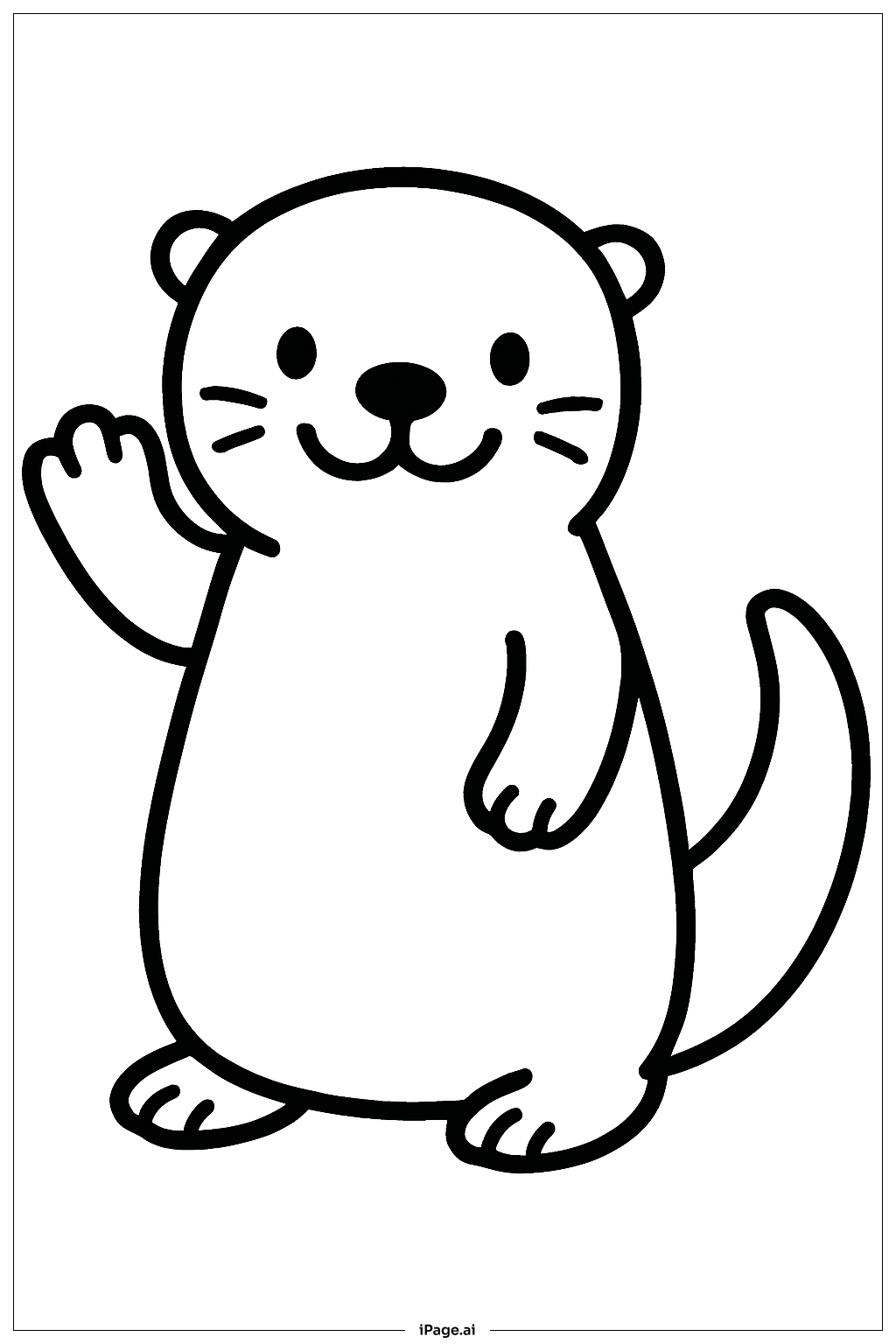
Coloring tips: How to color Smiling Otter Waving coloring page well?
Use soft browns or greys for the otter’s body to make it look natural. For the nose and eyes, black or dark grey will make them stand out. You can color the whiskers and mouth in a similar dark shade. The background can be light blue or green to look like water or grass. Feel free to add colors for the otter’s tail and paws that fit well with the body color. Bright colors for the background will make the otter pop.
Coloring challenges: Which parts are difficult to color and need attention for Smiling Otter Waving coloring page?
1. The otter’s small paws and whiskers can be tricky to color neatly because of their size. 2. Keeping the colors consistent on the otter’s body may be challenging for younger kids. 3. Choosing background colors that complement the otter without overpowering it is important. 4. Avoiding coloring outside the thick black outlines requires careful attention. 5. Adding shading to give the otter a 3D look can be difficult but rewarding.
Benefits of coloring books: Advantages of drawing Smiling Otter Waving coloring page
Coloring this otter helps children practice fine motor skills by staying inside the lines. It also encourages creativity by letting them choose different colors for the otter and its surroundings. Coloring animals like otters can teach kids about wildlife. It promotes relaxation and focus, which are good for emotional wellbeing. This picture is simple enough for young kids but interesting enough for older children to enjoy.