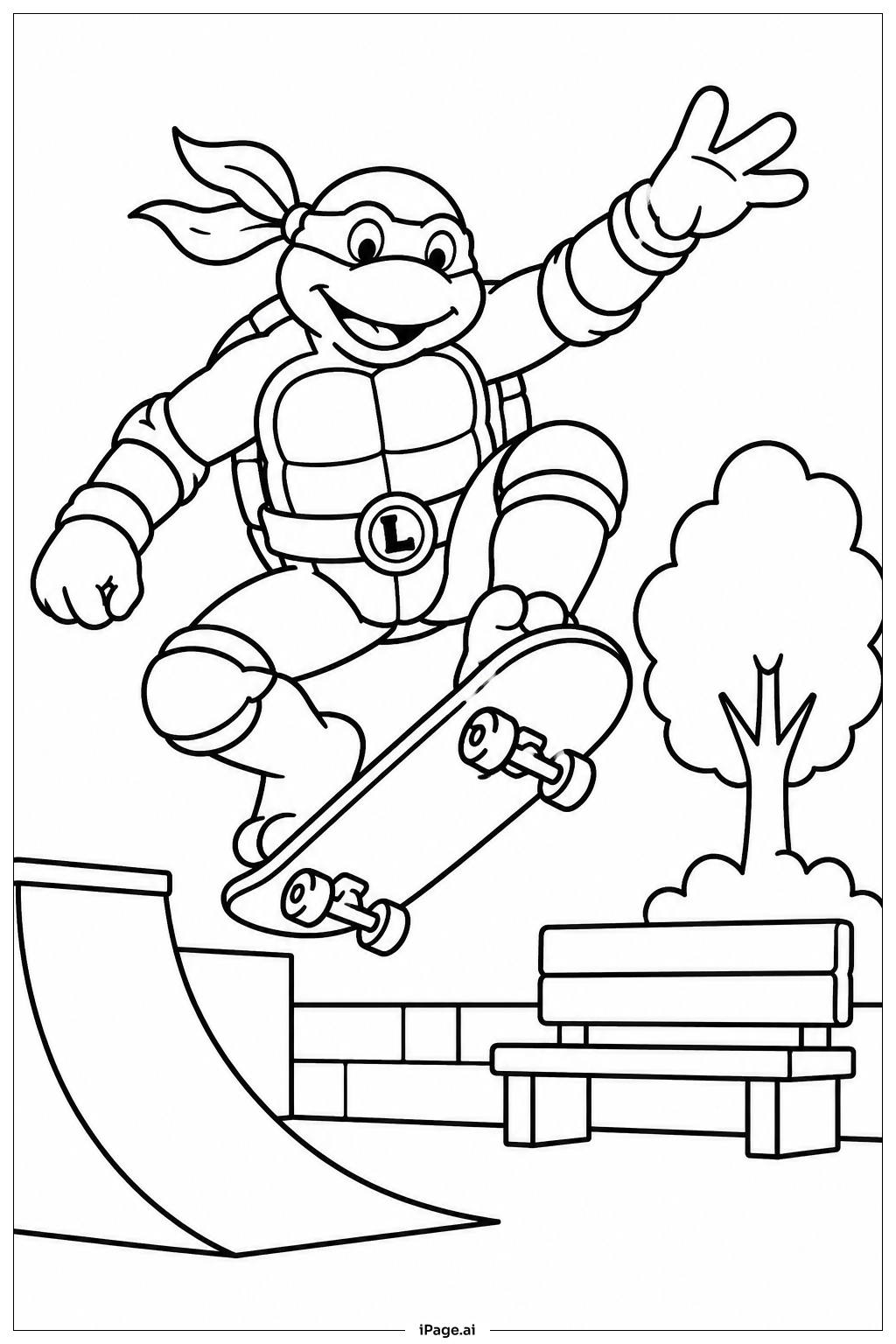
Coloring tips: How to color Ninja Turtles On Skateboard coloring page well?
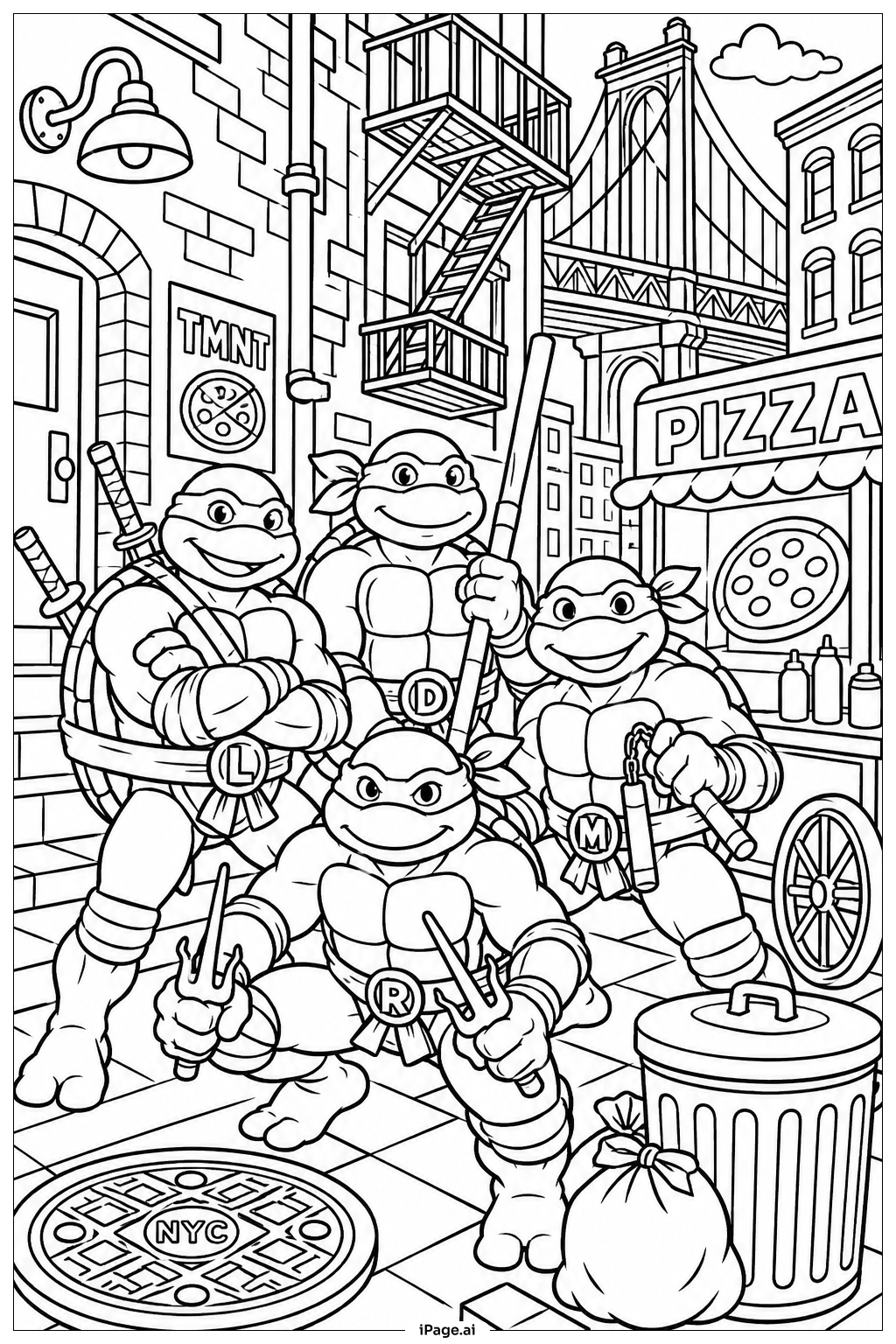
Use bright and bold colors to bring this scene to life. Each Ninja Turtle can be colored in their classic green skin tone with their unique mask colors: blue for Leonardo, purple for Donatello, orange for Michelangelo, and red for Raphael. The skateboard can be decorated with vibrant reds, blues, or yellows to make it pop. Try coloring their weapons with metallic shades like silver or gray to add realism. For the background or action lines, use lighter or contrasting colors so the turtles and skateboard stand out clearly. Don’t forget to color their elbow and knee pads, belts, and wristbands with matching hues. This picture offers great chances to experiment with shading to show the curved shapes and movement.
Coloring challenges: Which parts are difficult to color and need attention for Ninja Turtles On Skateboard coloring page?
• Character Details: The four Ninja Turtles each have distinct facial expressions, masks, and gear that require careful attention to keep their identities clear. It can be tricky to color their small weapons and accessories accurately.
• Dynamic Poses: The turtles’ poses show motion and balance on the skateboard, posing a challenge to shade correctly for a natural look without colors blending.
• Overlapping Figures: The turtles overlap on the skateboard, so coloring each one separately without smudging can be difficult, especially the areas where limbs and bodies touch.
• Small Space Coloring: The skateboard wheels, spikes on pads, and other tiny details need precise coloring within small spaces.
• Consistent Skin Tones: Keeping a consistent green shade for the skin across all turtles helps maintain their look but requires careful blending and uniform application.
Benefits of coloring books: Advantages of drawing Ninja Turtles On Skateboard coloring page
Coloring this Ninja Turtles On Skateboard image helps improve fine motor skills as kids carefully fill in small, detailed areas. It encourages creativity by allowing different color choices for gear and accessories. The dynamic scene inspires imagination about action and teamwork. It also supports focus and patience, qualities children develop while completing the complex parts. Plus, kids learn about color coordination by picking shades that complement each other, making their work visually appealing. Overall, it’s a fun way to combine art with a beloved adventure theme, promoting both relaxation and cognitive development.