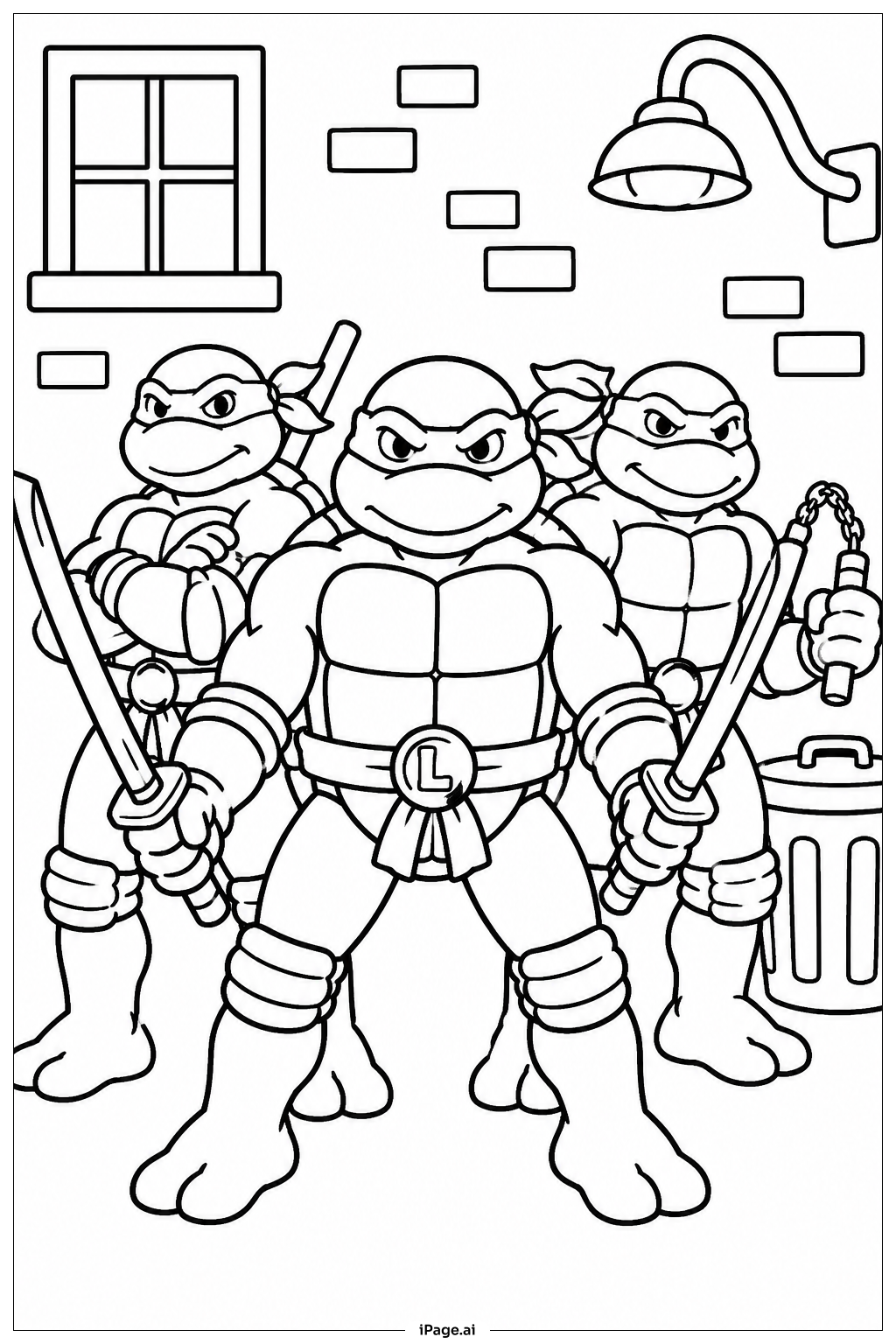
Coloring tips: How to color Ninja Turtles Masked Trio coloring page well?
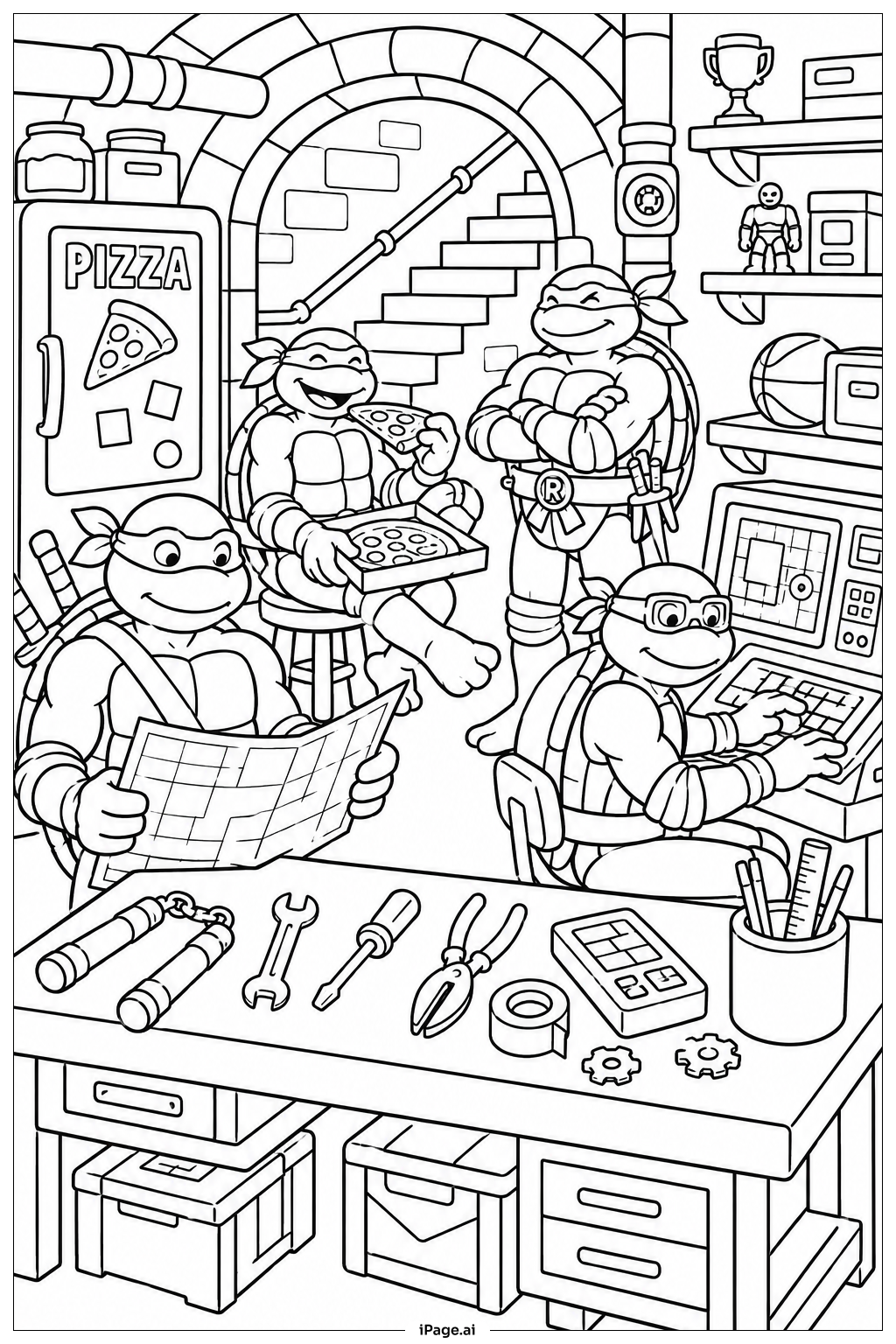
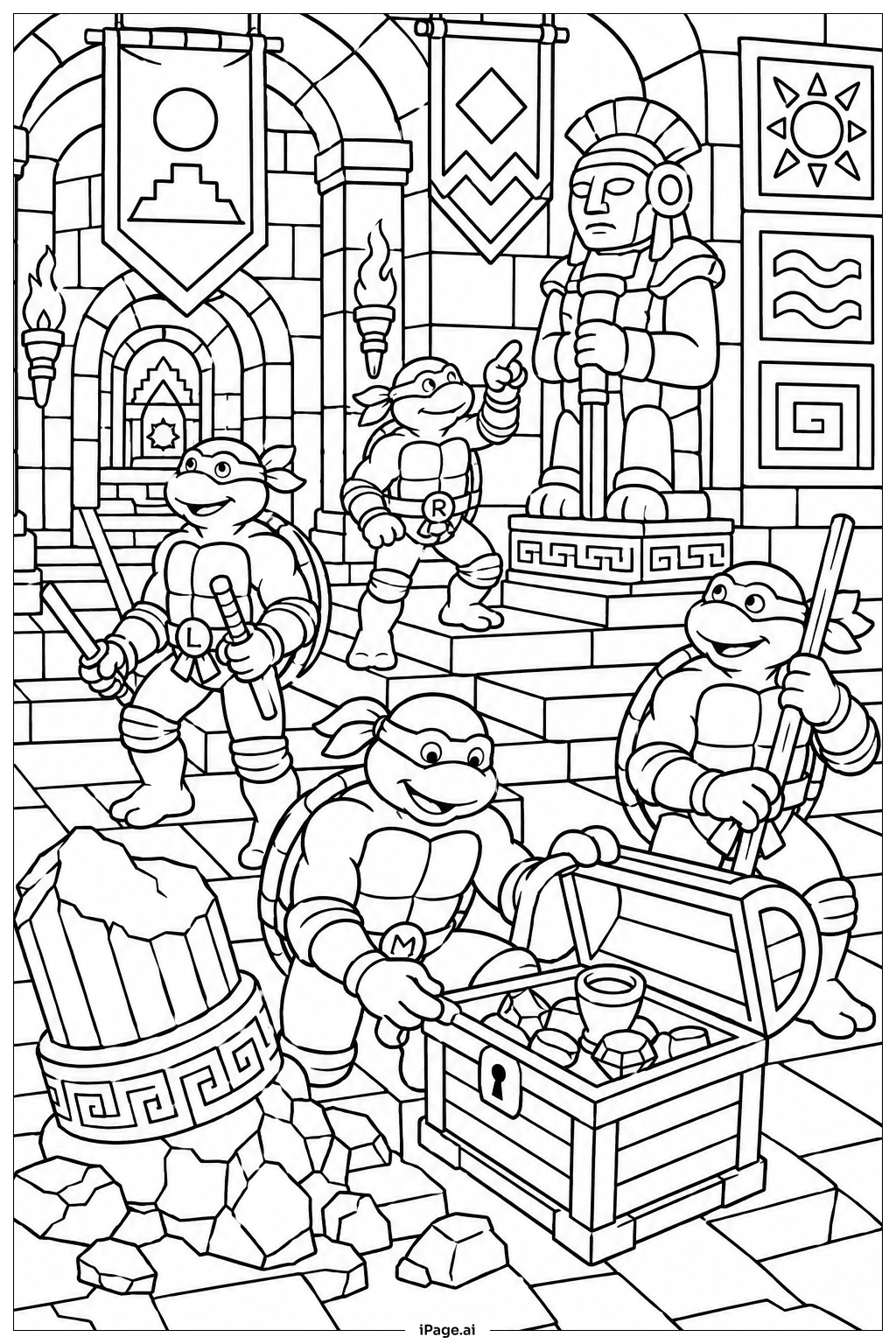
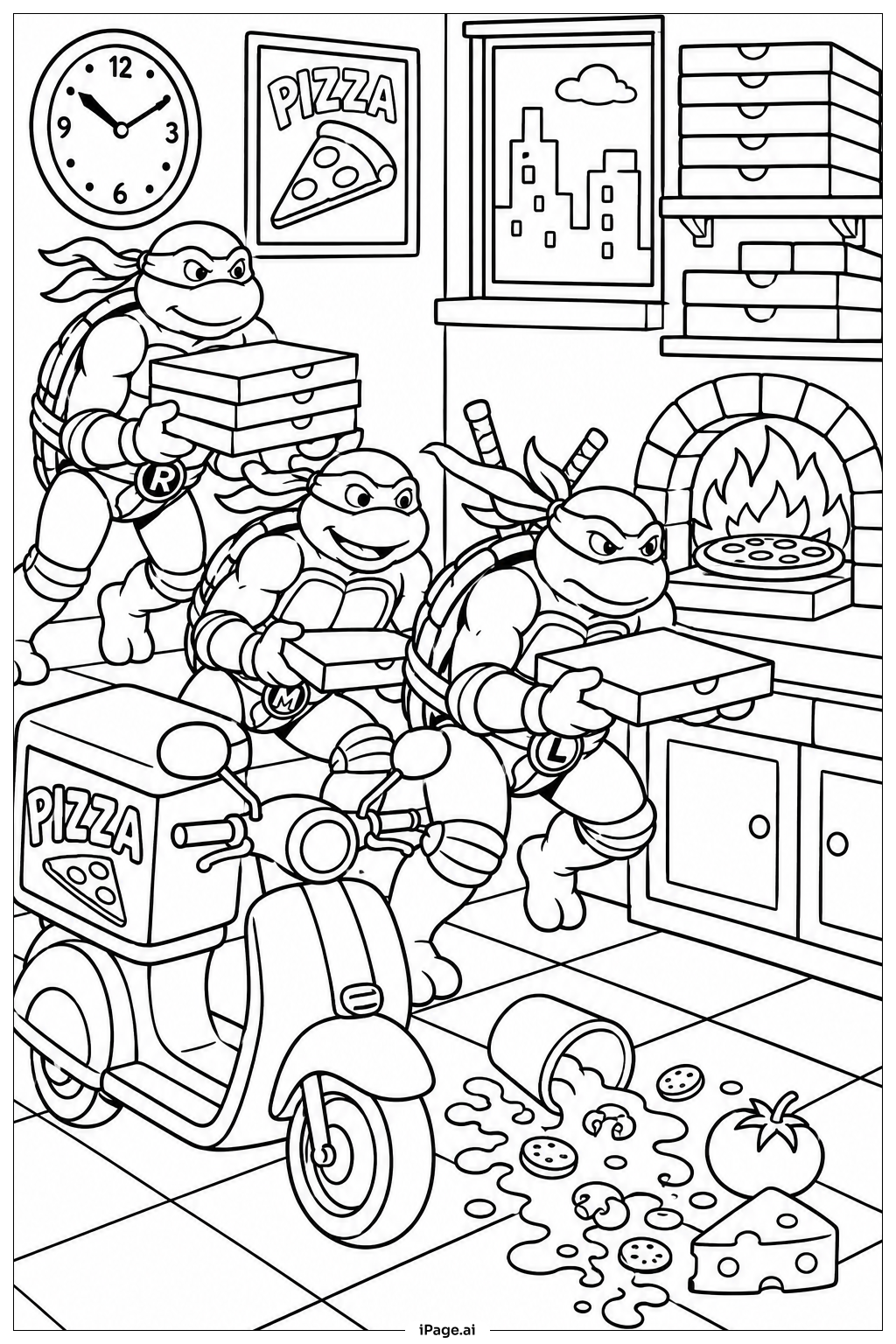
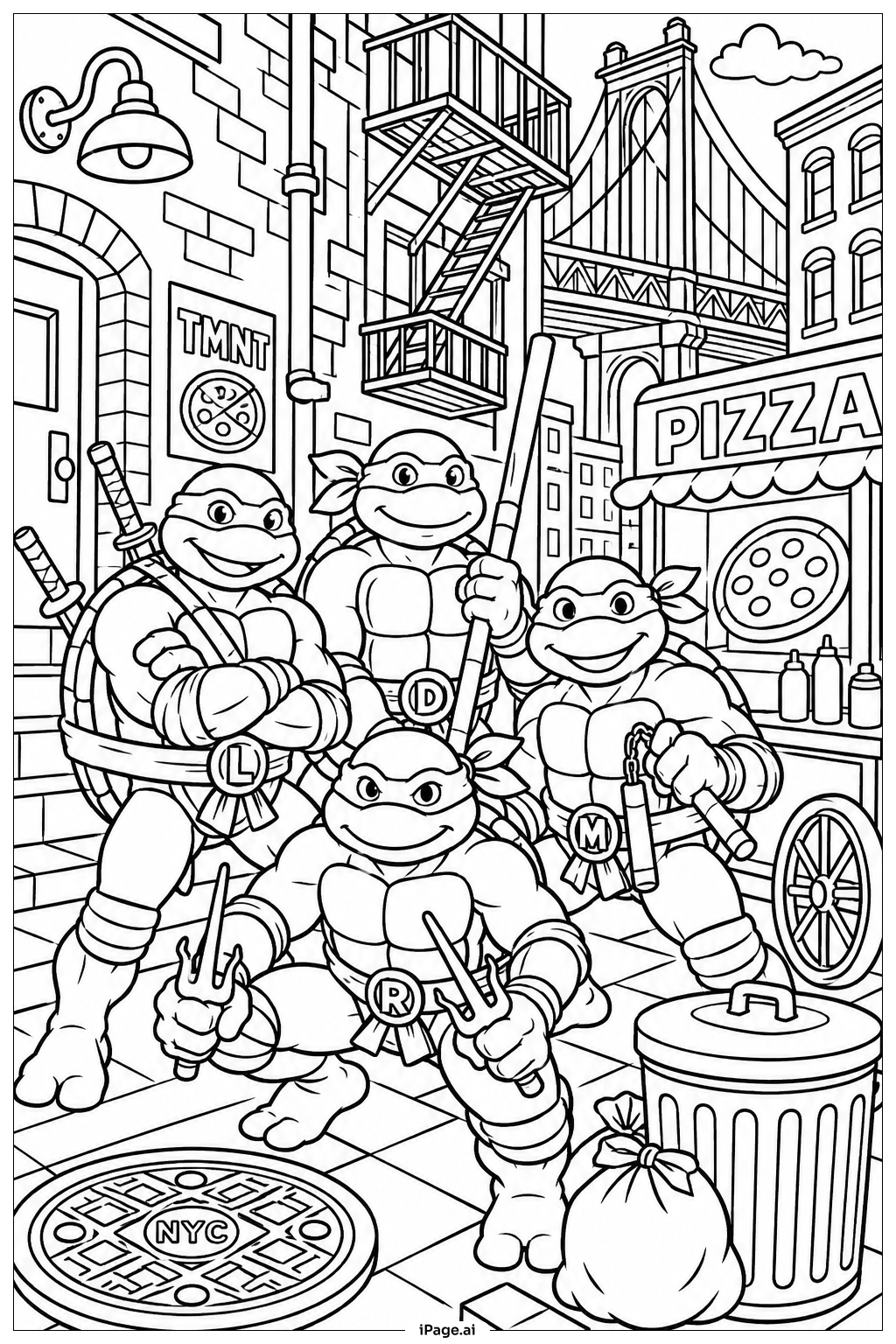
Use bright and bold colors for the turtles’ masks to make each one stand out: red, blue, and purple are great options. For their skin, choose different shades of green to show variety. The weapons can be colored in metallic shades like silver or gray to make them pop. The shells can be brown or olive tones to give them a natural look. Don’t forget to add shading on the muscles and shells to create dimension. The background bricks can be colored with reds and oranges to resemble a city alley. Keep the colors balanced so the turtles remain the main focus of your coloring page.
Coloring challenges: Which parts are difficult to color and need attention for Ninja Turtles Masked Trio coloring page?
• Intricate Weapon Details: Each turtle’s weapons have small designs and shapes that require careful coloring to avoid going outside the lines. Steady hands are needed to color these parts clearly. • Overlapping Figures: The turtles stand close together, causing some of their limbs and shells to overlap. This makes it tricky to decide where one ends and the other begins, demanding attention to detail to color each separately. • Different Textures: The image includes smooth skin, rough shells, shiny weapons, and brick backgrounds. Capturing these textures requires mixing colors and applying different coloring techniques, which can be hard for beginners. • Maintaining Mask Colors: Each turtle’s mask is a distinct color important to their identity. Coloring the masks evenly and vibrantly without mixing colors can be a challenge. • Shading Depth: The image has shadows to show movement and body curves. Adding correct shading involves using varied pressure or layering to create depth, which may be difficult for young artists.
Benefits of coloring books: Advantages of drawing Ninja Turtles Masked Trio coloring page
Coloring this Ninja Turtles Masked Trio image helps improve fine motor skills by requiring controlled movements in small spaces like weapons and facial features. It encourages creativity through choosing colors and shading techniques, allowing children to personalize each turtle. The image’s overlapping figures foster focus and attention to detail, which are important in artistic development. Coloring familiar characters also boosts confidence and joy, motivating kids to complete the artwork. Additionally, working on different textures like skin and shell helps build understanding of how to represent surfaces visually. Overall, this activity promotes relaxation and inspires a love for art.