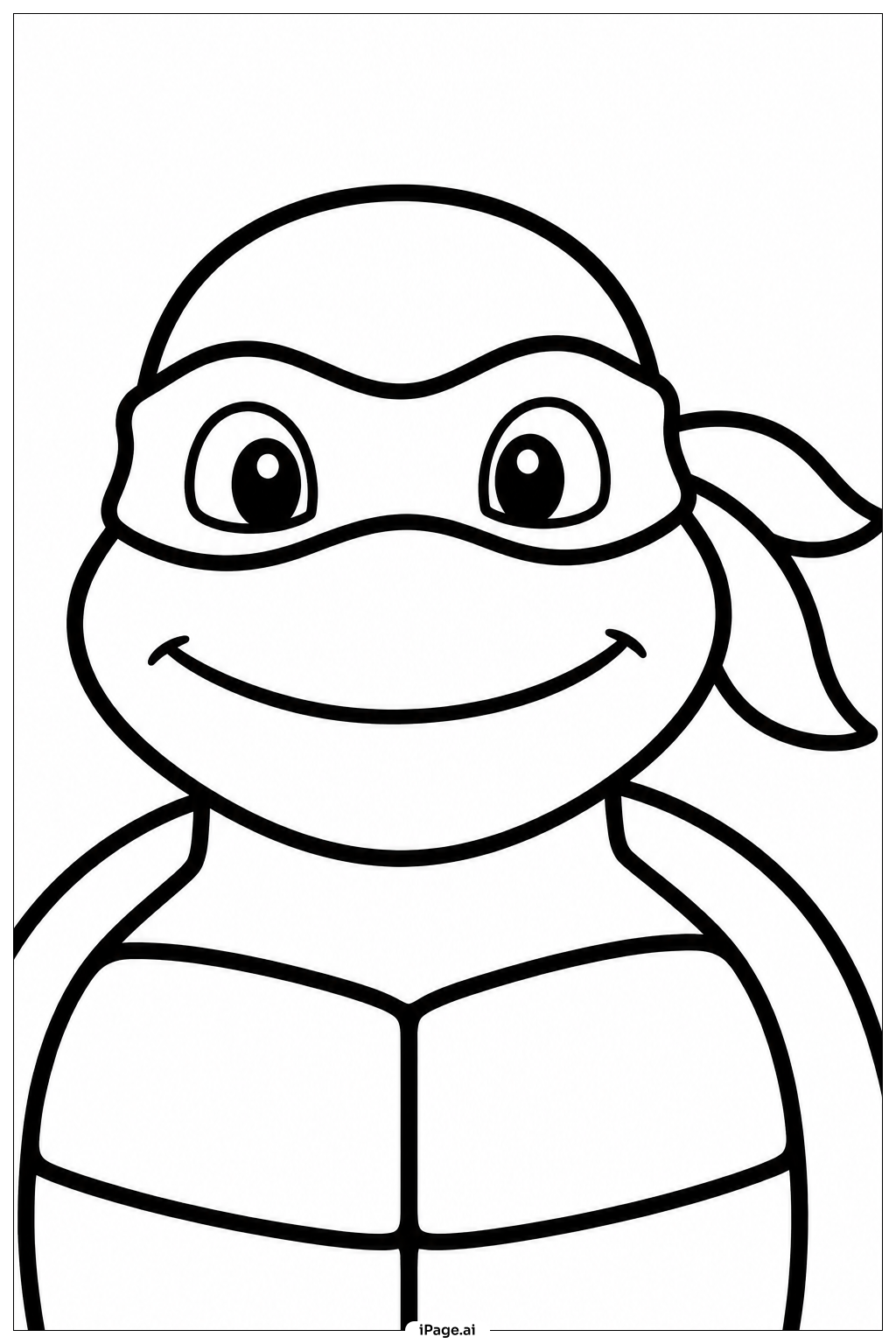
Coloring tips: How to color Ninja Turtles Mask Closeup coloring page well?
For coloring this closeup, try using bright and bold colors for the mask. Each Ninja Turtle has its own signature mask color—Leonardo’s blue, Michelangelo’s orange, Donatello’s purple, or Raphael’s red. You can use crayons, markers, or colored pencils to make the mask stand out. Shade around the edges lightly to give the mask a 3D effect. For the turtle’s skin, earth tones like olive green and brown work well. Don’t be afraid to blend colors for a smooth look, or add darker green spots for texture. The eyes can be colored with white highlights to make them look shiny and alive. Have fun mixing colors and experimenting with light and shadow!
Coloring challenges: Which parts are difficult to color and need attention for Ninja Turtles Mask Closeup coloring page?
• Mask contours: The mask has curved edges and folds that require careful coloring to follow the lines clearly without coloring outside the edges. Staying within these shapes takes patience and fine motor skills. • Texture details: The turtle’s skin shows subtle textures that are small and detailed. Coloring these without smudging or losing the texture can be challenging. • Eye expression: The eyes are small but important in showing emotion. Coloring the whites and pupils correctly to keep the fierce look while adding shine needs attention to detail. • Color layering: Achieving a smooth color gradient on the mask or skin may be difficult for younger children who are not used to blending colors or shading properly. • Limited space: The closeup means some areas are small and precise, requiring controlled strokes and a steady hand to keep colors neat and even.
Benefits of coloring books: Advantages of drawing Ninja Turtles Mask Closeup coloring page
Coloring this Ninja Turtles Mask Closeup helps children develop their fine motor skills as they carefully stay within the mask lines and small areas. It encourages creativity by allowing kids to choose colors or experiment with shading to make the mask look realistic or imaginative. Coloring facial features like the eyes teaches attention to detail and how subtle changes can show different emotions. The image also inspires focus and patience since the shapes and textures require thoughtful coloring. Finally, it boosts confidence as children complete a bold, iconic image that celebrates their favorite heroes.