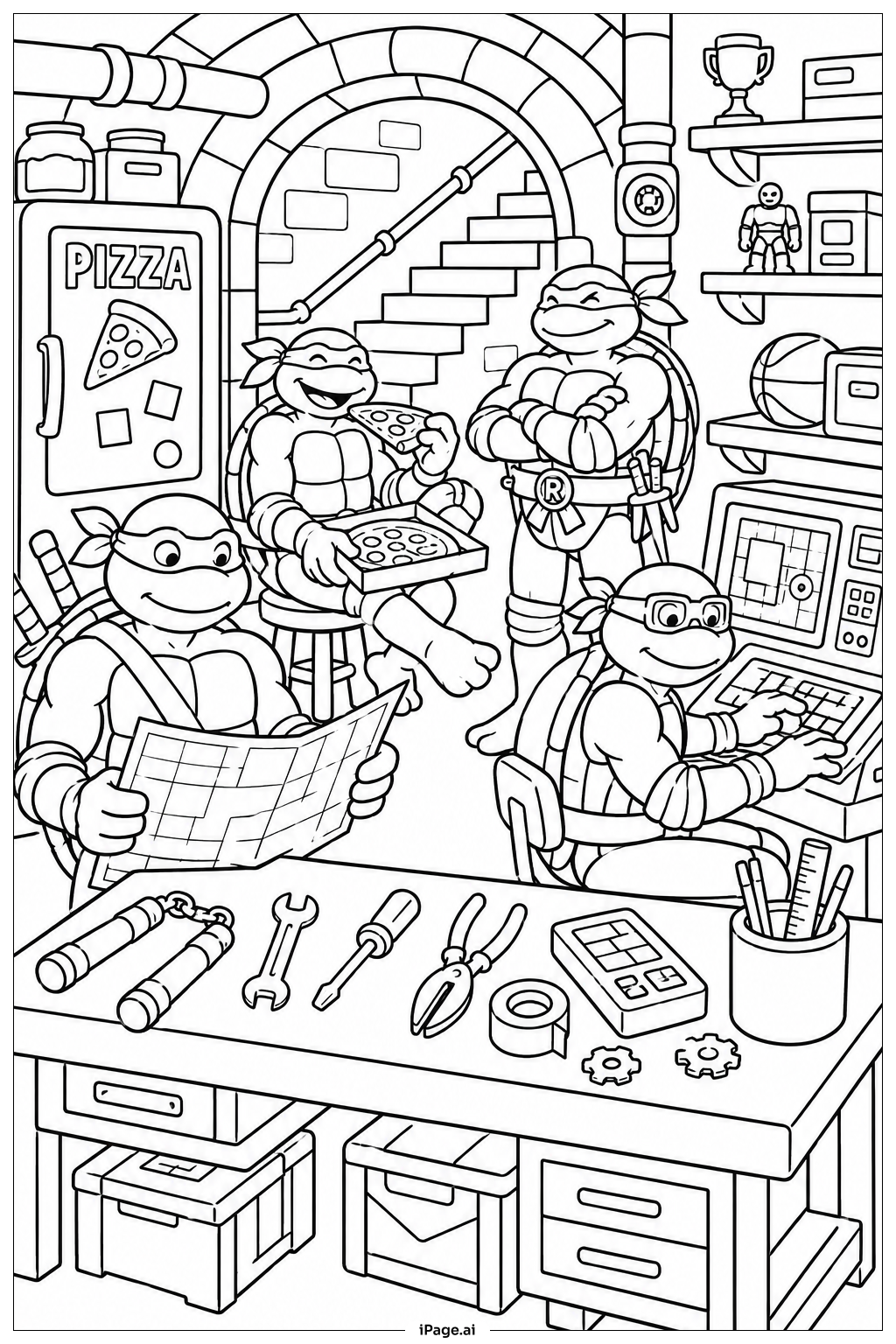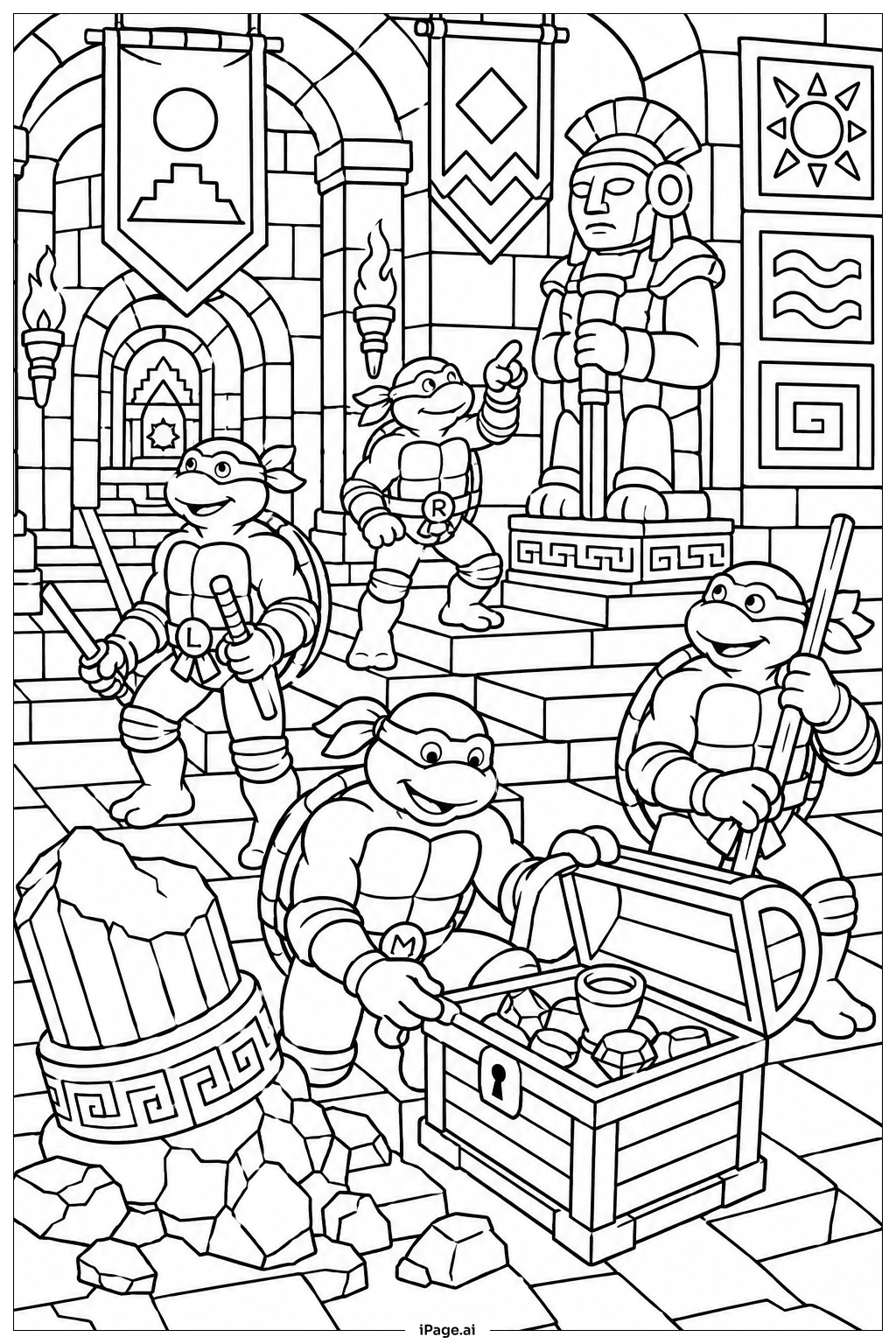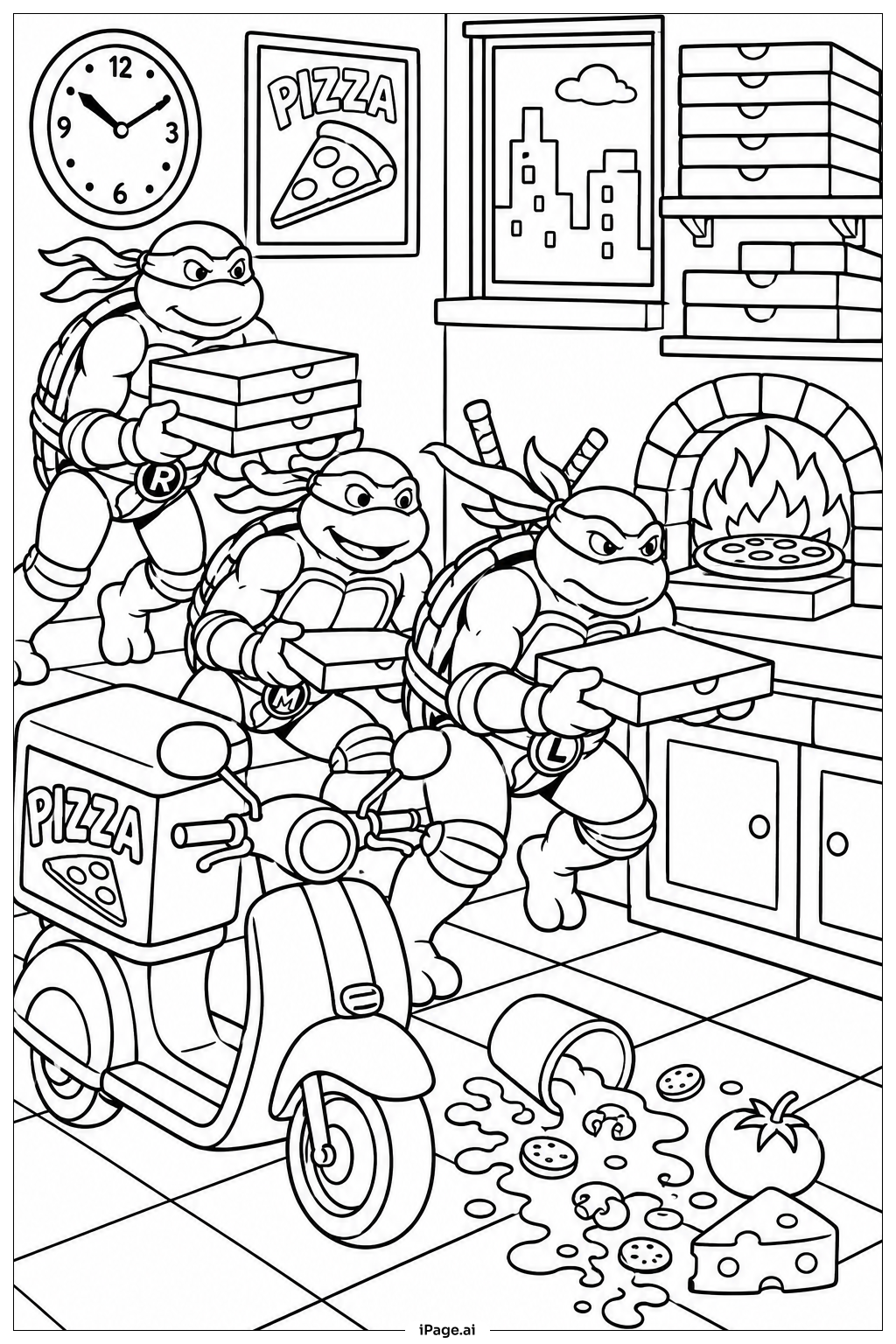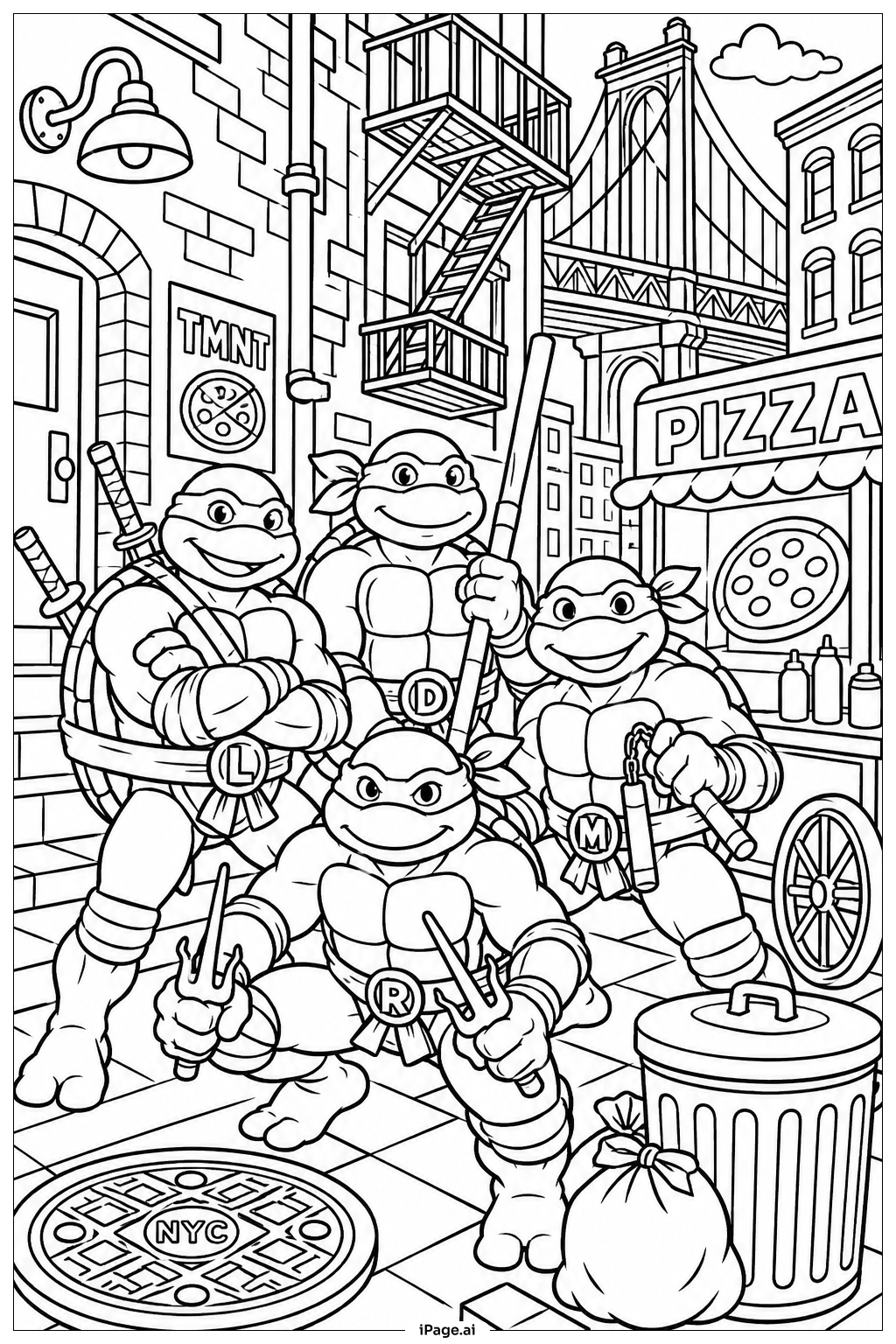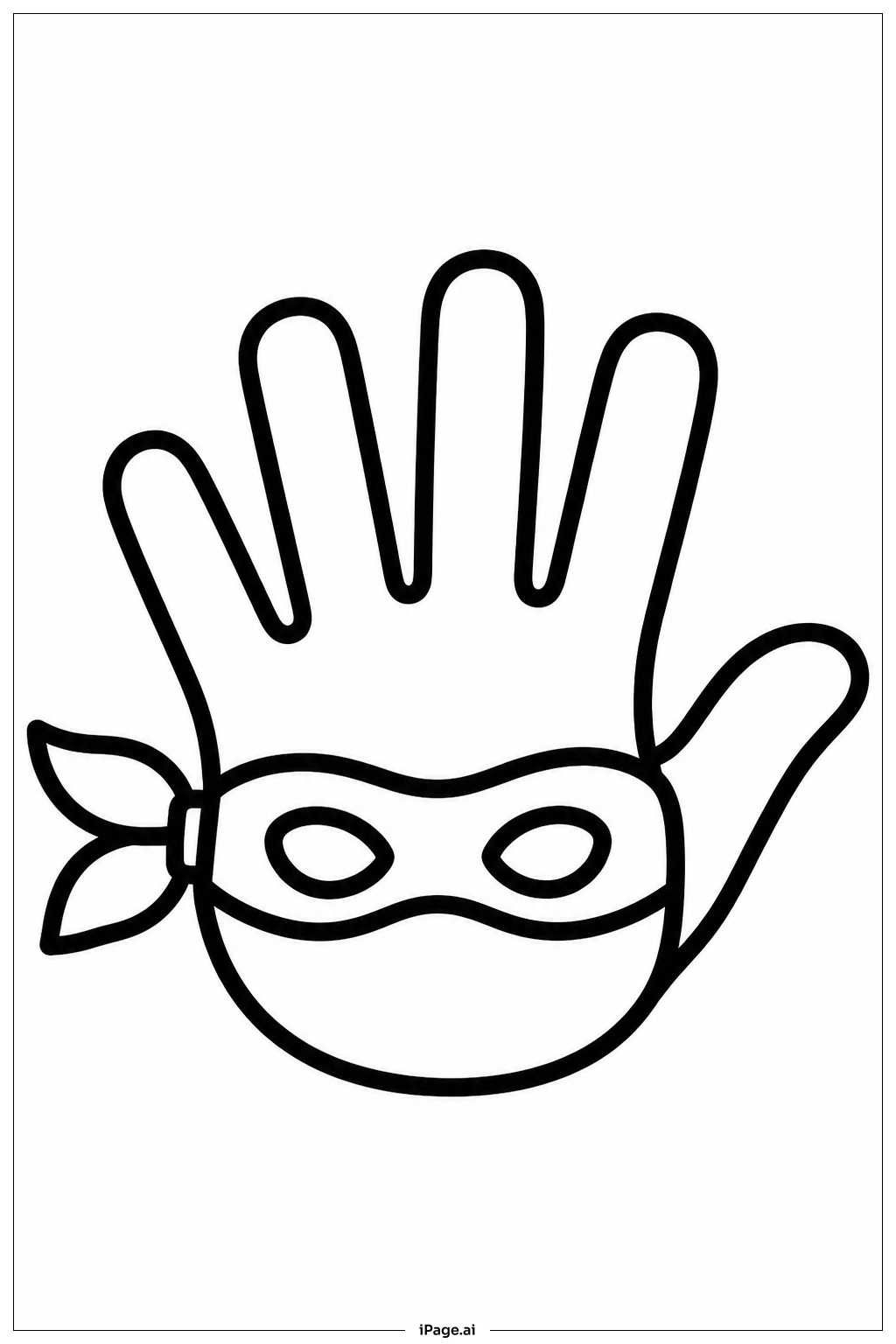
Coloring tips: How to color Ninja Turtles Handprint coloring page well?
Start with the turtle's skin. Use bright green for the face, arms, and legs. Use a darker green or olive tone for the shell to add depth. Pick one of the four classic mask colors — blue for Leonardo, red for Raphael, orange for Michelangelo, or purple for Donatello — and carefully fill in the eye mask and headband. Color the shell segments with a mix of dark brown and tan to make them look three-dimensional. Use gray or silver for the belt buckle and any weapon details. For the knee and elbow pads, a warm beige or light brown works great. Leave the eyes white and add small black pupils for a lively look. Feel free to add shading along the edges of the shell and limbs to give the whole figure a more dynamic, comic-book feel. Kids can also pick their favorite turtle and match all the colors to that character for a personalized touch.
Coloring challenges: Which parts are difficult to color and need attention for Ninja Turtles Handprint coloring page?
Coloring this Ninja Turtles Handprint page comes with a few fun challenges that will help young artists grow their skills:
• Shell Pattern Details: The shell on the palm area is divided into multiple small segments, each one needing careful attention. Staying inside the lines of each individual segment without smudging into the neighboring ones takes patience and a fine-tipped coloring tool. Using two slightly different shades of green or brown for alternating segments can make the shell look more realistic but requires extra color control.
• Mask and Headband Accuracy: The eye mask is a narrow band that wraps across the face, and the headband ties at the side with small flowing ends. These are small, tight areas that can be tricky to color neatly, especially for younger children. A thin marker or a sharpened colored pencil works best here to avoid going outside the lines.
• Skin Tone Consistency: The turtle's skin spans several separate sections — the face, fingers, arms, and legs — all of which should match in color. Keeping a consistent green tone across all these disconnected areas while not accidentally bleeding into the shell or mask areas requires focus and steady hands.
• Small Accessory Details: Items like the belt buckle, elbow pads, knee pads, and any weapon outlines are very small features packed into tight spaces. These tiny details reward careful, deliberate coloring and are a great opportunity to practice precision with a fine-point tool.
• Blending and Shading: Adding depth to the shell and limbs through light shading is optional but rewarding. Knowing where to apply a darker tone without making the overall image look muddy is a skill that takes practice and experimentation.
Benefits of coloring books: Advantages of drawing Ninja Turtles Handprint coloring page
Coloring this Ninja Turtles Handprint page offers a wonderful range of benefits for kids of all ages. First, it builds fine motor skills. Carefully staying inside the small shell segments and narrow mask lines trains hand muscles and improves pencil control, which directly supports handwriting development. Second, it sparks creativity. Choosing between the four turtles and their iconic mask colors encourages kids to make decisions and express their personal preferences through color. Third, it strengthens focus and patience. The detailed shell pattern and tiny accessories require sustained concentration, helping children practice sitting with a task and seeing it through to completion. Fourth, it connects learning to play. Kids who love the Ninja Turtles universe can explore the characters more deeply by recreating them with their own hands — literally, since the image is based on a handprint. This adds a personal, imaginative layer to the activity. Finally, completing the page gives children a real sense of accomplishment. Seeing a finished, colorful piece of art they created themselves builds confidence and encourages them to take on more creative challenges.