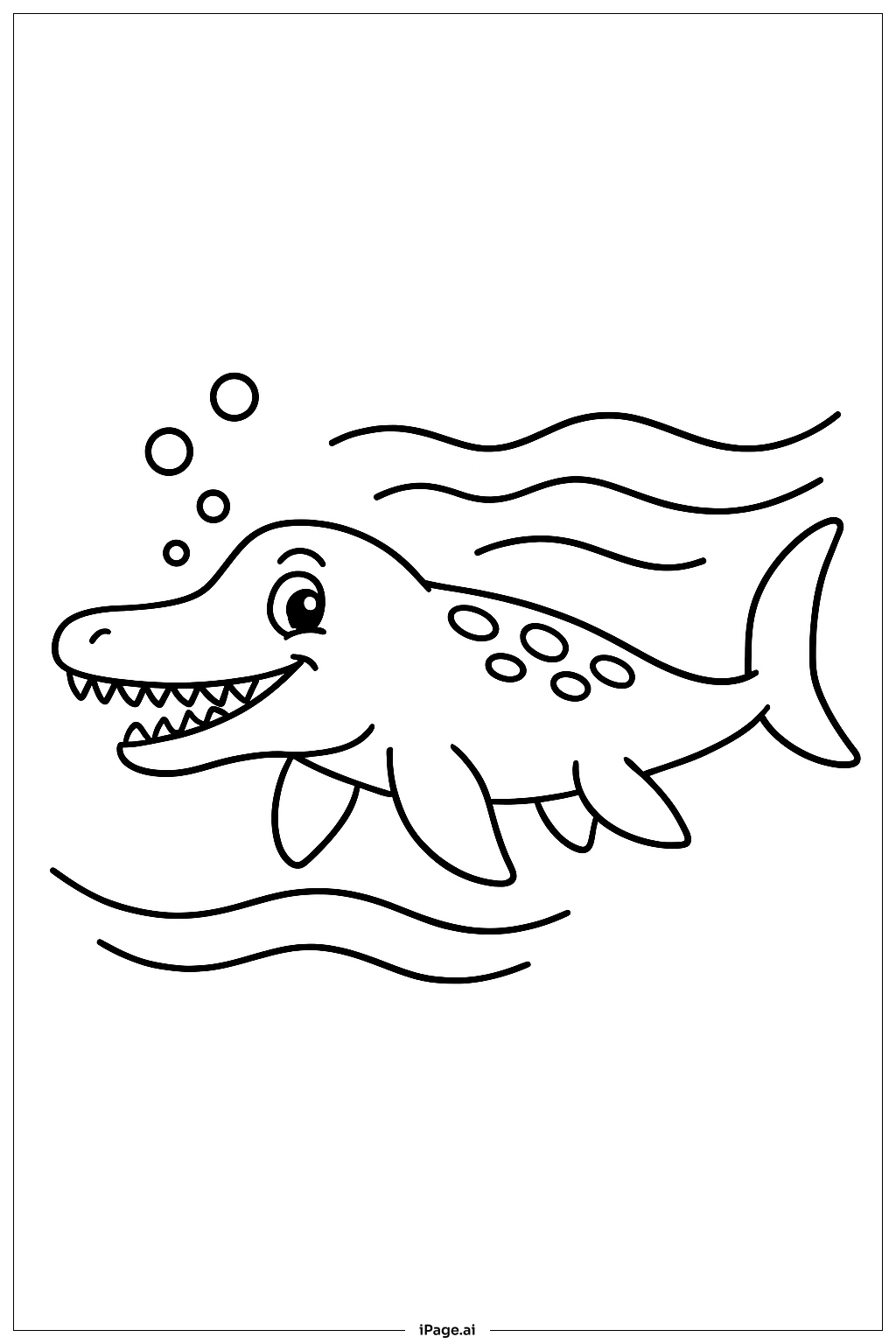
Coloring tips: How to color Mosasaurus With Simple Waves coloring page well?
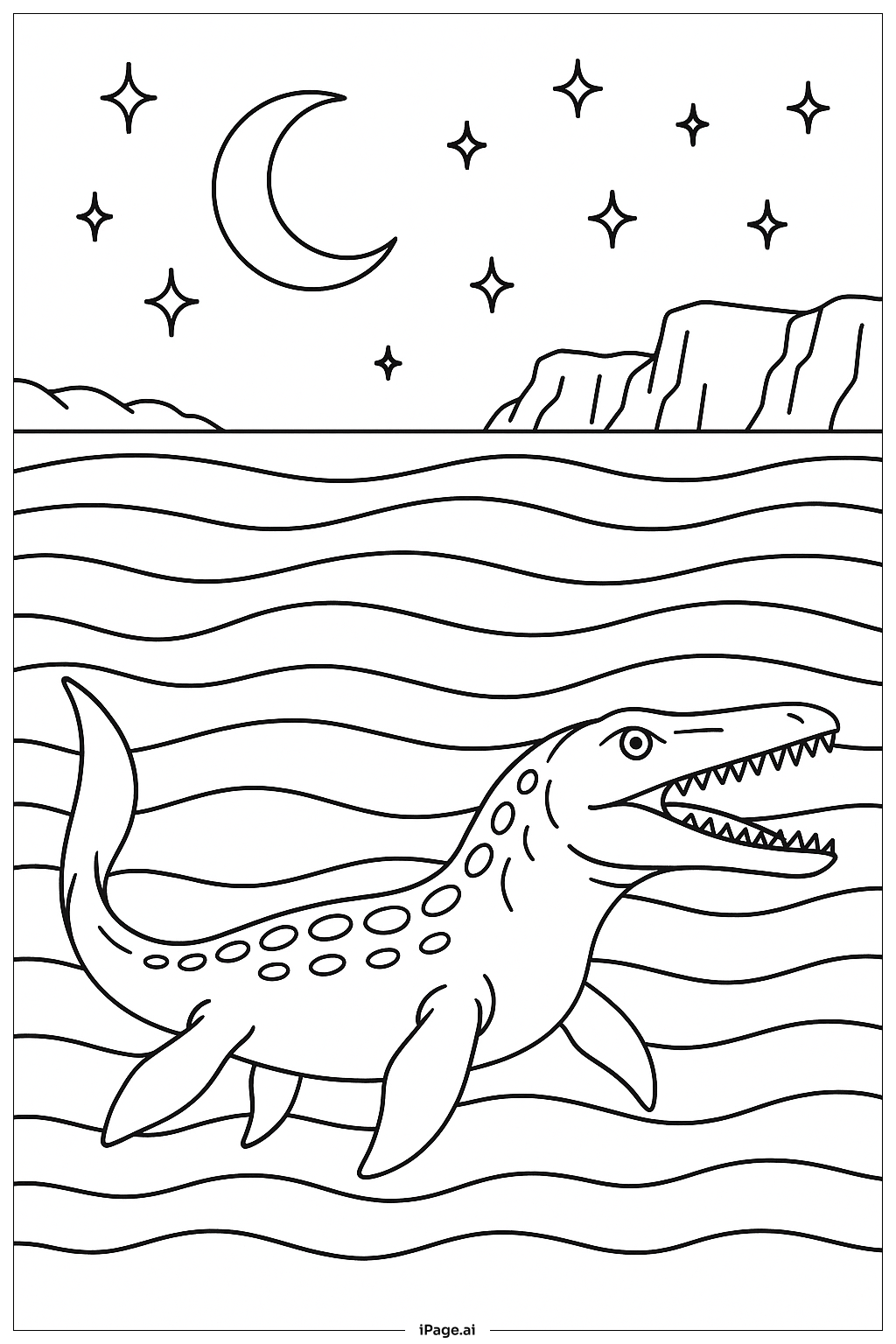
Choose bright blues and greens for the mosasaurus. A slightly lighter belly helps show its rounded belly. Add gentle shading along the top curves to give it three-dimensional form. For the water, use a range of blues from light cyan near the waves to deeper blue further away. Leave the white space for bubbles white or pale gray to look bubbly. The circular spots along its back can be colored with a contrasting hue like orange, purple, or yellow to make them pop. The outline remains black, so color inside carefully and use smooth, even strokes. Try to color the fins in a different shade than the body to create separation. You can also blend colors along the tail to show movement.
Coloring challenges: Which parts are difficult to color and need attention for Mosasaurus With Simple Waves coloring page?
- Edges and staying inside lines: The large curved body and flowing waves invite careful coloring. Small spaces like the mouth teeth and the fin edges are easy to overrun with marker tips. Encourage kids to color in light, then add a darker shade with a second layer. Slow, controlled strokes help keep lines crisp. If a color bleeds, let the area dry before continuing or use a blotting sheet.
- Shading the mosasaurus: The creature has a rounded form; shading helps show light coming from above. Use a simple highlight along the top and a softer shadow along the belly and underside of the tail. Avoid heavy gradients; keep it gentle so the page remains suitable for younger children. Practice blending on a scrap paper first.
- Coloring water and bubbles: The waves are simple curves; choose two or three blues and blend them slightly. Make the bubbles white with a touch of gray for shading. If using markers, start with the lightest color and layer darker shades slowly to prevent streaks. For crayons, color in circular motion to keep even coverage.
- Color coordination and balance: Plan your palette. Too many colors can distract from the main character. Pick 2-3 colors for the mosasaurus, 1 color for spots, and 1-2 colors for waves. Keep the background light to help the fish stand out. Remind kids to color with purpose and have fun trying new color combos.
- Tools and safety: Use the right tool for the job. Crayons keep colors gentle and movable; markers are bold but can bleed; pencils allow precise shading. Have a practice sheet to test colors. Work in good light. Clean hands between colors to keep them neat.
Benefits of coloring books: Advantages of drawing Mosasaurus With Simple Waves coloring page
Coloring this mosasaurus page helps children practice fine motor skills as they hold crayons, pencils, or markers and carefully stay inside lines. It builds hand-eye coordination and finger strength. Playing with colors teaches color recognition and how different hues work together. The simple waves and rounded shapes keep it approachable, boosting confidence as kids complete the design. Coloring also invites focus and calm, offering a relaxing moment between activities. By choosing colors for the body, the spots, and the water, children learn decision-making and creative expression. Recreating the ocean scene encourages storytelling as kids imagine where the mosasaurus swims and what it sees. Sharing finished pictures with family or friends can build language skills as they describe their color choices. The activity supports concentration, patience, and perseverance, especially when small sections require careful coloring. It’s a playful way to explore prehistoric life while developing fine motor precision and spatial awareness. Plus, kids can experiment with blending colors to simulate shading, giving depth to the illustration without needing any expensive tools. Overall, coloring this page can be a fun, educational, and relaxing experience.