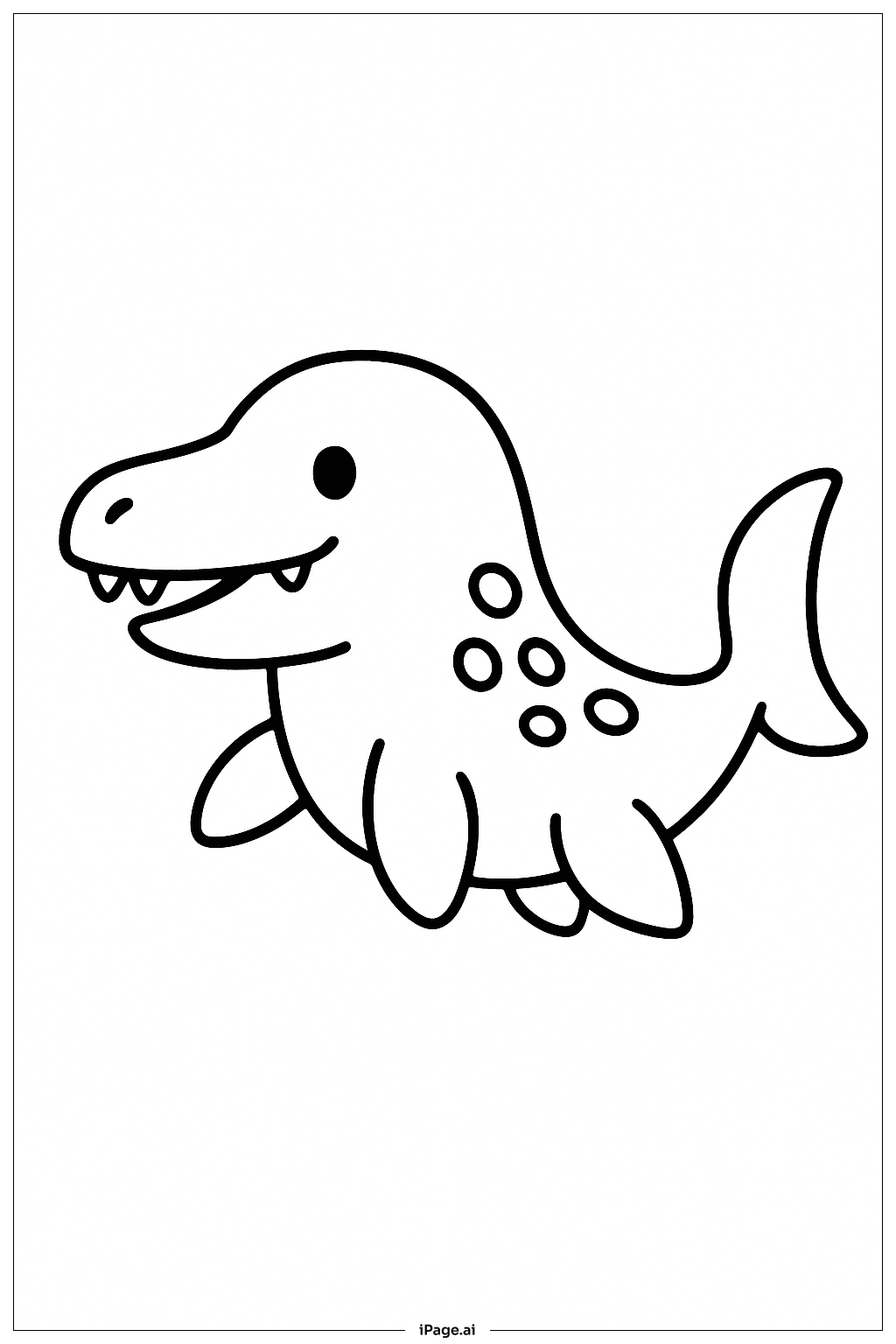
Coloring tips: How to color Mosasaurus Simple Pose coloring page well?
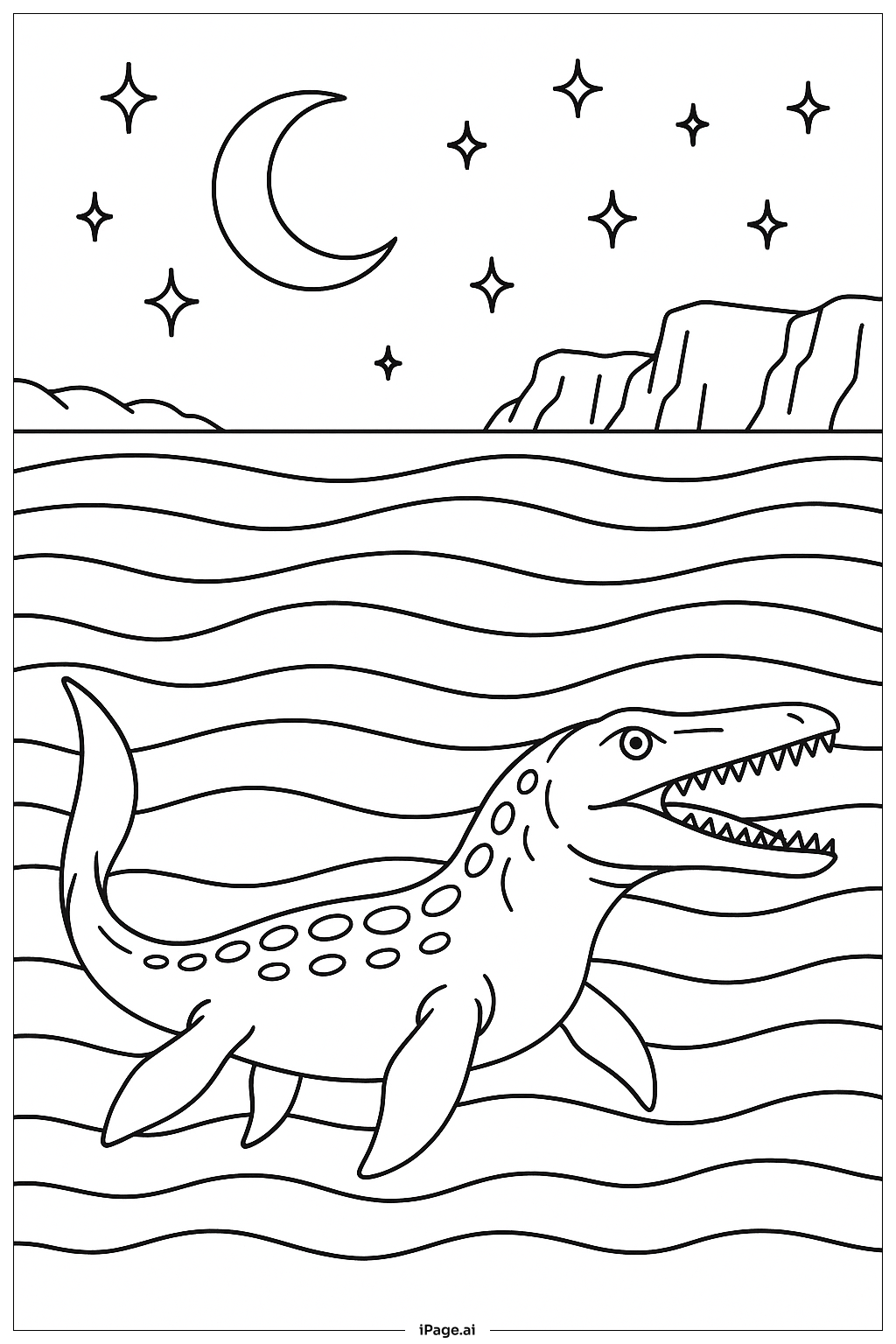
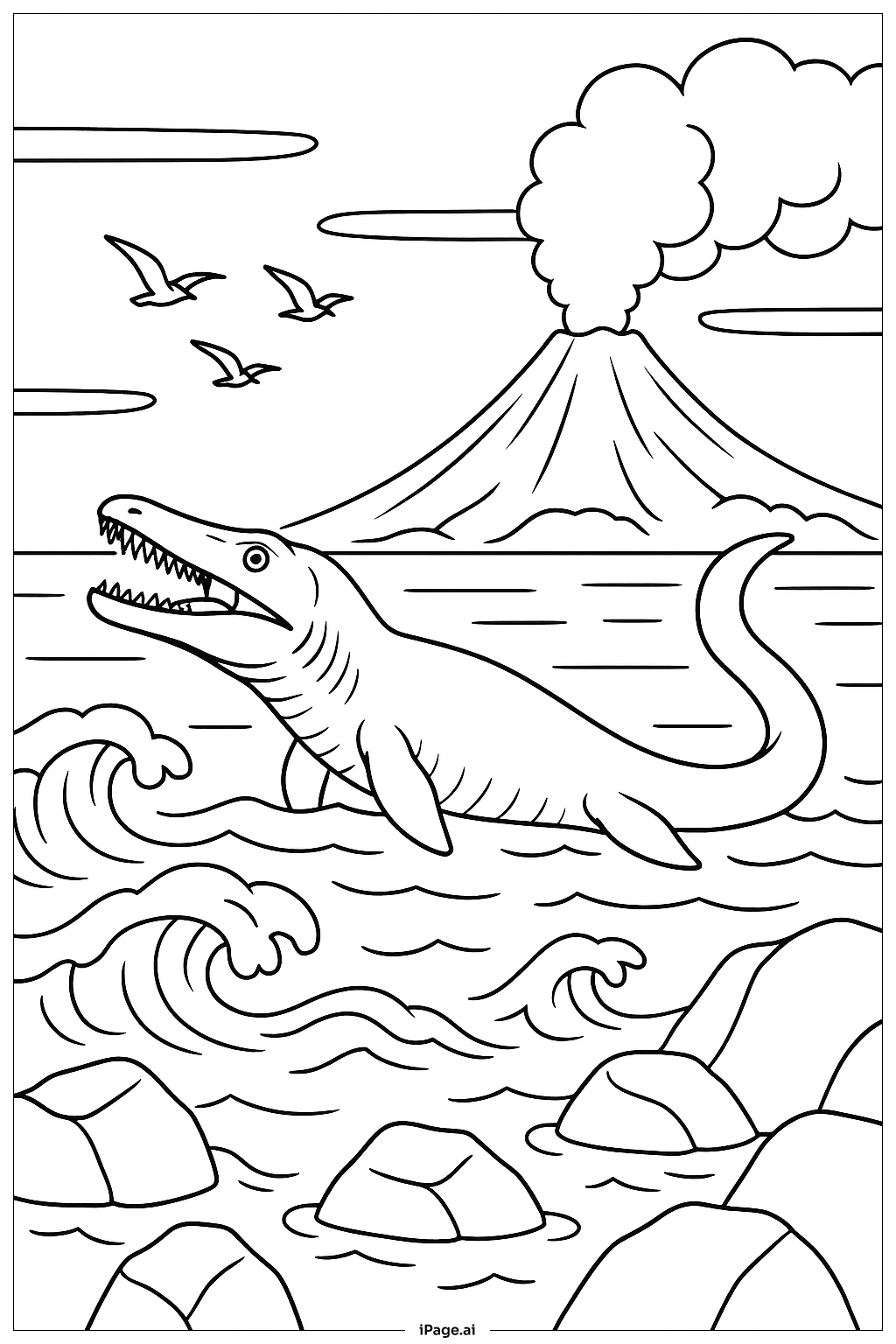
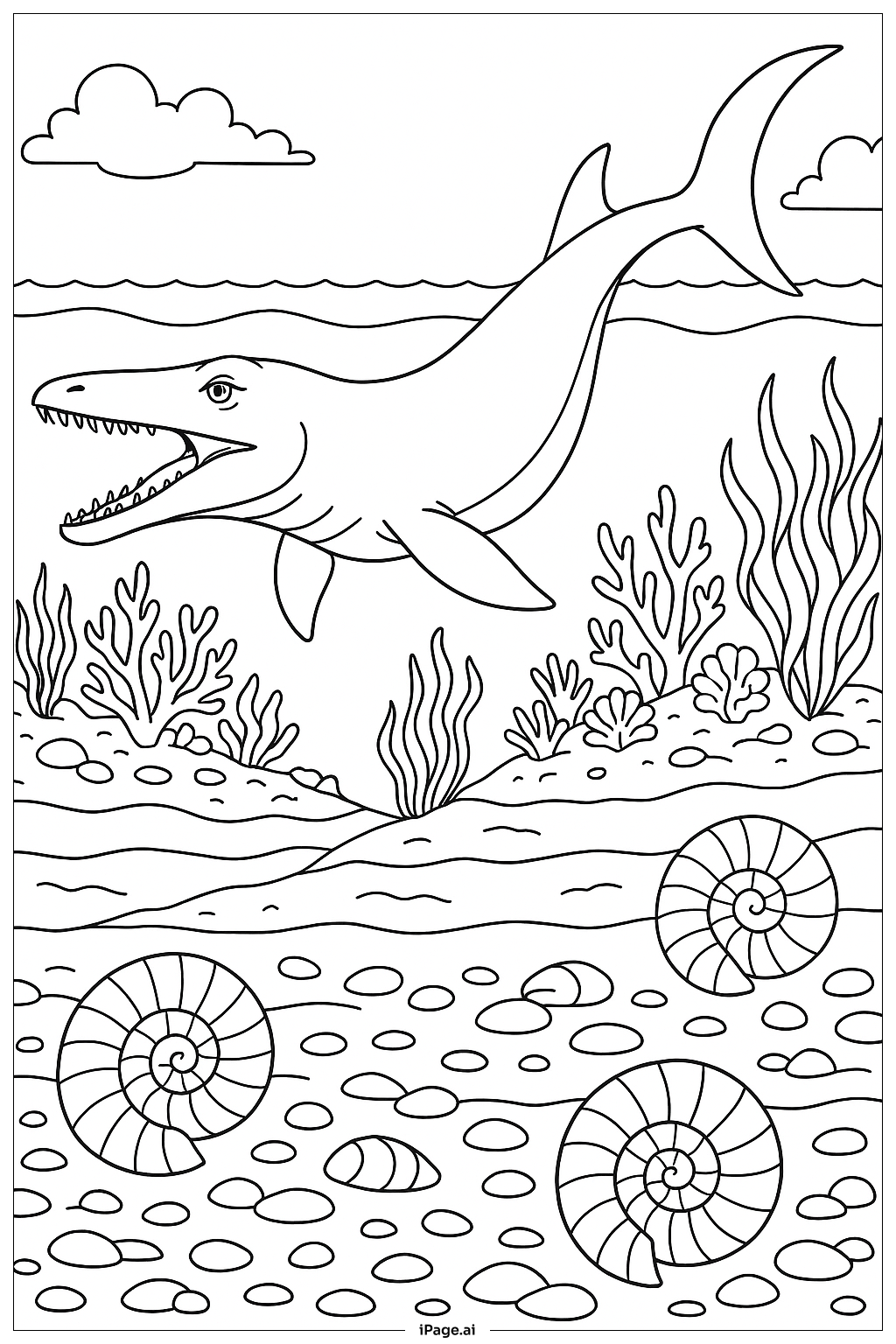
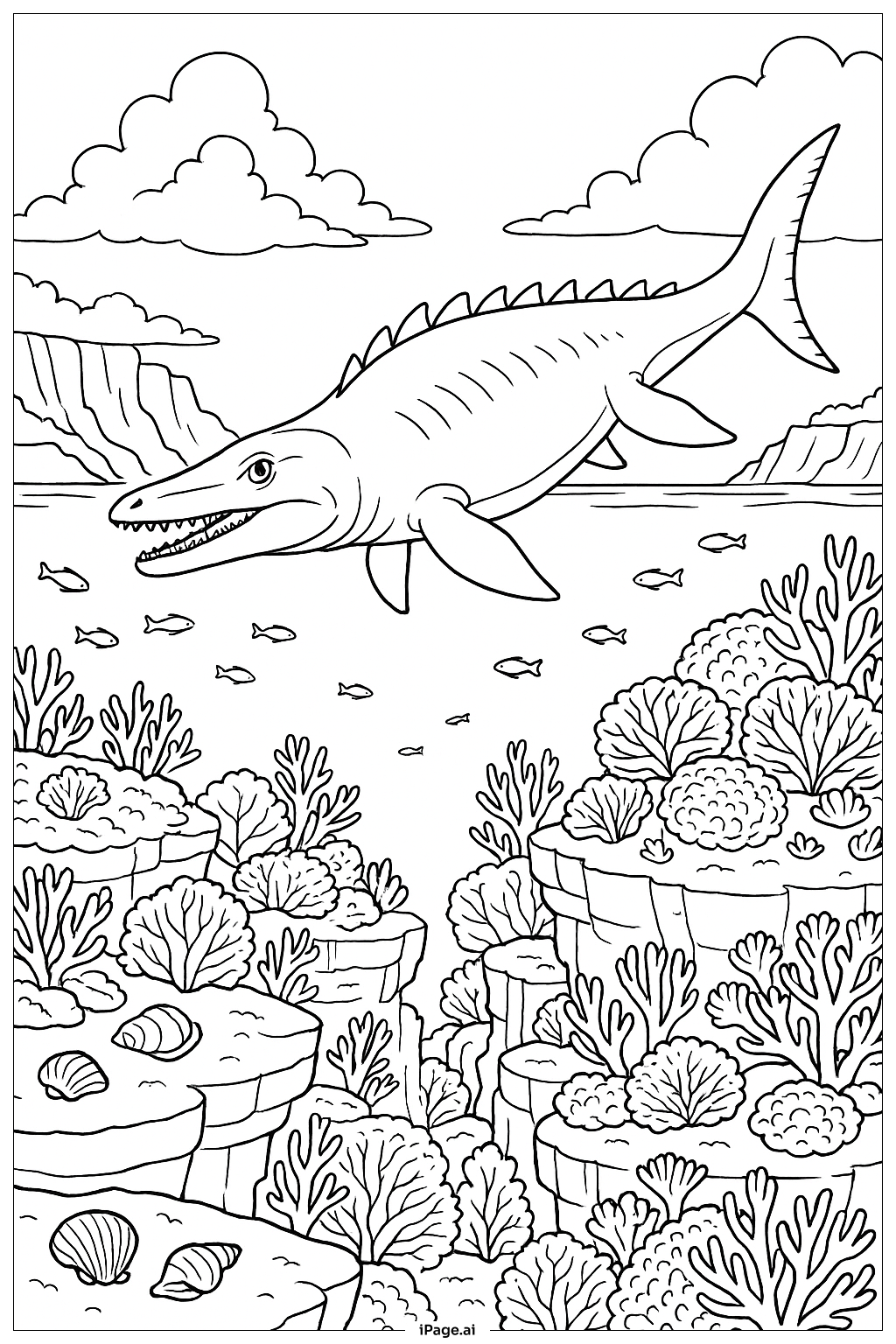
Start with the body of the Mosasaurus. Real mosasaurs likely had dark backs and lighter bellies, similar to modern sharks and whales. Try a deep gray, dark green, or navy blue on the upper body, then blend into a pale gray or cream on the underside. The flippers can match the body color or go slightly darker at the edges. For the inside of the mouth, use a warm pink or red. Teeth look great in off-white or ivory. You can add a glossy effect by leaving small white spots along the back to suggest wet, smooth skin. If you want a more creative look, try teal or olive green for the body with a sandy yellow belly. Keep the outline colors slightly darker than the fill to give the shapes more depth. Use light, even strokes for smooth areas and short, layered strokes where the scales are. Simple shading under the belly and along the tail adds a great sense of dimension without being too complex.
Coloring challenges: Which parts are difficult to color and need attention for Mosasaurus Simple Pose coloring page?
• Body Scale Texture: The Mosasaurus has a large surface area covered in implied scale patterns. Keeping the color consistent across such a wide area while still suggesting texture takes patience. Using the same base color throughout and then lightly layering a slightly darker shade in circular or diagonal strokes can help create a scaly look without making the image feel messy or overworked.
• Smooth Color Gradients: Achieving a natural transition from the darker dorsal side to the lighter ventral belly is one of the trickier parts of this image. Blending two colors smoothly — especially with colored pencils or crayons — requires slow, light layering. Rushing this step often results in a harsh line rather than a soft gradient.
• Teeth and Mouth Detail: The open jaw reveals rows of sharp teeth and the interior of the mouth. These small, closely spaced teeth can be fiddly to color neatly, especially for younger children. Using a fine-tipped marker or a sharpened pencil helps stay within the lines on each individual tooth.
• Flipper Edges and Shape: The flippers have curved, organic edges that can be tricky to fill neatly right up to the outline. Coloring outward from the center of each flipper toward the edge gives better control and reduces the chance of going outside the lines.
• Overall Size Management: Because the Mosasaurus fills most of the page in a single, sweeping shape, keeping the color pressure even from one end of the body to the other can be tiring. Working in sections and taking short breaks helps maintain a consistent result across the full image.
Benefits of coloring books: Advantages of drawing Mosasaurus Simple Pose coloring page
Coloring this Mosasaurus page is a great activity for kids and dinosaur fans of all ages. It helps build focus and patience, especially when working through larger areas and smaller details like the teeth. Staying inside the lines trains fine motor skills and improves hand control, which supports writing and drawing in everyday life. Choosing colors for a prehistoric creature also sparks creativity and curiosity. Kids get to imagine what this ancient ocean giant may have looked like, combining science with art in a fun way. Learning about real animal coloring patterns — like counter-shading used by sharks and whales — turns the activity into a small science lesson too. For older children and adults, the shading and blending challenges make this a satisfying and calming exercise. Coloring is a well-known way to reduce stress and encourage mindfulness. Completing the full image also builds a sense of accomplishment and pride. Whether you are a young learner or an experienced colorist, this Mosasaurus page offers a rewarding, educational, and enjoyable creative experience from start to finish.