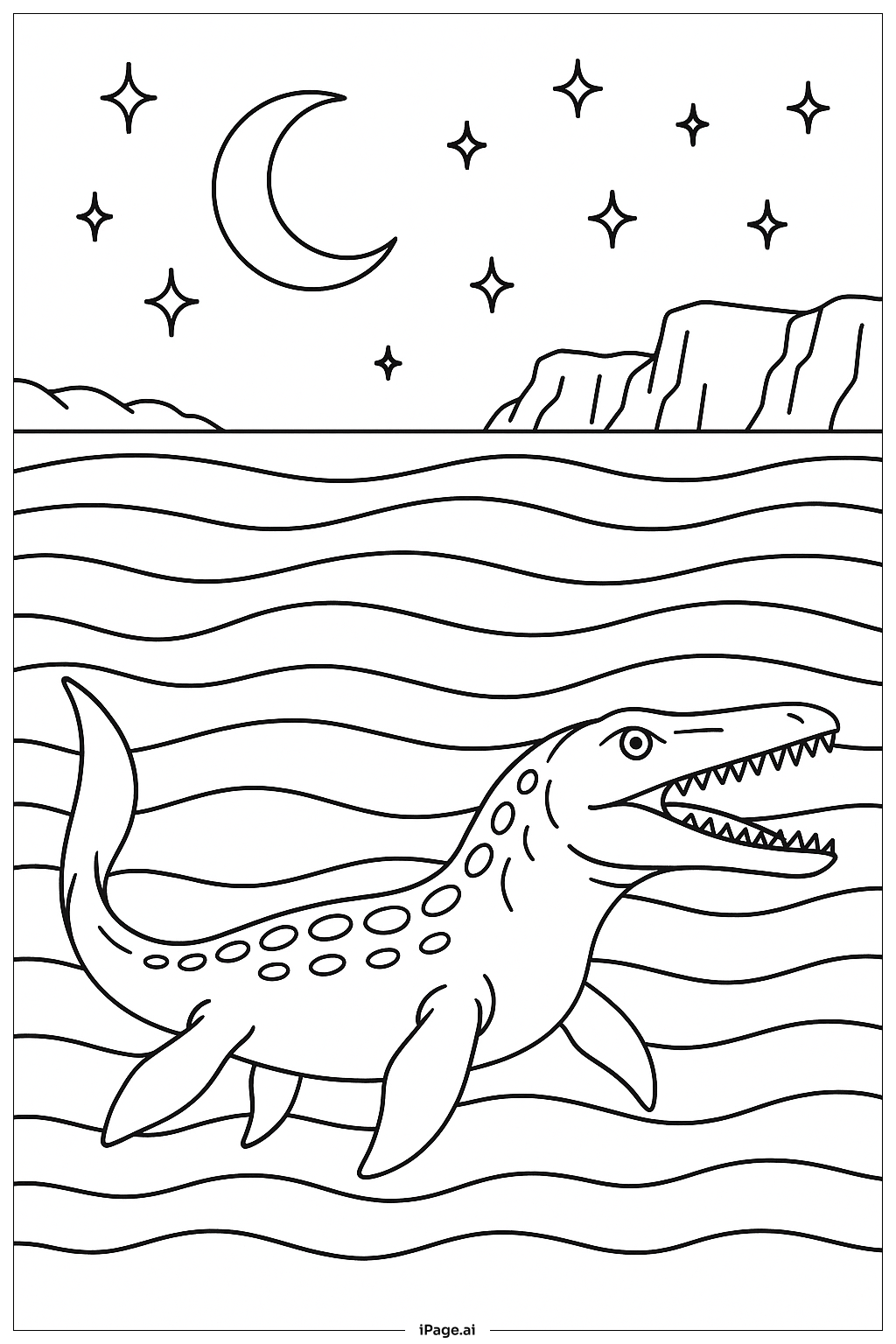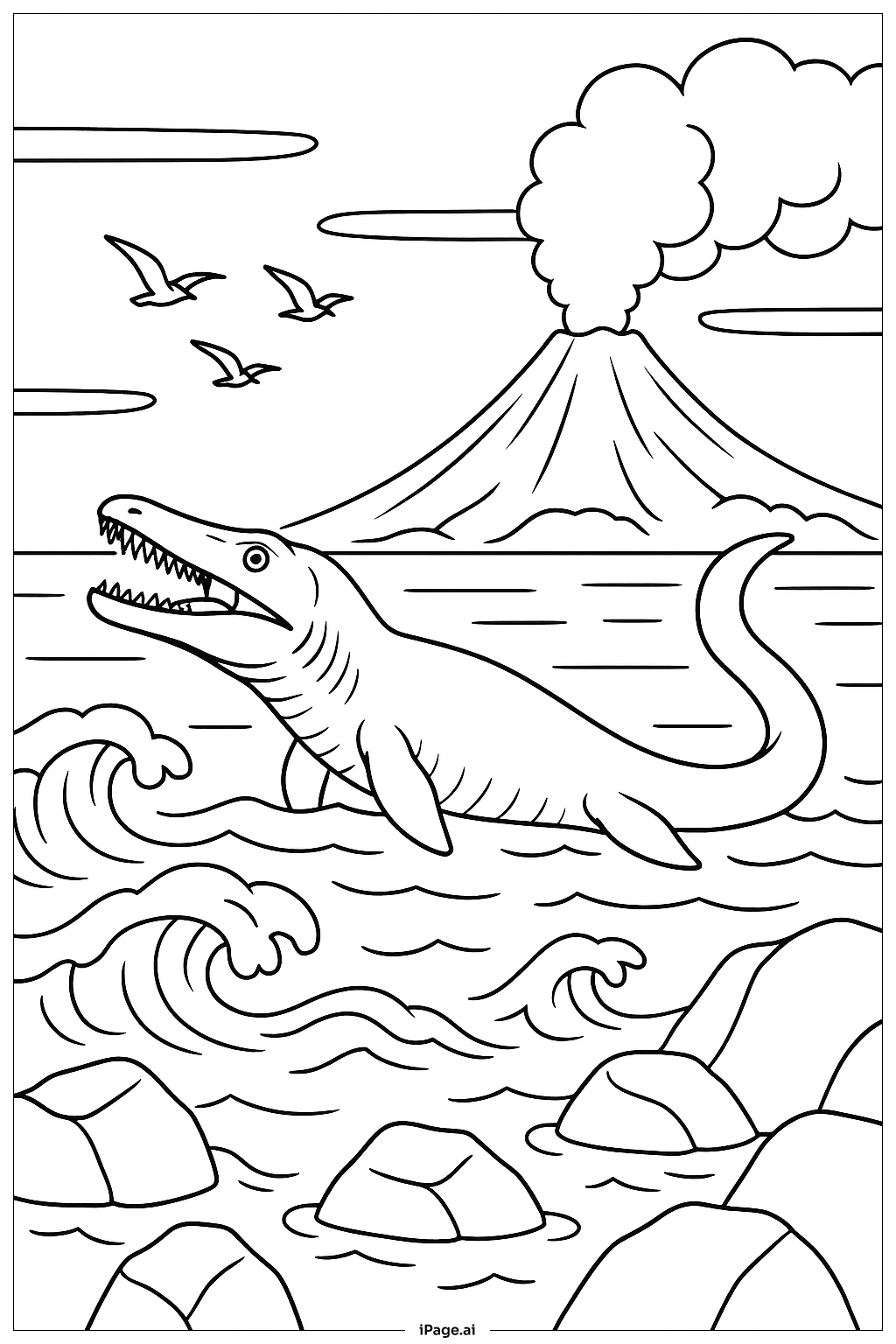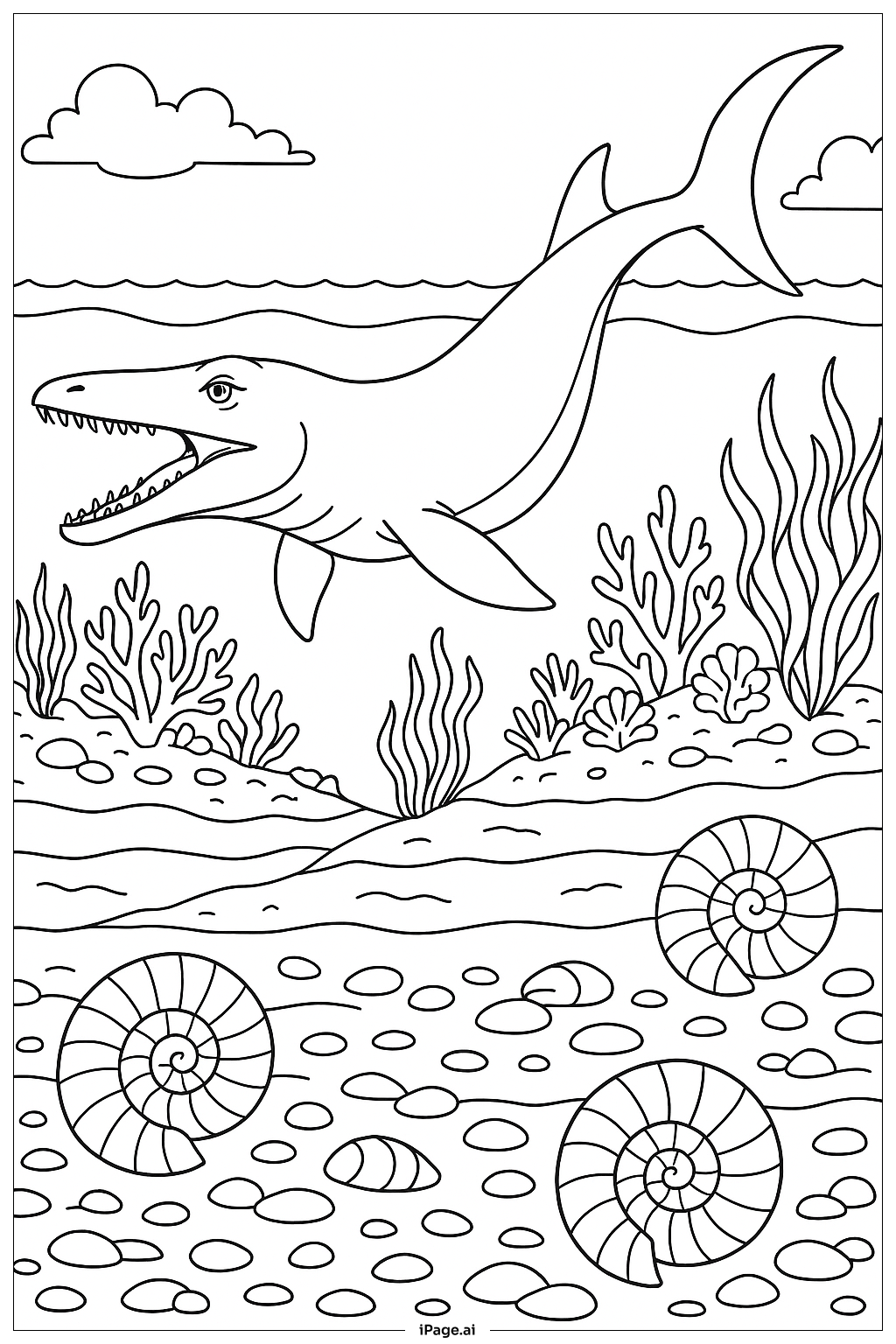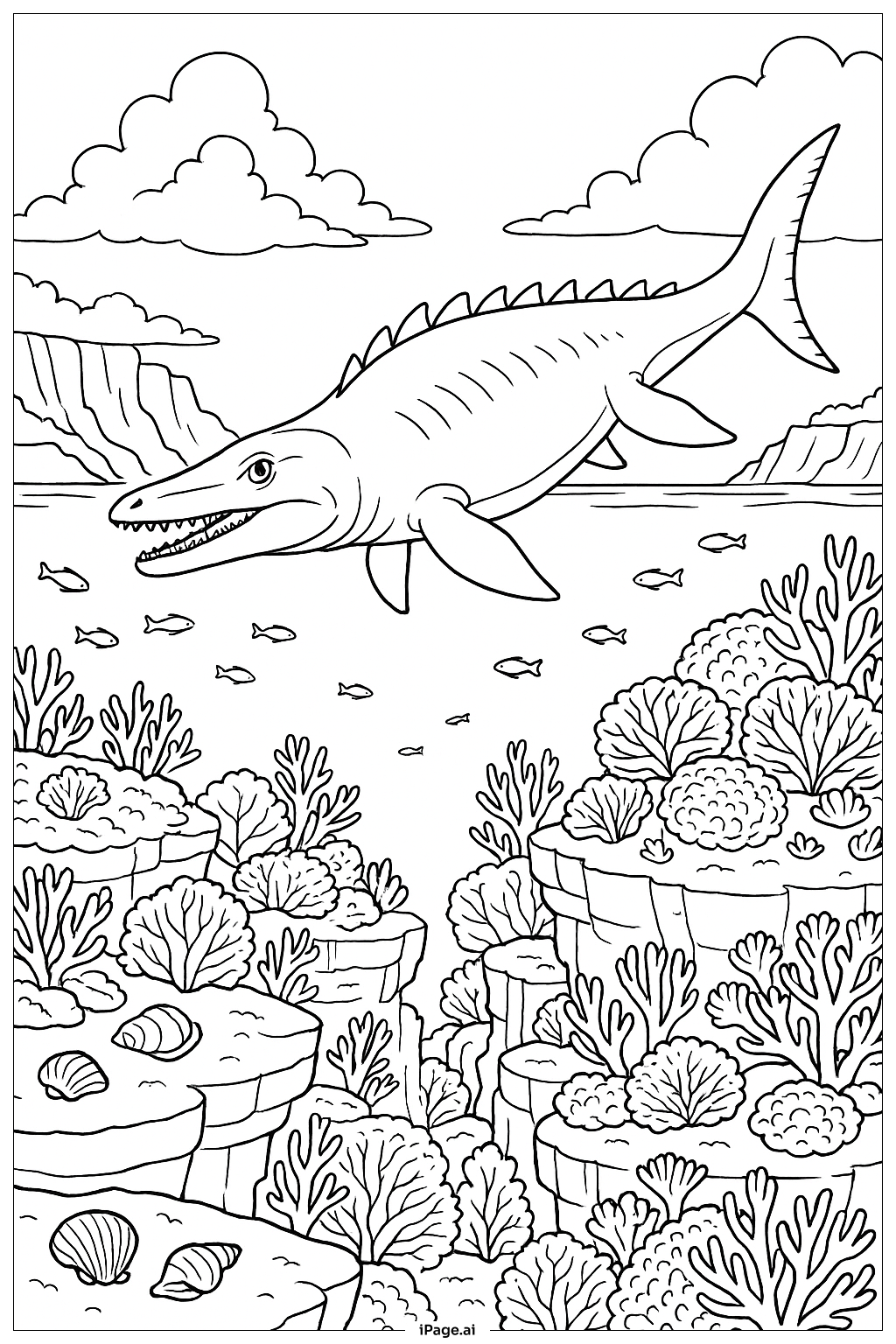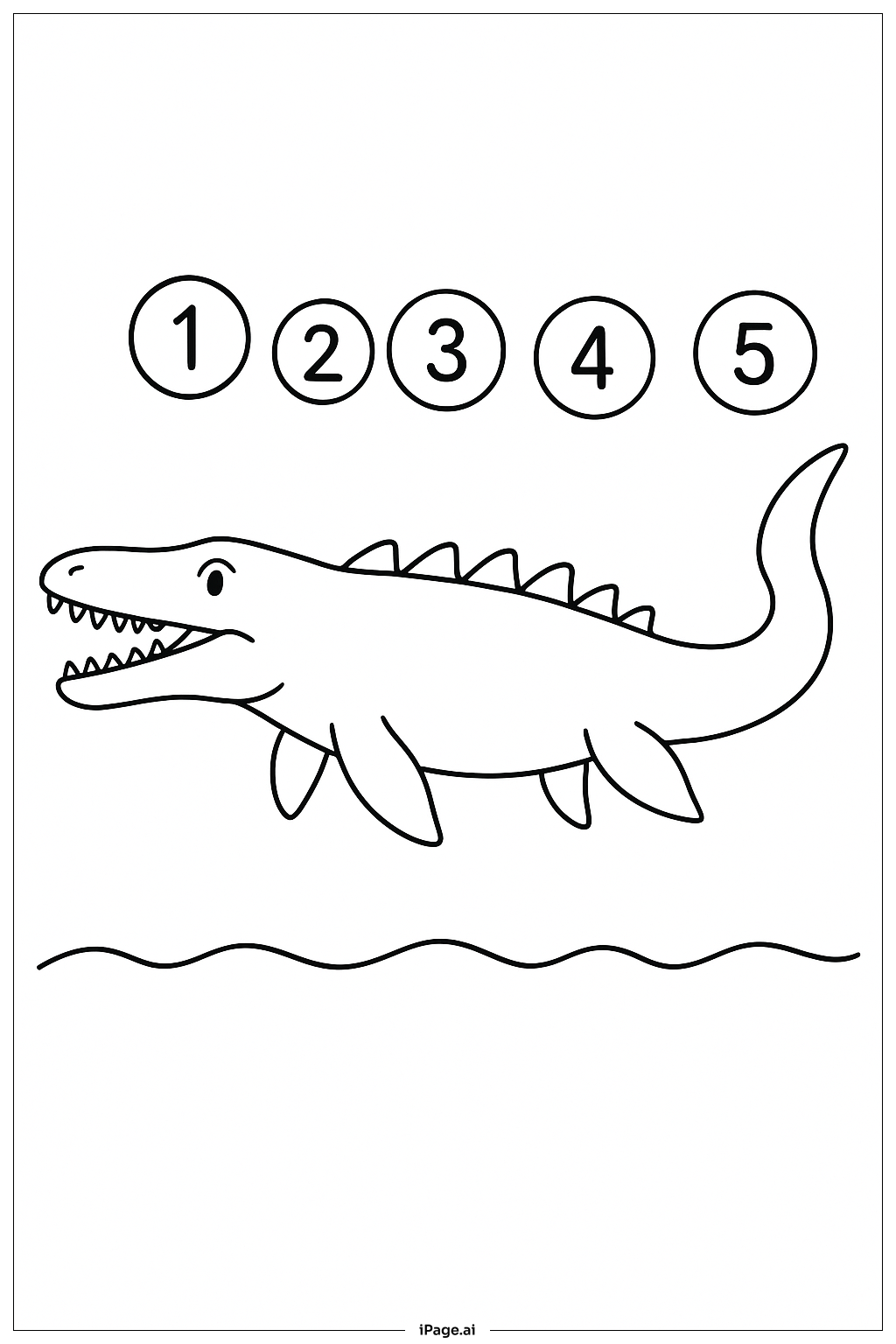
Coloring tips: How to color Mosasaurus Counting Bubbles coloring page well?
Use light blues for water and darker blues for the mosasaurus body to create contrast. Start by washing large areas with a flat color, then add gentle shading along the belly and under the tail to give depth. The bubbles offer a fun chance to practice white with blue outlines or pale hues; color the numbers boldly in a color that stands out. Try a gradient from light to dark across the mosasaurus to show round shapes, like a soft highlight along the top edge and a deeper shade toward the underside. The wavy water line can be a different blue, or even turquoise. For variety, children can add a sunny glow or coral accents near the background, leaving plenty of white space between the figure and the border to keep the page airy.
Coloring challenges: Which parts are difficult to color and need attention for Mosasaurus Counting Bubbles coloring page?
Here are common coloring challenges for this page, listed as four points:\n- Proportions and large areas can be tricky. The mosasaurus has a long curved body and several fins. Suggest coloring in small sections with light strokes, then layering darker shades for depth. Start with a gentle base, add a thin line of a slightly darker color along the top, and blend toward the belly. Take your time near the head and tail, where curves are sharp. Use a soft brush or pencil to keep edges neat.\n- Staying inside the lines and keeping the numbers clear is important. The five bubbles sit above the animal, each with a bold digit. Color the bubbles first with pale tones like light blue or pastel yellow, then carefully shade the outside ring darker to keep it distinct. Leave the numbers bright by avoiding them with color or by coloring around them. If a line slips, fix it with a white gel pen or correction.\n- Shading on curved surfaces like the mosasaurus body can be challenging. Use a small set of complementary colors and blend gently from light to dark. Apply shading toward the back and underside to suggest volume. Avoid heavy strokes that smear outlines; wipe or lift color near the edges. A damp cotton swab helps blend while keeping lines sharp.\n- Color harmony with water and bubbles is another key point. Pick blues for water and reserve other colors for the mosasaurus to stand out. The bubbles can stay lighter with dark rims for contrast. If children want more variety, add subtle coral shapes or a sunlit shimmer in the background, but keep the focus on the creature and the counted bubbles.
Benefits of coloring books: Advantages of drawing Mosasaurus Counting Bubbles coloring page
Coloring this page helps many skills for kids aged 4 to 16. First, it builds fine motor control as little hands practice precise strokes to color within the lines around the mosasaurus and its teeth and fins. Second, it reinforces number recognition and counting as children focus on the five numbered bubbles, possibly matching colors to numbers or coloring them in sequence. Third, color perception and decision-making grow as learners choose hues, create contrasts, and experiment with light and shade on a curved body. Fourth, concentration and patience develop during a longer coloring task, especially when the water line and small details demand steady effort. Fifth, ocean awareness can be introduced by naming the Mosasaurus as a marine reptile and discussing how waves move. Overall, this activity blends art with early science and math, supporting creativity while teaching focus, memory, and the joy of finishing a picture.