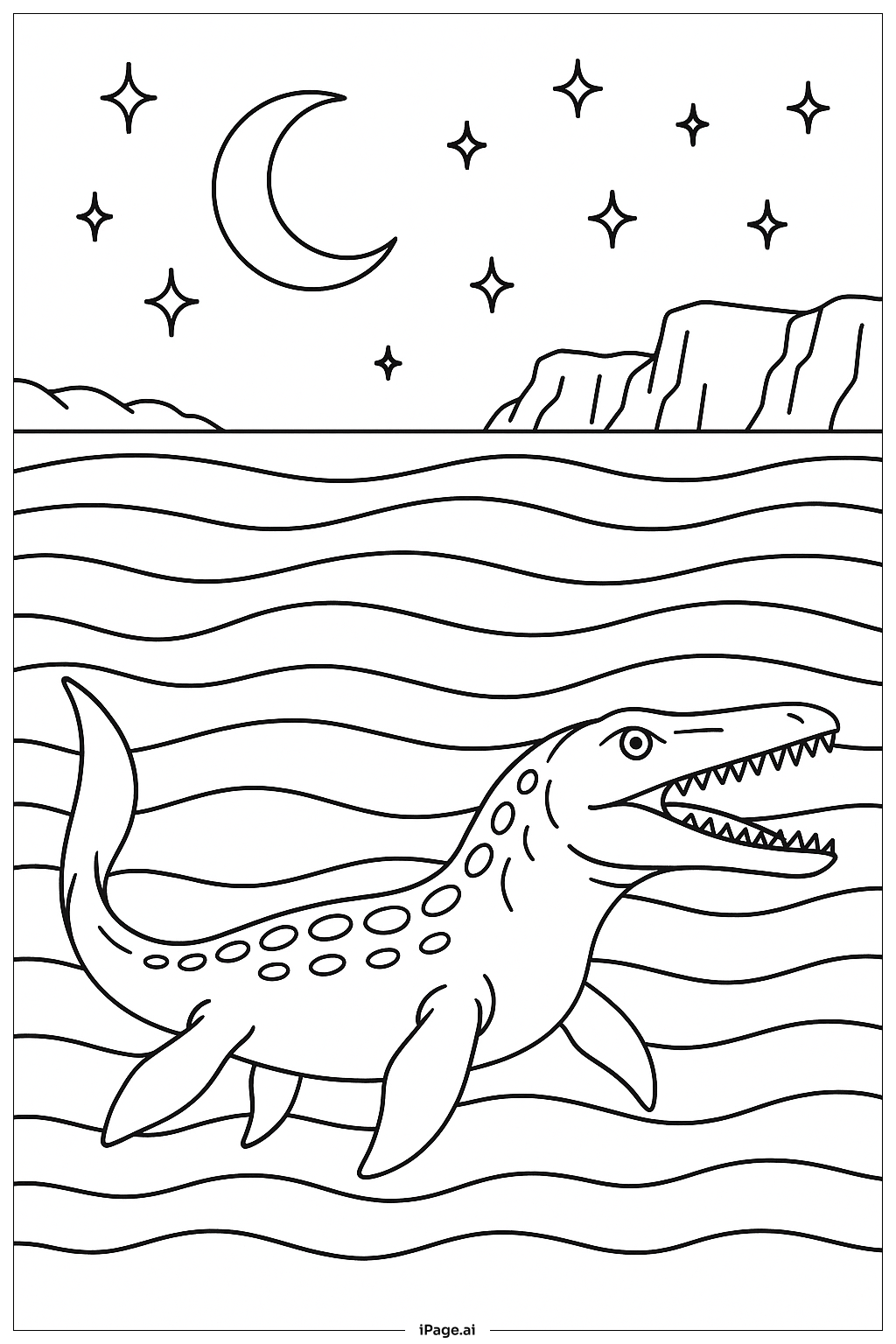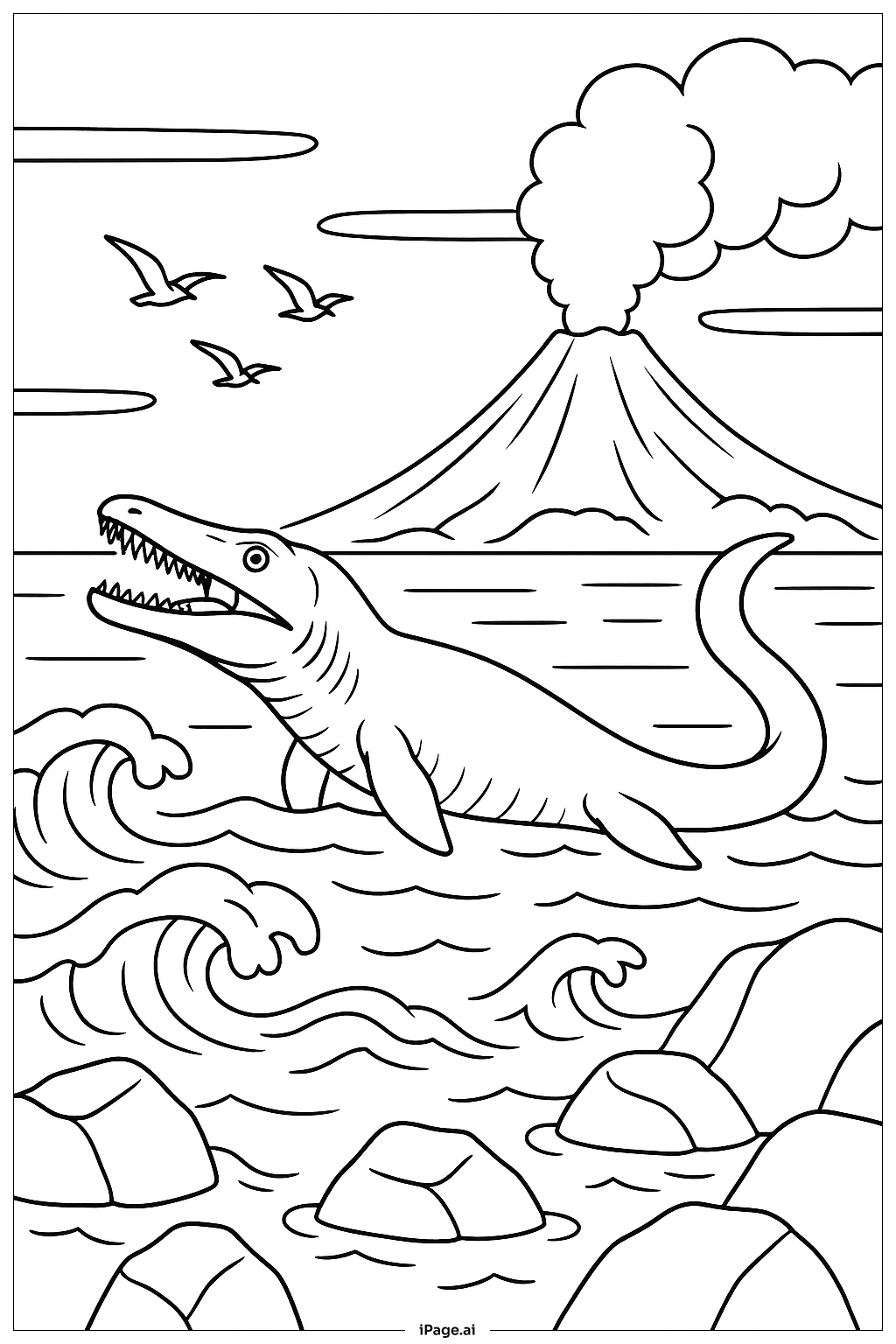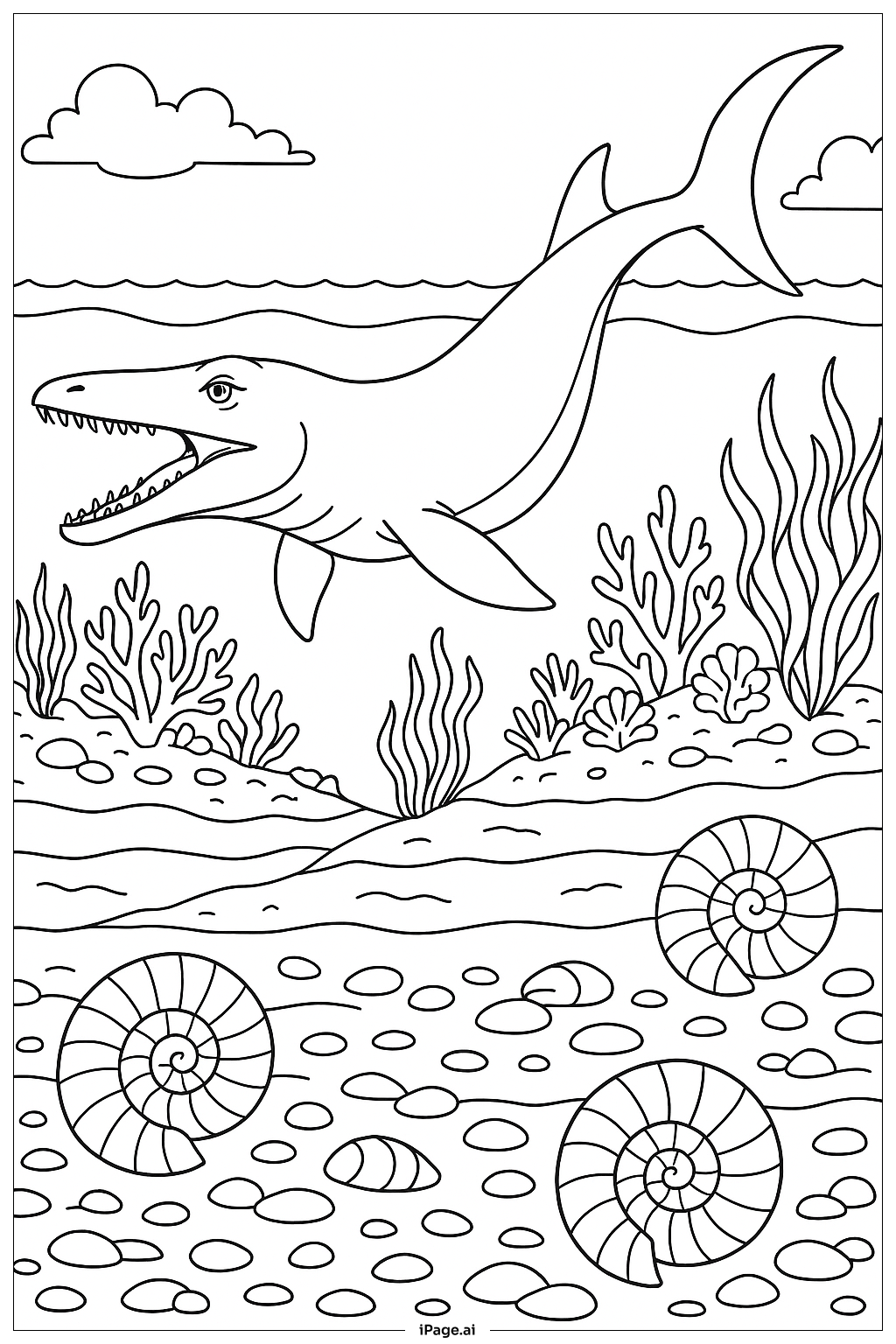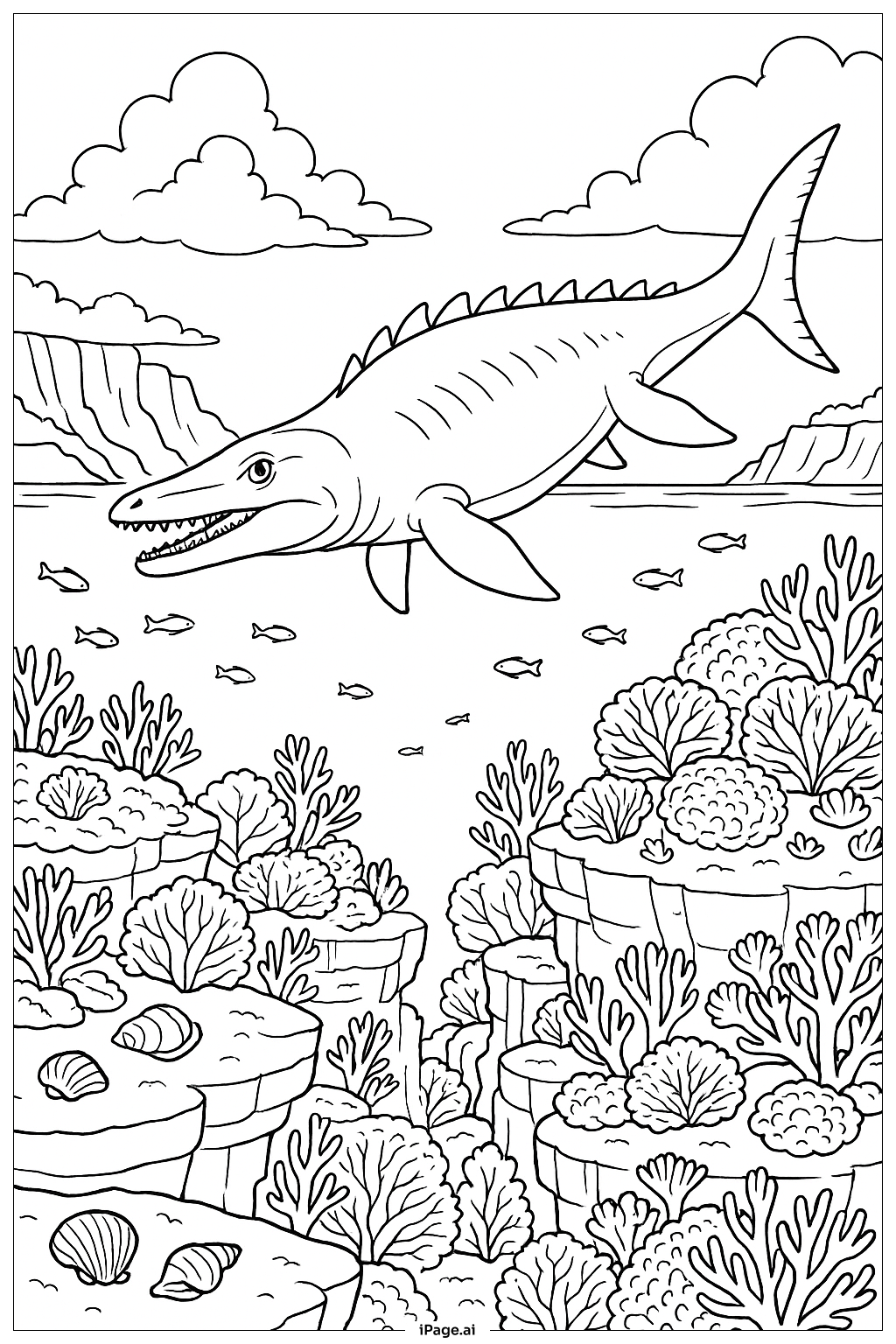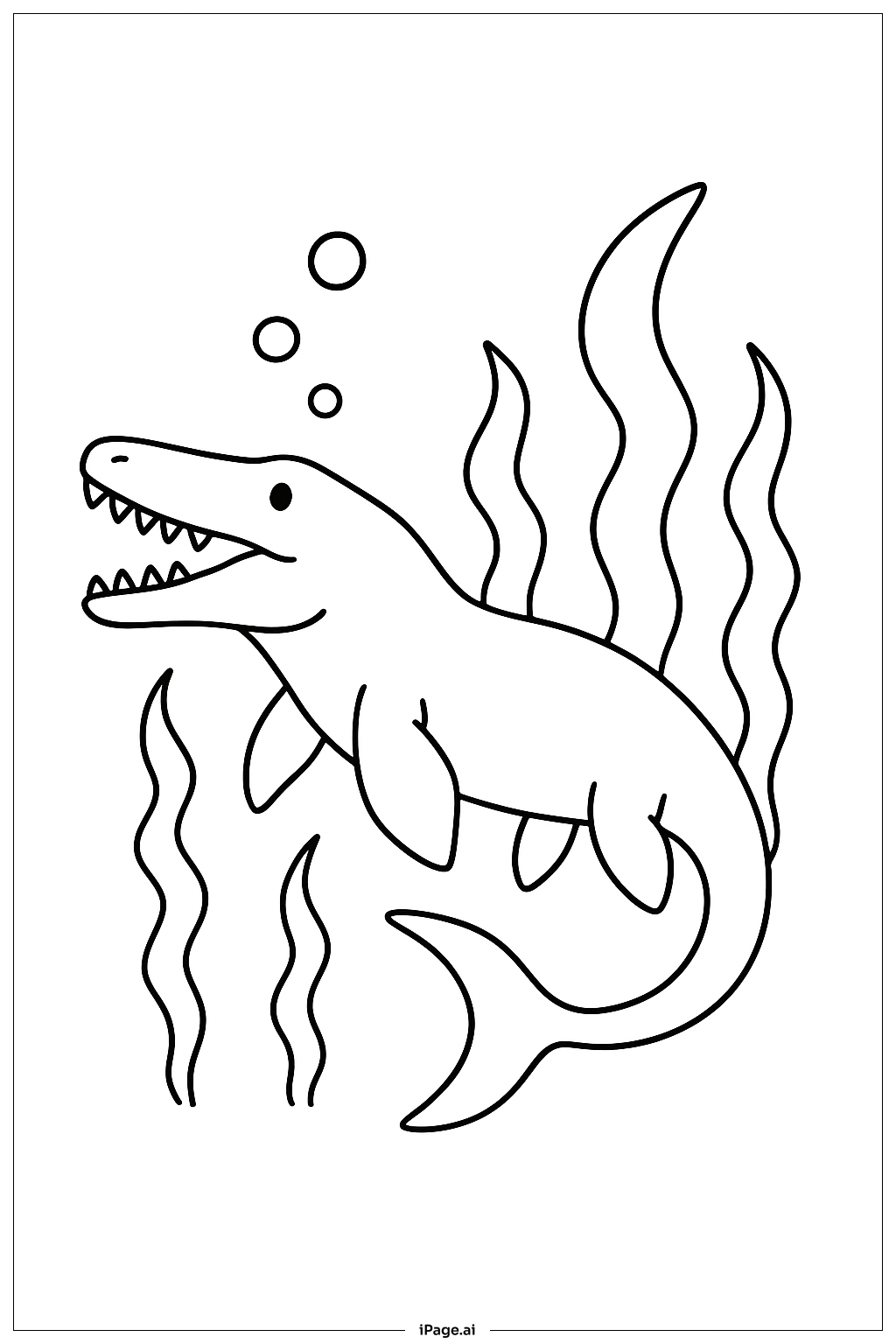
Coloring tips: How to color Mosasaurus And Seaweed coloring page well?
For the Mosasaurus, consider using shades of blue-green, teal, or gray for the main body, with a lighter cream or white belly to show natural countershading. You can add darker tones along the back and fins to create dimension. The seaweed offers wonderful opportunities for variety: try different shades of green from deep forest to bright lime, or experiment with browns, yellows, and even purples to represent different types of marine plants. Consider using darker greens at the base of the seaweed and lighter tones at the tips to show how sunlight filters through water. The background water can be colored in layers, with lighter blues near the surface and deeper navy or turquoise in the depths. Adding small dots or specks of white or light blue can create the effect of water particles or bubbles.
Coloring challenges: Which parts are difficult to color and need attention for Mosasaurus And Seaweed coloring page?
• Mosasaurus Body Shading: The large body of the Mosasaurus presents a challenge in creating smooth gradients and realistic texture. Colorists need to carefully blend colors to show the creature's muscular form and three-dimensional shape. The curves of the body require attention to light sources, with lighter areas where light hits and darker areas in shadows, particularly under the flippers and along the underside.
• Seaweed Layering and Depth: The multiple strands of seaweed overlapping each other require careful color choices to show which pieces are in the foreground and which are in the background. Creating depth means using darker, more saturated colors for closer seaweed and lighter, less saturated colors for distant strands. The flowing, curved lines of the seaweed need consistent coloring along their length while maintaining natural variation.
• Water Environment and Atmosphere: Capturing the underwater atmosphere is challenging because it requires thinking about how water affects color and light. Colorists must consider how to show depth, light filtering from above, and the overall aquatic mood. This might involve leaving some areas lighter to suggest light rays or using color gradients to show distance.
• Scale and Proportion Balance: Balancing the colors between the large Mosasaurus and the delicate seaweed strands requires careful planning. The prehistoric creature should stand out as the focal point while the seaweed complements rather than overwhelms the scene. This means choosing colors that create harmony while maintaining visual interest throughout the entire composition.
Benefits of coloring books: Advantages of drawing Mosasaurus And Seaweed coloring page
Coloring this Mosasaurus scene helps children develop fine motor skills as they carefully fill in the curved lines of the seaweed and the detailed body of the prehistoric creature. The image encourages learning about marine paleontology, sparking curiosity about ancient ocean life and extinct animals. Working with the flowing seaweed strands improves hand-eye coordination and teaches patience, as each strand requires careful attention. The underwater theme allows for creative color exploration, helping children understand how environments affect color choices. This coloring page also promotes concentration and focus, as the detailed elements require sustained attention. Additionally, completing this prehistoric scene builds confidence and provides a sense of accomplishment, while the educational aspect makes learning about natural history fun and engaging through art.