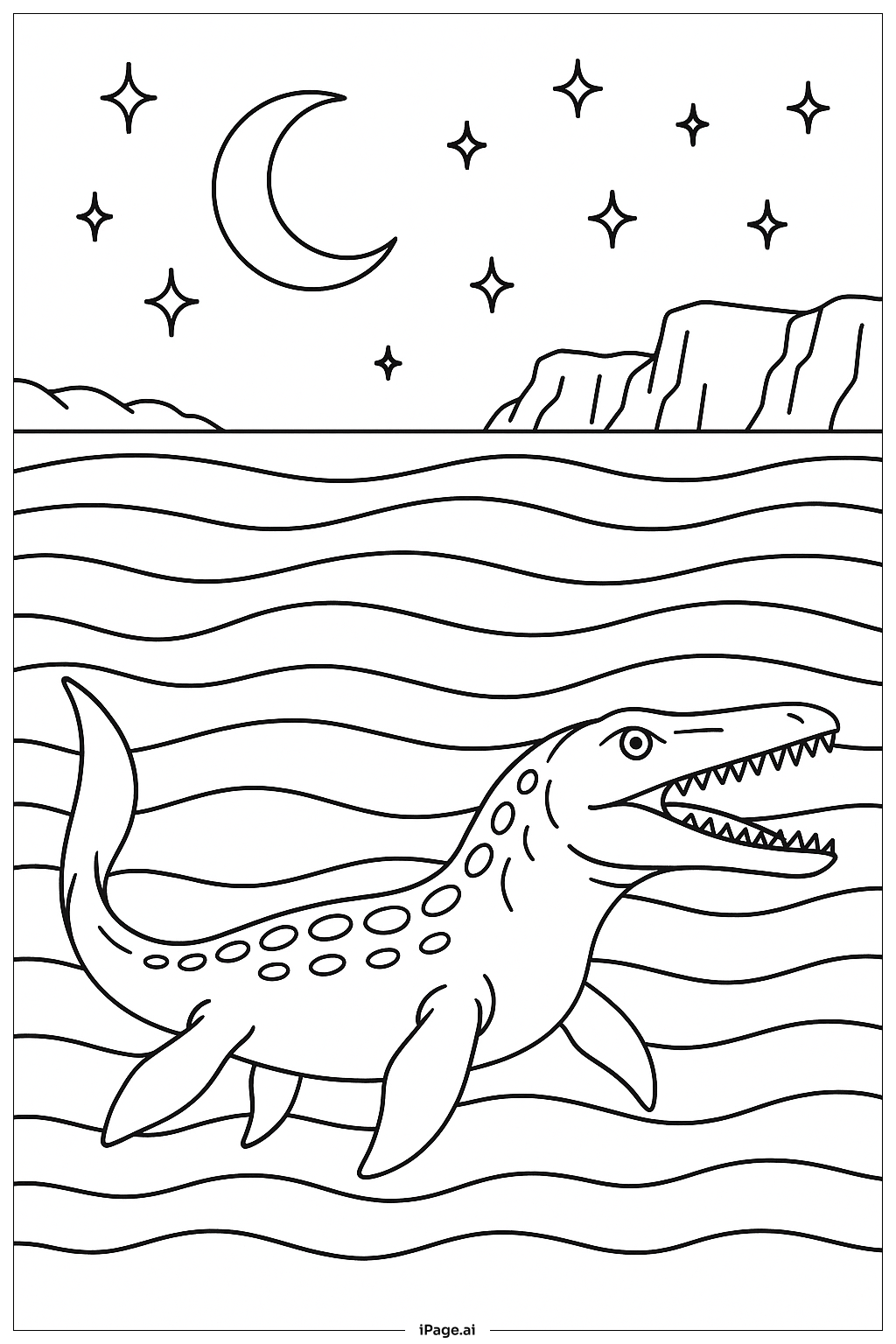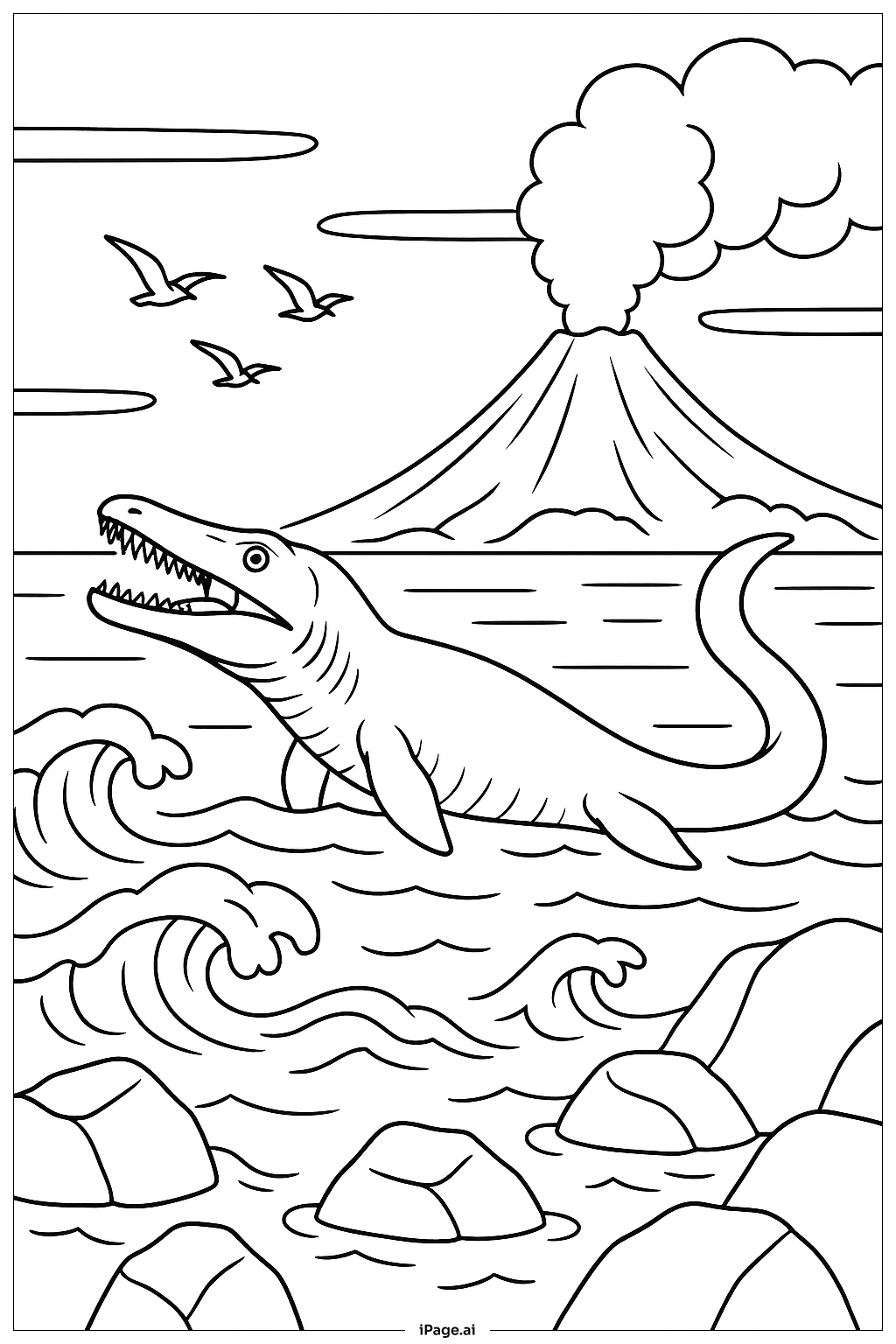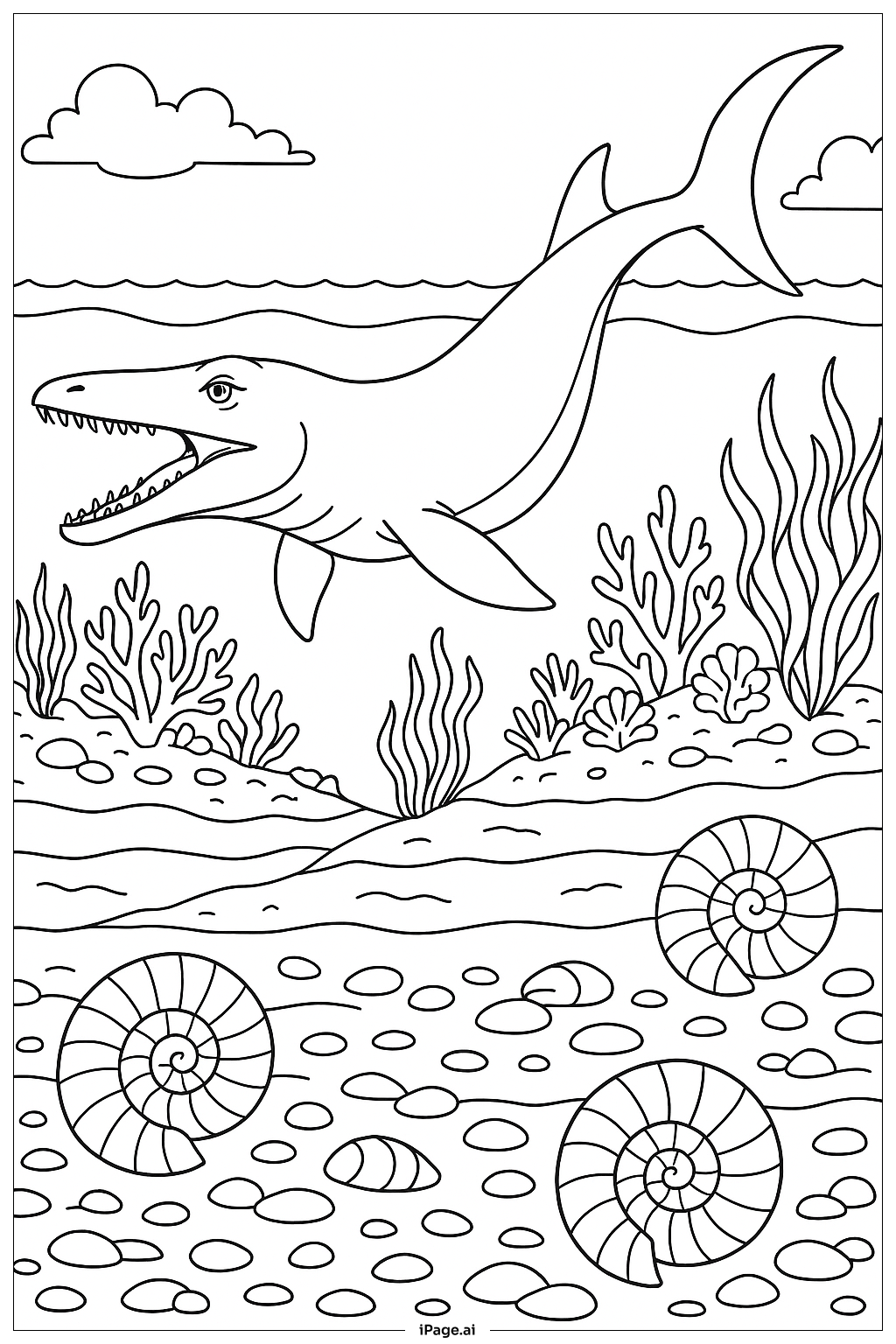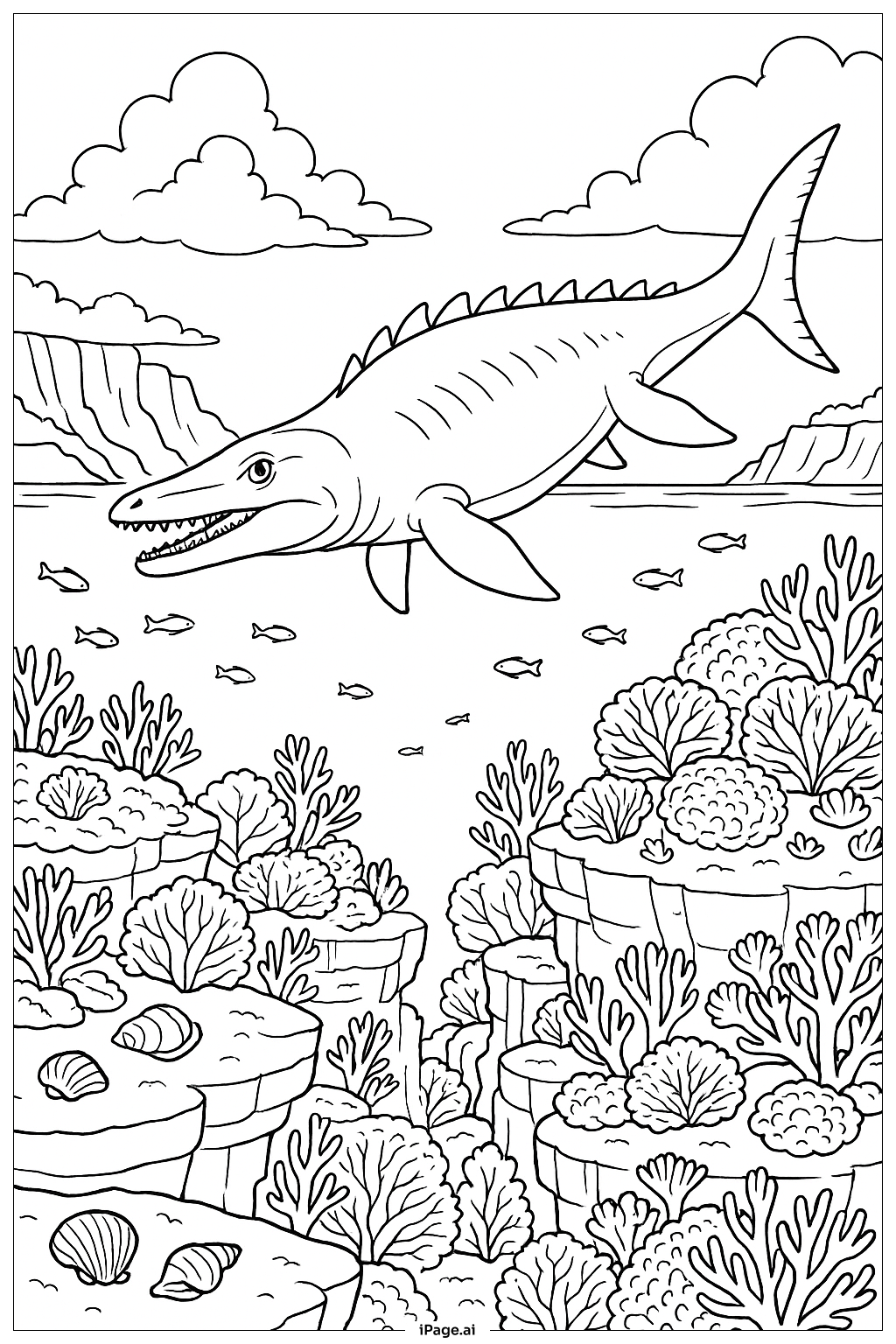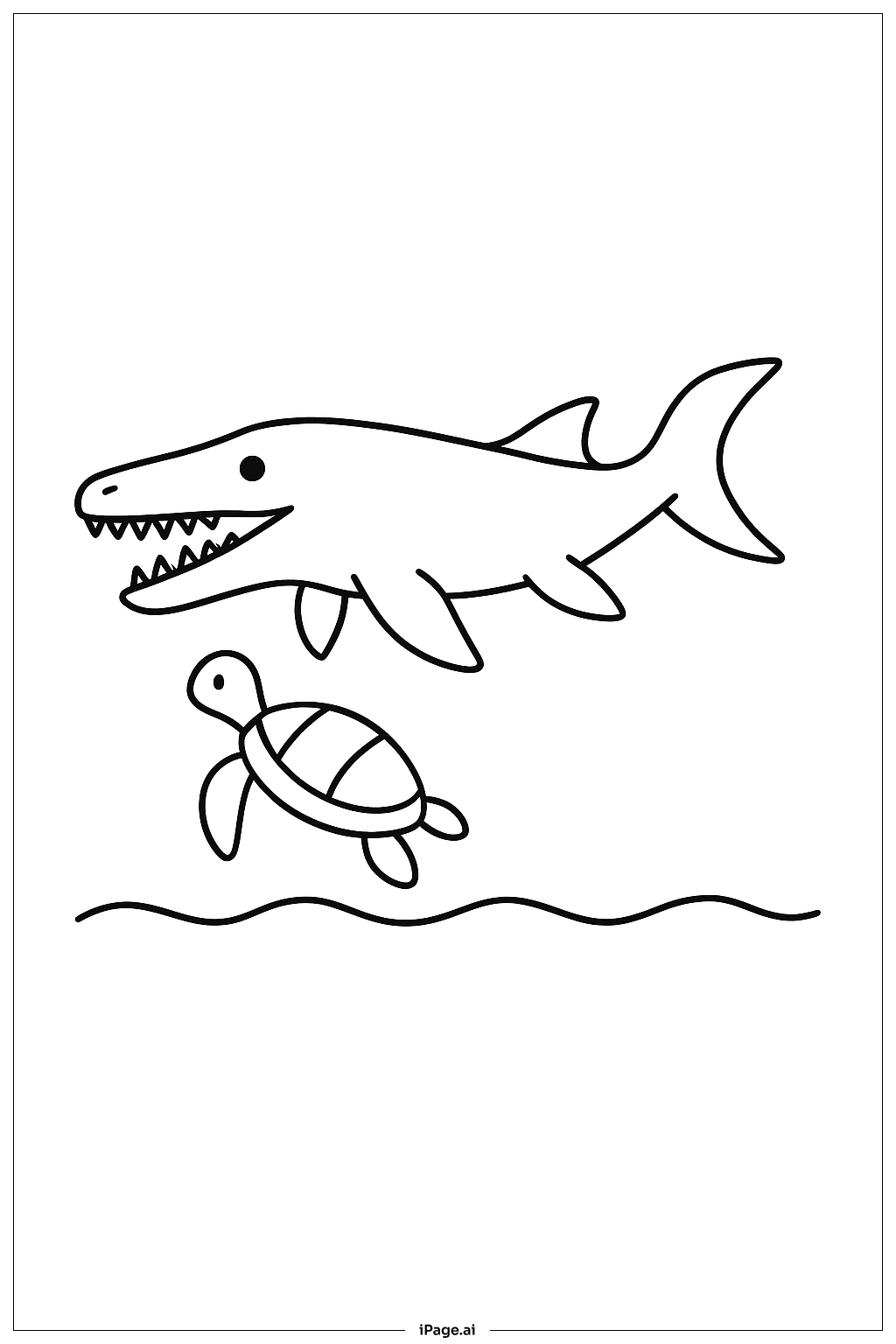
Coloring tips: How to color Mosasaurus And Sea Turtle coloring page well?
Choose a bright, ocean-inspired palette. Start with light sky blues for the water and darker blues for shadows under the Mosasaurus and turtle. Color the Mosasaurus in cool grays or blue-greens with a hint of green on the fins. The turtle shell can be greenish-brown with subtle darker segments to show pattern. Add lighter highlights along the top edges where light hits. Use a different shade for the teeth to make them stand out, but keep the mouth area calm. For a magical touch, add bubbles, sunlight rays filtering through the water, or small coral shapes in the distance. Crayons offer bold, even color; markers provide sharper lines; watercolors can create soft blends between the sea and the creatures. Encourage color layering to create depth, while keeping some white space to maintain clarity.
Coloring challenges: Which parts are difficult to color and need attention for Mosasaurus And Sea Turtle coloring page?
1) Proportions and anatomy: The Mosasaurus is a long, sleek reptile with a large head, several wide flippers, and a powerful tail. In the picture, the turtle swims beside it with a rounded shell that is divided into segments. Getting the sizes right helps the scene look natural. Kids can start by sketching light pencil anchors: place the head around the front, the body in the middle, and the tail toward the right. Then add the turtle and the water line. Finally, trace bold outlines so the shapes are clear for coloring. 2) Small spaces and tiny details: Teeth and the turtle’s shell segments create tiny spaces that are easy to overshoot with color. Eye, mouth, and shell seams are delicate. To avoid coloring outside the lines, use a slightly smaller brush or marker tip for those spots, and leave white gaps around the edges to keep the design crisp. 3) Coloring water and shading: Use gentle gradients to suggest depth. Light blues near the surface, deeper blues further down, and a hint of green where light mixes with water. Add white highlights to mimic shine on the Mosasaurus’s back and the turtle’s shell. A few bubbles or sun rays can make the scene livelier. Blending tools or careful layering help create smooth transitions without muddy colors. 4) Maintaining bold outlines and balance: The black lines give the page its clear, kid-friendly look. If you color across the edges too heavily, the lines can blur. Suggest keeping some white space around shapes and using color in layers from light to dark. Use a consistent pressure to keep lines bold, and choose colors with good contrast so every feature—teeth, eyes, shell segments—remains visible and fun to color.
Benefits of coloring books: Advantages of drawing Mosasaurus And Sea Turtle coloring page
Coloring this page helps children practice fine motor skills as they stay inside the lines and work with small spaces. It builds hand-eye coordination, strengthens finger muscles, and improves pencil or marker control. Choosing colors enhances creativity and decision-making as kids imagine the ocean scene. The activity also promotes color recognition and vocabulary—describing blues, greens, grays, and browns. By planning color choices for the Mosasaurus and the sea turtle, kids learn to compare warm and cool tones to show light and depth. The water line invites children to think about layering colors to create an illusion of distance. The scene invites patience and focus, especially when blending colors smoothly and keeping a neat border between different areas. In addition, this coloring page can inspire curiosity about prehistoric life and modern sea animals, encouraging kids to ask questions like 'What color was the Mosasaurus?' and 'How do sea creatures move through water?' Overall, coloring supports emotional relaxation, confidence, and a sense of accomplishment when the page is finished.