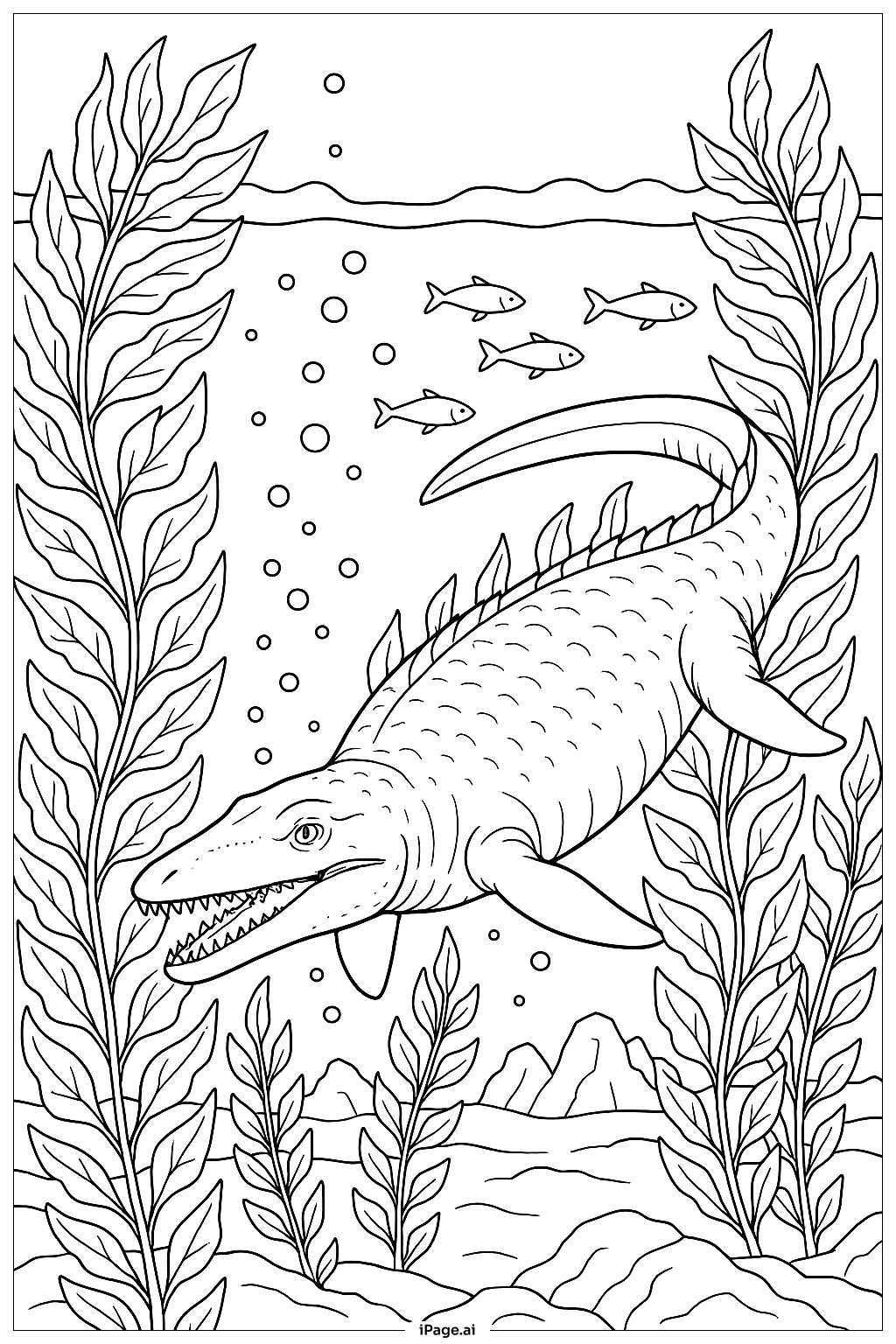
Coloring tips: How to color Mosasaurus Among Kelp Forest coloring page well?
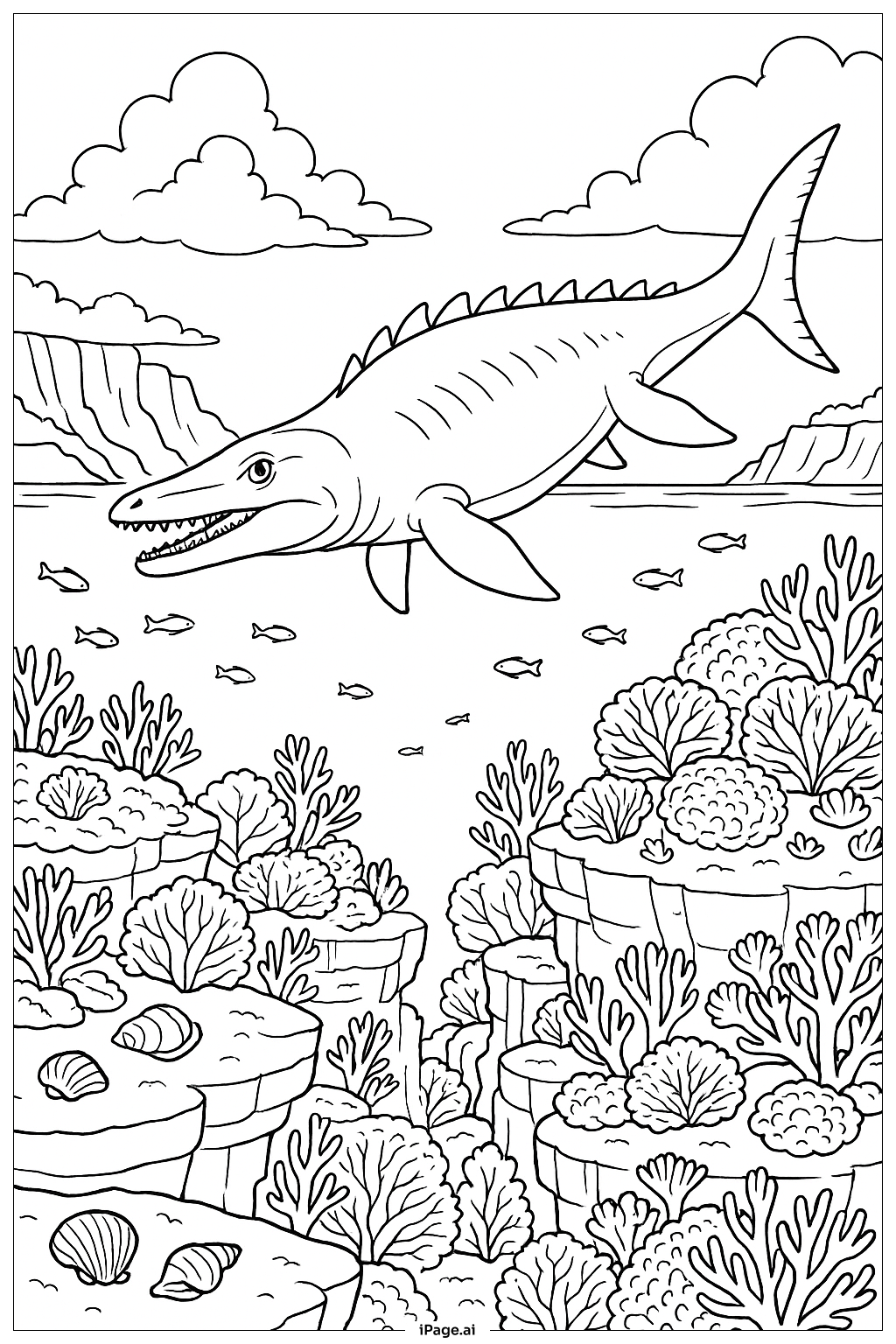
Suggestions for coloring: Use cool blues and greens for the water to create a lively underwater mood. Start with light blues near the surface and deepen the tone toward the bottom. Color the mossy kelp with a mix of greens and olive highlights, leaving some white gaps along the edges to give a translucent look. For the mosasaurus, choose a base color like bluish gray or sandy brown, then add darker shading along the underside and on the flippers to show light coming from above. Color small fish with brighter tones to contrast with the larger creature; use yellow, orange, or light blue for variety. Use different blues for bubbles, giving them a soft glow. Add texture by lightly layering colors on the mosasaurus scales and on rock surfaces. Keep a consistent light source from the top left for natural shadows. If you use markers, color in thin layers and let them dry between strokes. If you use colored pencils, build up color gradually to avoid wax bloom. Have fun and experiment with color combinations to make the scene feel lively and magical.
Coloring challenges: Which parts are difficult to color and need attention for Mosasaurus Among Kelp Forest coloring page?
1) Proportions and perspective: The mosasaurus is large and curved; keeping its proportions accurate while balancing it with the tall kelp and smaller fish can be tricky. Kids may struggle to gauge how long the body should be relative to the background and how much space the jaws, fins, and tail occupy without crowding the scene. Practice drawing the mosasaurus in simple shapes first, then add details. 2) Underwater lighting and shading: Water diffuses light, so colors gradually shift from lighter tones near the surface to deeper hues below. Creating believable shading on the mosasaurus, kelp, and rocks requires careful attention to light direction, shadow edges, and color transitions without making the image too dark. 3) Texture and detail work: The mosasaurus has scales and a row of back spines; kelp leaves have delicate veins; rocks have rough textures. Coloring these tiny details evenly can be challenging for younger children. Build color slowly in small sections, and use light pressure for gentle lines. 4) Color harmony and contrast: Choosing a palette that looks cohesive across water, plants, and animals is important. If colors clash, the page may appear muddy. Encourage selecting a limited set of blues, greens, and browns and then adding bright accents for fish to keep the composition readable for kids of various ages.
Benefits of coloring books: Advantages of drawing Mosasaurus Among Kelp Forest coloring page
Coloring this page helps children develop fine motor skills as they control pencils or markers to stay inside lines. It also boosts focus and patience when shading the mosasaurus and the kelp. By choosing different blues, greens, and browns, kids learn color recognition and how colors can suggest depth and mood. The scene sparks curiosity about sea life, offering simple facts about mosasaurs and kelp forests as a talking point. Coloring encourages creativity and imagination; kids decide the color of each fish and the background, making the underwater world come alive. It promotes calm, reducing stress after a busy day and gives a sense of accomplishment when finishing a detailed page.