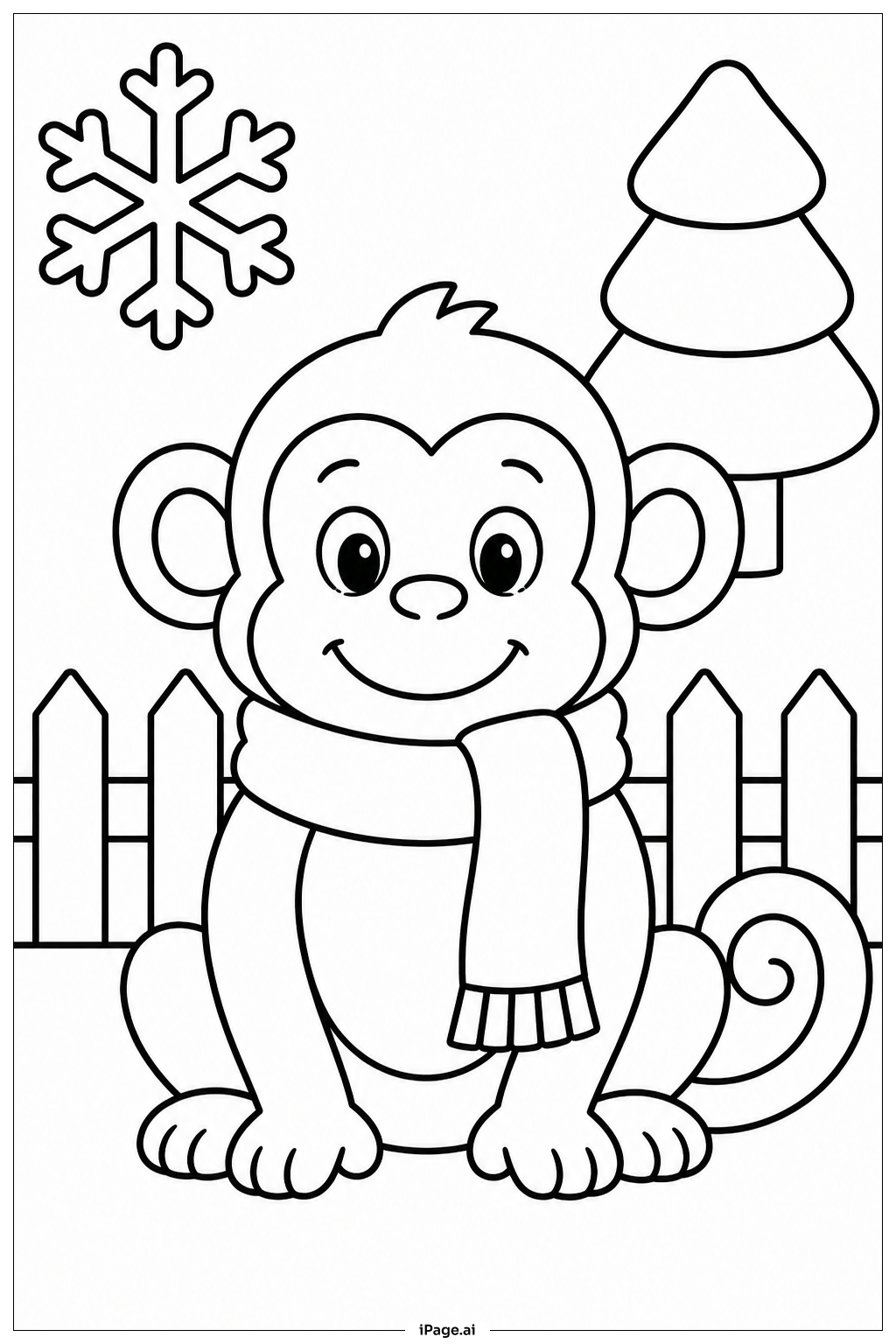
Coloring tips: How to color Monkey Wearing Scarf coloring page well?
Start by coloring the monkey's body with warm brown or golden tan shades. Use a lighter beige or cream tone for the face, ears, and belly area to create a natural contrast. Add a touch of pink or peachy color to the inner ears and nose for a lively look. For the scarf, feel free to get creative — try bright red, royal blue, or a fun striped pattern with multiple colors like yellow, green, and orange. Use short pencil strokes that follow the direction of the fur lines to make the monkey look fluffy and realistic. Add soft shadows under the chin and along the arms using a slightly darker brown. Leave small white highlights in the eyes to make them sparkle. Keep the background simple with a light sky blue or sunny yellow to make the monkey stand out. This image is great for experimenting with warm, cheerful colors that bring out the monkey's playful personality.
Coloring challenges: Which parts are difficult to color and need attention for Monkey Wearing Scarf coloring page?
• Fur Texture Details: The monkey's body is covered with small curved lines that represent fur. Staying within these tiny strokes and following their direction takes patience and a sharp colored pencil. Using short, light strokes that follow the fur pattern will help the coat look natural and soft rather than flat or messy.
• Facial Expression Accuracy: The monkey's face has small, closely spaced features including eyes, a nose, and a smile. Coloring these areas neatly requires a fine-tipped tool. Choosing the right skin tone for the face — slightly lighter than the body fur — is important to keep the face looking expressive and lifelike without losing detail.
• Scarf Folds and Fabric Texture: The scarf has multiple folds and overlapping layers. Each fold creates a slight shadow on one side and a highlight on the other. Blending two shades of the same color — one darker, one lighter — along the fold lines adds depth and makes the scarf look three-dimensional and realistic.
• Color Contrast Between Fur and Scarf: Choosing a scarf color that stands out clearly from the monkey's brown fur can be tricky. If the scarf color is too similar to the fur, the two elements will blend together visually. Bright, bold colors like red, teal, or purple work best to create a clear and visually pleasing separation.
• Small Ear and Hand Areas: The ears and hands are small but important parts of the image. They need careful coloring with a lighter inner tone to show dimension. These tight spaces can be difficult to fill neatly, so using a finely sharpened pencil or a thin marker tip is recommended.
Benefits of coloring books: Advantages of drawing Monkey Wearing Scarf coloring page
Coloring this fun Monkey Wearing Scarf image offers many great benefits for kids and beginners alike. First, it helps develop fine motor skills. Staying inside the lines and adding small details like fur texture trains hand control and finger strength. Second, it encourages creativity. Choosing colors for the scarf, fur, and background lets children make their own artistic decisions and express their personal style. Third, it builds focus and patience. Working through the different parts of the image — the face, the scarf folds, and the body — teaches children to slow down and pay attention to detail. Fourth, it introduces basic color theory in a fun way. Figuring out how to make the scarf stand out from the fur helps children naturally learn about contrast and complementary colors. Fifth, it provides a calming, screen-free activity that reduces stress and encourages a sense of accomplishment when the page is complete. The monkey's cheerful expression also makes the coloring experience joyful and engaging, keeping young artists motivated from start to finish. Overall, this is a wonderful image for building both artistic skills and confidence.



