Coloring tips: How to color Moana Examining Colorful Shells on Quiet Beach coloring page well?
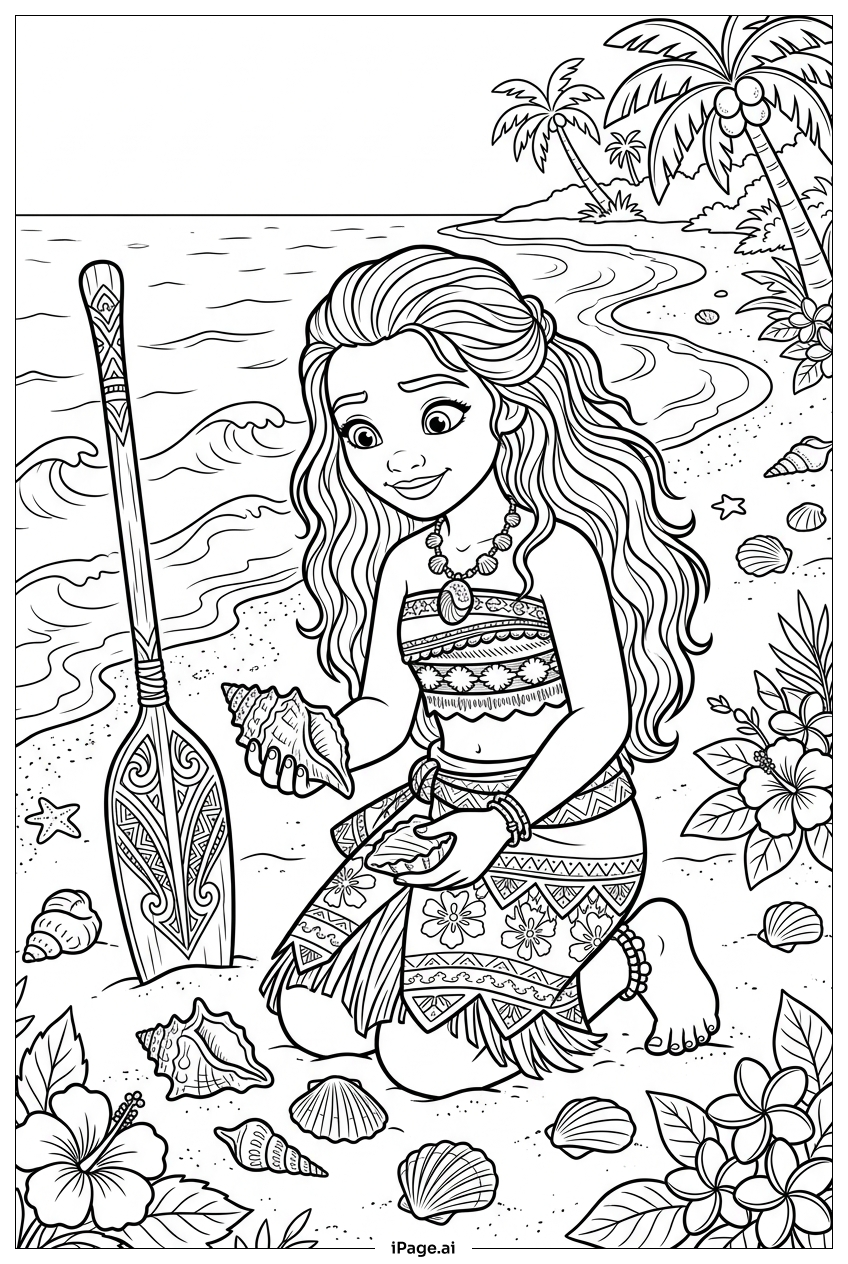
Start with Moana's skin using warm golden-brown tones to reflect her Polynesian heritage. Her outfit can be colored in earthy red and tan shades, staying true to her traditional look. For her long hair, use deep black or dark brown. The shells scattered on the sand offer a wonderful chance to get creative — try pinks, creams, peach, coral, soft purples, and bright oranges to make them look vibrant and unique. Use light tan or golden yellow for the sandy beach. The ocean in the background can be filled with beautiful shades of turquoise, aqua, and deep blue. Add lighter blue or white tones near the shore to show the gentle foam of the waves. The palm trees can be colored with rich greens for the leaves and warm brown for the trunks. Feel free to mix and blend colors to bring this peaceful beach scene to life. There are no wrong choices — let your imagination guide you!
Coloring challenges: Which parts are difficult to color and need attention for Moana Examining Colorful Shells on Quiet Beach coloring page?
• Shell Variety and Detail: The shells on the beach come in many different shapes, sizes, and textures. Each one may have tiny ridges, swirling patterns, or delicate curves that require careful attention and a fine-tipped coloring tool. Keeping colors neat within such small, intricate areas can be tricky, especially for younger colorists who are still developing hand control.
• Moana's Facial Features: Getting Moana's face to look just right takes patience. Her eyes, nose, and lips are drawn with fine lines, and coloring them neatly without going outside the lines requires a steady hand and a sharp colored pencil or fine marker. Small details like her eyebrows and eyelashes also need careful handling.
• Hair Texture and Depth: Moana's thick, flowing hair has many layered lines running through it. Simply coloring it one flat shade of black or brown may look dull. To make it look natural and full of life, try using two or three shades of dark brown or black and leave small highlights uncolored or lightly shaded to add depth and dimension.
• Ocean Background Blending: The background ocean scene calls for smooth color transitions from lighter turquoise near the shore to deeper blue farther out. Achieving a soft, gradient-like blend without harsh lines can be challenging, especially with crayons. Using watercolor pencils or blending with a cotton swab can help create a smoother finish.
• Sand Texture: The beach sand may look simple, but adding realistic texture requires layering light golden-yellow tones with small dots or short strokes of tan and beige. Keeping this consistent across the entire beach area without making it look patchy takes time and a gentle touch.
Benefits of coloring books: Advantages of drawing Moana Examining Colorful Shells on Quiet Beach coloring page
Coloring this peaceful scene of Moana on the beach offers many wonderful benefits for children and young artists. Focusing on the small details of the shells and Moana's features helps strengthen fine motor skills and hand-eye coordination, which are important for writing and everyday tasks. Choosing colors for the ocean, sand, and shells encourages creative thinking and gives kids the freedom to express themselves in a fun, low-pressure way. The calming nature of a quiet beach scene makes this a relaxing activity that can help reduce stress and anxiety, allowing children to slow down and focus on something enjoyable. Staying within the lines and completing the full image also builds patience and concentration. Connecting with a beloved character like Moana adds an extra layer of excitement and motivation, making it easier for kids to stay engaged. For younger children, naming the colors they use helps build vocabulary. For older kids, experimenting with shading and blending develops more advanced artistic skills. Overall, this coloring page is a beautiful way to combine creativity, learning, and relaxation in one activity.