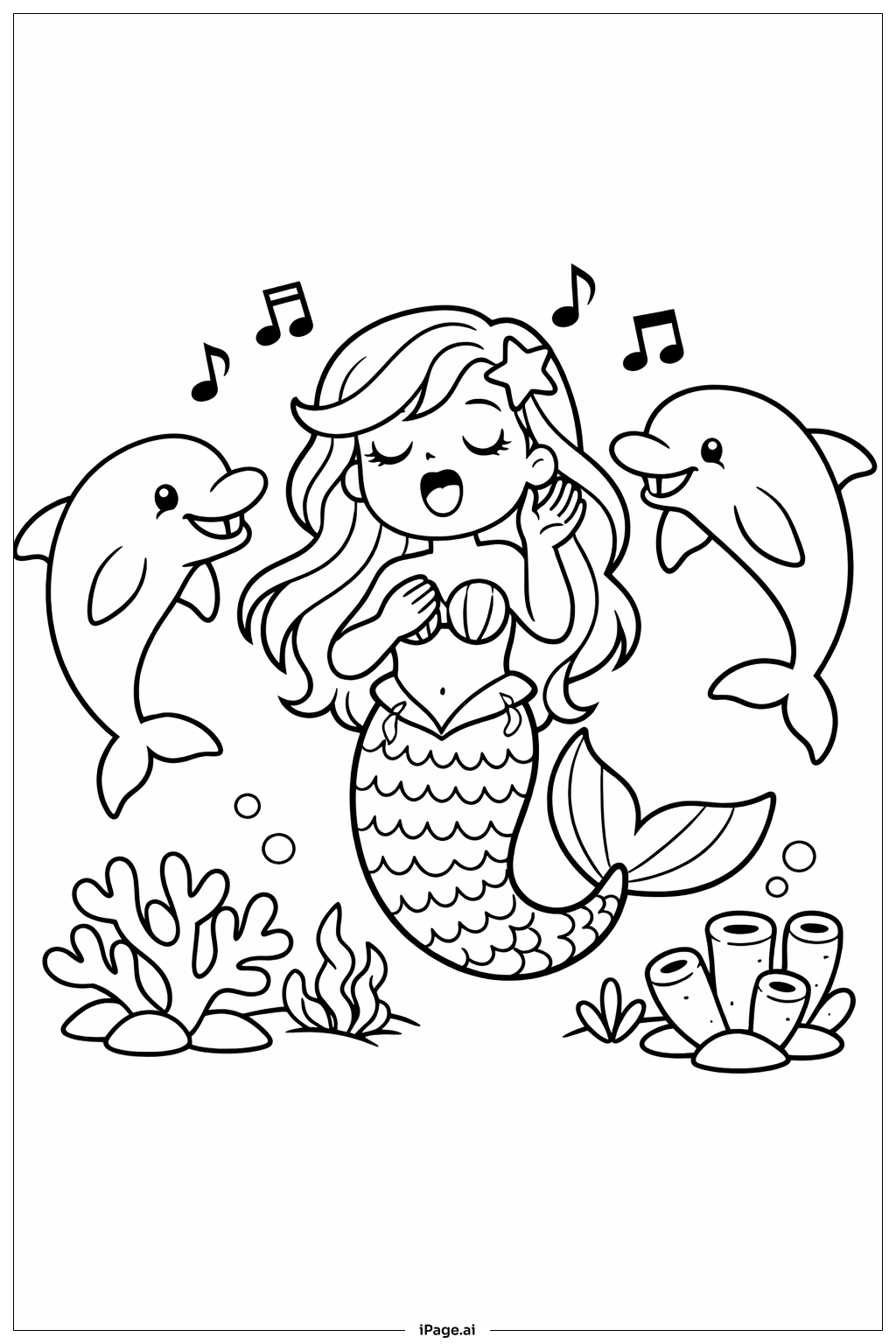
Coloring tips: How to color Mermaid Singing to Dolphins coloring page well?
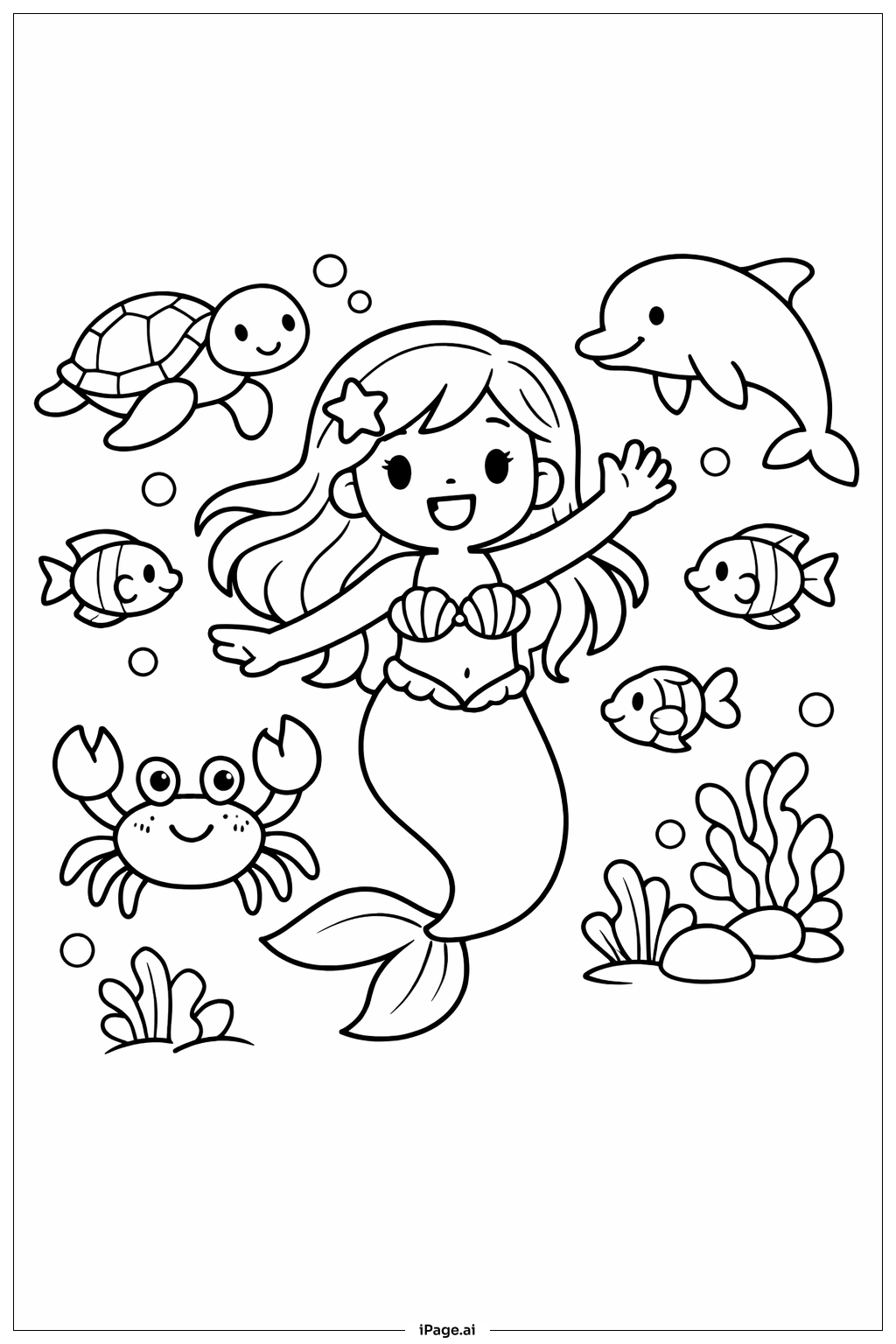
Start with the mermaid's tail using blues, greens, or purples with hints of pink or turquoise for a shimmering effect. Color each scale slightly differently to create depth. Use warm peach or tan tones for her skin and choose golden blonde, auburn, or deep brown for her flowing hair. The starfish and flowers in her hair can be bright coral, yellow, or pink. For the dolphins, try various shades of gray and blue, adding lighter tones on their bellies. Use different blues for the ocean water, from light aqua near the surface to deeper navy below. Color the coral and rocks in earthy browns, oranges, and reds. Add soft yellows and whites to the bubbles for a magical sparkle.
Coloring challenges: Which parts are difficult to color and need attention for Mermaid Singing to Dolphins coloring page?
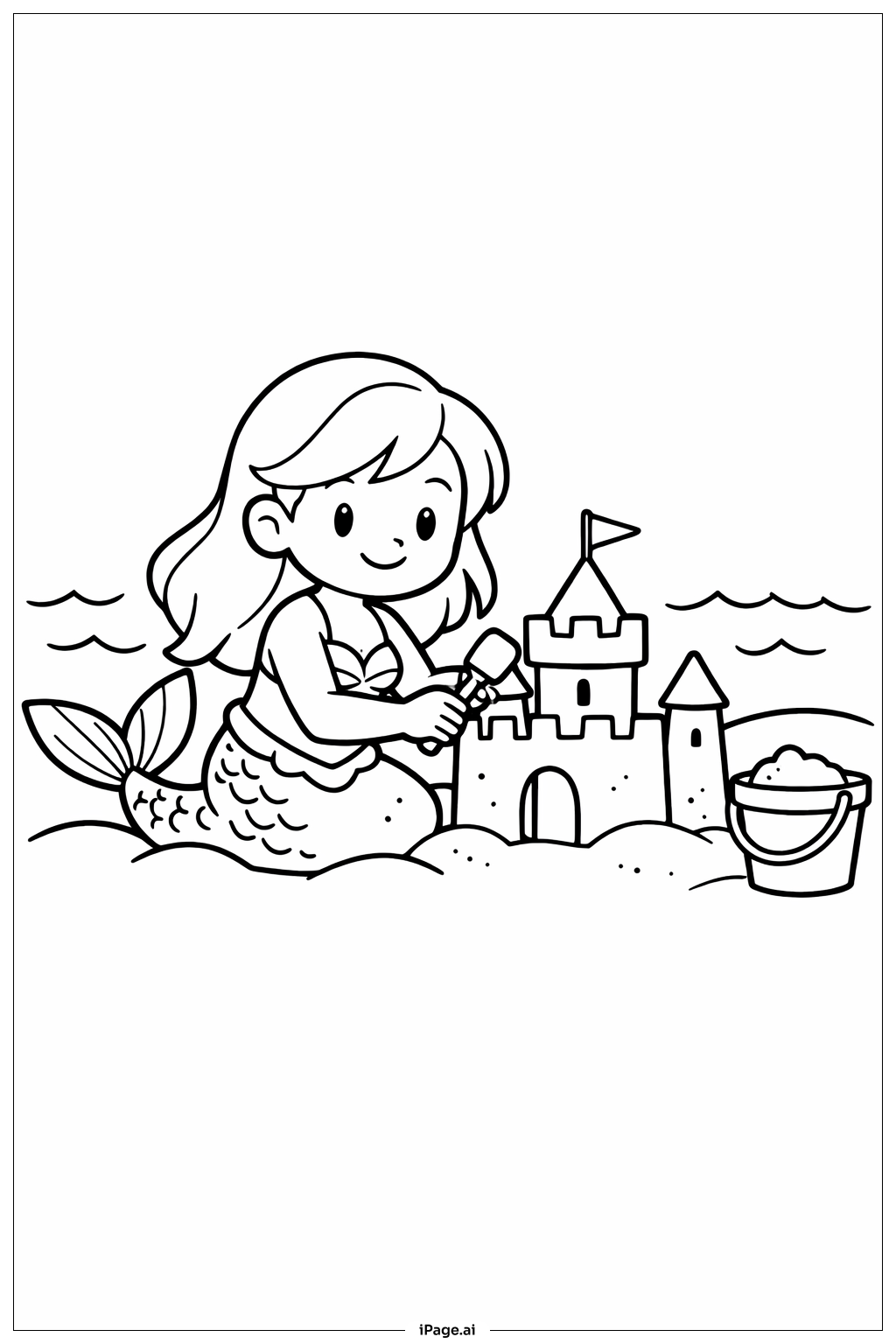
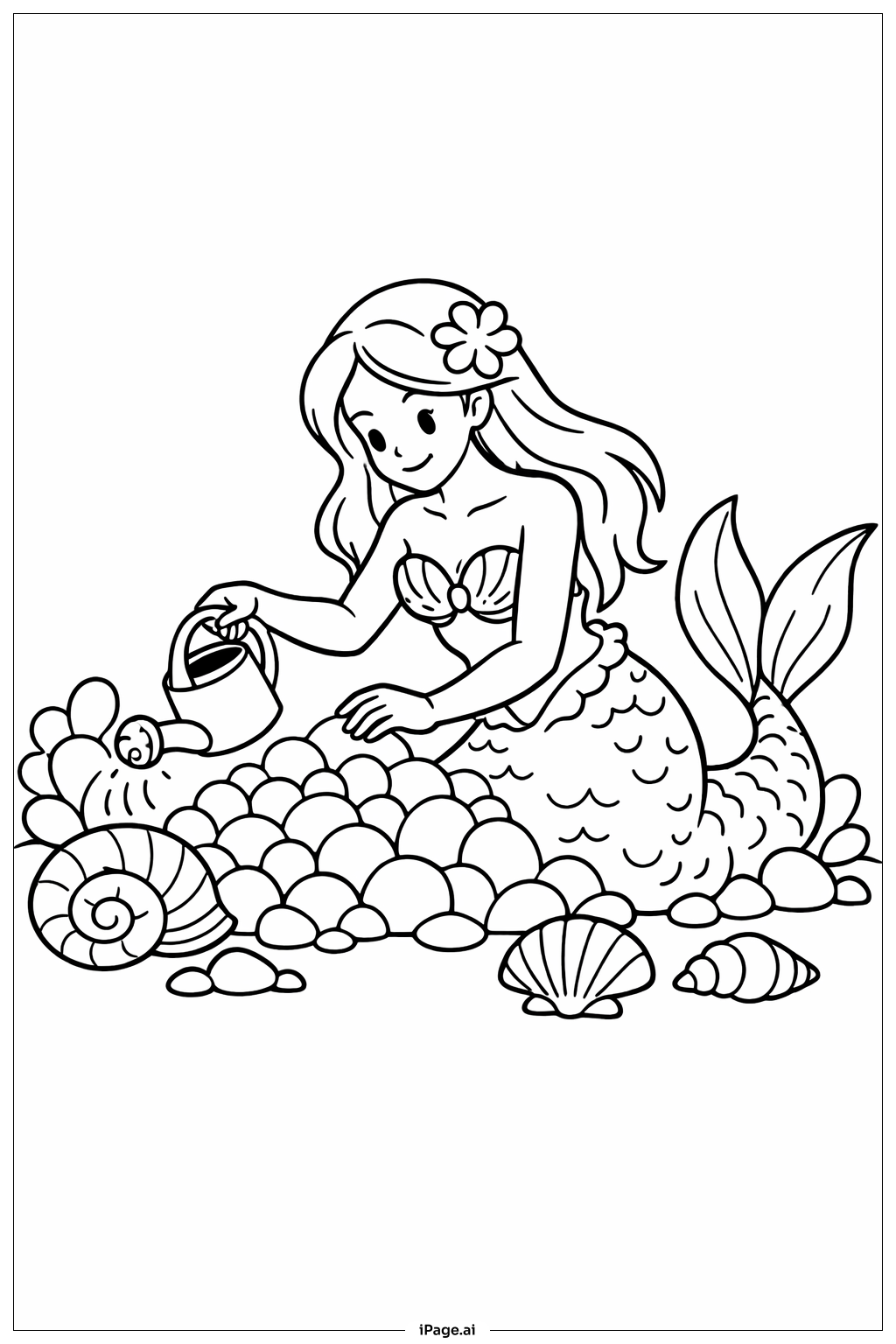
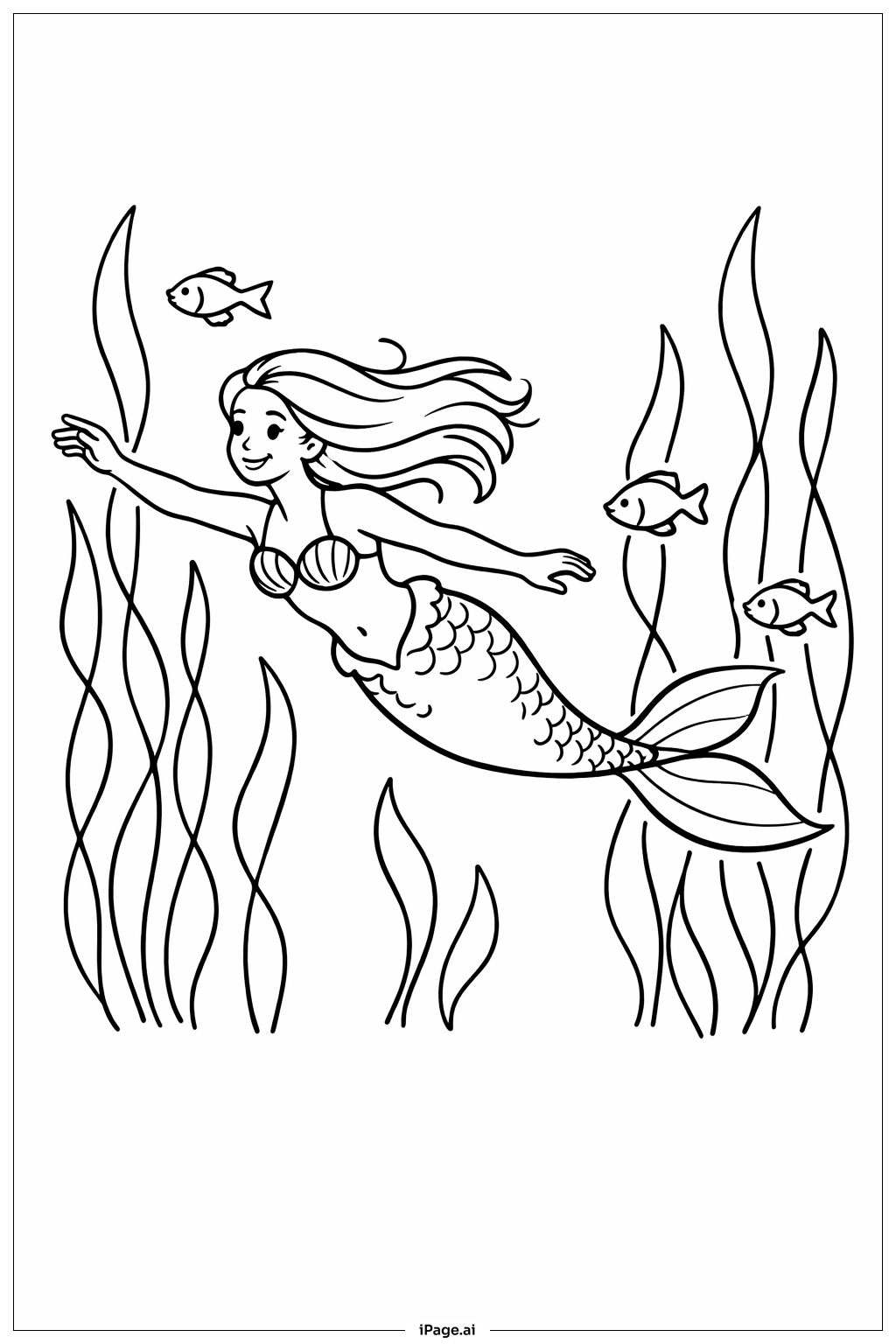
• Mermaid Tail Scales: The tail features numerous individual scales that require patience and attention to detail. Each scale should be colored consistently while creating a gradient effect from top to bottom. Young children may find it challenging to stay within the small curved lines, while older colorists can experiment with layering colors to achieve an iridescent shimmer effect that makes the tail look realistic and dimensional.
• Flowing Hair Details: The mermaid's long, wavy hair contains many intertwining strands and curves that overlap in complex patterns. Distinguishing between different hair sections requires careful observation. Adding highlights and shadows to create depth and movement can be tricky, especially where the hair flows behind her back or drapes over her shoulders. The small decorative elements like starfish and flowers nestled in the hair add extra complexity.
• Dolphin Body Curves: The three dolphins are positioned at different angles with their bodies curved in dynamic swimming poses. Shading their smooth, rounded forms to show dimension requires understanding of light and shadow. The challenge lies in making each dolphin look three-dimensional rather than flat, particularly where their bodies twist and turn through the water.
• Water and Wave Textures: Creating realistic-looking water with various wave patterns, splashes, and bubbles requires thoughtful color choices and blending techniques. The water needs to look transparent in some areas while showing movement and depth in others. Beginners may struggle with representing water convincingly, while advanced colorists can use multiple shades of blue and white to create foam, ripples, and light reflections on the surface.
Benefits of coloring books: Advantages of drawing Mermaid Singing to Dolphins coloring page
Coloring this magical ocean scene helps children develop fine motor skills through the detailed scales, waves, and flowing hair. The mermaid and dolphins encourage creativity as kids choose their own color combinations and imagine the underwater world. This page teaches about marine life and ocean environments in a fun, engaging way. The peaceful scene promotes relaxation and calm focus, making it perfect for quiet time activities. Children practice hand-eye coordination when filling small areas like individual scales and tiny bubbles. The variety of textures, from smooth dolphin skin to flowing hair and rocky surfaces, helps develop an understanding of different materials. This coloring page also encourages storytelling, as children can imagine what song the mermaid is singing and why the dolphins have gathered to listen.