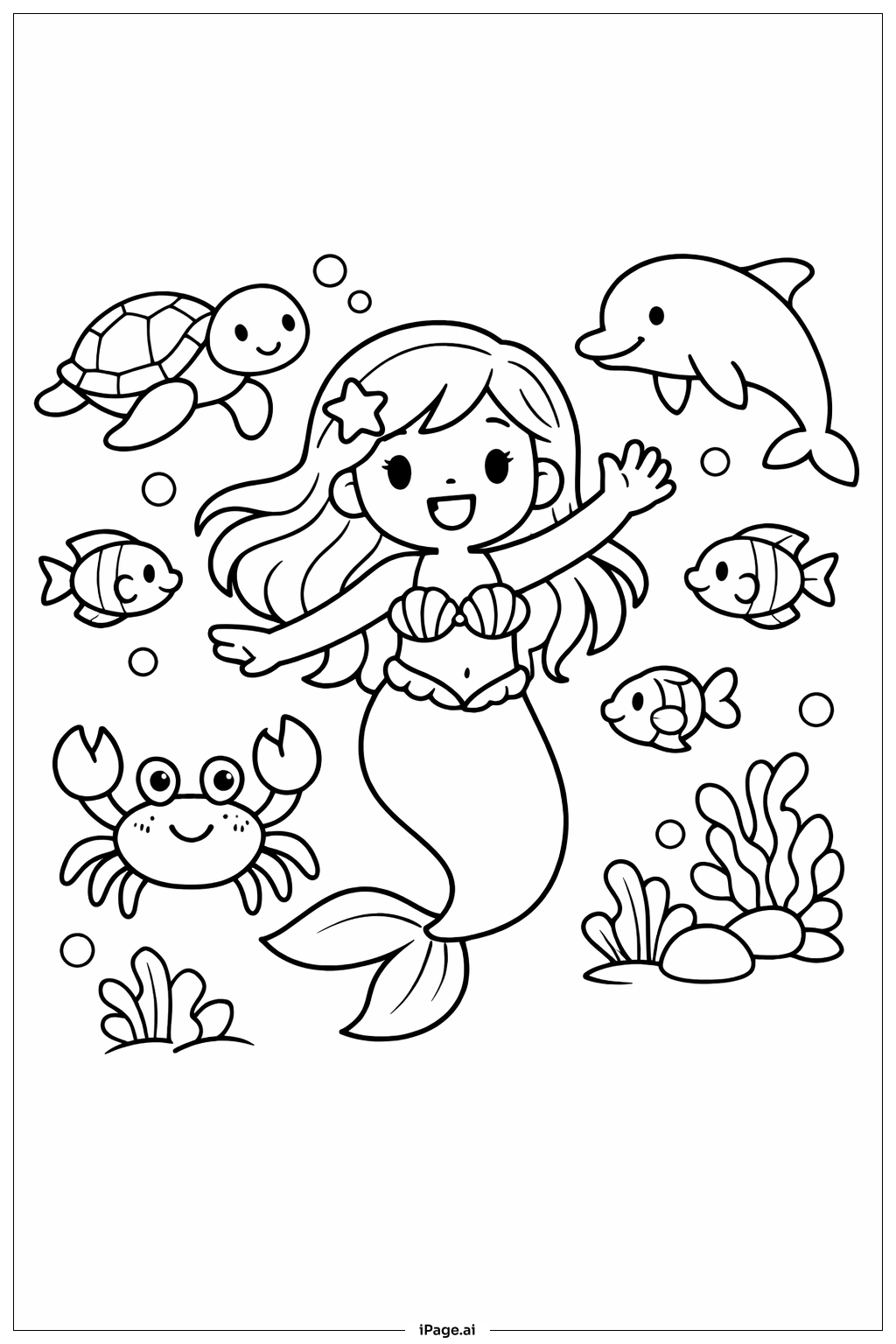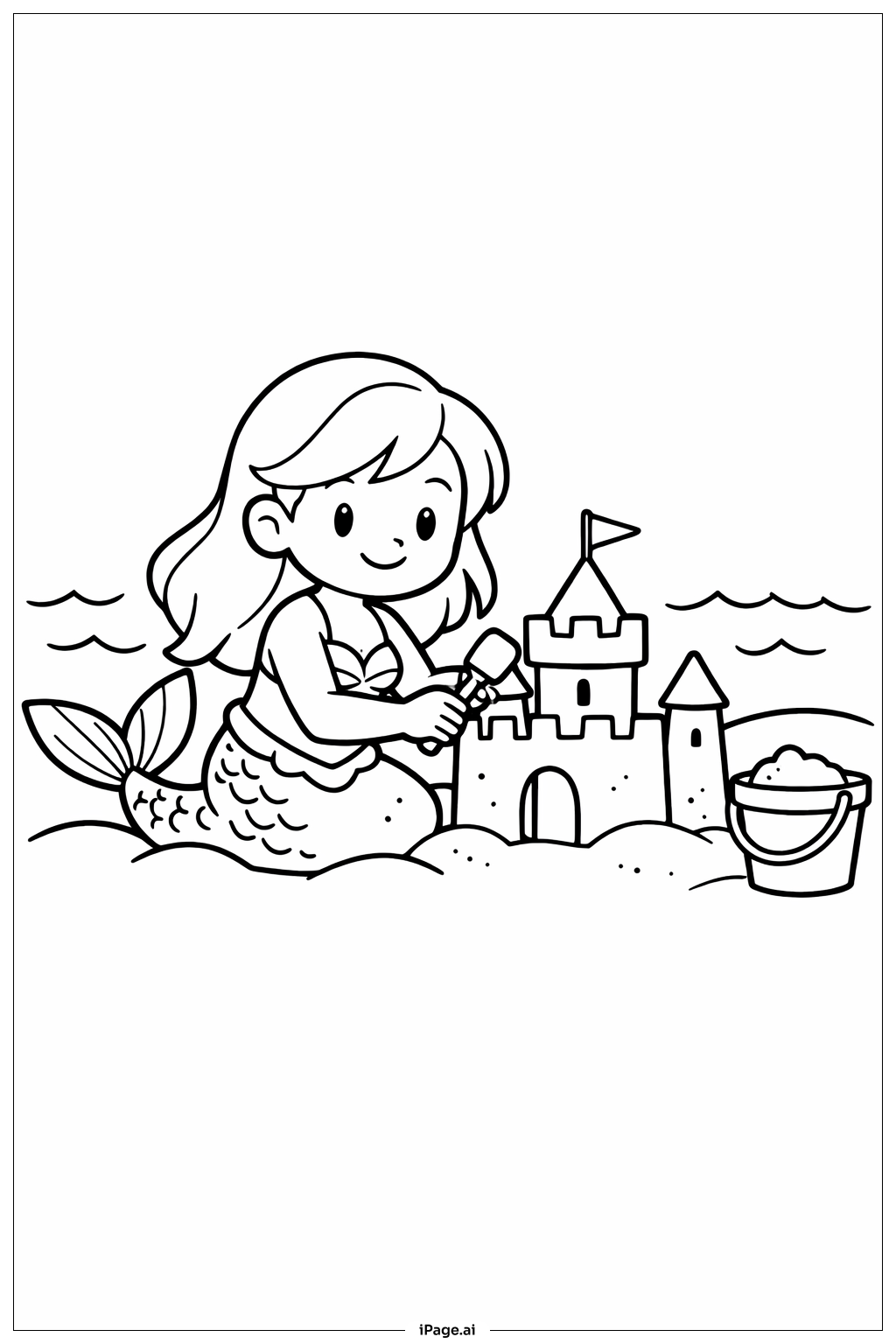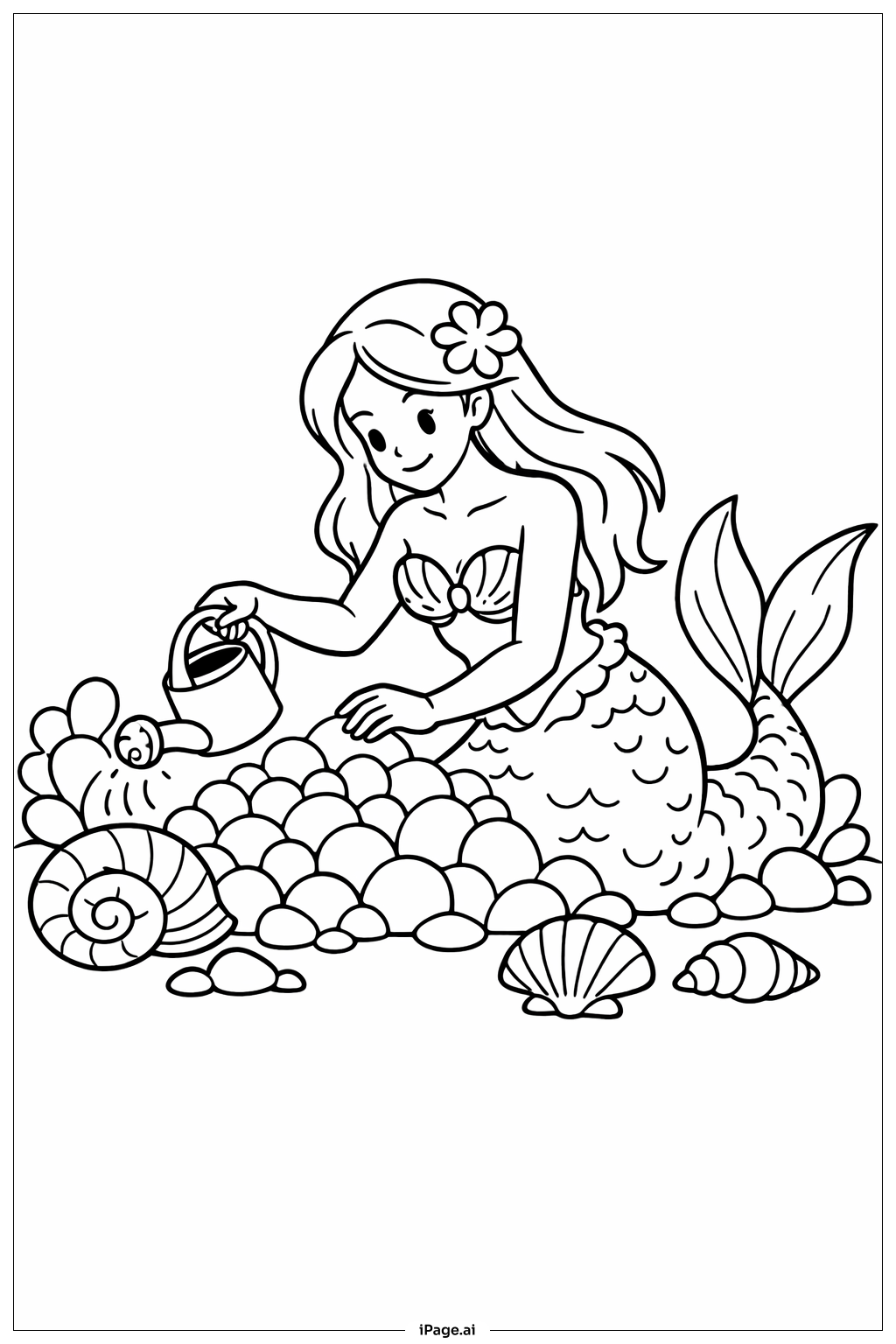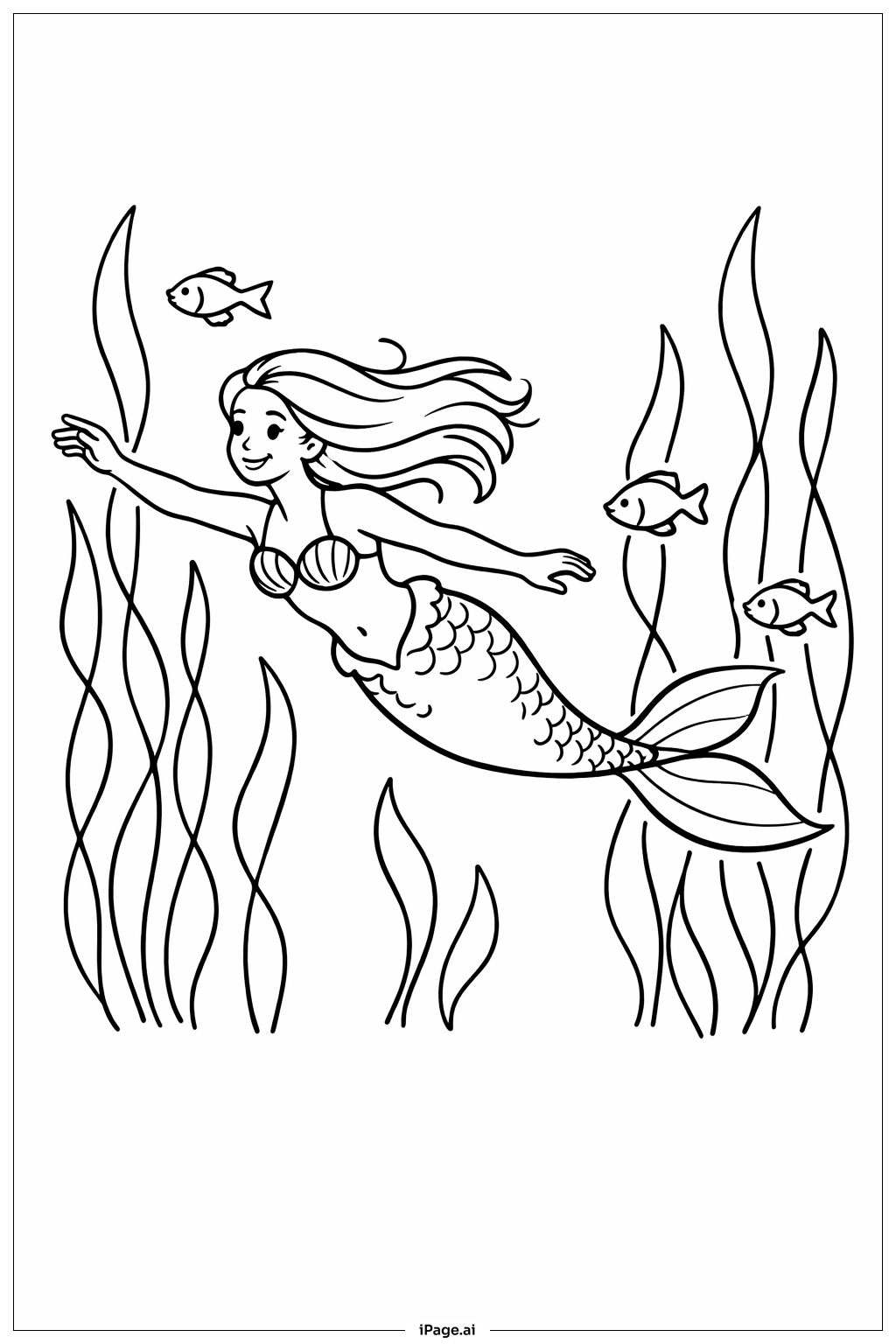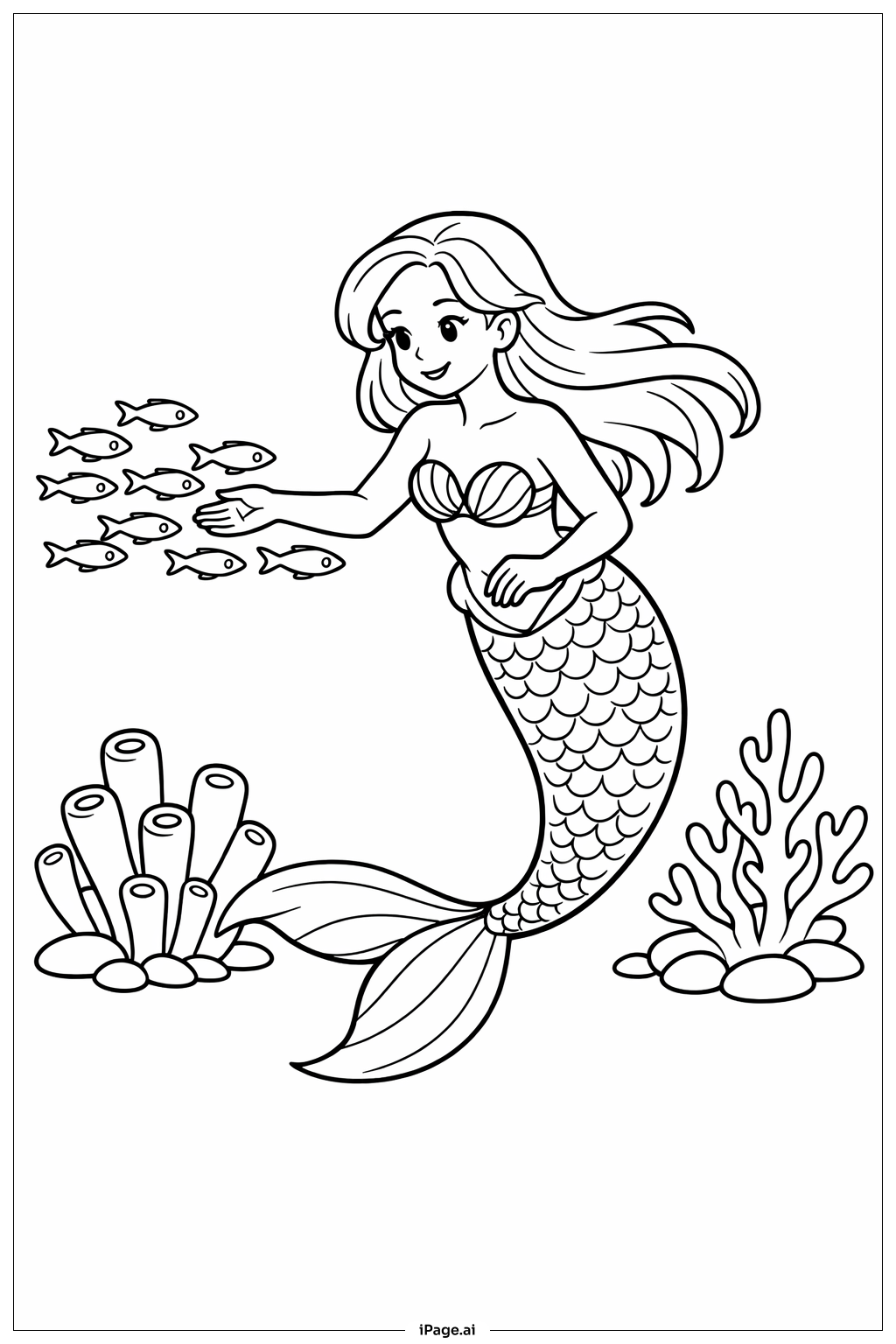
Coloring tips: How to color Mermaid Guiding Small Fish coloring page well?
For the mermaid's tail, consider using shimmering blues, greens, or purples with gradual shading to create a scale pattern that catches the light. Her hair can be colored in warm tones like golden blonde, auburn, or rich brown with highlights. Use soft peach or tan for her skin tone. The small fish offer wonderful opportunities for variety—try bright oranges, yellows, blues, or even rainbow combinations to make each fish unique. Color the seashells in her top with natural cream, pink, or lavender shades. For the ocean background, use light blues and aqua tones, getting slightly darker toward the edges. Add white or pale blue to the bubbles for a translucent effect. Consider using colored pencils for smooth blending on the tail scales.
Coloring challenges: Which parts are difficult to color and need attention for Mermaid Guiding Small Fish coloring page?
• Scale Pattern Detail: The mermaid's tail features numerous individual scales that require patience and precision. Each scale should ideally have its own shading to create dimension, which can be time-consuming. Younger children may find it challenging to stay within these small curved shapes, while older colorists can practice gradient techniques to make scales appear three-dimensional and iridescent.
• Hair Flow and Texture: The mermaid's long, flowing hair consists of multiple wavy strands that overlap and intertwine. Distinguishing between different hair sections and maintaining consistent color while adding highlights and shadows requires careful attention. Creating realistic hair texture with natural-looking color variation demands good pencil control and understanding of light direction.
• Small Fish Details: The group of small fish contains intricate fin patterns and small features that need steady hands. Each fish has its own personality, and coloring them differently while maintaining visual harmony can be challenging. The small size of these elements makes it difficult to add detailed shading or pattern work without colors bleeding together.
• Underwater Depth and Atmosphere: Creating a convincing underwater environment requires understanding how to use color to show depth and light diffusion. The background needs subtle color variations to suggest water without overwhelming the main subjects. Achieving the right balance between background and foreground elements, and making bubbles look transparent and realistic, presents a challenge for colorists of all ages.
Benefits of coloring books: Advantages of drawing Mermaid Guiding Small Fish coloring page
Coloring this mermaid scene offers wonderful benefits for children and young people. It helps develop fine motor skills through the detailed work required for scales, hair strands, and small fish. The image encourages color mixing and experimentation, especially when creating ocean water effects and shimmering tail scales. Children can practice making decisions about color combinations and learn about complementary colors that work well together in an underwater setting. The gentle, friendly nature of the scene promotes calm focus and relaxation during the coloring process. It also sparks imagination about ocean life and mythical creatures, encouraging storytelling and creative thinking. The variety of elements—from large areas like the tail to tiny details like bubbles—accommodates different skill levels and keeps the activity engaging from start to finish.