Coloring tips: How to color May Tulip Bouquet coloring page well?
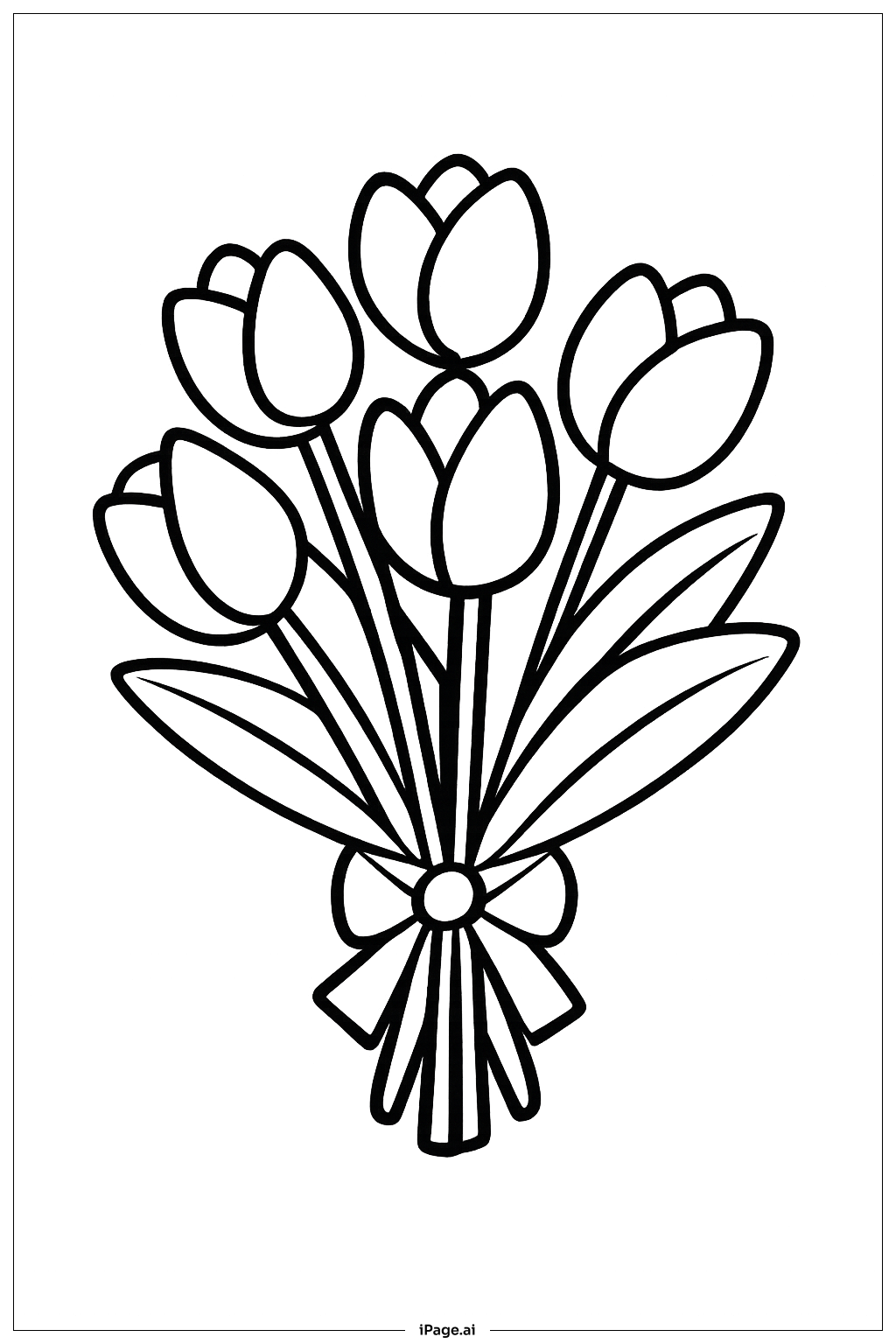
Start with the tulip petals using classic spring colors like bright red, sunny yellow, soft pink, or vibrant purple. You can make each tulip a different color or create a coordinated color scheme. For the leaves and stems, use various shades of green—try light green for younger leaves and darker forest green for mature ones. Add depth by using lighter colors on the edges of petals where light would naturally hit, and darker shades in the center or where petals overlap. The vase offers a wonderful opportunity for creativity—consider soft pastels, bold patterns, or even a gradient effect. Don't forget to add subtle shadows beneath the vase to ground the bouquet. For a finishing touch, you might add tiny highlights with white or light yellow to make the flowers sparkle.
Coloring challenges: Which parts are difficult to color and need attention for May Tulip Bouquet coloring page?
• **Petal Overlap and Layering**: The tulips feature multiple overlapping petals that require careful attention to maintain distinct boundaries between each layer. Younger colorists may find it challenging to keep colors within the lines when petals curve behind one another, requiring patience and precision with coloring tools.
• **Consistent Shading and Depth**: Creating realistic dimension across multiple flowers demands understanding of light sources and shadow placement. Each tulip needs individual attention to shading, which can be time-consuming and requires planning to ensure the entire bouquet looks cohesive rather than flat.
• **Leaf and Stem Details**: The long, curved leaves and stems intersect at various points, creating small spaces that are tricky to color neatly. Maintaining steady hand control while coloring these narrow areas without accidentally crossing into adjacent sections presents a moderate challenge.
• **Color Coordination**: With multiple tulips in one bouquet, deciding on a harmonious color palette requires thoughtful planning. Balancing variety with unity—making each flower distinct while ensuring the overall arrangement looks natural—involves color theory knowledge that may challenge beginners.
• **Vase Decoration and Texture**: Adding decorative elements or patterns to the vase while maintaining symmetry and proportion requires advanced coloring skills. Creating the illusion of a three-dimensional, possibly reflective surface adds complexity to what might initially seem like a simple element.
Benefits of coloring books: Advantages of drawing May Tulip Bouquet coloring page
Coloring this May tulip bouquet offers wonderful benefits for creative development and relaxation. The repetitive yet varied petal shapes help improve fine motor skills and hand-eye coordination, especially valuable for younger children developing pencil control. The image encourages color recognition and experimentation—kids can learn about complementary colors, shading techniques, and how different hues work together in nature. The moderate complexity level provides a satisfying challenge without being overwhelming, building confidence and patience as each flower comes to life. This spring-themed image also connects children with seasonal changes and nature appreciation. The calming, focused activity of coloring flowers has been shown to reduce stress and anxiety while promoting mindfulness. Completing this detailed bouquet gives a strong sense of accomplishment and creates a beautiful artwork suitable for display or gifting, boosting self-esteem and pride in creative work.