Coloring tips: How to color May Pond With Ducks coloring page well?
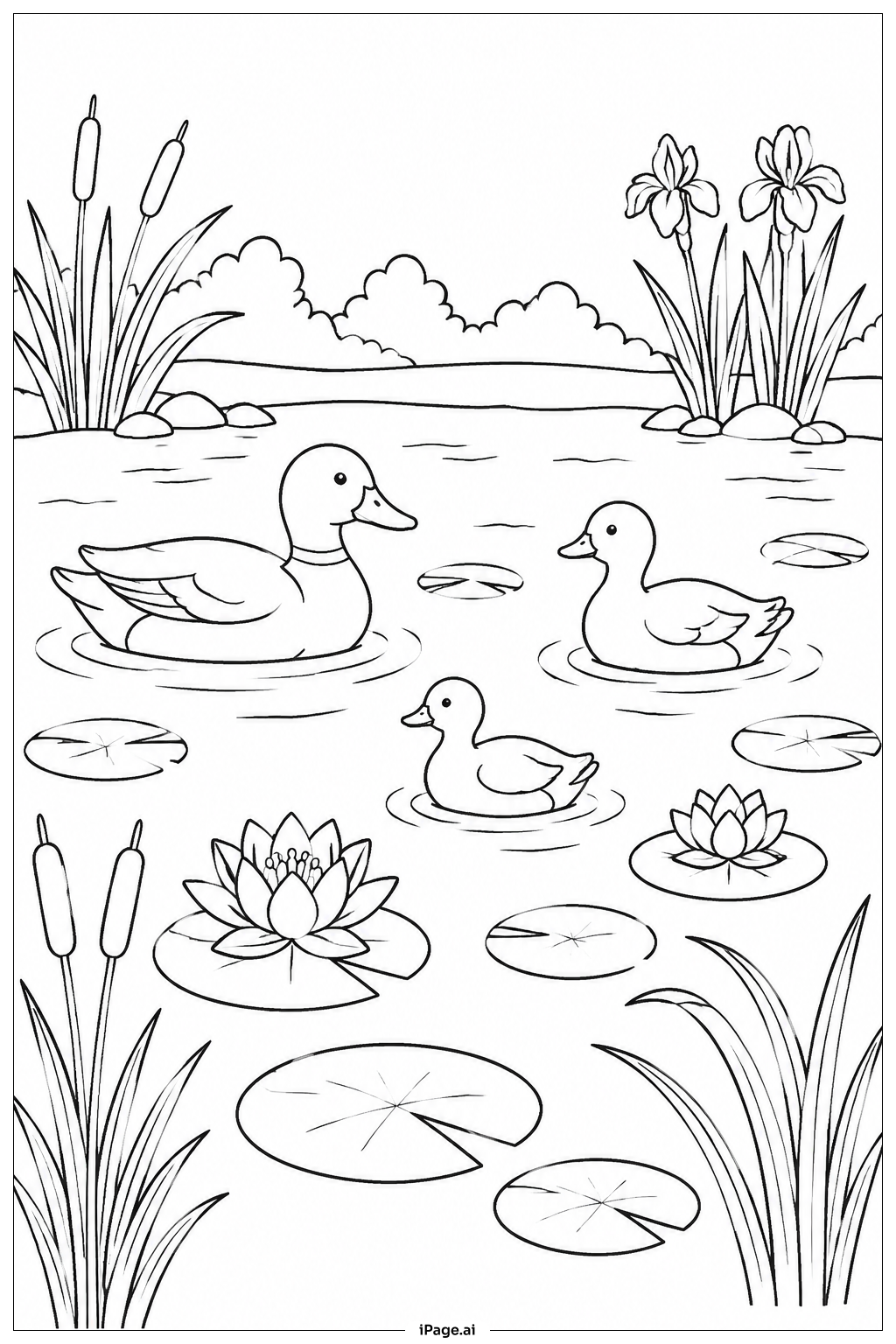
For the ducks, try bright yellow or orange for their beaks and feet, with brown, white, or green bodies depending on the duck species you imagine. The pond water can be various shades of blue, from light sky blue to deeper navy, with hints of green to show reflection. Color the lily pads in different greens, and add pink, white, or yellow flowers on top. The cattails look wonderful in brown with green stems. Make the grass and reeds vibrant spring greens. The sky can be light blue with white or gray clouds. Paint the sun yellow or orange. The hills in the background work well in soft greens or blues to show distance. Add colorful wildflowers in reds, purples, yellows, and pinks around the pond's edge.
Coloring challenges: Which parts are difficult to color and need attention for May Pond With Ducks coloring page?
• **Water texture and reflection**: Creating realistic water requires blending multiple shades of blue and green smoothly. Children may find it challenging to show the water's movement and the subtle reflections of the sky, ducks, and surrounding plants. Layering colors gently and leaving some white spaces can help create a shimmering effect.
• **Duck details and feathers**: The ducks have curved lines suggesting feather patterns that need careful attention. Staying within these small detailed areas requires good fine motor control. Younger children might struggle with the wing details and the transition between different body parts.
• **Depth and perspective**: The scene includes foreground elements like cattails and lily pads, middle-ground ducks and water, and background hills and sky. Choosing appropriate colors to show distance—making background elements lighter and less detailed—can be tricky for beginners.
• **Plant variety and natural colors**: The image contains multiple types of vegetation including cattails, reeds, grasses, and flowers. Each plant type has different textures and shapes. Selecting realistic yet varied greens and browns while keeping them distinct from each other requires color planning.
• **Blending sky and clouds**: Creating a natural-looking sky with fluffy clouds involves soft color transitions. Children may find it difficult to blend colors smoothly or to leave appropriate white spaces for clouds without making them look too harsh or disconnected from the sky.
Benefits of coloring books: Advantages of drawing May Pond With Ducks coloring page
Coloring this May pond scene helps children develop patience and focus as they work through the detailed elements. The variety of textures—from smooth water to fluffy clouds to spiky cattails—encourages experimentation with different coloring techniques like shading, blending, and layering. This nature scene teaches kids about springtime ecosystems and the plants and animals found near ponds. Working with the curved lines of the ducks and lily pads improves hand-eye coordination and fine motor skills. The peaceful subject matter promotes relaxation and mindfulness, making it a calming activity. Children learn about color relationships by choosing harmonious shades for water, sky, and plants. Completing this detailed scene builds confidence and provides a sense of accomplishment, especially when they see their finished artwork displayed.