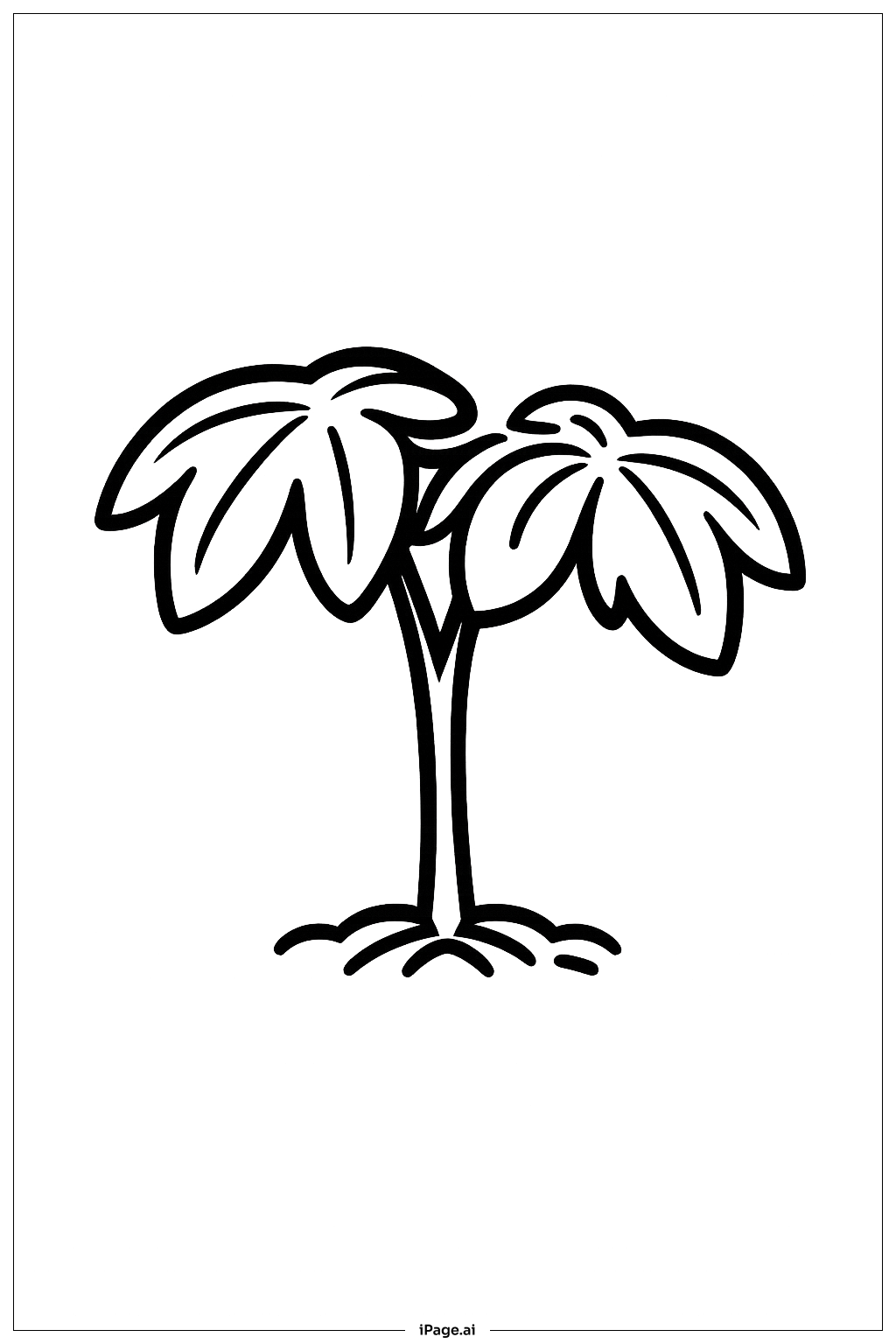
Coloring tips: How to color May Apple Sapling coloring page well?
Start with the leaves using various shades of green. Try light green for the newer growth at the top and darker green for the lower portions. The veins can be colored with a slightly darker or lighter shade to make them stand out. For the stem, use a pale green or light brown color. The soil base offers a chance to experiment with browns, from light tan to rich dark brown. You can add small dots or specks in different brown tones to create a realistic earth texture. Consider adding a hint of yellow-green to show where sunlight might hit the leaves. A light blue or soft green background can suggest a forest setting without overwhelming the main subject.
Coloring challenges: Which parts are difficult to color and need attention for May Apple Sapling coloring page?
• **Leaf vein details**: The intricate network of veins running through each leaf lobe requires careful attention and a steady hand. Young colorists may find it challenging to stay within these thin lines while maintaining consistent color throughout each section.
• **Shading the palmate leaves**: Creating depth and dimension on the umbrella-shaped leaves takes practice. Understanding where shadows fall between the overlapping lobes and how light hits the surface requires spatial awareness that develops with experience.
• **Smooth color transitions**: Blending colors naturally on the stem and leaves to show roundness and form can be tricky. Avoiding harsh lines while transitioning from light to dark areas demands patience and proper coloring technique.
• **Soil texture creation**: Making the ground look realistic with varied tones and textures rather than flat and uniform requires experimentation with different coloring methods like stippling, cross-hatching, or layering multiple shades.
• **Maintaining symmetry**: Since the May apple has a naturally balanced appearance, keeping colors consistent between the two main leaves while adding natural variation can be a delicate balance for colorists to achieve.
Benefits of coloring books: Advantages of drawing May Apple Sapling coloring page
Coloring this May apple sapling helps children learn about plant biology and woodland ecosystems. They discover how young plants grow and develop their distinctive leaf patterns. The activity improves fine motor skills as they carefully color within the detailed leaf veins and lobes. It teaches patience and focus, especially when working on the intricate vein network. Children practice color mixing and shading techniques to create realistic plant tones. The symmetrical design helps develop an understanding of balance and patterns in nature. This coloring page encourages observation skills as kids notice how leaves connect to stems and how plants emerge from soil. It provides a calming, meditative activity that reduces stress while fostering creativity and artistic expression.