Coloring tips: How to color March Tulip coloring page well?
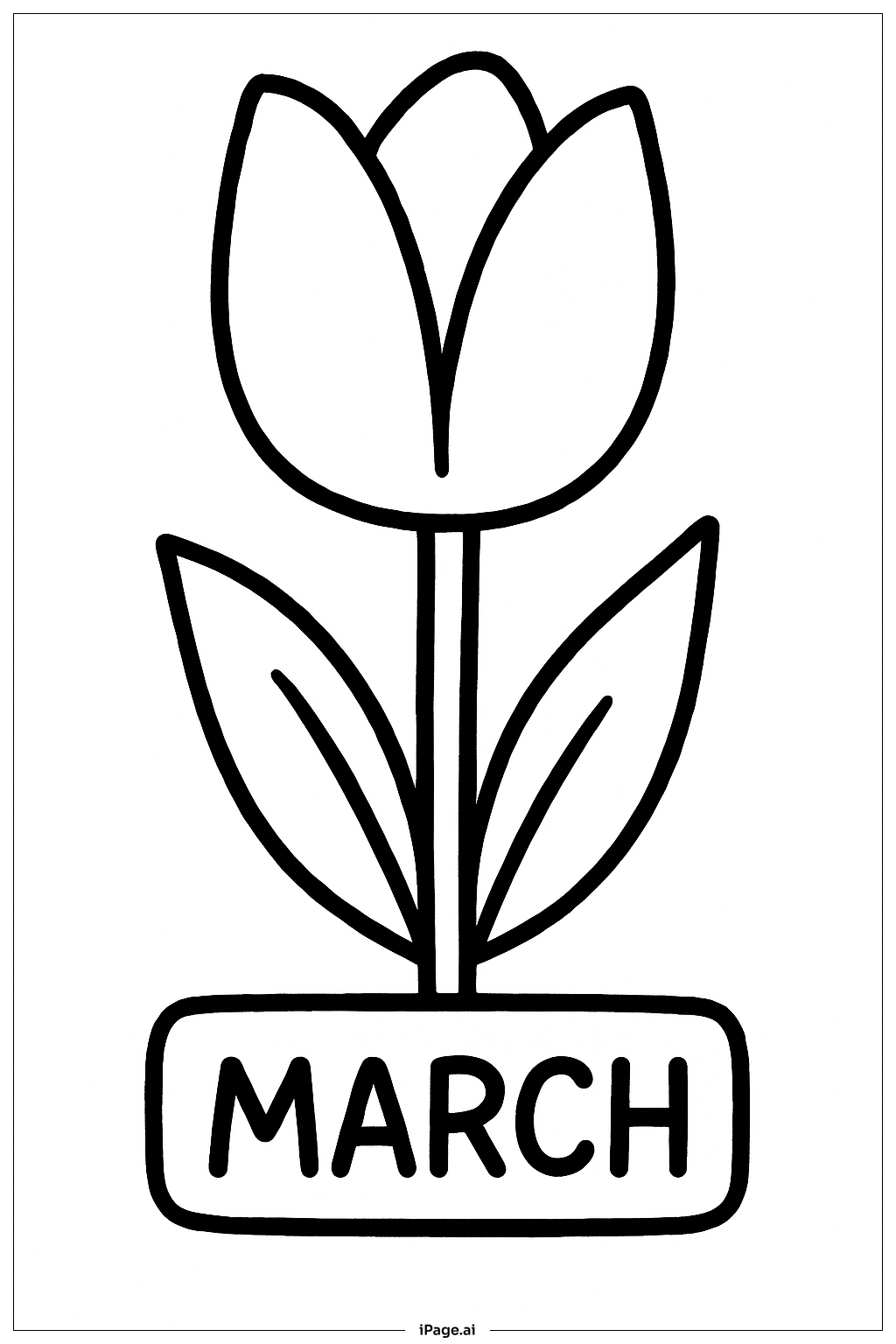
Start with the flower petals at the top. Tulips in March often come in bright, cheerful colors. Try red, pink, yellow, orange, or purple. You can use a single color for all petals or mix two shades — a lighter tone in the center and a deeper tone along the edges to give the bloom a natural look. For the stem, use a medium green. The leaves can be colored in two different shades of green — one lighter and one darker — to show depth. If you want a spring feel, add a soft blue or light yellow background to suggest a sunny sky or a warm morning. Keep your strokes smooth and follow the curves of each petal and leaf for the best result. This image is great for practicing gradients and shading for older kids, or simple flat coloring for younger ones.
Coloring challenges: Which parts are difficult to color and need attention for March Tulip coloring page?
• Petal Shading and Depth: The tulip petals are curved and rounded, which means flat coloring can make them look two-dimensional. Achieving a natural, three-dimensional look requires using at least two tones of the same color — one for highlights and one for shadows. Young or beginner colorists may find it tricky to blend these tones smoothly without creating harsh lines between them.
• Staying Within Petal Outlines: The petals are closely grouped together with narrow gaps between them. It can be easy to accidentally color outside the lines and onto a neighboring petal, especially when using markers or thick crayons. Colored pencils or fine-tip markers work best here for precision.
• Leaf Detailing: The leaves have a long, flowing shape with subtle vein lines running through them. Capturing the natural look of a leaf means using at least two shades of green and being careful not to color over the vein lines. Keeping these lines visible adds realism and texture to the finished piece.
• Stem Consistency: The stem is narrow and long, making it easy to apply uneven pressure and end up with a patchy or streaky finish. This is especially challenging for younger children who are still developing fine motor control. Using smooth, even strokes from top to bottom helps keep the color consistent.
• Background Composition: The image leaves the background open, which gives creative freedom but can also feel overwhelming. Deciding what colors and elements to add — without overpowering the tulip itself — requires planning and a good sense of color balance.
Benefits of coloring books: Advantages of drawing March Tulip coloring page
Coloring this March Tulip page offers a range of wonderful benefits for children and young learners. First, it helps build fine motor skills. Carefully filling in the petals, leaves, and stem trains hand-eye coordination and strengthens the small muscles used in writing. Second, it encourages creativity. Choosing colors for the petals and background lets kids express themselves freely and explore their own artistic style. Third, it teaches color theory in a natural, hands-on way. Experimenting with light and dark shades on the petals introduces the basic concept of shading without any formal instruction. Fourth, it supports focus and patience. Completing a detailed image like a tulip requires concentration, which helps children practice staying on task. Fifth, it connects kids to nature and the seasons. Learning that tulips bloom in spring and are closely linked to March helps build awareness of the natural world around them. Overall, this page is a simple yet meaningful activity that nurtures both creative and cognitive growth.