Coloring tips: How to color March Sheep Grazing coloring page well?
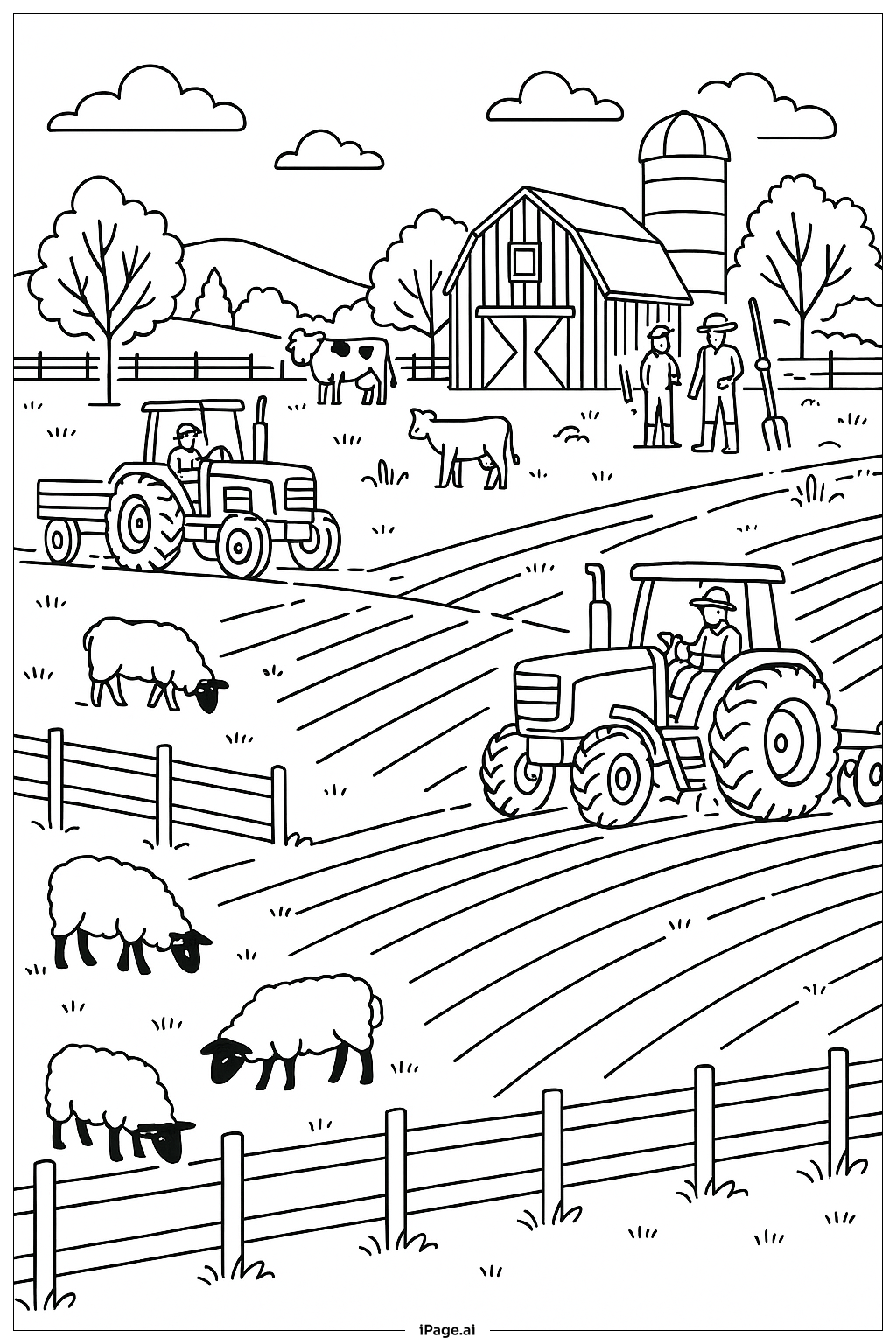
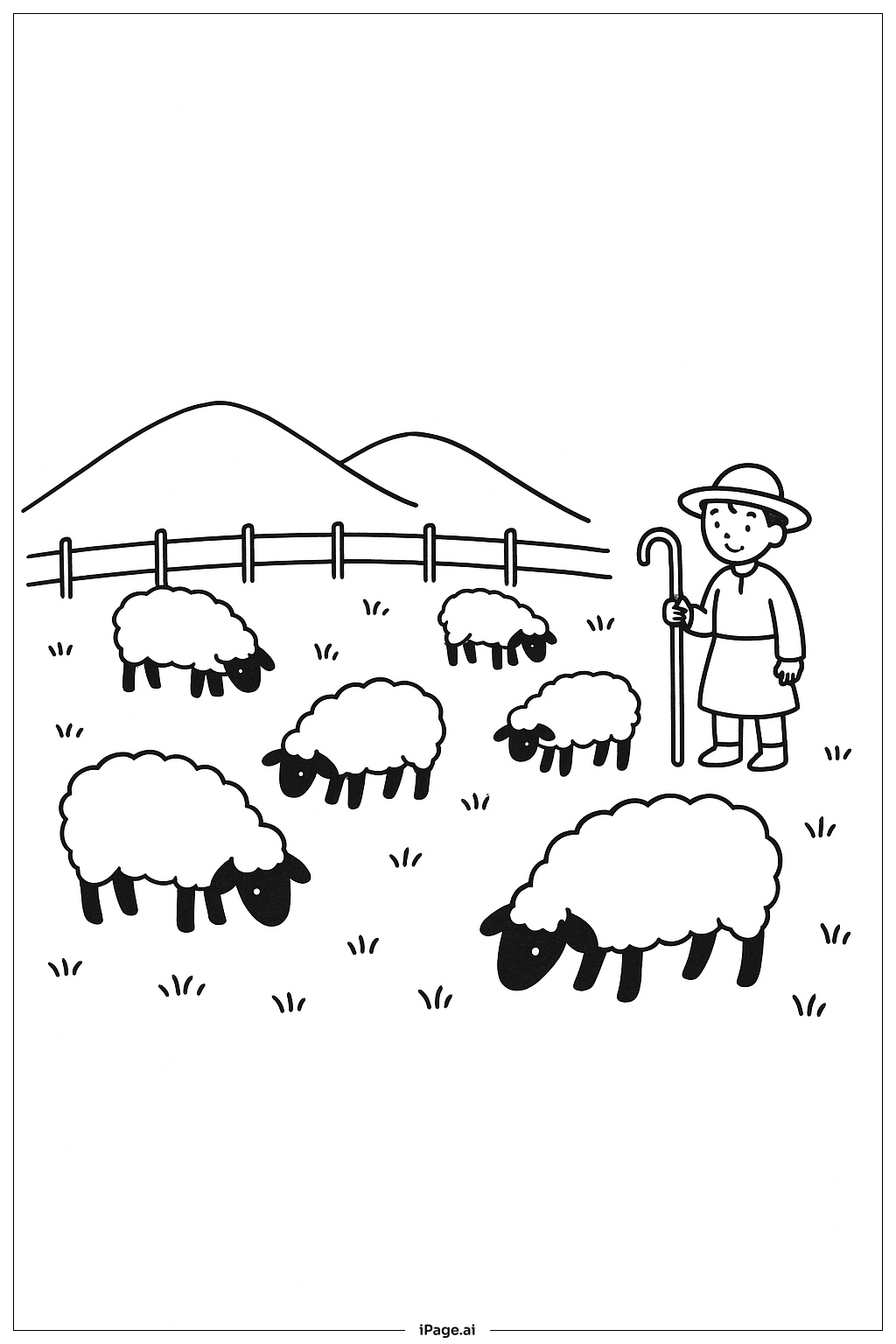
Use soft greens for the grass and hills to create a fresh spring look. The sheep's wool can be colored in light cream, white, or pastel shades to keep them looking fluffy and gentle. The faces, legs, and ears of the sheep can be colored black or dark brown for contrast. The farmer's outfit can be colored in bright, cheerful colors like blue, red, or yellow to make them stand out. The fence can be colored in natural wood tones like brown. Try using light blue for the sky to give a clear day feeling. Add some shading to the hills and grass tufts for depth.
Coloring challenges: Which parts are difficult to color and need attention for March Sheep Grazing coloring page?
1. Coloring the small tufts of grass evenly without making the picture too crowded can be challenging for young children.
2. Balancing the colors on the sheep’s wool to make them look soft and fluffy while keeping the faces and legs dark requires attention to detail.
3. The fence has thin lines that may be hard to color within without bleeding outside the lines.
4. Coloring the farmer’s clothes neatly, especially the hat and shoes, can be tricky because of their small size.
5. Creating a natural look for the hills and grass could be difficult without blending colors smoothly.
Benefits of coloring books: Advantages of drawing March Sheep Grazing coloring page
Coloring this picture helps improve fine motor skills, especially with the small details like the grass and the farmer’s features. It encourages children to think about nature and farm life, sparking curiosity about animals and the seasons. Coloring the sheep and the farmer also teaches attention to color contrast and shading. Overall, it promotes creativity and relaxation while helping develop focus and patience.