Coloring tips: How to color March Rainy Walk coloring page well?
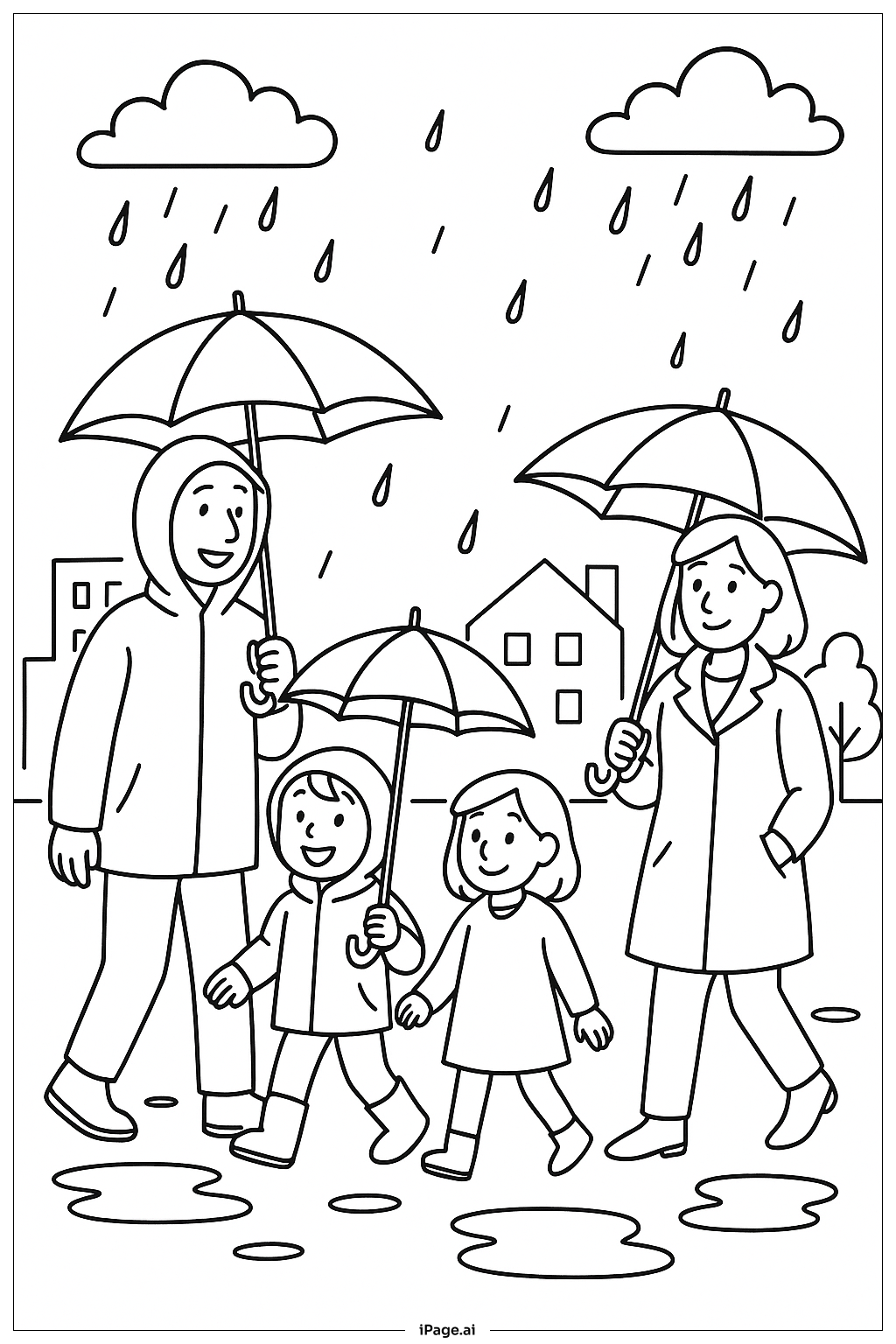
For this March rainy walk scene, start with the sky using soft gray and light blue tones to create that typical spring rain atmosphere. Color the umbrella in bright, cheerful colors like red, yellow, or rainbow stripes to contrast with the gray sky. The raincoat can be colored in vibrant shades such as bright yellow, blue, or green. Make the rain boots fun with bold colors or patterns. For the puddles, use light blue with darker blue shadows to create depth and reflection effects. The grass should be colored in fresh spring green shades, perhaps mixing yellow-green for new growth. Early spring flowers can be soft pastels like light purple, pale pink, or white. Trees can have brown trunks with light green buds starting to appear. Use light gray or silver for the raindrops to make them visible but gentle. Add touches of brown for the muddy path to make the scene more realistic and playful.
Coloring challenges: Which parts are difficult to color and need attention for March Rainy Walk coloring page?
• Raindrop Details: One of the main challenges in this coloring page is coloring the numerous raindrops falling from the sky. These small, delicate elements require careful attention to ensure they remain visible against the sky background. Children may find it tricky to use light enough colors so the drops do not disappear, yet distinct enough to show they are rain. Using metallic or silver crayons can help, but steady hand control is needed for each tiny drop.
• Puddle Reflections: Creating realistic-looking puddles with reflections presents a moderate challenge. To make puddles appear wet and reflective, colorists need to understand how to layer lighter and darker shades of blue or gray. Adding highlights where light would reflect and darker areas for depth requires some understanding of light and shadow. Younger children might struggle with this concept and may need guidance on leaving white spaces for shine effects.
• Layering Rain Gear Textures: The raincoat and umbrella fabric offer opportunities to create interesting textures, but this can be challenging. Children might want to add stripes, polka dots, or plaid patterns to make the rain gear more interesting. Keeping patterns consistent and aligned across curved surfaces like an umbrella requires planning and careful coloring. Blending colors to show fabric folds and shadows adds another layer of difficulty.
• Background Depth: Creating a sense of distance between the foreground walker and background trees, clouds, and scenery requires understanding of perspective. Objects in the distance should be colored more lightly or with less detail than those up close. This concept can be difficult for younger colorists who may want to use the same intensity of color throughout the entire page.
Benefits of coloring books: Advantages of drawing March Rainy Walk coloring page
Coloring this March rainy walk scene offers wonderful developmental benefits for children. It helps improve fine motor skills through the careful coloring of small details like raindrops, flower petals, and tree buds. The image encourages emotional expression and mood exploration, as children can choose colors that reflect how rainy weather makes them feel—whether calm and peaceful or energetic and playful. This scene also teaches children about seasonal changes and weather patterns, connecting art with nature education. The variety of elements, from clothing textures to natural backgrounds, allows children to practice color mixing and shading techniques. Working on puddle reflections and raindrop effects introduces basic concepts of light, shadow, and transparency in a fun, accessible way. This coloring page can spark conversations about springtime, outdoor activities, and weather preparation. It promotes patience and focus as children work through the detailed areas, while the cheerful subject matter keeps the activity enjoyable and engaging for all ages.