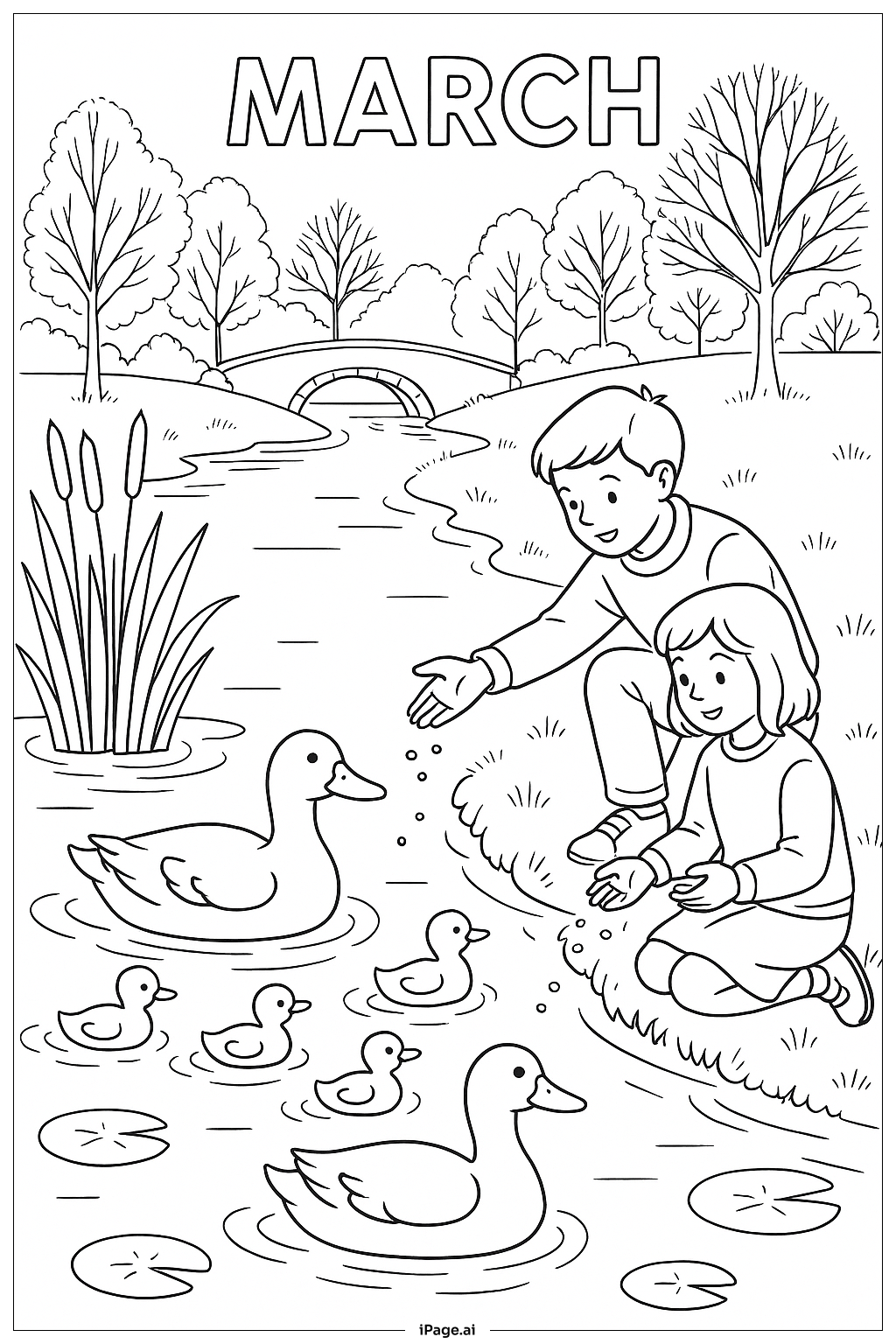
Coloring tips: How to color March Pond with Ducks coloring page well?
Use soft greens for the grass and trees to show early spring growth. The water can be colored in light blues and gentle reflections of the sky. Color the ducks in yellows and browns to make them stand out. For the children, use warm colors like reds, blues, and pinks for their clothes to add contrast to the scene. The bridge can be gray or light brown to look like stone or wood. The sky could be a pale blue to reflect a nice March day. Add gentle shading to the trees and grass for depth.
Coloring challenges: Which parts are difficult to color and need attention for March Pond with Ducks coloring page?
1. Coloring the ducks and ducklings: It's important to use different shades to show their shapes and feathers clearly without mixing colors too much. 2. Water reflections: Capturing the gentle water ripples and reflections can be tricky, needing delicate coloring strokes. 3. Background trees: Coloring many thin branches without over-coloring or losing details requires patience. 4. Small details: The reeds, lily pads, and grass need careful coloring to avoid smudging or coloring outside lines. 5. Coloring the children’s clothes and skin tones evenly is a challenge for young colorers who are still learning control.
Benefits of coloring books: Advantages of drawing March Pond with Ducks coloring page
Coloring this scene helps children practice fine motor skills by coloring inside small and medium shapes like the ducks and grass. It encourages attention to detail and patience. The outdoor setting promotes learning about nature and springtime, enhancing curiosity. Using different colors for water, animals, and plants teaches color recognition and mixing. This page also fosters creativity as children decide how to color different elements to make the picture lively and cheerful.