Coloring tips: How to color March Hot Tea coloring page well?
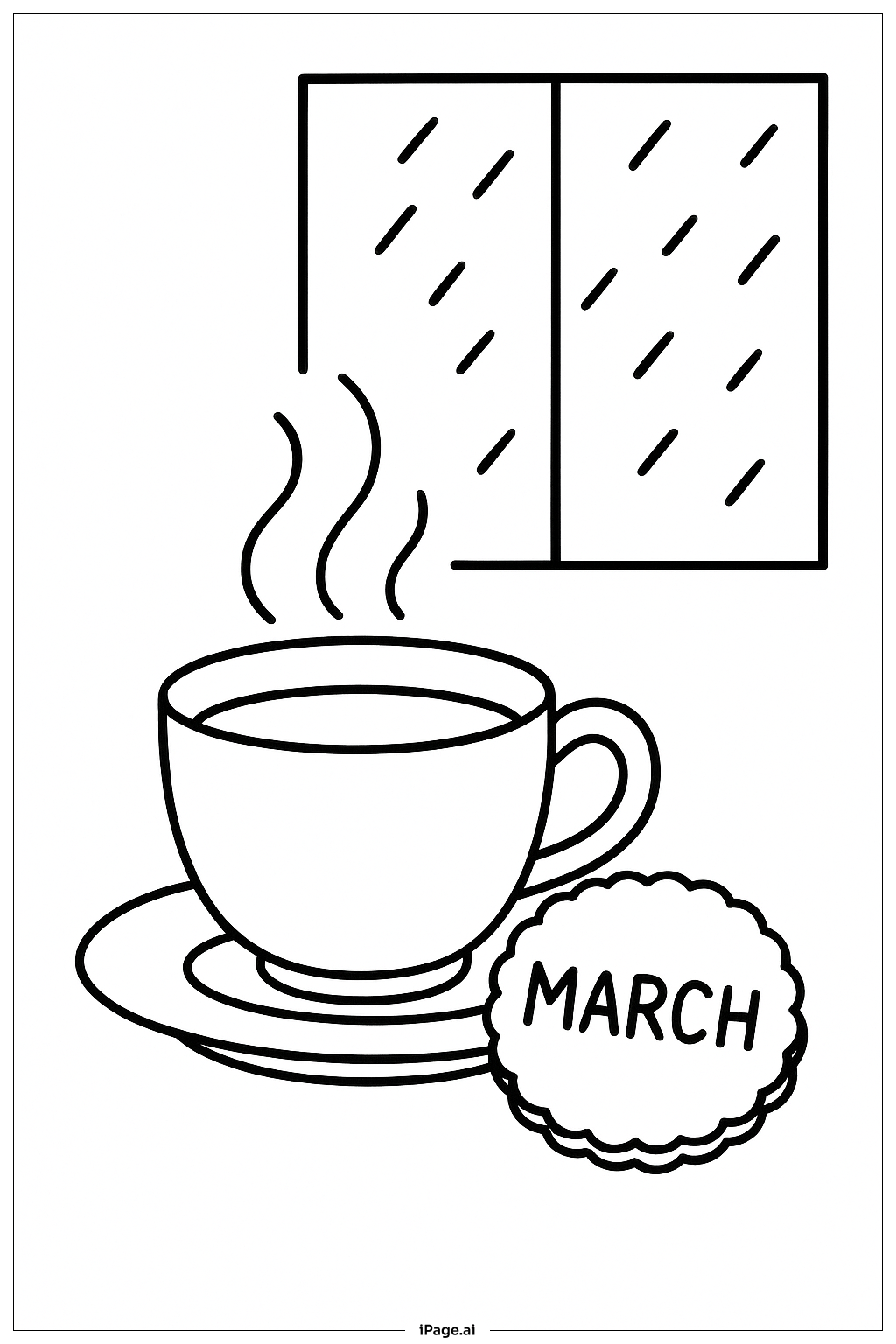
For the teacup, consider using warm ceramic tones like cream, soft yellow, or pale pink for the base. Add pops of color to the decorative patterns using blues, greens, or purples. The tea inside can be colored with warm amber, brown, or reddish-orange hues to suggest black tea, or soft green for herbal varieties. Make the steam light gray or leave it white with subtle blue shadows to create an airy, ethereal effect. For the spring elements, use fresh March colors like soft greens for new leaves, pastel yellows and pinks for early flowers, and light blues for any sky or water elements. The saucer can complement the cup or contrast with it using coordinating colors. Consider adding shading beneath the cup and around the steam to create depth and dimension in your finished piece.
Coloring challenges: Which parts are difficult to color and need attention for March Hot Tea coloring page?
• Steam Details: The flowing steam wisps require careful attention to create a realistic, ethereal appearance. Children may find it challenging to decide whether to color the steam or leave it white, and how to add subtle shading to make it appear light and airy without making it look heavy or solid. The organic, curving shapes of the steam need gentle color transitions to maintain their delicate quality.
• Intricate Cup Patterns: The decorative elements on the teacup, including floral motifs and geometric designs, contain small detailed areas that require precision and patience. Younger children may struggle to stay within the lines of these tiny patterns, while older colorists need to consider how to make these details stand out without overwhelming the overall design. Choosing complementary colors for multiple pattern elements can be complex.
• Creating Depth and Dimension: Making the teacup appear three-dimensional requires understanding of light and shadow. Colorists need to determine where highlights should be placed on the curved surface of the cup and handle, and where shadows naturally fall. The challenge includes making the tea inside look liquid and realistic, with appropriate shading to show it is below the rim of the cup.
• Balancing Multiple Elements: The composition includes the cup, saucer, steam, and surrounding March elements, each requiring different coloring approaches. Children must decide how to distribute colors throughout the image so that no single element overpowers the others, while still maintaining visual interest and creating a cohesive seasonal scene that captures the essence of March.
Benefits of coloring books: Advantages of drawing March Hot Tea coloring page
Coloring this March Hot Tea page offers wonderful opportunities for children to practice fine motor skills, especially when working on the detailed patterns and small floral elements. The varied shapes and sizes throughout the image help develop hand-eye coordination and pencil control. This cozy scene encourages mindfulness and relaxation, much like enjoying a real cup of tea, helping children learn to focus and find calm moments. The seasonal theme teaches about March traditions and the comforting rituals that help us transition from winter to spring. Children can explore color theory by experimenting with warm tones for the tea and cup, and cooler tones for steam and spring elements. The steam wisps provide excellent practice in creating soft gradients and understanding transparency. This image also sparks conversations about self-care, warmth, and taking peaceful breaks, promoting emotional awareness and healthy habits.