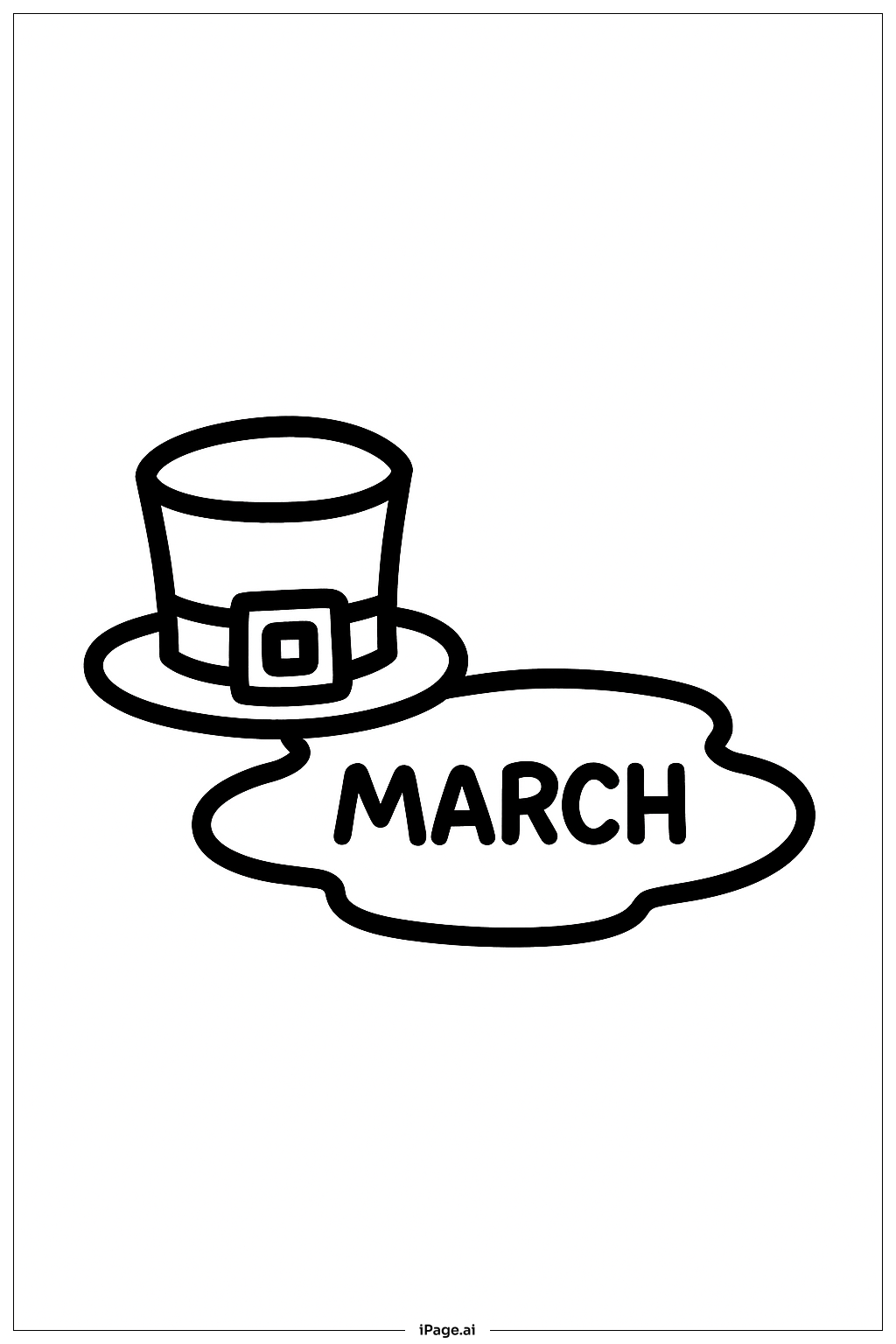
Coloring tips: How to color March Hat Puddle coloring page well?
For the hat, consider using rich spring colors like deep purple, soft pink, or cheerful yellow with a contrasting ribbon band in complementary shades. The puddle offers a wonderful opportunity to experiment with blues and grays, adding white highlights to show reflections and shine. Try blending light blue with hints of silver to create a realistic water surface. Color the sky with pale blues and soft grays to suggest cloudy March weather. The grass can be colored in fresh spring greens, mixing lighter and darker tones for depth. Add tiny pops of color to the flowers using pastels like lavender, buttercup yellow, or soft pink. For the raindrops, use light gray or silver, leaving some white space to show transparency. The ground around the puddle works well in browns and tans with touches of green for emerging vegetation.
Coloring challenges: Which parts are difficult to color and need attention for March Hat Puddle coloring page?
• Water Reflection Details: The puddle presents one of the most challenging aspects, requiring careful attention to create a realistic reflective surface. Children need to understand how reflections work, using similar colors to the sky but in reversed or distorted patterns. Blending techniques help create the illusion of water, with lighter shades near the edges and darker tones in the center. Adding small white highlights strategically can make the water appear wet and glossy.
• Hat Texture and Dimension: Creating the appearance of fabric texture on the hat requires varying pressure and color intensity. The brim needs shading underneath to show it casting a shadow, while the crown should be lighter where light hits it. The hat band offers a chance to add pattern or contrasting color, but keeping it distinct from the main hat body without harsh lines takes practice and control.
• Raindrop Transparency: Depicting falling raindrops so they appear translucent rather than solid is tricky. Children must use very light pressure and leave surrounding areas slightly lighter to suggest the rain is see-through. Overlapping raindrops add complexity, as each drop needs to maintain its individual appearance while blending into the overall rainy atmosphere.
• Grass and Ground Texture: The small blades of grass and emerging spring growth require fine motor control and patience. Each blade should point in slightly different directions for natural appearance, and varying the green shades prevents the grass from looking flat. Blending the ground colors where wet earth meets dry areas adds realism but requires smooth color transitions.
Benefits of coloring books: Advantages of drawing March Hat Puddle coloring page
Coloring this March Hat Puddle scene helps children develop important observation skills about weather and seasonal changes. They learn to recognize the visual characteristics of spring, including rain, emerging vegetation, and transitional weather patterns. The puddle element teaches about reflections and water properties, building scientific understanding through art. Working with the various textures in this image enhances fine motor skills and hand-eye coordination, especially when coloring small details like grass blades and raindrops. The scene encourages creative color choices and experimentation with blending techniques, building artistic confidence. Children practice patience and focus while working on the intricate details. The peaceful nature of the image promotes relaxation and mindfulness. This coloring page also provides opportunities to discuss March weather, the water cycle, and seasonal transitions, connecting art activities with learning about the natural world and calendar concepts.