Coloring tips: How to color March Flower Pot coloring page well?
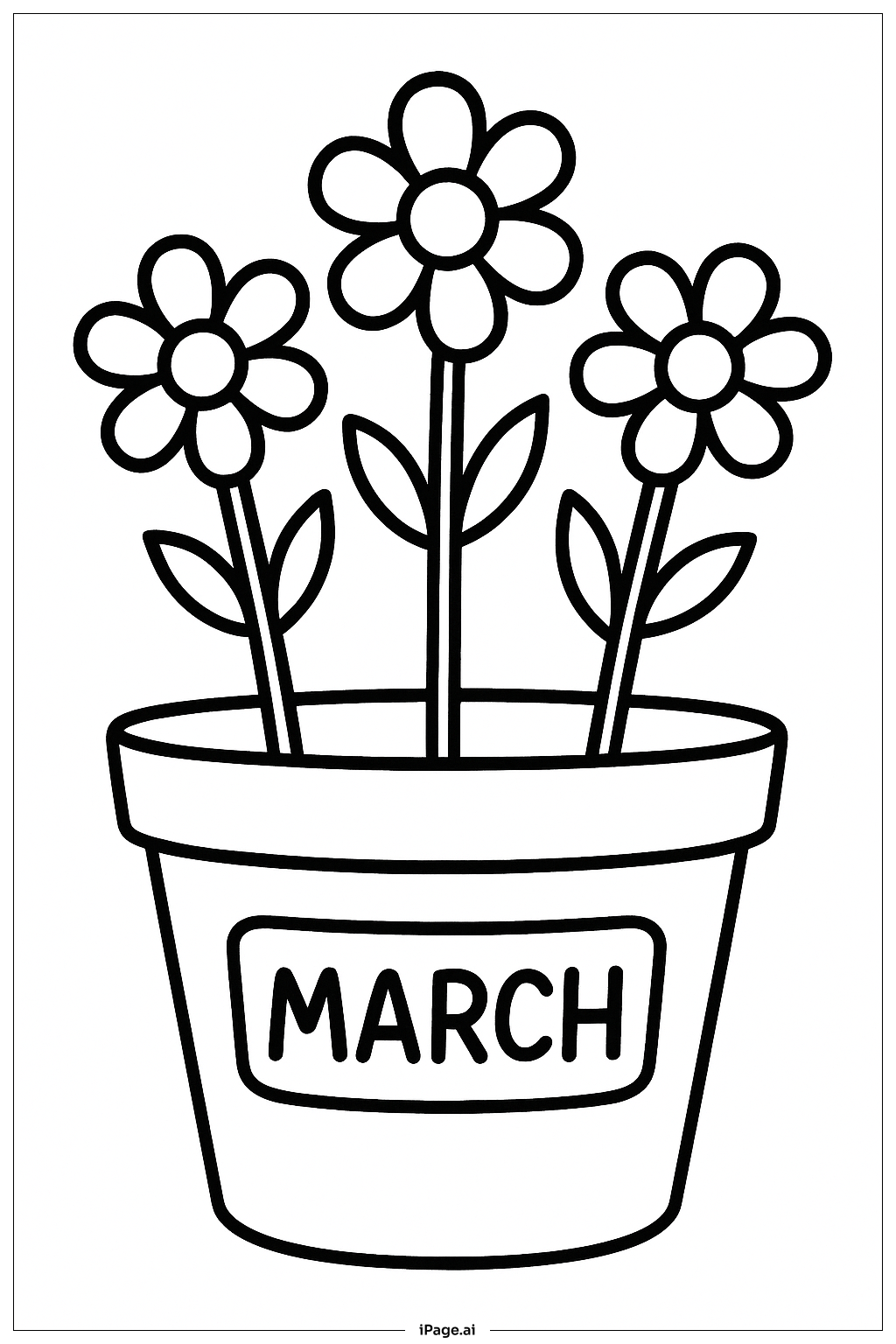
You can use bright and lively colors to make this flower pot look beautiful. Color the flowers with different shades like red, pink, yellow, or purple to make each flower unique. The leaves can be colored in various shades of green to add depth. The pot can be painted in warm tones such as brown, orange, or terracotta to create a natural look. Feel free to use a yellow or blue background to represent sunlight or sky. Use crayons, markers, or colored pencils for coloring. Try to stay inside the lines for neat coloring, but don’t worry about small mistakes—it’s about having fun!
Coloring challenges: Which parts are difficult to color and need attention for March Flower Pot coloring page?
1. Coloring the small petals and keeping the colors inside the lines can be tricky for younger children. 2. Choosing different colors for the flowers and leaves without making the picture look too busy might be challenging. 3. The label on the pot has letters that require careful coloring to keep them clear and readable. 4. Blending colors on the leaves or petals for a natural look might be difficult for beginners. 5. Coloring evenly inside the pot’s rim to show depth and shape requires attention to detail.
Benefits of coloring books: Advantages of drawing March Flower Pot coloring page
Coloring this flower pot helps kids practice their fine motor skills by carefully filling the small spaces like petals and leaves. It encourages creativity by allowing them to choose colors freely and combine shades. This activity also teaches children about plants and spring, promoting learning through play. Coloring improves focus and patience as kids concentrate on staying inside the lines. Finally, completing the coloring can boost confidence and provide a sense of accomplishment.