Coloring tips: How to color March Flower Crown coloring page well?
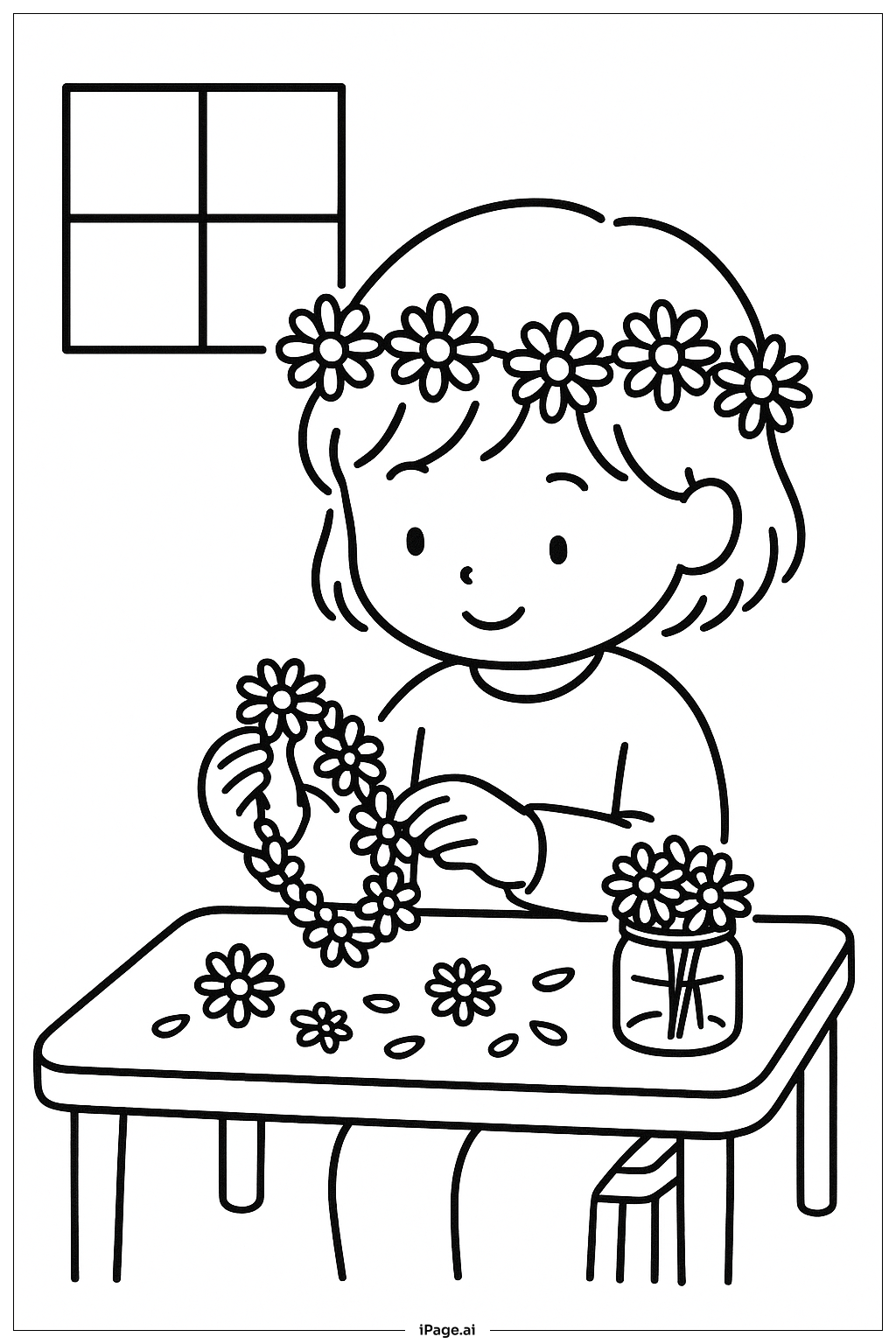
Start with the largest flowers first. Pick bright spring colors like pink, yellow, lavender, and soft orange for the blooms. Use light green for the leaves and vines to keep them natural and fresh. Try mixing two shades of the same color on each petal — a lighter tone near the center and a darker tone near the edges. This creates depth and makes the flowers look more real. For the small buds and accent flowers, use contrasting colors so they stand out from the bigger blooms. You can use white or cream for daisies to keep them simple and clean. Color the vines and tendrils in a slightly darker green than the leaves. Take your time with each flower and do not rush. If you like a softer look, use colored pencils. If you want bold and bright, try markers or crayons. Have fun mixing colors and making each bloom unique!
Coloring challenges: Which parts are difficult to color and need attention for March Flower Crown coloring page?
• Petal Layering: Many flowers in this crown have multiple layers of petals that overlap each other. Coloring each layer without smearing into the next requires a steady hand and patience. You need to wait for one area to dry before moving to the next, especially when using markers or watercolors.
• Small Accent Details: The crown includes tiny buds, small wildflowers, and delicate tendrils that are very narrow. These small details are hard to color neatly, especially for younger children. Using a fine-tipped tool or sharpened colored pencil helps stay within the lines.
• Color Variety and Balance: With so many different flowers in one design, choosing colors that work well together can be tricky. Too many bright colors close together can look cluttered. Spreading out similar colors and using light and dark tones thoughtfully helps create a balanced, pleasing result.
• Vine and Leaf Consistency: The leaves and vines weave throughout the entire crown. Keeping the green tones consistent while still showing some variation between individual leaves takes practice. Using two or three shades of green and applying them systematically makes the foliage look natural without becoming repetitive.
• Circular Crown Structure: Because the design wraps around in a circle, it can be easy to lose track of which sections you have already colored. Planning your color placement before you start and working in one direction around the crown helps you stay organized and avoid coloring the same section twice in different colors.
Benefits of coloring books: Advantages of drawing March Flower Crown coloring page
Coloring this March Flower Crown is a wonderful activity for kids and adults alike. It helps build focus and concentration as you carefully fill in each petal and leaf. Working through the detailed design strengthens fine motor skills and hand-eye coordination, which are especially helpful for younger children still developing pencil control.
Choosing colors for each flower encourages creative thinking and artistic decision-making. Kids learn how colors work together and how light and dark tones can add depth to a flat image. This builds early art skills in a fun, low-pressure way.
The spring theme of the crown brings a sense of joy and calm. Spending quiet time coloring can reduce stress and help both children and adults feel more relaxed and present. It is a great screen-free activity that feels rewarding when finished.
Completing a full coloring page also builds a sense of achievement. Seeing a finished, colorful flower crown gives children a confidence boost and motivates them to keep creating. The design can also be used as a decoration or gift, adding extra meaning to the effort put in. Overall, this is a fun, calming, and skill-building activity for all ages.