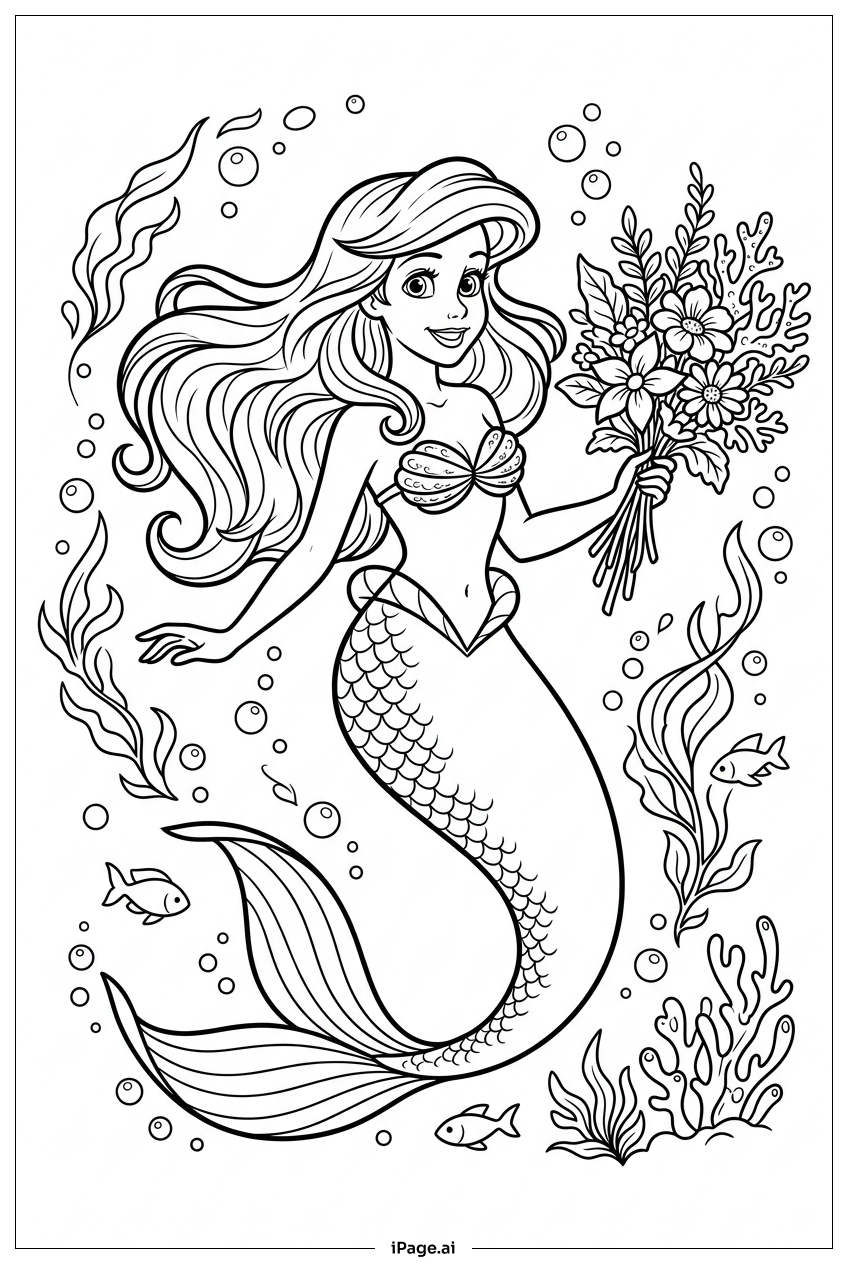
Coloring tips: How to color Little Mermaid holding bouquet among sea flowers coloring page well?
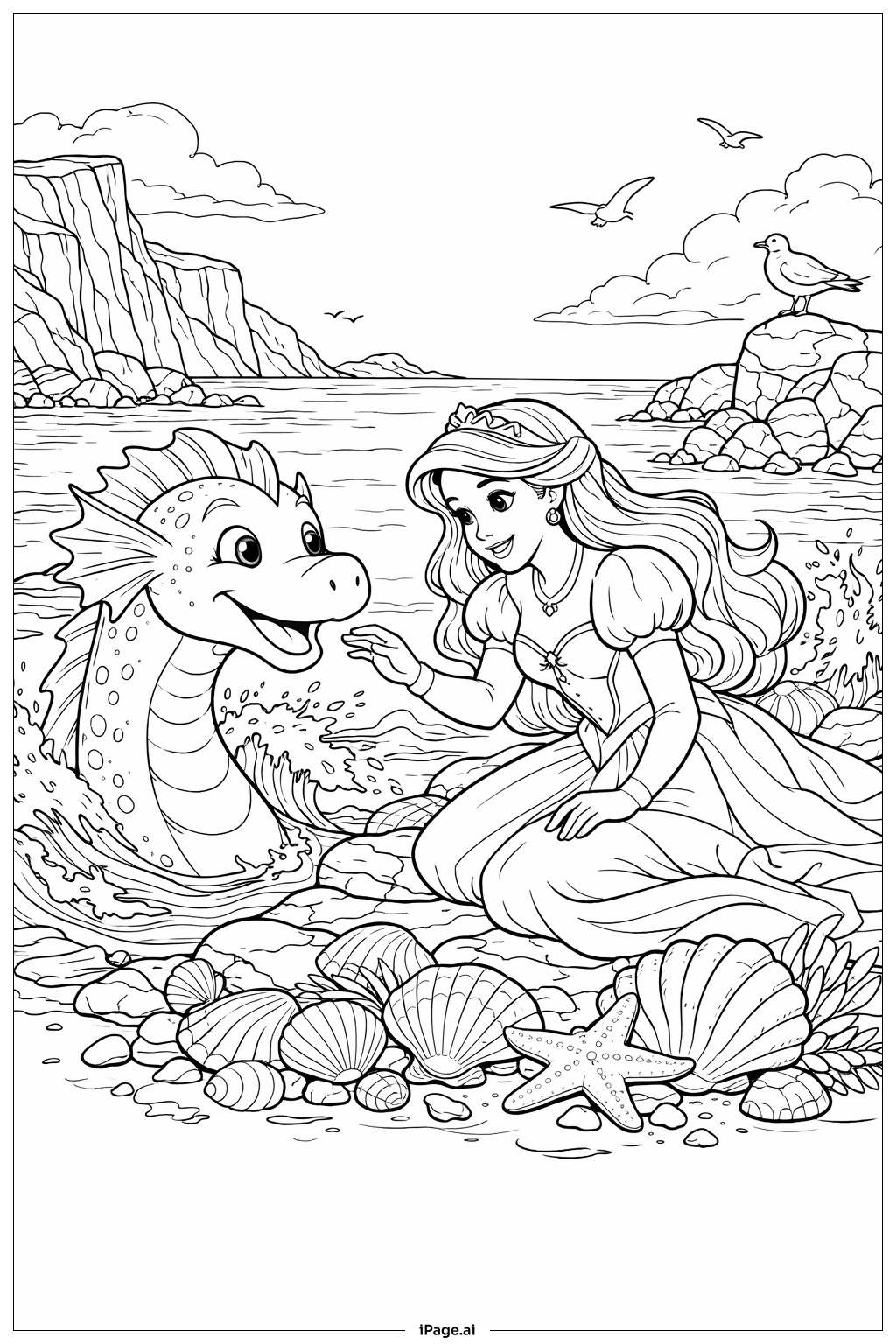
Use soft and bright colors to bring the underwater scene to life. For the Little Mermaid, consider warm shades like coral pink or peach for her skin and vibrant red or auburn for her hair. The bouquet can be colored in a mix of pastel blues, purples, yellows, and oranges to represent the variety of sea flowers. For the surrounding sea plants, use greens in different tones—from light seafoam to deep emerald—to create contrast and texture. Try adding light blue or turquoise to the water background to make the scene feel fresh and oceanic. Experiment with shading to give the sea flowers a delicate and three-dimensional look. Keep colors cheerful and inviting to make the page fun and bright.
Coloring challenges: Which parts are difficult to color and need attention for Little Mermaid holding bouquet among sea flowers coloring page?
• Fine details in the bouquet and sea flowers require careful coloring to separate each bloom clearly without blending colors • The flowing strands of the Little Mermaid’s hair are thin and wavy, demanding steady handwork to avoid coloring outside the lines • Overlapping plants and flowers create complex layers, which can confuse color choices and shading if not planned carefully • Light reflections on the underwater scene are subtle, so adding highlights without overdoing them can be tricky • Coloring a believable underwater palette involves blending greens, blues, and warm skin tones harmoniously, which can be challenging for beginners
Benefits of coloring books: Advantages of drawing Little Mermaid holding bouquet among sea flowers coloring page
Coloring this image helps children improve their fine motor skills by working on detailed patterns like the bouquet and sea flowers. It encourages creativity through choice of colors for an underwater world full of life and magic. The peaceful and joyful scene also promotes relaxation and focus, making coloring a calming activity. Moreover, it teaches children about natural elements like plants and water environments while developing patience and concentration. By shading and layering colors, young artists can explore new techniques and gain confidence in their artistic abilities.