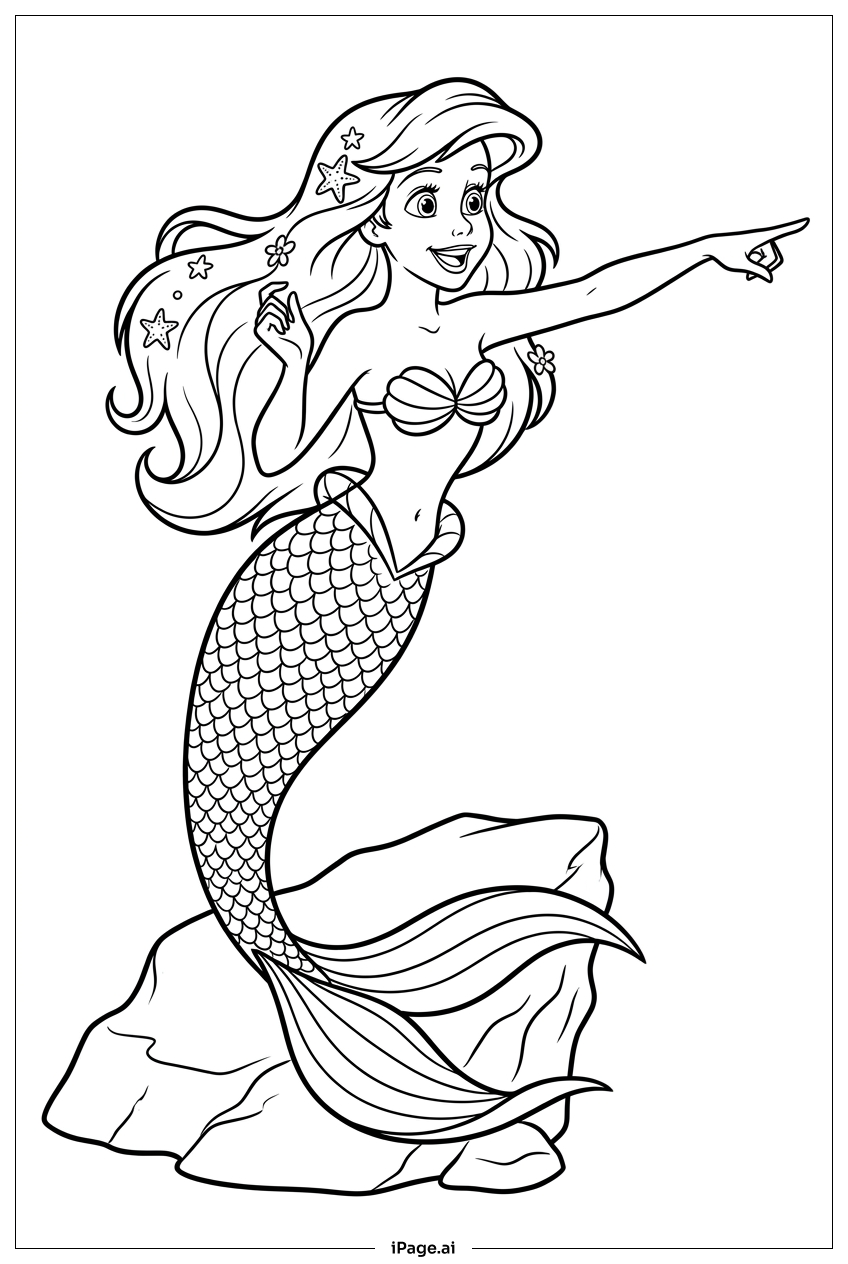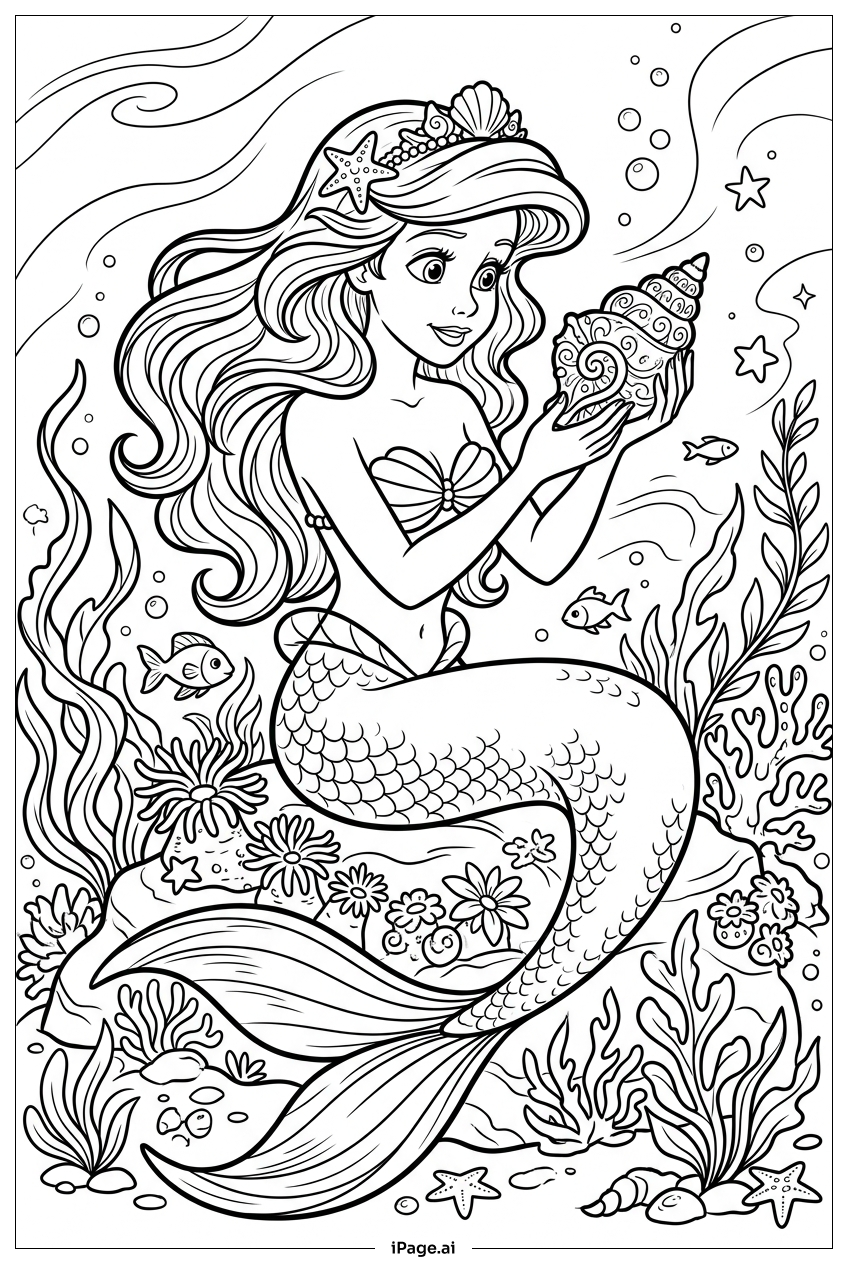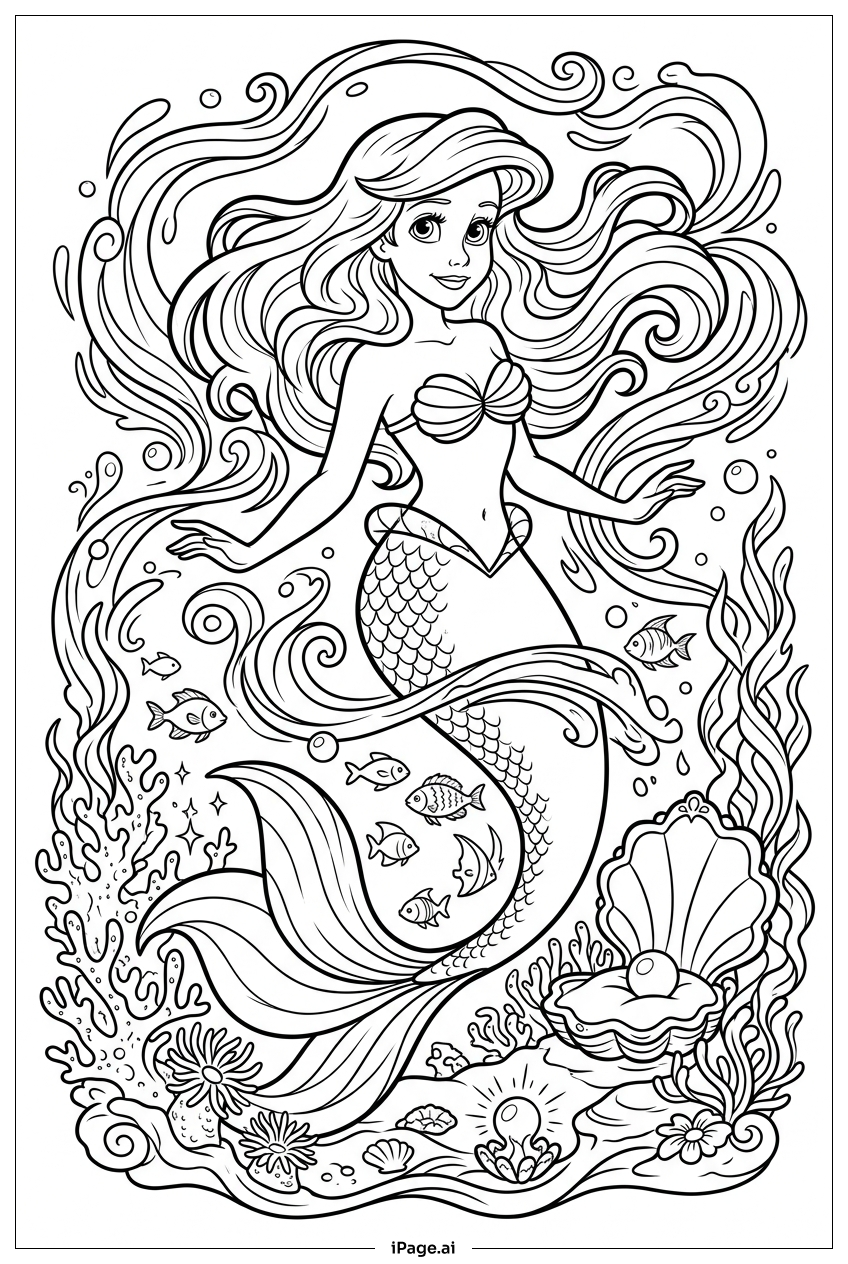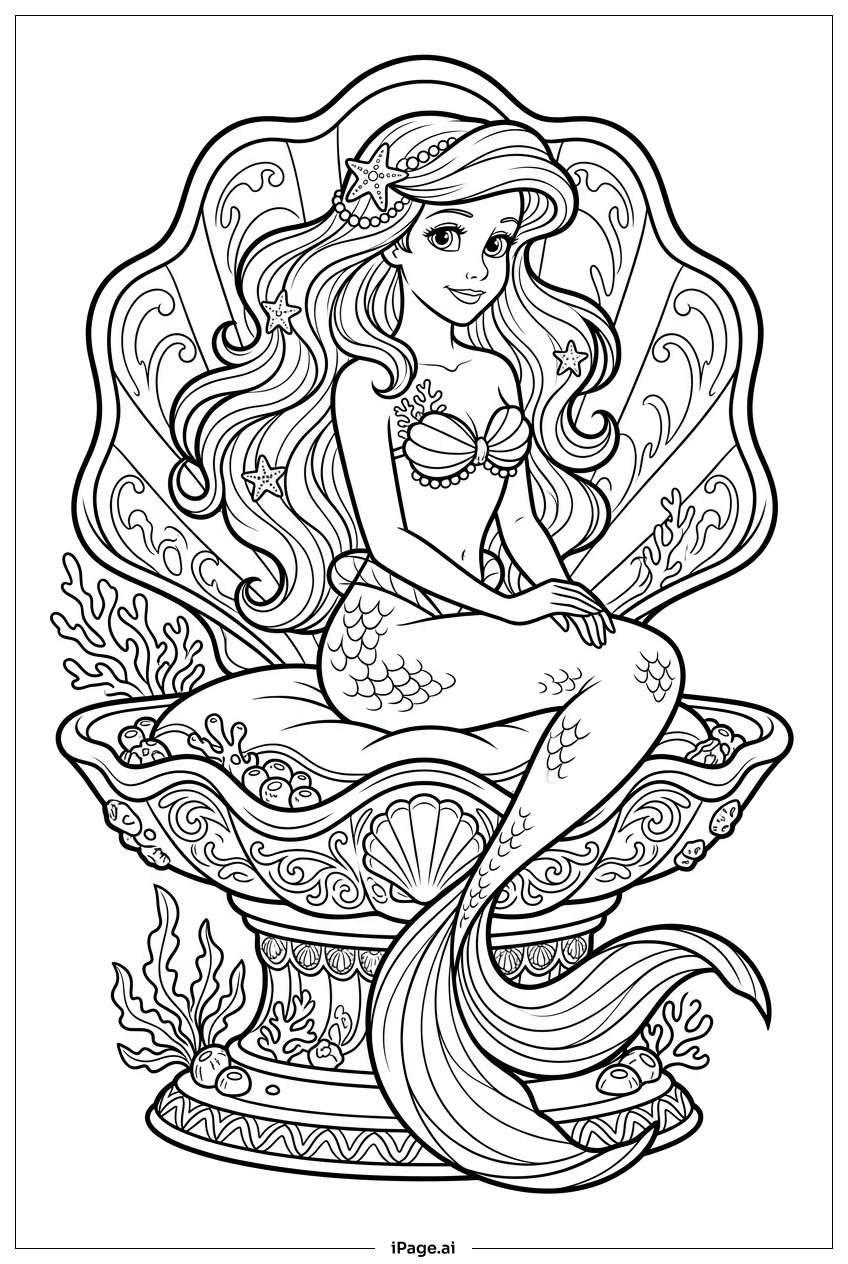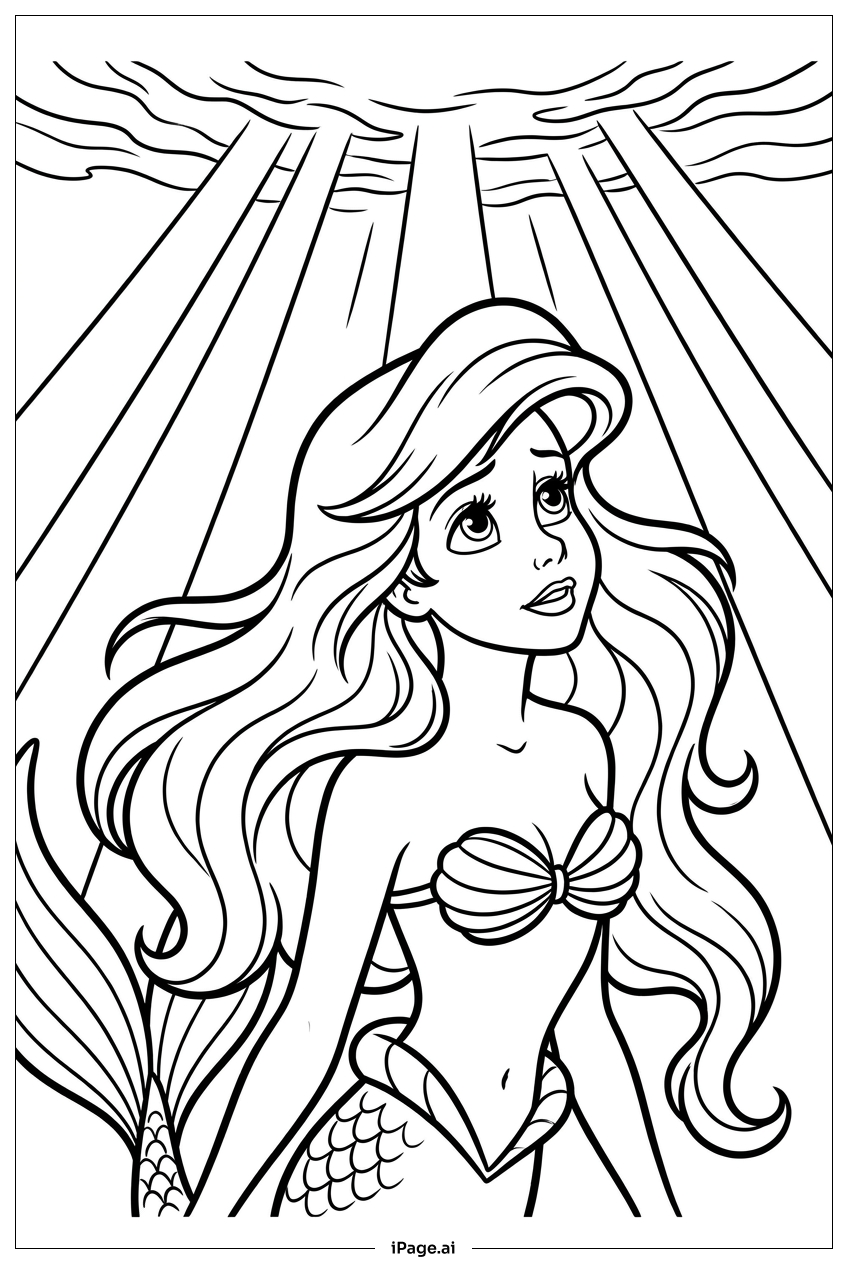
Coloring tips: How to color Little Mermaid gazing toward shimmering surface light coloring page well?
For this coloring page, try using soft blues and aquamarines for the water to capture the underwater feeling. The shimmering surface light can be colored with gentle yellows, whites, and pale golds to create a glowing effect. The Little Mermaid's tail could be vibrant greens, blues, or even purples to make her stand out. Use varied shades of green and brown for the sea plants and rocks to add texture. For her hair, try warm tones like auburn or golden blonde to contrast with the cool background. Don’t forget to color the bubbles lightly with hints of blue or white to show their transparency. Adding some light shading near the edges can help give the scene depth and make it more magical.
Coloring challenges: Which parts are difficult to color and need attention for Little Mermaid gazing toward shimmering surface light coloring page?
- The gradual shading needed to show the shimmering surface light and reflections can be tricky, especially blending yellows and blues smoothly to create a glowing effect.
- Coloring the mermaid’s hair to look flowing and dynamic requires careful lines and some gradient work to give the impression of underwater movement.
- The bubbles and tiny underwater details should be lightly colored or left partially white, which requires a gentle coloring technique to avoid overpowering the image.
- Differentiating the underwater plants and rocks by using varied shades and textures might be challenging for beginners but helps create depth.
- Maintaining contrast between the foreground mermaid and the background water can be difficult while using mostly cool tones. It requires balancing colors carefully so the mermaid does not blend into the background.
Benefits of coloring books: Advantages of drawing Little Mermaid gazing toward shimmering surface light coloring page
Coloring this Little Mermaid scene helps improve fine motor skills by encouraging careful coloring of detailed elements like hair, bubbles, and plants. It promotes creativity through color blending, shading, and thoughtful color choices to represent underwater light and reflections. Children can develop patience and concentration by focusing on the subtle details and layering colors to create depth. This activity also sparks imagination as they bring to life a magical underwater world full of mystery and wonder. Coloring sea life themes can increase interest in marine environments and nature, fostering a sense of care and curiosity about the ocean.