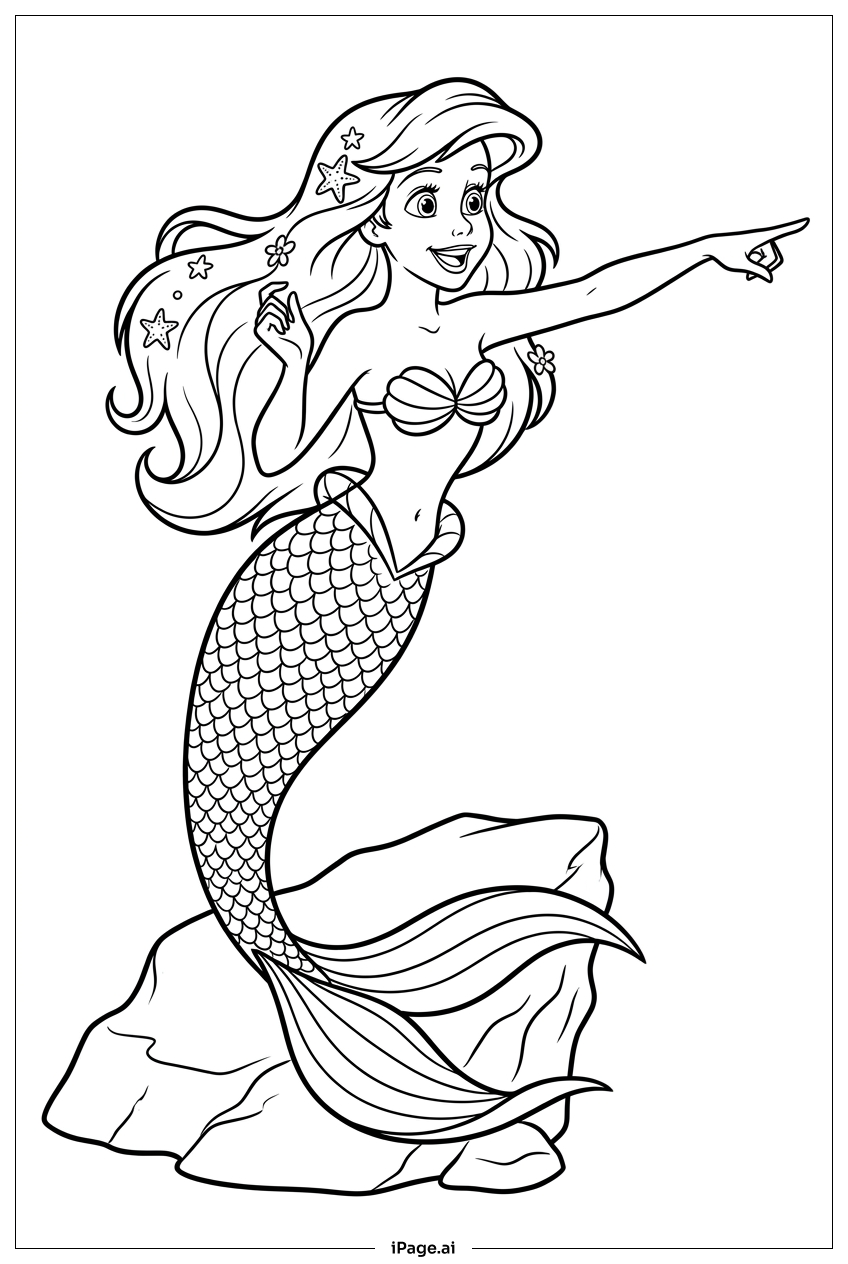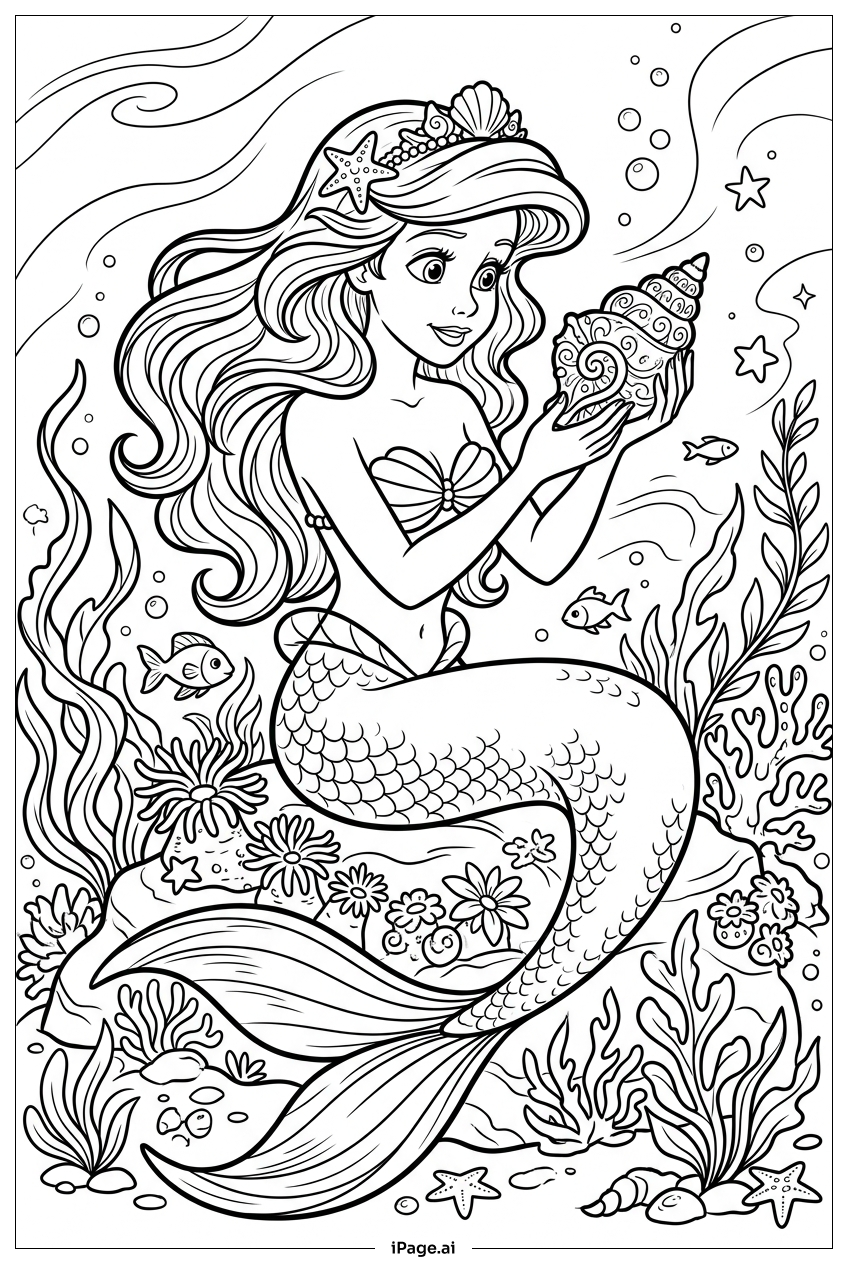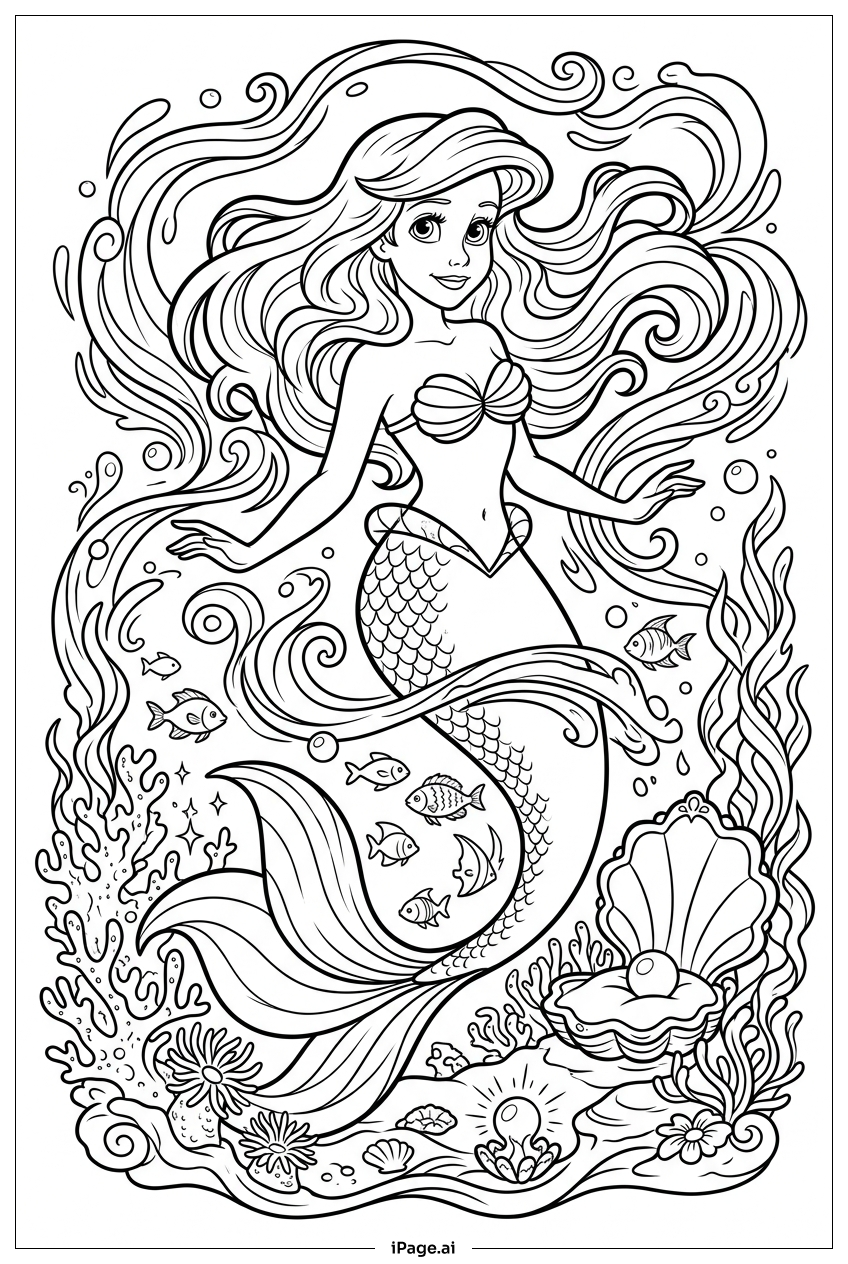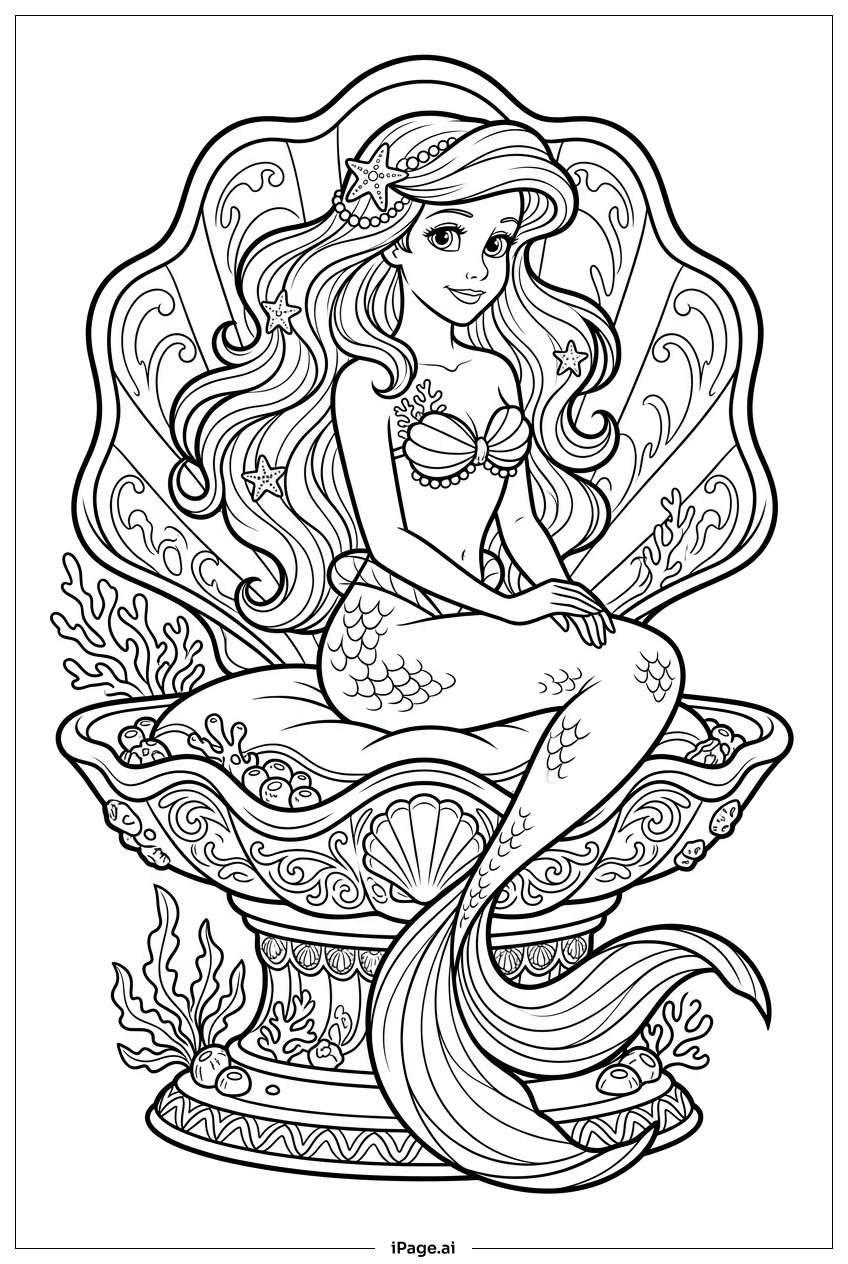
Coloring tips: How to color Little Mermaid discovering coral in vibrant reef coloring page well?
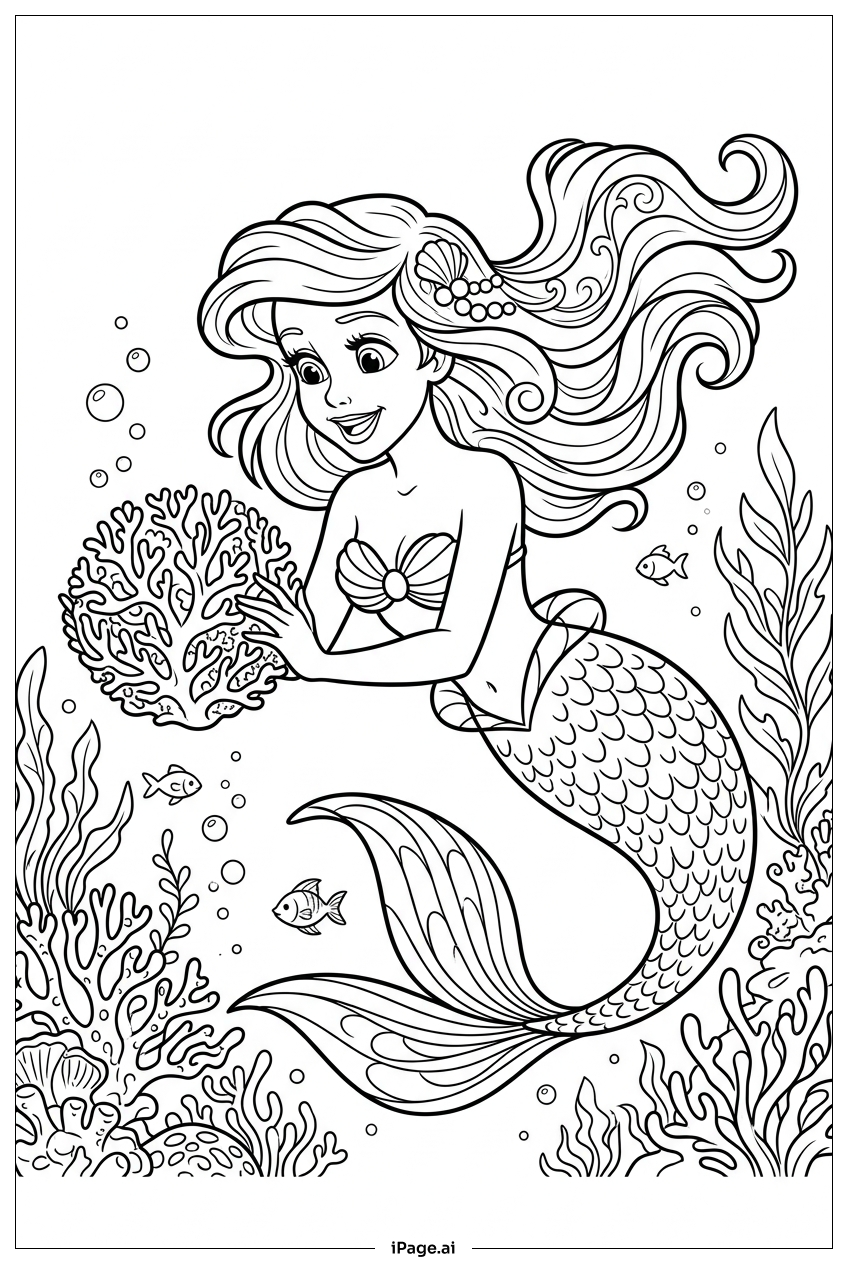
Use a bright and cheerful palette to bring this underwater scene to life. Color the coral in a mix of reds, pinks, oranges, and purples to reflect the rich diversity of the reef. The Little Mermaid’s tail can be shaded in shimmering greens or blues with some sparkles to show its magical nature. Her hair might be a vibrant red or another striking color. For the fish, choose multiple hues like yellow, blue, and silver to create contrast. The background water can be different tones of blue to give a sense of depth. Adding soft shading and subtle highlights will make the scene more dynamic and engaging for children.
Coloring challenges: Which parts are difficult to color and need attention for Little Mermaid discovering coral in vibrant reef coloring page?
• Detailed Coral Shapes: The coral formations have many small sections and curves which require careful coloring to stay within the lines.
• Multiple Elements: With fish, seaweed, bubbles, and seashells, younger colorers might find it challenging to color each object distinctly.
• Shading Water: Representing depth in water using different blue shades can be tricky, especially blending smoothly.
• Maintaining the Mermaid’s Flow: Her hair and tail have flowing lines that demand steady hand and attention to detail.
• Color Balance: Choosing colors that harmonize yet keep the scene lively may require planning so the reef doesn’t look too busy or dull.
These difficulties make this image a wonderful practice in precision and creativity.
Benefits of coloring books: Advantages of drawing Little Mermaid discovering coral in vibrant reef coloring page
Coloring this image helps children develop fine motor skills as they carefully fill in detailed coral and fluid shapes. It encourages creativity through selecting vibrant colors and imagining an underwater world. Working on blending shades for the water and shimmer on the mermaid’s tail builds color awareness and art technique. Additionally, it fosters patience and focus needed to complete complex images. Finally, coloring scenes inspired by nature and fantasy can stimulate curiosity about ocean life and storytelling, making the process both fun and educational.