Coloring tips: How to color Little Mermaid Swimming Through Kelp coloring page well?
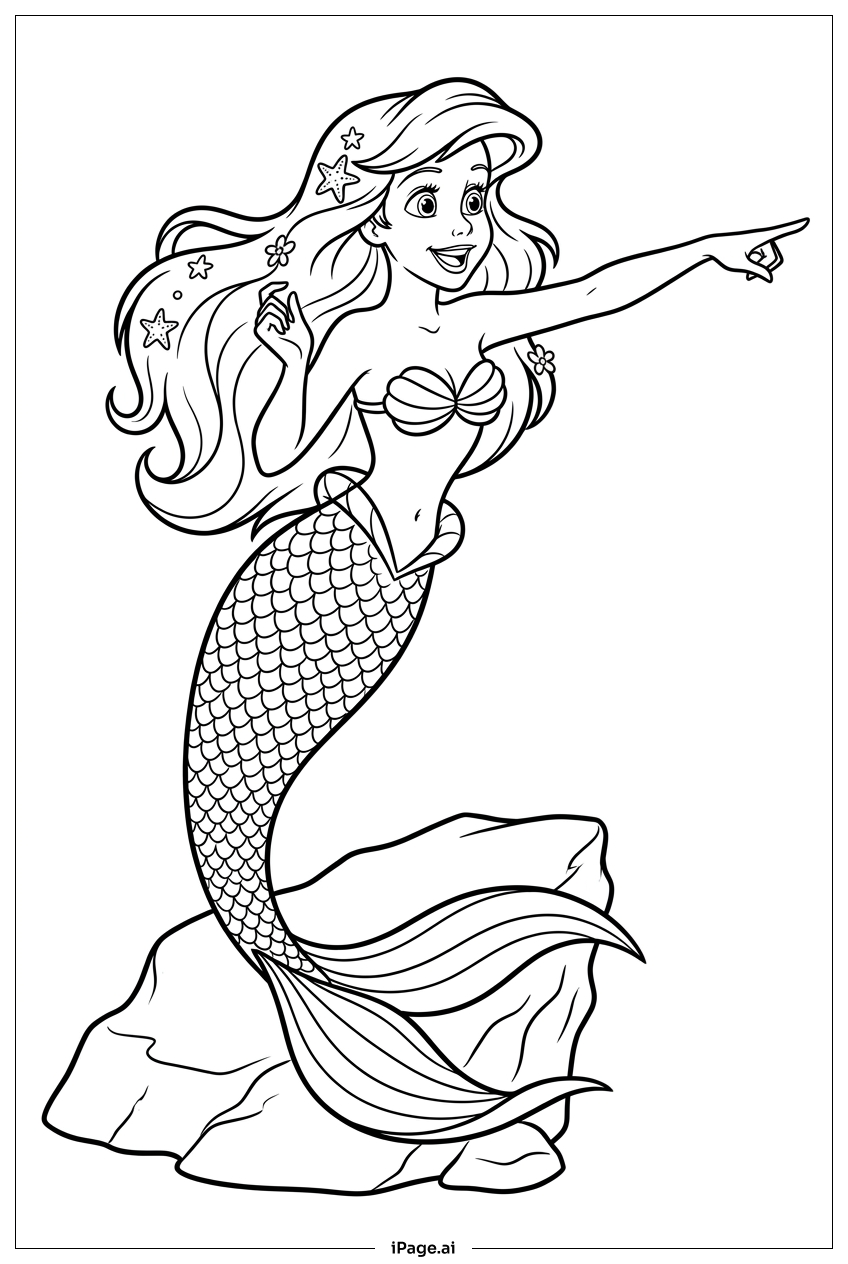
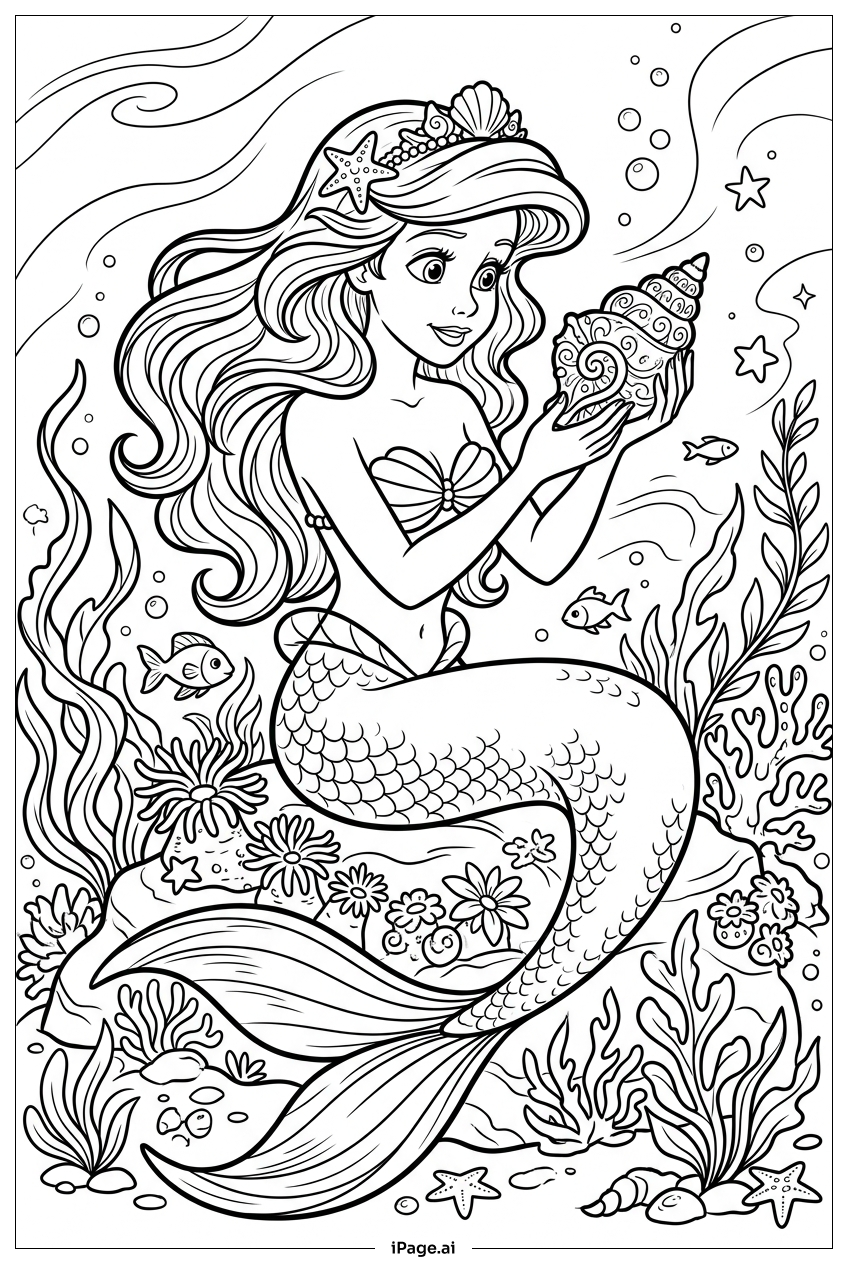
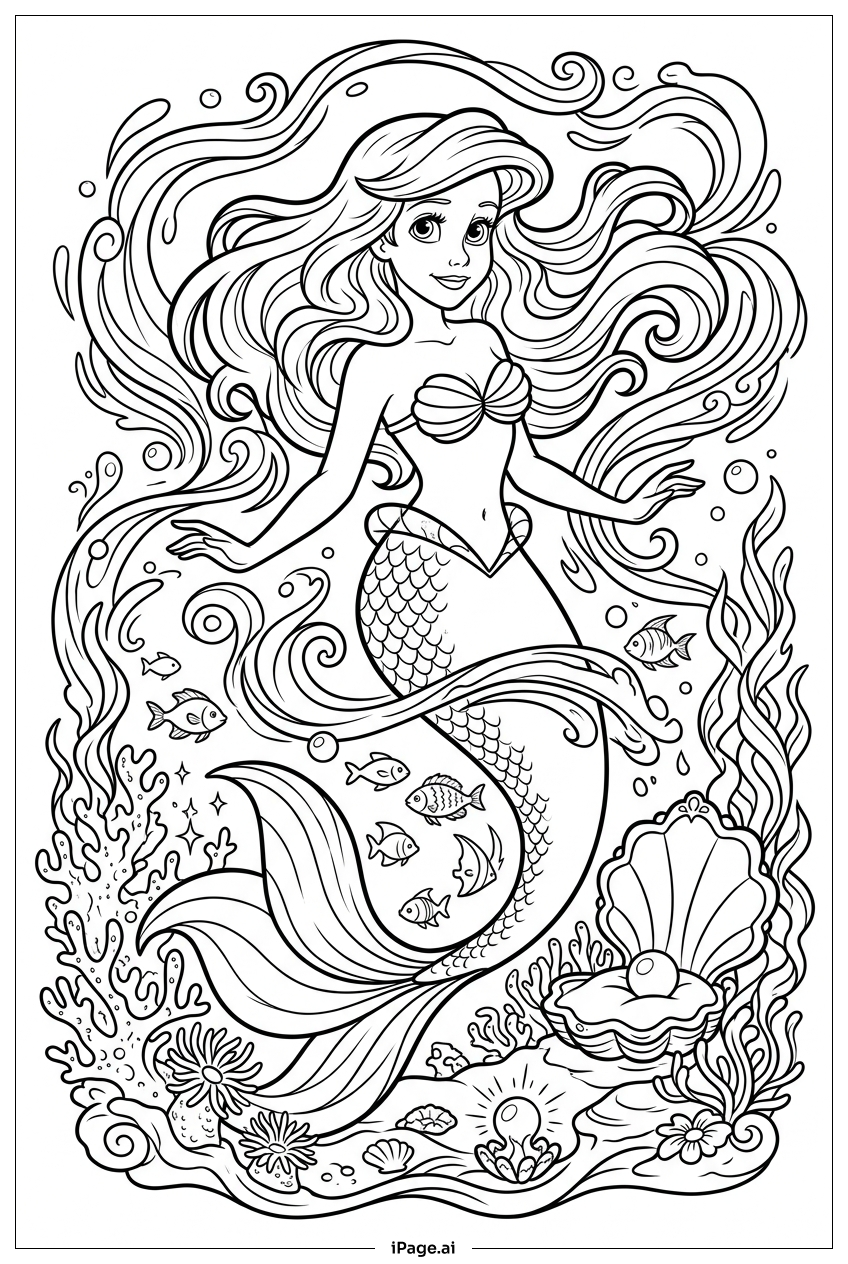
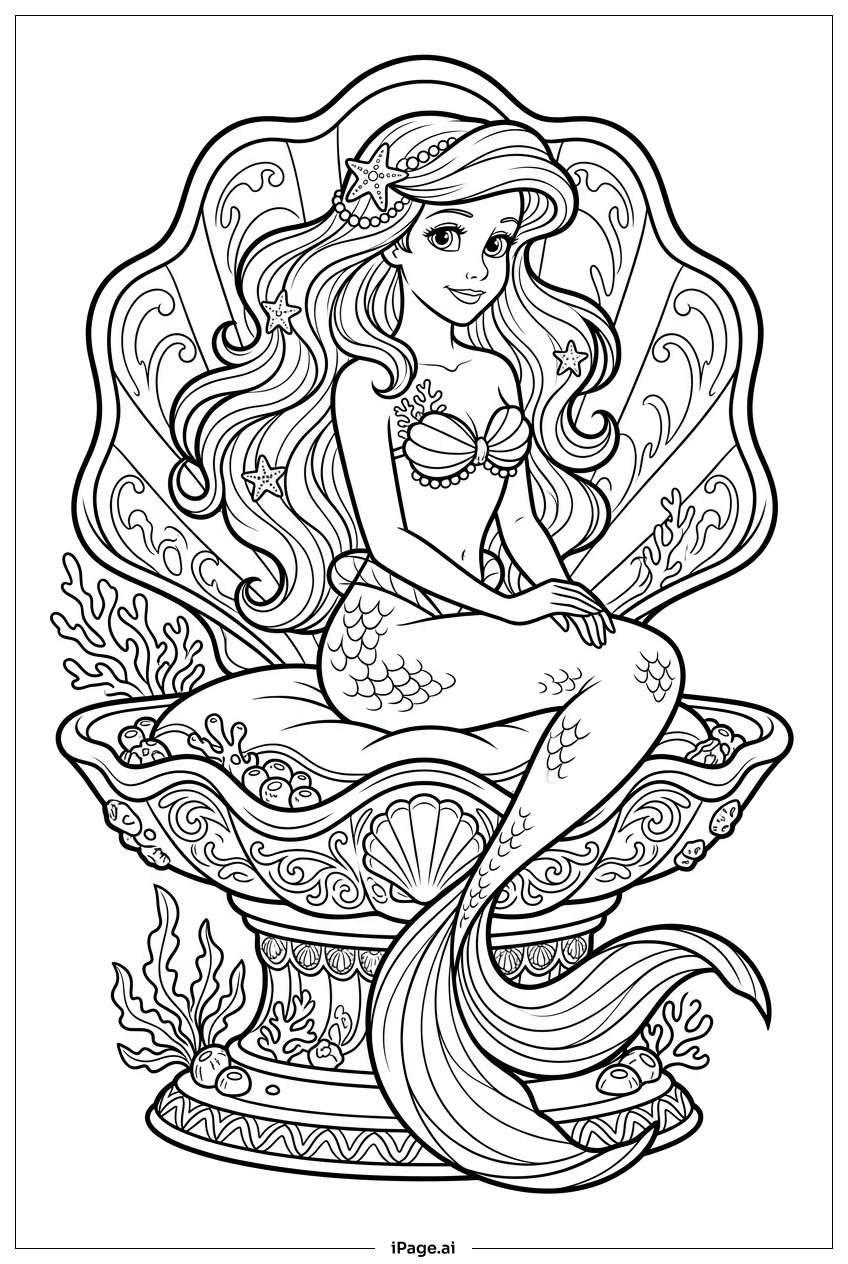
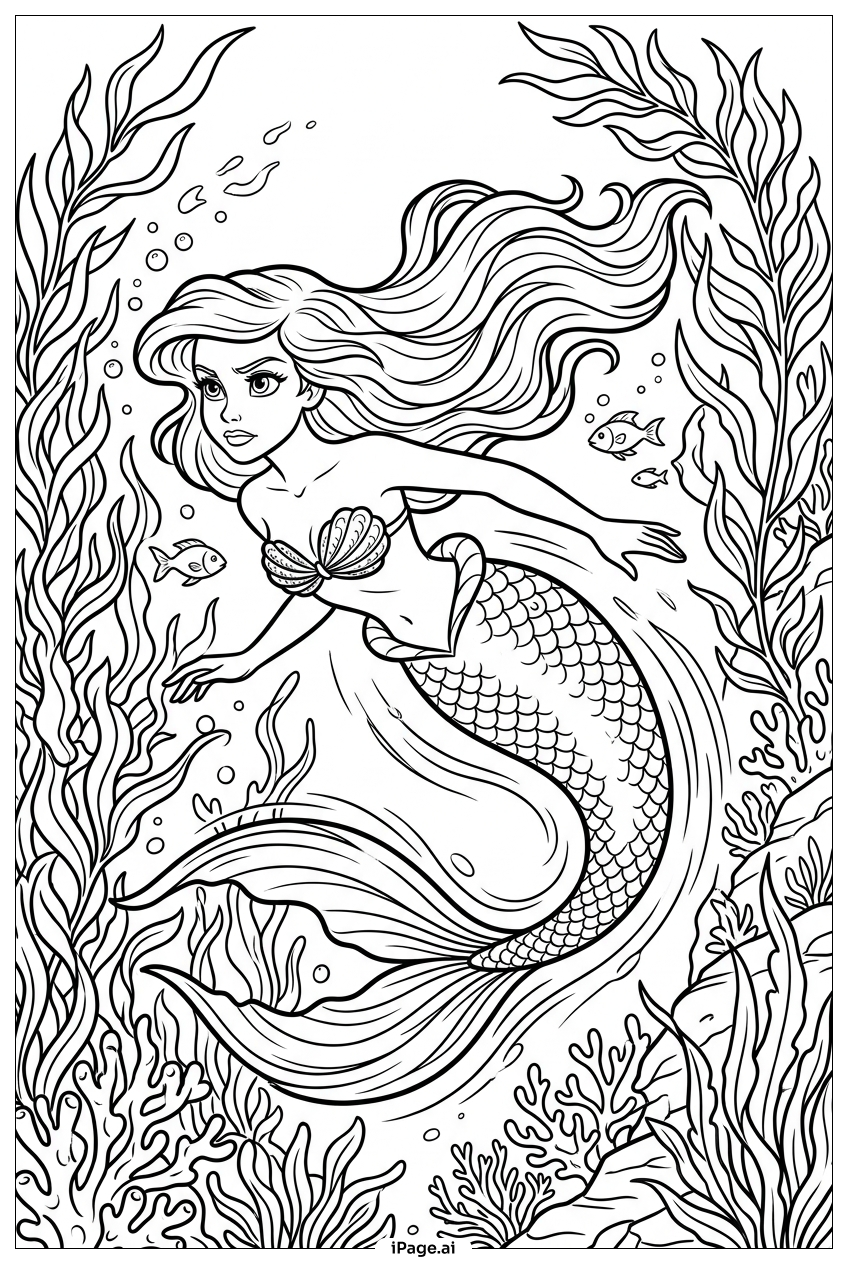
Start with the Little Mermaid herself. Use warm skin tones for her face and arms. Her tail can be a bright teal, green, or even a shimmery purple — let your imagination go wild! Her hair looks great in golden yellow, auburn, or even a fantasy ocean blue. For the kelp, use different shades of green, from bright lime to deep forest green, to make the plants look layered and full. Add some dark green shadows between the kelp strands to give depth. Color the water background in soft blues and teals. Light blue works near the surface, while deeper blue-greens look great further down. You can add tiny touches of yellow or white for the bubbles to make them pop. Try using a light hand for background areas and press harder for the mermaid and kelp in the front to create a sense of depth.
Coloring challenges: Which parts are difficult to color and need attention for Little Mermaid Swimming Through Kelp coloring page?
• Kelp Layering and Depth: The dense kelp forest has many overlapping stalks and leaves. Deciding which strands are in front and which are behind can be tricky. Kids and beginners may find it hard to keep each stalk a distinct shade of green without the whole scene blending into one flat color. Using at least three different green tones helps separate the layers and makes the image look more realistic and lively.
• Mermaid Tail Gradient: The mermaid's fish tail often looks best with a color that shifts gradually from one shade to another, such as teal fading into aqua or purple fading into blue. Blending colors smoothly in a small curved area is a challenge, especially for younger colorists who are still learning how to transition between tones without harsh lines.
• Hair in Motion: The flowing hair streaming behind the mermaid has many curved lines and strands. Keeping the color inside each strand while also making the hair look dynamic and soft requires steady hands and patience. Colorists need to follow the curve of each line carefully to avoid going outside the edges.
• Water Background: Filling in the water without making it look flat is a common challenge. The background needs light and dark variations to suggest depth and movement, but adding too much dark color can accidentally overwhelm the mermaid figure in the foreground.
• Small Detail Areas: Bubbles, scales on the tail, and tiny details on the mermaid's outfit are small and closely packed. Coloring these neatly without smearing or going outside the lines takes focus and a sharp-tipped pencil or fine marker.
Benefits of coloring books: Advantages of drawing Little Mermaid Swimming Through Kelp coloring page
Coloring this image of the Little Mermaid swimming through kelp brings so many great benefits for kids and beginners alike. First, it helps build fine motor skills as children carefully color inside the lines of the kelp strands, the mermaid's tail, and her flowing hair. This kind of detailed work strengthens the small muscles in the hands and improves pen and pencil control.
It also sparks creativity. Choosing colors for an underwater world — where anything goes — gives kids the freedom to make their own unique version of the scene. There is no wrong answer when picking shades for a fantasy ocean!
Focusing on a detailed image like this also builds patience and concentration. Children learn to slow down, pay attention, and work through a task step by step. This focus carries over into school and other learning activities.
The underwater theme can also inspire curiosity about ocean life. Kids may become interested in real kelp forests, sea creatures, and marine ecosystems after spending time with this image.
Finally, completing the page gives a real sense of accomplishment. Seeing the finished, colorful scene is rewarding and builds confidence. It encourages kids to take on more creative challenges and feel proud of what they can make with just a few colors and some imagination.