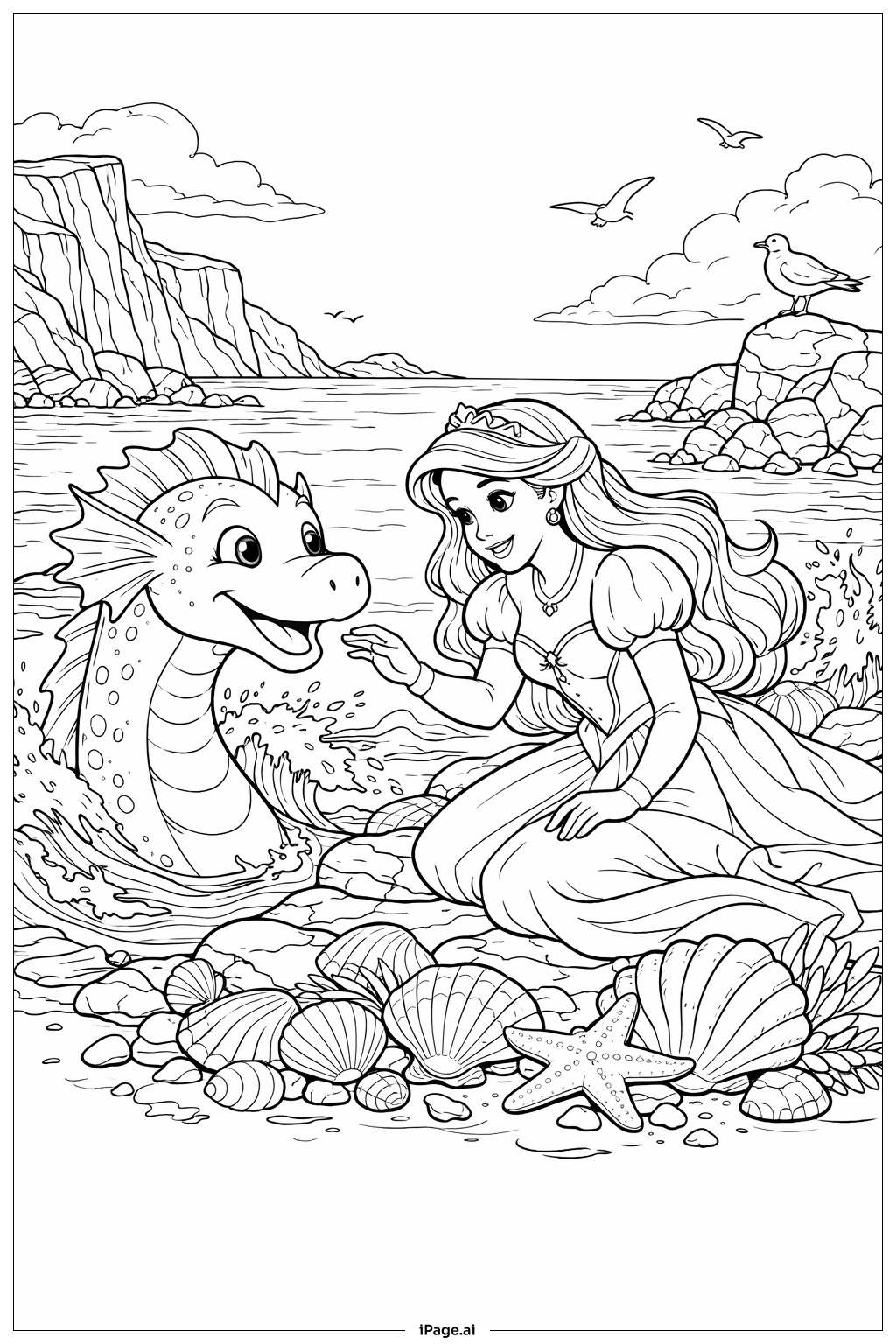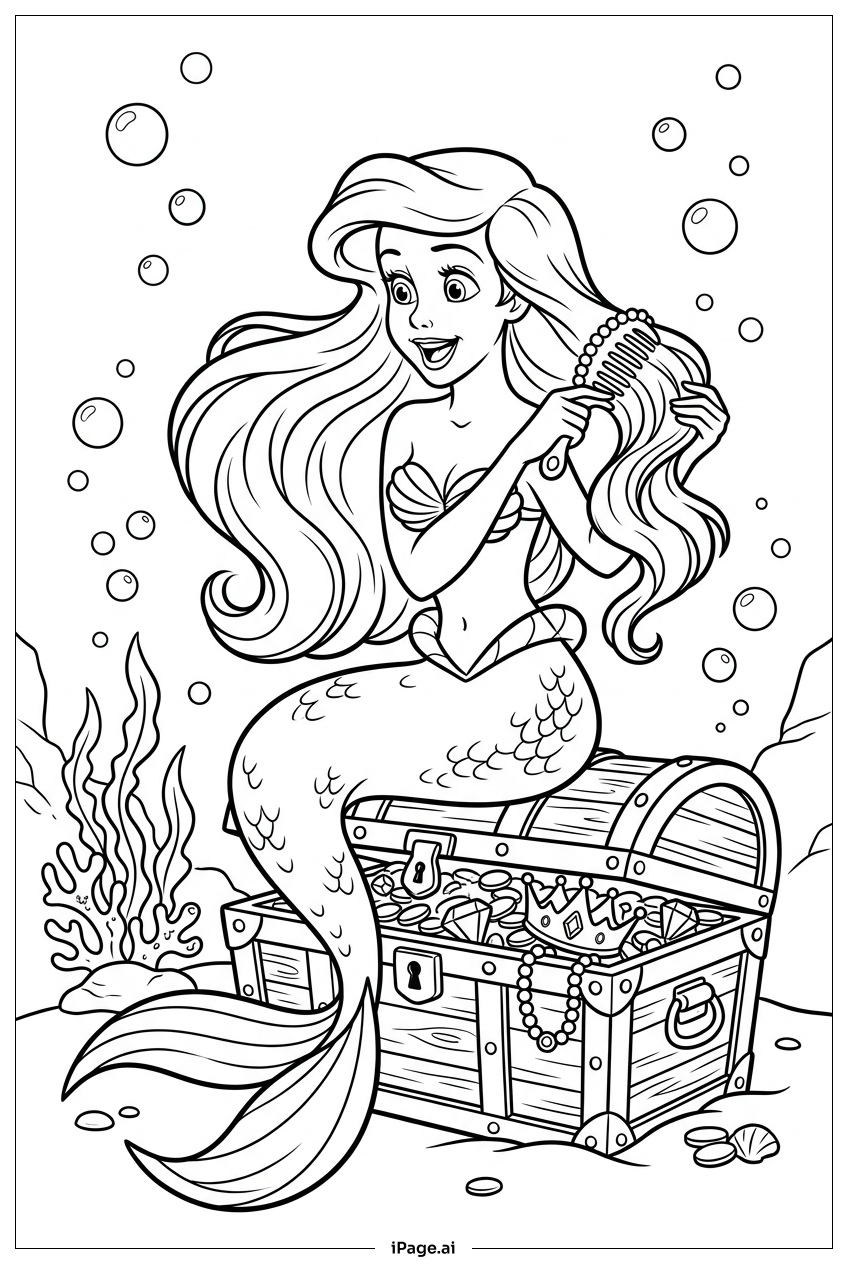
Coloring tips: How to color Little Mermaid brushing hair on treasure chest coloring page well?
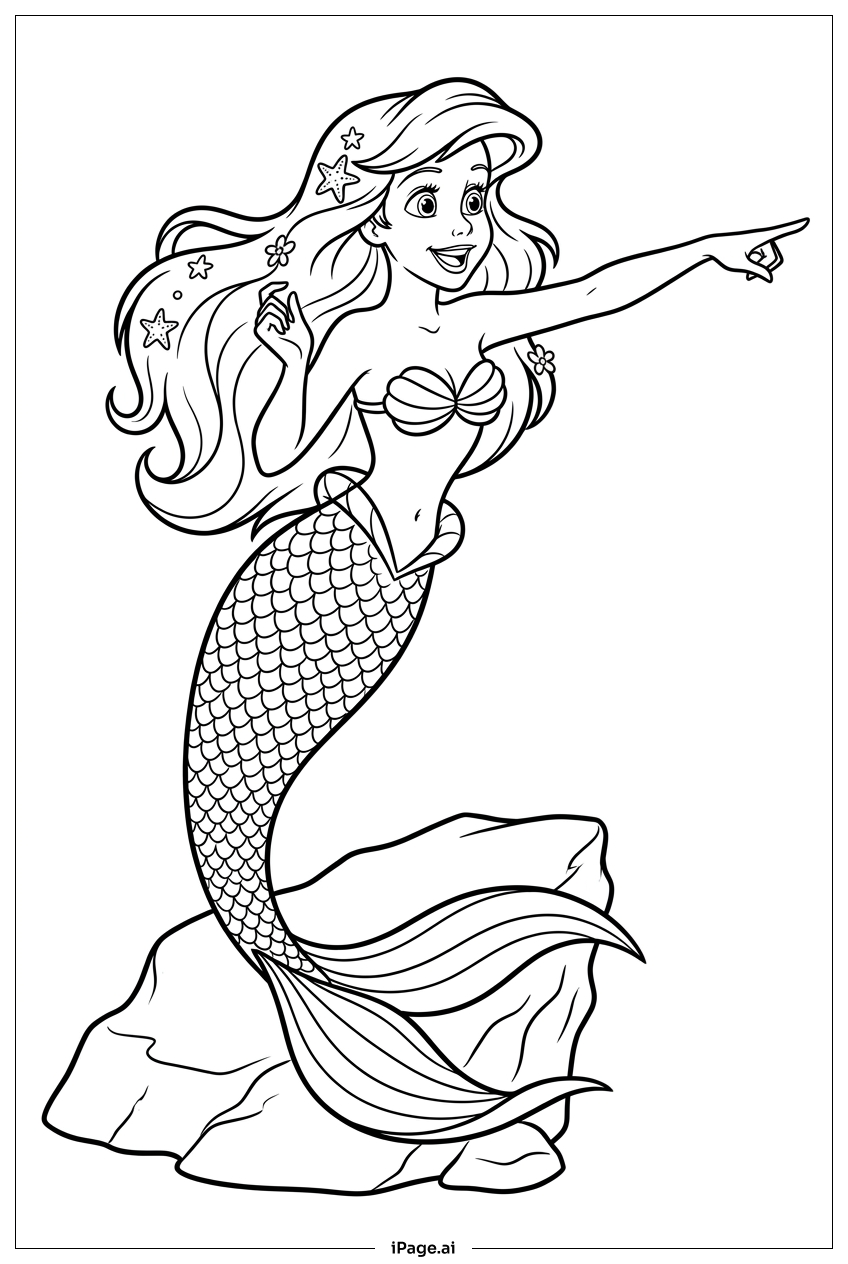
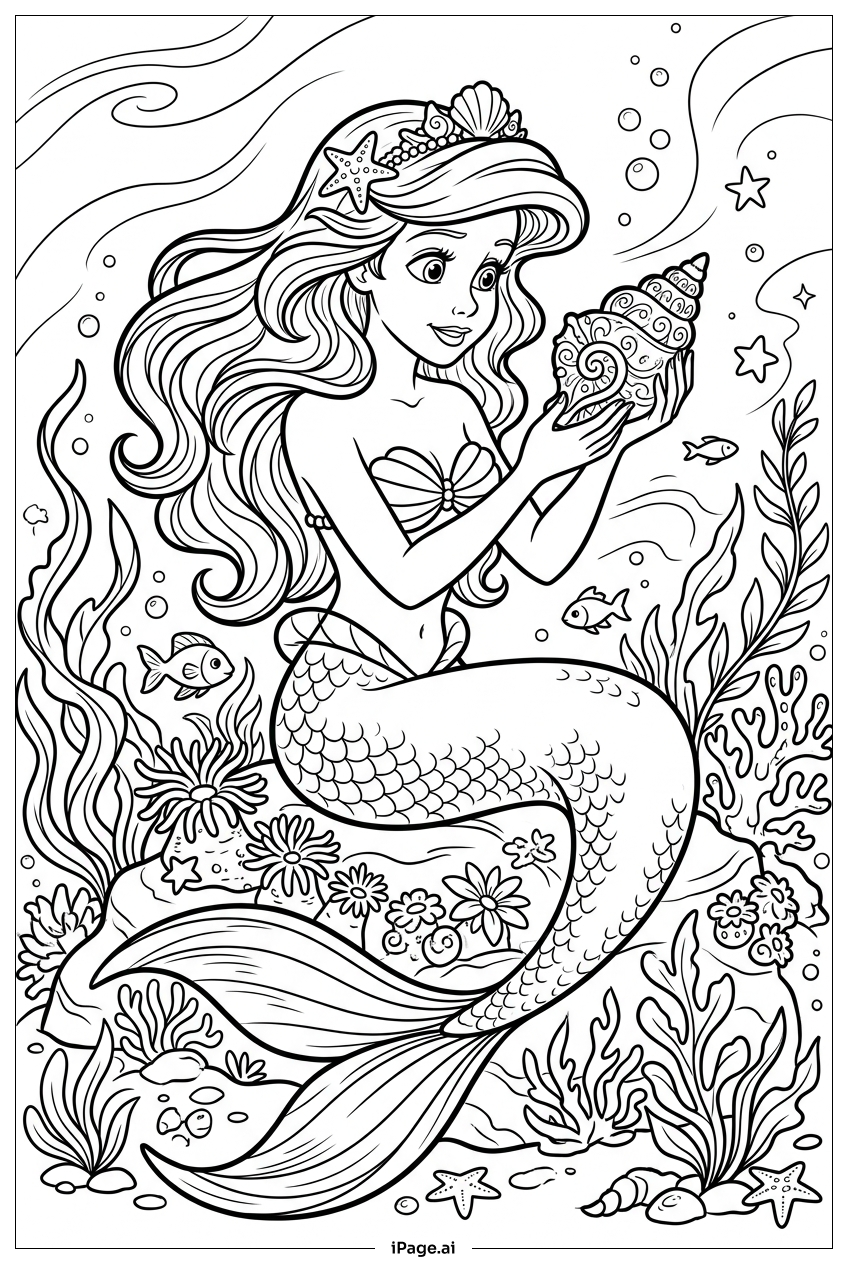
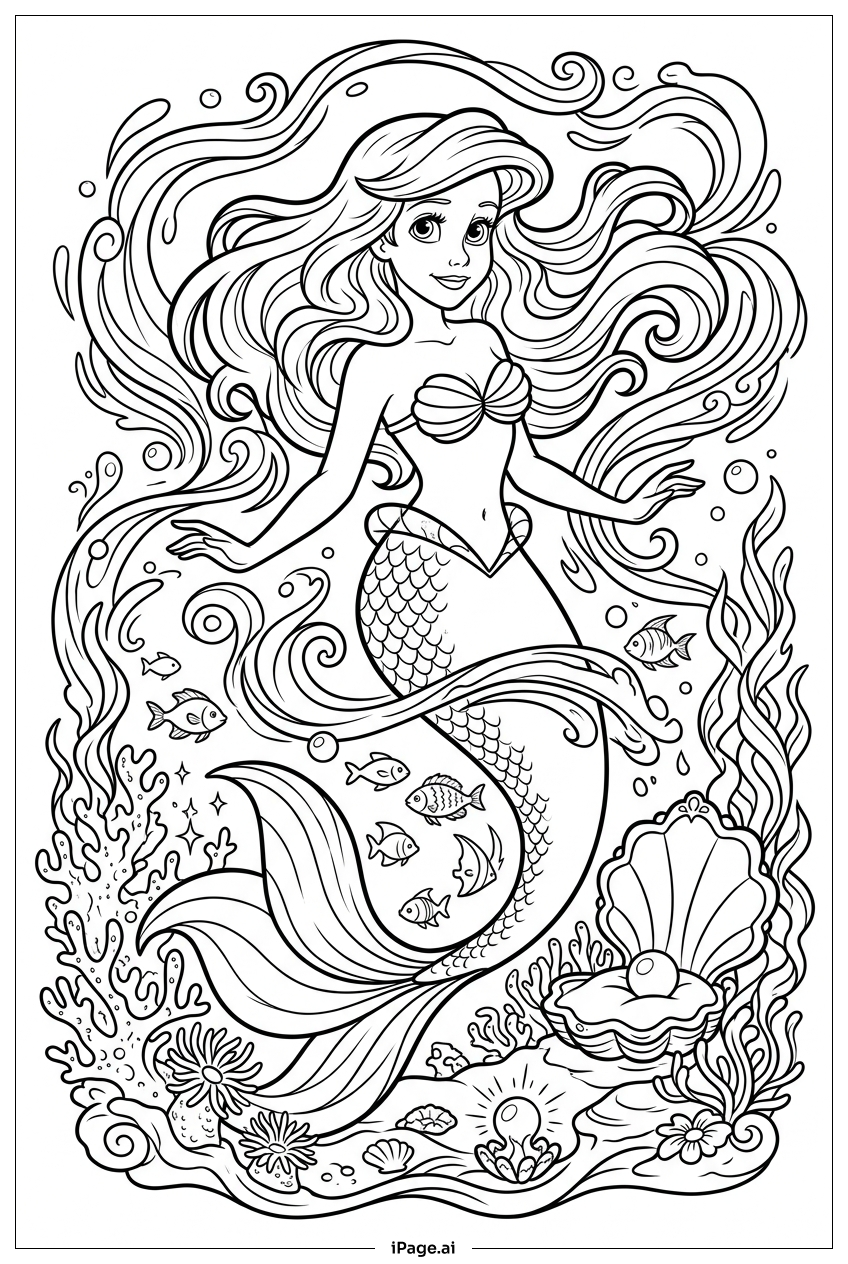
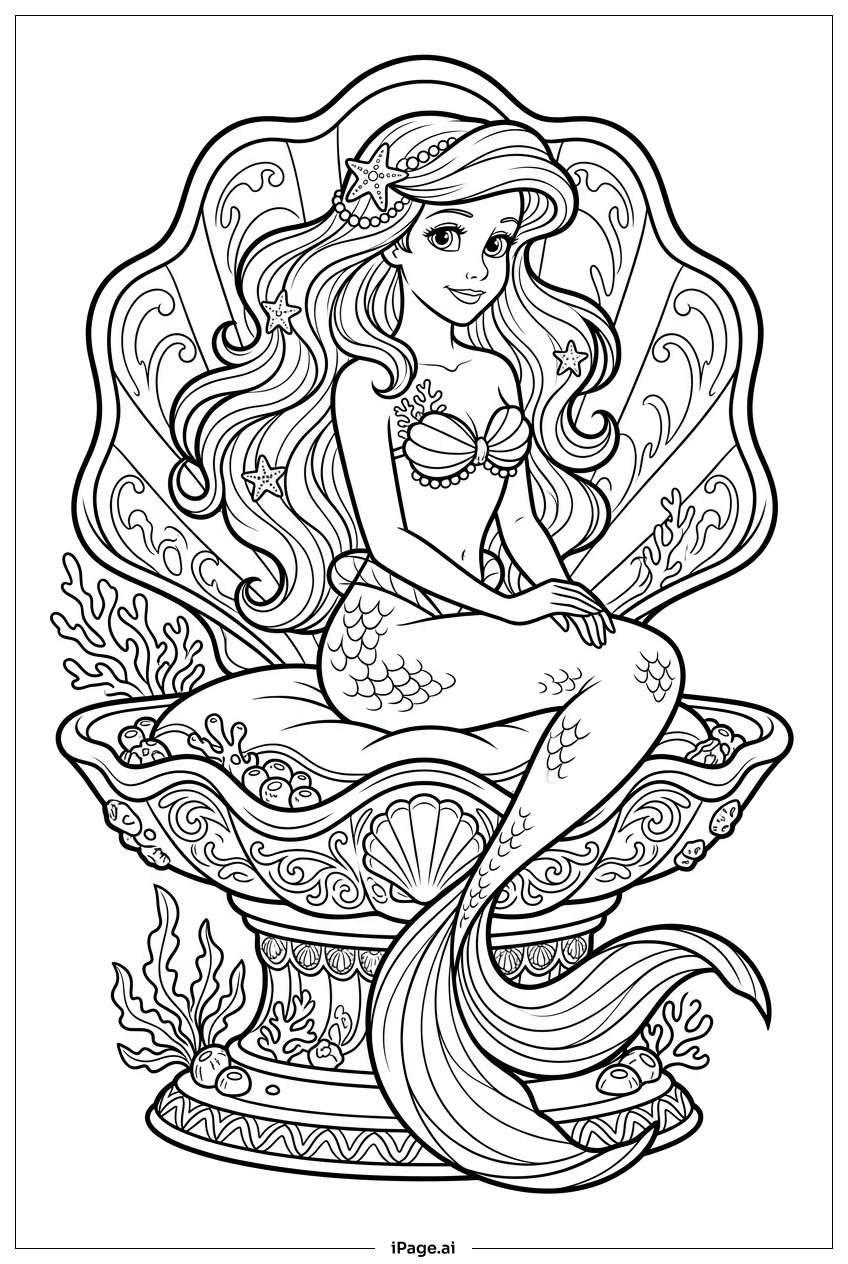
For this image, you can use soft ocean-themed colors. Color the Little Mermaid’s tail with shimmering shades of green and teal to make it look magical. Her hair can be a bright red or auburn, which contrasts beautifully with the blue sea. You could choose pastel colors for the shells and pearls inside the treasure chest, such as pink, lavender, and pearl white. Add hints of golden yellow for the treasure chest’s metal parts to give it a rich look. The background can be a gentle gradient of blues and aquamarines to show the underwater environment. Don’t forget to color the seaweed in different shades of green and the small fish in bright, playful colors to make the scene lively.
Coloring challenges: Which parts are difficult to color and need attention for Little Mermaid brushing hair on treasure chest coloring page?
• The flowing hair of the Little Mermaid has many thin strands, which can be tricky to color neatly without going outside the lines. Patience and possibly using fine-tipped coloring tools will help here.
• The intricate details on the treasure chest require careful attention, especially the jewels and ornamental patterns, which are small and close together.
• The tail’s scales might be challenging to shade well if you want to add depth and shine. Layering colors and blending gently is helpful but can be demanding for beginners.
• Coloring the underwater background evenly can be difficult; creating a smooth gradient takes practice to avoid patchiness.
• Balancing bright, contrasting colors without making the image look too crowded or messy takes planning and good color choices.
Benefits of coloring books: Advantages of drawing Little Mermaid brushing hair on treasure chest coloring page
Coloring this image encourages creativity and fine motor skills, especially with the detailed elements like hair strands and treasure jewels. It helps children practice patience and concentration as they carefully fill in small areas. The underwater theme can inspire imagination and storytelling, making the activity more engaging. Additionally, choosing and blending colors enhances an understanding of color theory, such as complementary shades and shading techniques. Overall, it is a fun, calming exercise that supports hand-eye coordination and artistic expression.