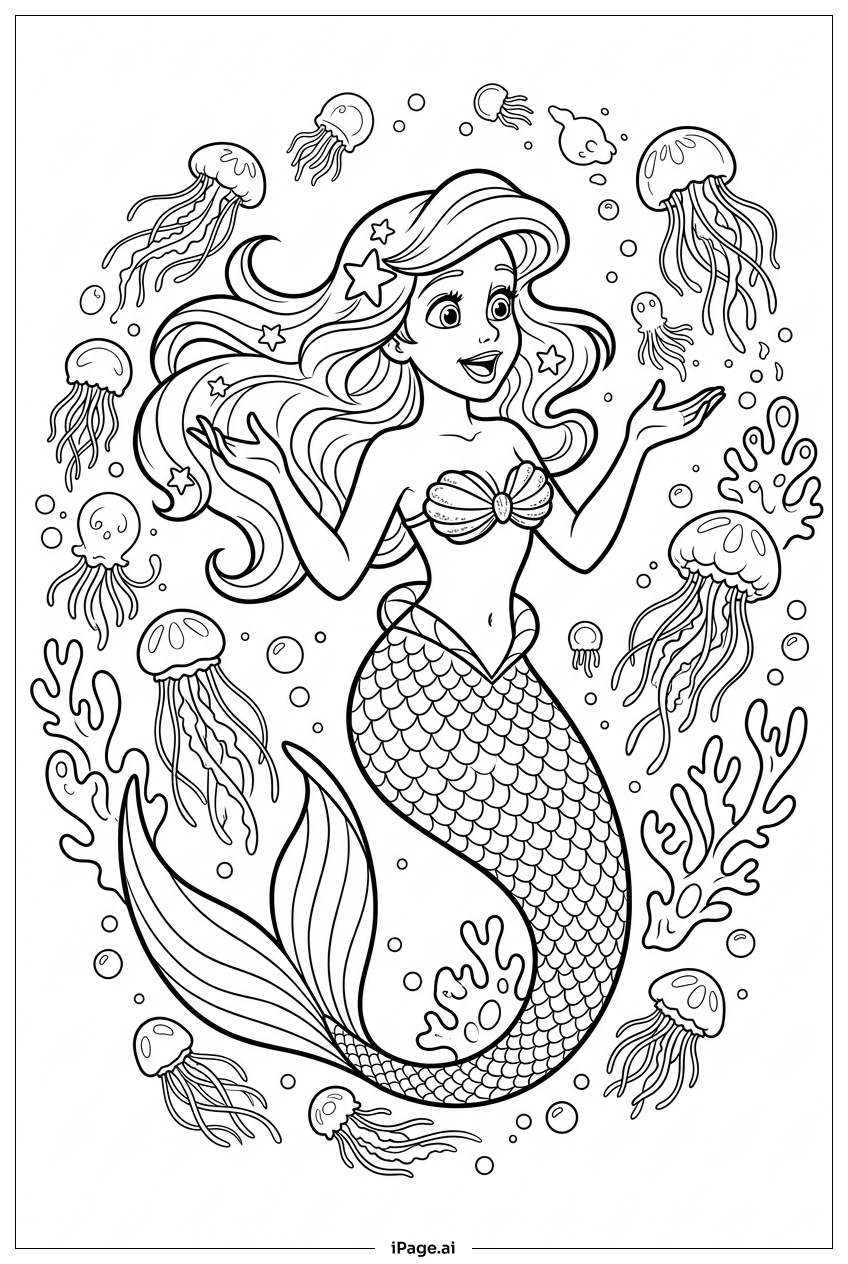
Coloring tips: How to color Little Mermaid amazed by drifting ocean jellyfish coloring page well?
For this coloring page, use soft blues and greens for the ocean background to create a calm underwater world. The Little Mermaid’s hair can be a vibrant red or auburn to contrast with the water. Her tail can be shaded in shimmering greens or aquamarine to highlight its scales. For the jellyfish, consider light pastel colors like pale pinks, purples, or blues, with translucent shading to capture their delicate, glowing nature. Adding a touch of white or light yellow at the edges will make them look luminescent. Don’t forget to color the bubbles with light blues and add white highlights for a sparkling effect. Keep colors gentle and dreamy to maintain the magical ocean atmosphere.
Coloring challenges: Which parts are difficult to color and need attention for Little Mermaid amazed by drifting ocean jellyfish coloring page?
• The jellyfish tentacles are long, thin, and intertwined, which can be tricky to color neatly without going over the lines or losing detail. It requires steady hand control and patience.
• Creating a translucent or glowing effect on the jellyfish demands layering colors lightly and blending them softly, which can be challenging for younger artists.
• The Little Mermaid’s flowing hair has many strands, requiring attention to direction and shading to make it look natural and dynamic.
• Coloring the scales on her tail could be time-consuming as it may need small, repetitive strokes to show texture.
• The underwater bubbles are small and require precise coloring to keep them round and clear, without filling them in solidly to maintain their transparency.
Benefits of coloring books: Advantages of drawing Little Mermaid amazed by drifting ocean jellyfish coloring page
Coloring this image offers many benefits for children and anyone who enjoys creative activities. It encourages fine motor skills development through careful coloring of detailed areas like tentacles and scales. The magical ocean theme stimulates imagination and curiosity about sea life. Working on soft color blending and shading techniques helps improve artistic skills and color awareness. It also promotes patience and focus as the image requires steady attention to detail. Finally, coloring this peaceful underwater scene can be a relaxing way to reduce stress and inspire a sense of wonder.