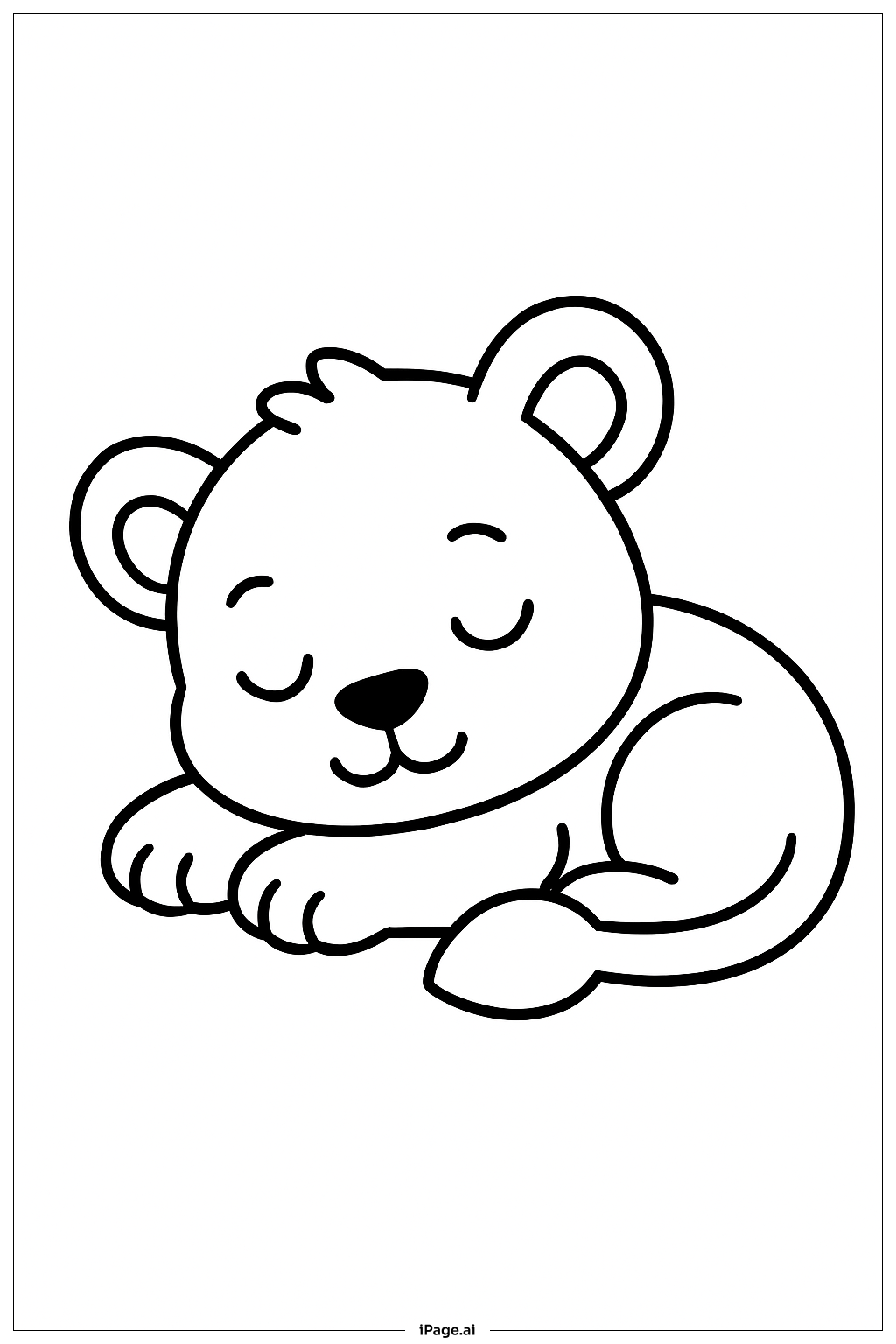
Coloring tips: How to color Sleeping Lion Cub coloring page well?
For this sleeping lion cub, start with warm sandy yellows or golden tans for the main body. The beginning mane can be colored in slightly darker shades of amber or light brown to show depth. Use soft peachy tones for the inner ears, nose, and paw pads to add realistic detail. The tail tuft can match the mane color or be slightly darker. Consider adding gentle shading with light brown or beige around the cub's body curves to create dimension. For a creative twist, you could use cooler tones like cream or pale gray. Add rosy pink to the nose and inner mouth area. The background can remain white for a clean look, or add soft blue or green tones to suggest a peaceful environment. Use colored pencils for smooth blending and a gentle, sleepy atmosphere.
Coloring challenges: Which parts are difficult to color and need attention for Sleeping Lion Cub coloring page?
• Fur Texture Details: The sleeping lion cub features intricate fur texture lines throughout its body that require careful attention. Young colorists may find it challenging to maintain consistent pressure and direction when coloring these fine lines without accidentally crossing boundaries or creating uneven patches. The fur flows in different directions across the body, requiring observation and planning to achieve a natural appearance.
• Mane Graduation: The developing mane around the cub's face presents a unique challenge as it transitions from the facial features to the fluffier mane area. Children need to blend colors smoothly to show this gradual change, moving from lighter face tones to slightly darker mane shades. This requires understanding of color layering and blending techniques that younger artists are still developing.
• Curved Body Contours: The cub's curled sleeping position creates multiple curved surfaces and overlapping body parts. Coloring around these curves while maintaining even color saturation can be difficult, especially where the tail wraps around and the paws tuck under the body. These areas require precise hand control to avoid gaps or color overflow.
• Shading for Dimension: To make the sleeping cub look three-dimensional rather than flat, colorists should add darker tones in recessed areas like under the chin, behind the legs, and along the belly. Understanding where shadows naturally fall on a rounded, sleeping animal requires spatial awareness that develops with practice and patience.
Benefits of coloring books: Advantages of drawing Sleeping Lion Cub coloring page
Coloring this peaceful sleeping lion cub offers wonderful benefits for young artists. The gentle, calm subject matter creates a relaxing coloring experience that can help reduce stress and anxiety. The soft curves and rounded shapes are soothing to color, promoting mindfulness and quiet focus time. Children learn about baby animals and wildlife while developing their fine motor skills through careful coloring within the detailed fur lines. The image teaches patience and attention to detail as young colorists work on the intricate mane and texture elements. It also encourages color exploration and decision-making as children choose realistic or imaginative color schemes. The adorable subject matter builds emotional connection and empathy toward animals, fostering appreciation for wildlife. Completing this coloring page boosts confidence and provides a sense of accomplishment, resulting in artwork that children feel proud to display or share with others.