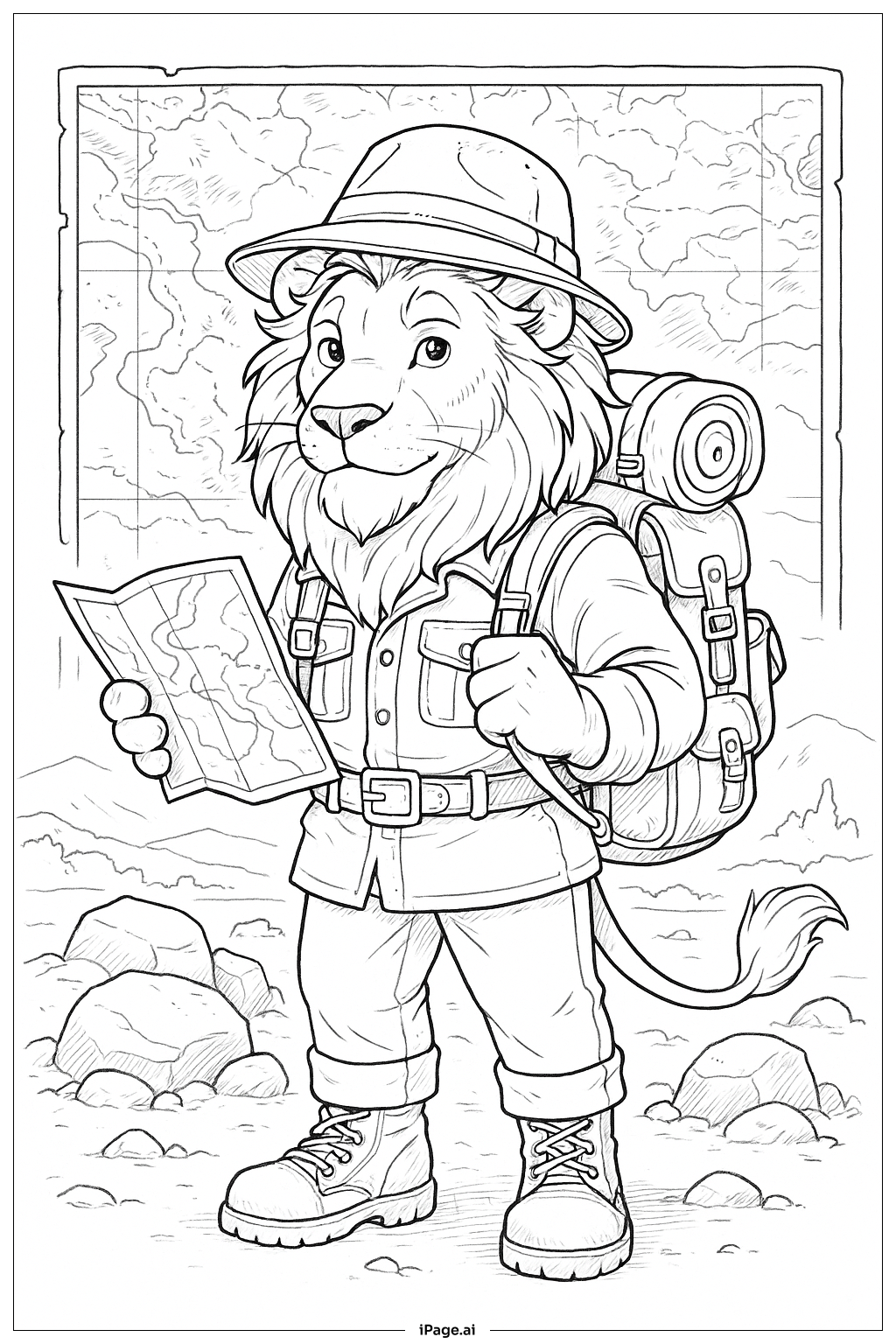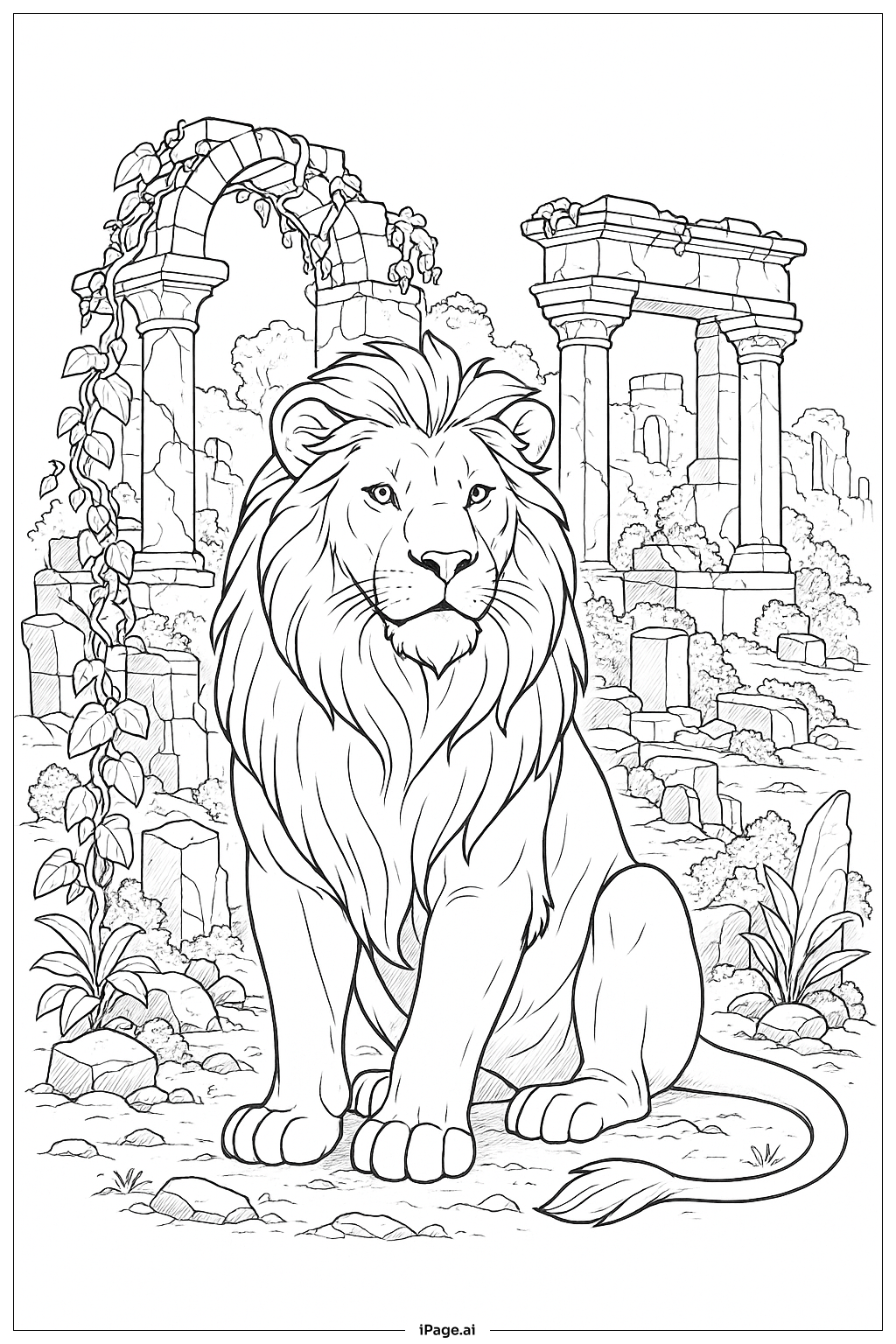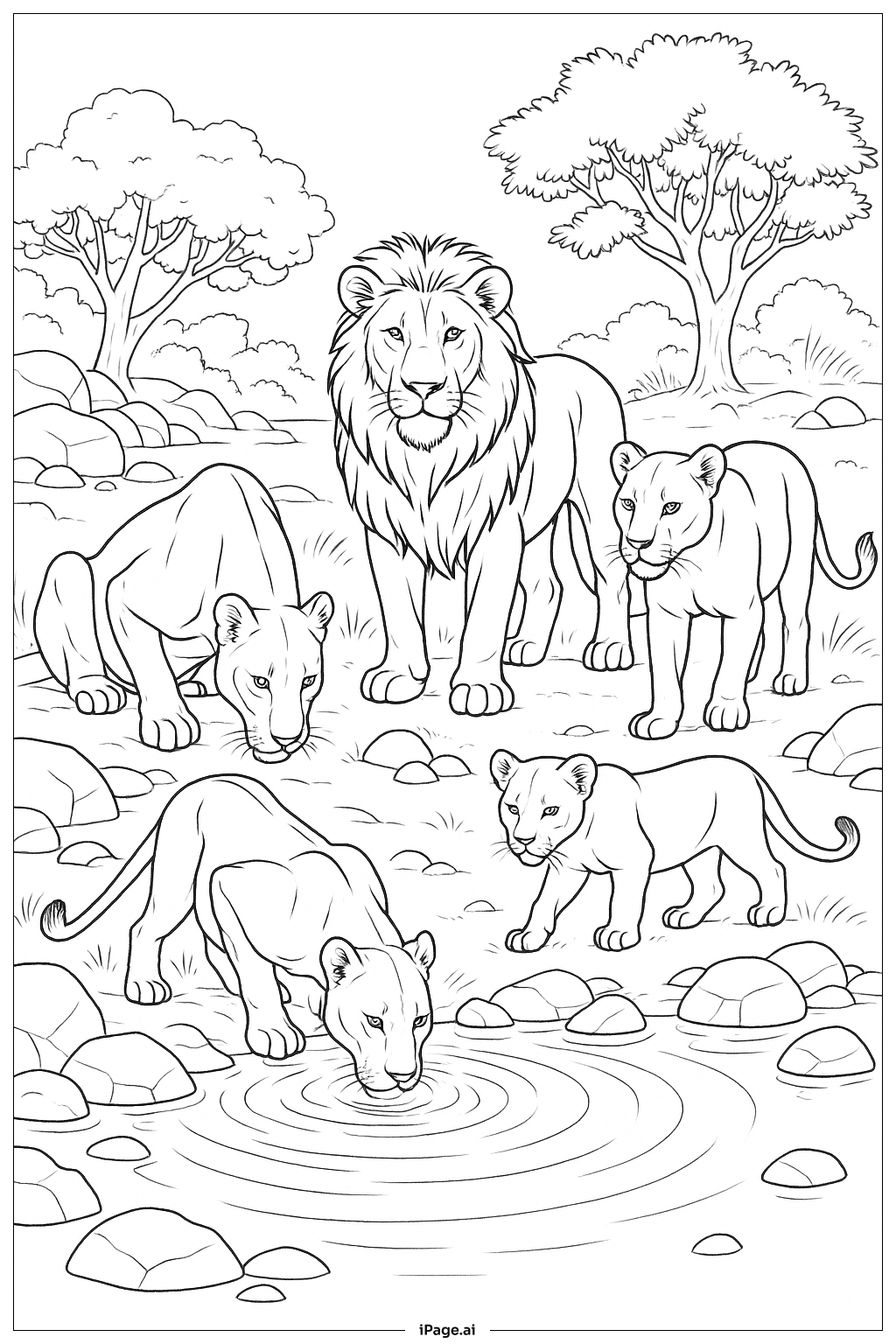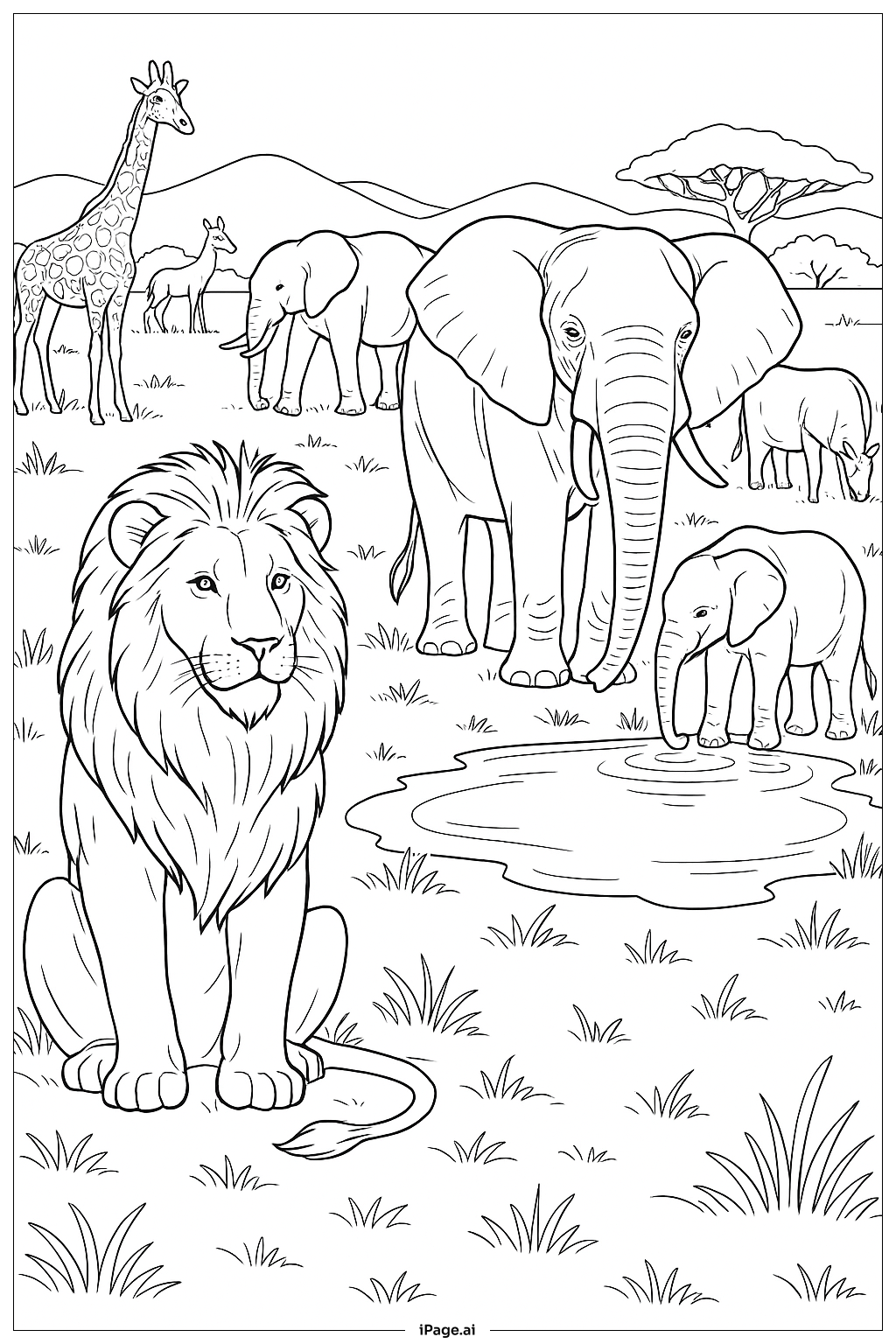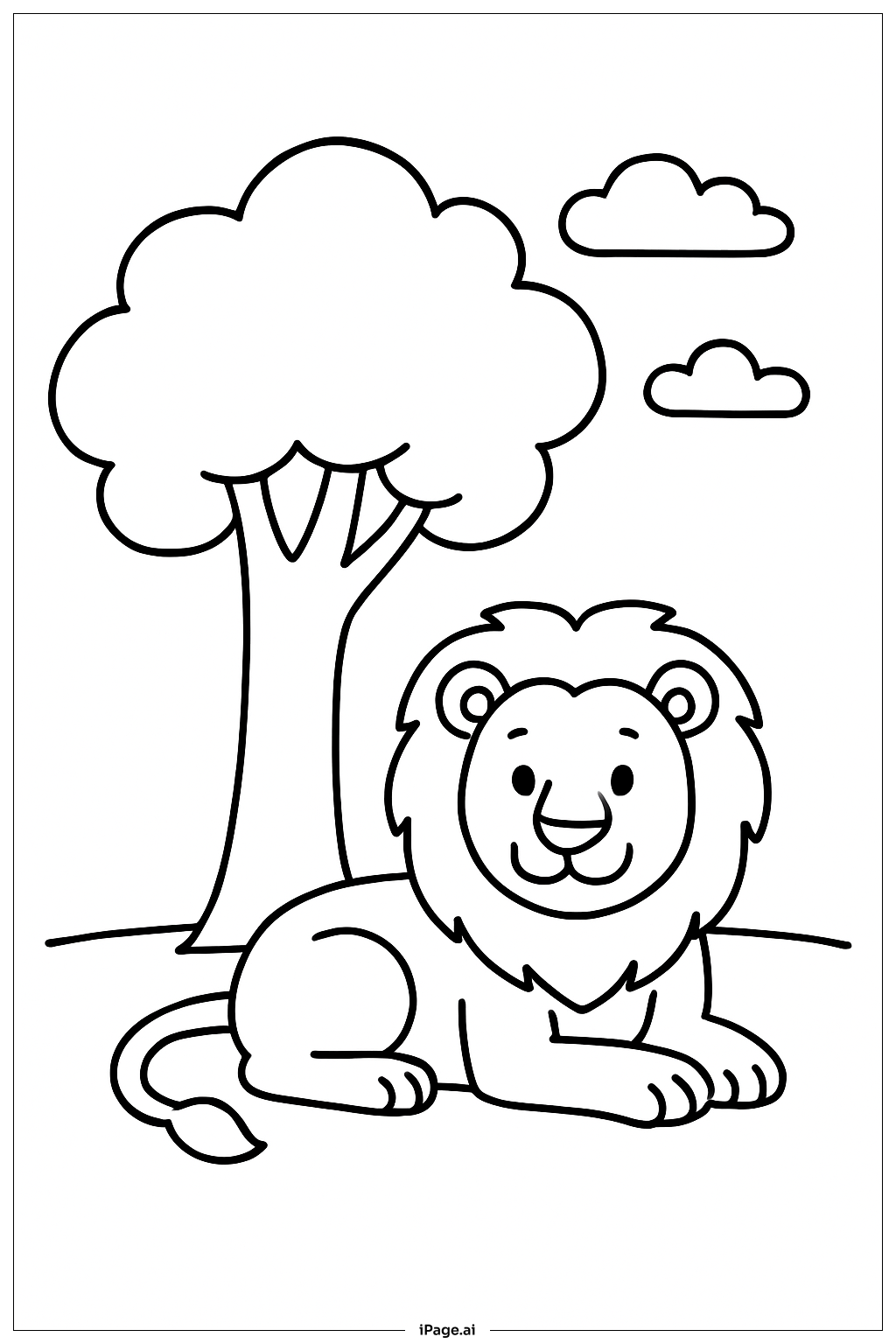
Coloring tips: How to color Lion Under Tree coloring page well?
For the lion, use warm golden yellows and sandy browns for the body, blending to lighter cream tones on the chest and underbelly. The mane can be colored in rich oranges, dark browns, or even reddish hues to create depth and dimension. Add darker brown shading around the face and paws to emphasize features. For the tree trunk, layer different shades of brown from light tan to deep chocolate to show bark texture. The leaves offer creative freedom—try various greens from lime to forest green, or experiment with autumn colors like orange, red, and yellow for a seasonal twist. The background can be colored with soft blues for sky and warm beiges or light greens for grass, keeping it subtle to make the lion and tree stand out as the focal points.
Coloring challenges: Which parts are difficult to color and need attention for Lion Under Tree coloring page?
• Mane Complexity: The lion's mane contains numerous flowing strands and layers that require careful color blending and shading techniques. Children may find it challenging to maintain consistent direction and create realistic depth by using multiple brown and orange tones. Taking time to color each section methodically will help avoid a flat appearance and bring the mane to life.
• Fine Fur Details: The lion's body features intricate fur texture lines throughout, especially on the legs, chest, and face. These small details require precision and a steady hand when using colored pencils or fine-tipped markers. Younger children might struggle to stay within these tiny spaces, but practicing patience and using lighter pressure can improve control and prevent colors from bleeding together.
• Tree Leaf Clusters: The tree's foliage consists of many small, overlapping leaves that create a dense canopy. Coloring each leaf individually while maintaining color variation for realistic depth can be time-consuming and requires focus. Deciding which leaves should be lighter or darker to show sunlight filtering through adds another layer of difficulty that helps develop artistic decision-making skills.
• Shading and Dimension: Creating three-dimensional effects through shading is essential for both the lion and tree. Understanding where shadows fall—under the lion's body, within the mane folds, and along the tree trunk—requires spatial awareness. Learning to blend colors smoothly and choose appropriate dark tones for shadows versus highlights takes practice and experimentation with pressure and layering techniques.
Benefits of coloring books: Advantages of drawing Lion Under Tree coloring page
Coloring this lion under tree scene helps children develop fine motor skills and hand-eye coordination through the detailed fur textures and intricate leaf patterns. The image encourages patience and focus as they work through the complex mane and foliage areas, building concentration abilities that benefit academic tasks. This wildlife scene sparks curiosity about animals and nature, creating opportunities to learn about lions, their habitats, and African ecosystems. The artistic freedom in choosing realistic or imaginative colors promotes creative thinking and self-expression. Working with warm and cool color combinations teaches basic color theory principles. Completing this detailed image provides a sense of accomplishment and boosts confidence, while the calming nature subject matter can reduce stress and promote relaxation for children of all ages.