Coloring tips: How to color Tadpole Near Lily Pad coloring page well?
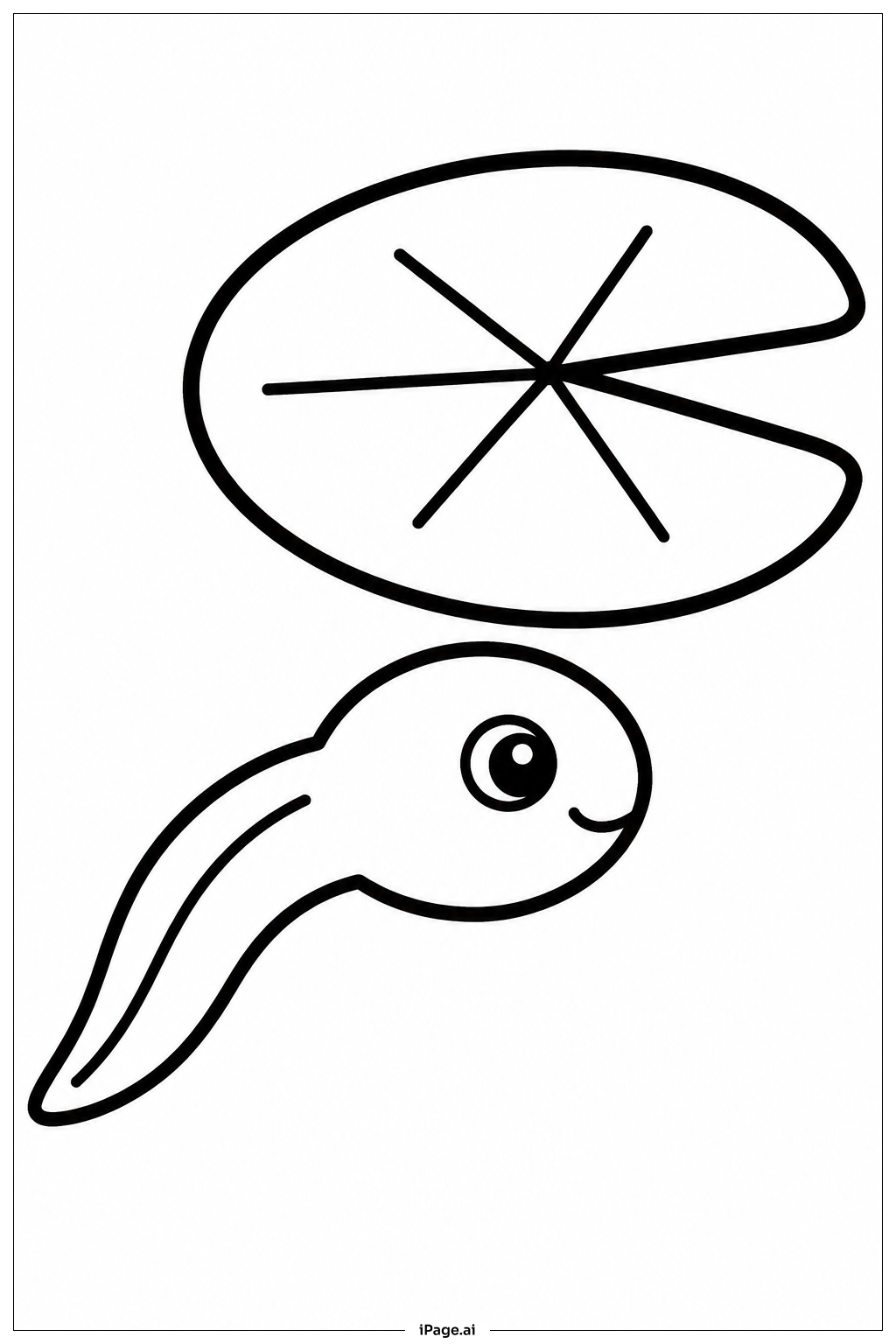
To bring this image to life, try using different shades of green for the lily pad to show its natural texture. You can color the veins a lighter green or even yellow to create contrast. The tadpole may look great in shades of dark gray or black, with hints of blue or green on its tail to add depth. For the water, consider soft blues or light turquoise to give a peaceful feel to the pond. Adding some white or light blue highlights around the ripples can create a sense of movement. Feel free to use bright colors to make the scene cheerful, especially if you want to capture a sunny day near the pond.
Coloring challenges: Which parts are difficult to color and need attention for Tadpole Near Lily Pad coloring page?
• Fine Detail Work: The veins on the lily pad are slender lines that require careful coloring to keep them distinct from the leaf. Staying inside these tiny areas can be challenging, especially for younger colorists. • Smooth Gradient: Coloring water with ripples involves creating smooth color transitions from darker to lighter blues. This can be difficult without blending techniques or shading tools. • Small Subject Size: The tadpole’s small body and tail need precise strokes to avoid coloring outside the lines. This requires steady hand control. • Natural Textures: Representing the lily pad’s smooth but veined texture in coloring means picking different shades and layering colors thoughtfully, which is more advanced. • Space Around Objects: The open water space around the tadpole and lily pad can feel empty if not colored carefully, so balancing background colors without overwhelming the main subjects is tricky.
Benefits of coloring books: Advantages of drawing Tadpole Near Lily Pad coloring page
Coloring this image encourages attention to detail as children learn to color within the veins and shapes of the lily pad and tadpole. It helps improve fine motor skills through the careful strokes needed for the small tail and leaf veins. This scene also stimulates creativity with its natural pond theme, allowing kids to experiment with different shades of green and blue. Coloring the ripples and water surface teaches shading ideas that develop an understanding of how light affects color. Overall, it is a relaxing activity that connects children to nature and enhances focus while offering a fun art experience.