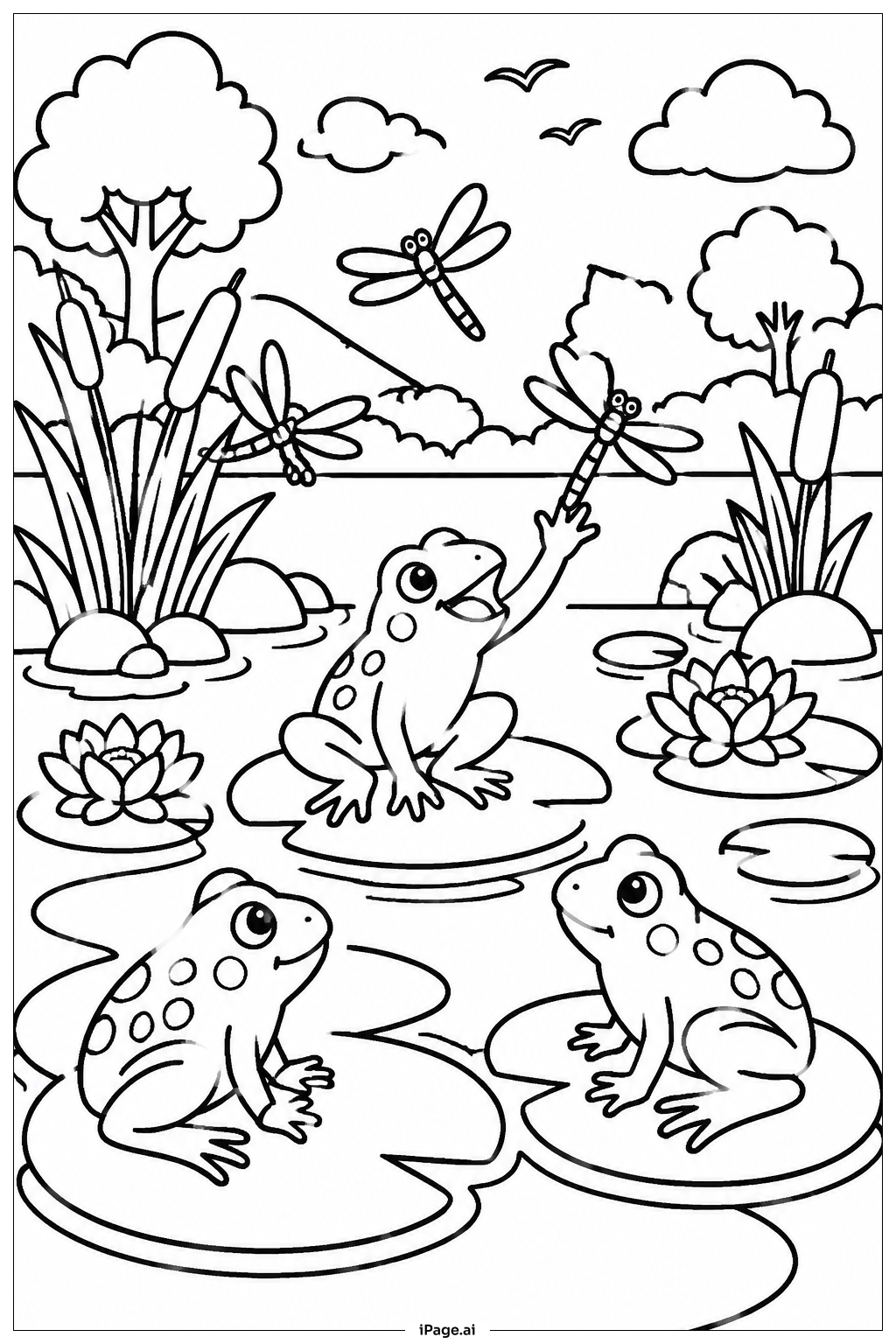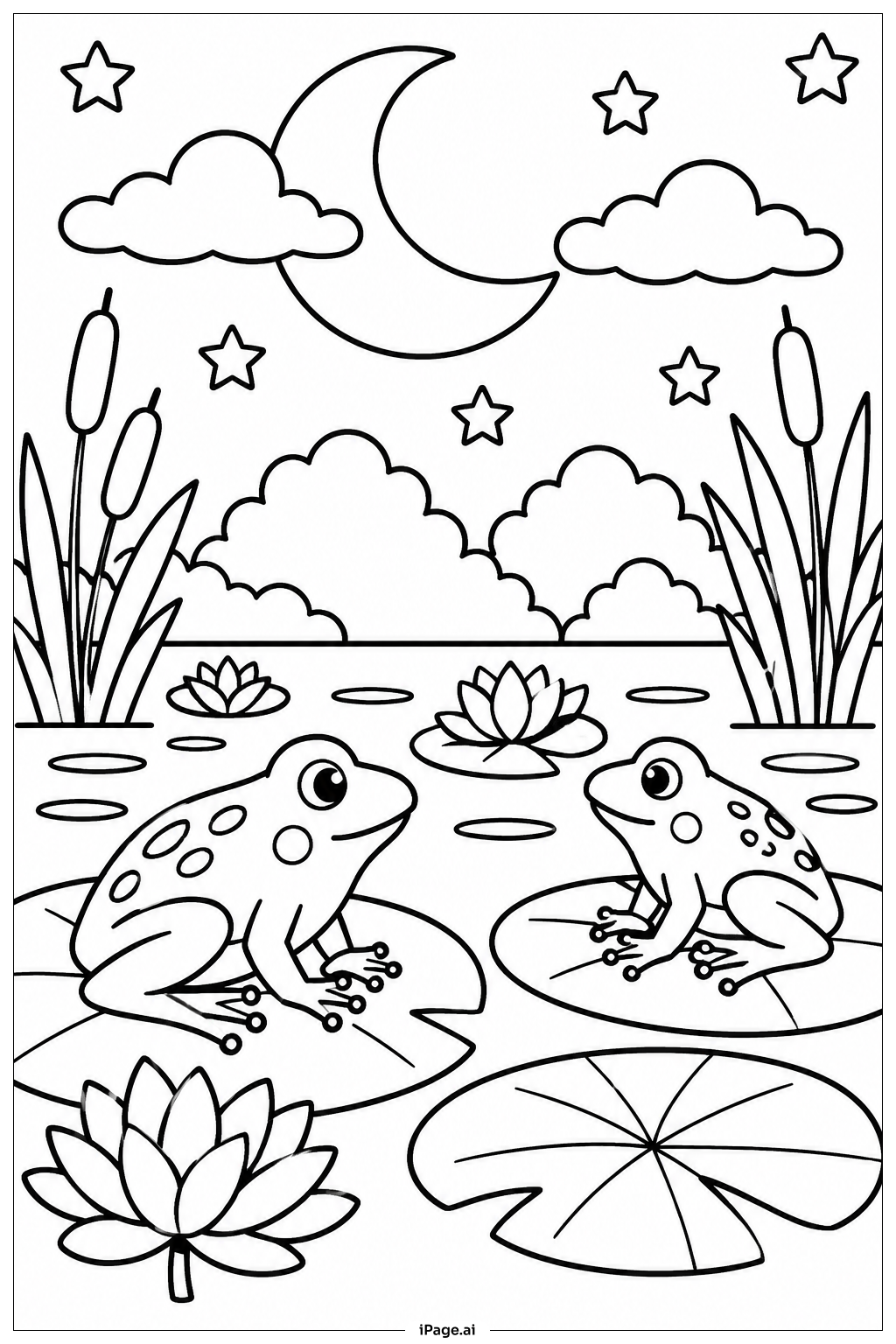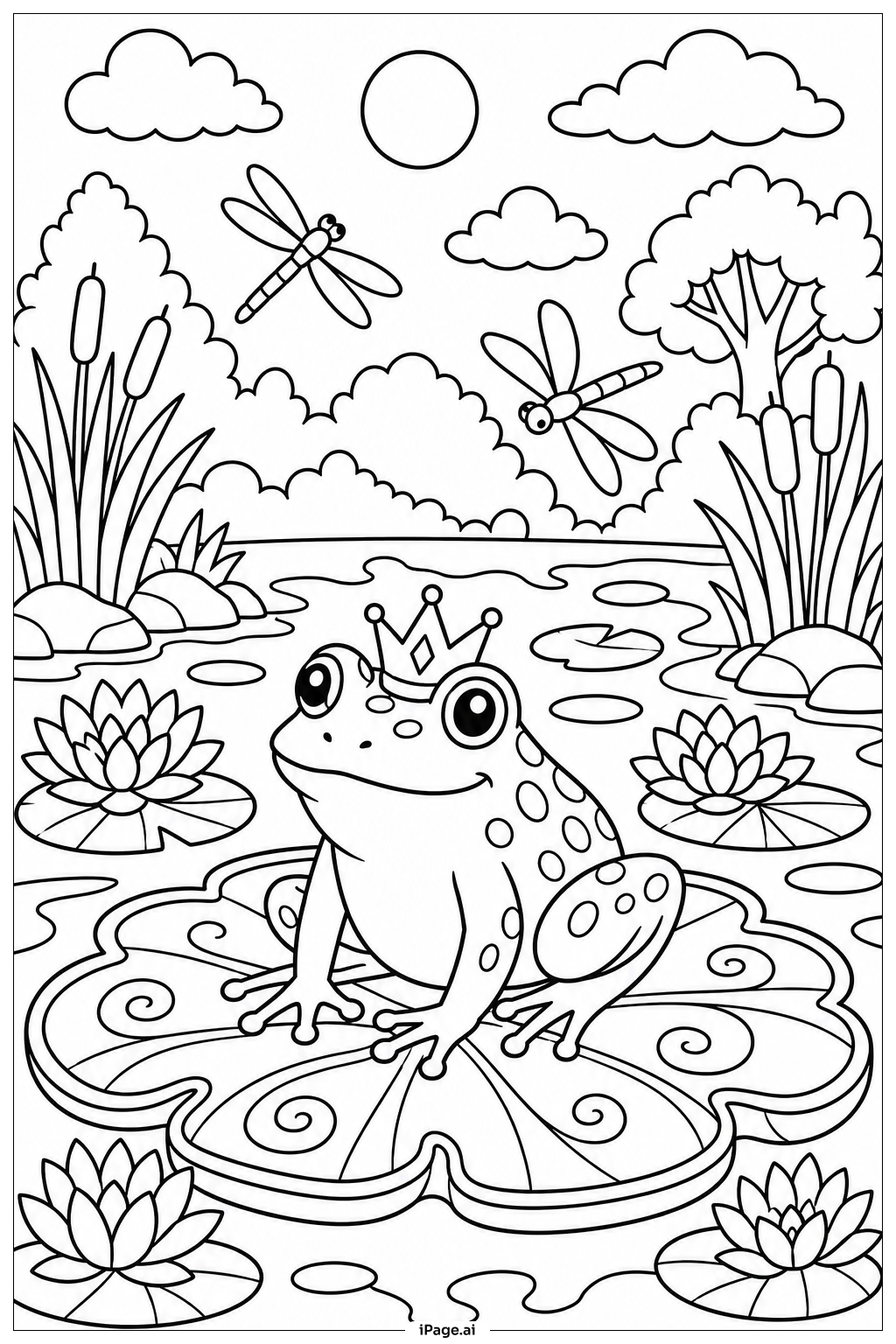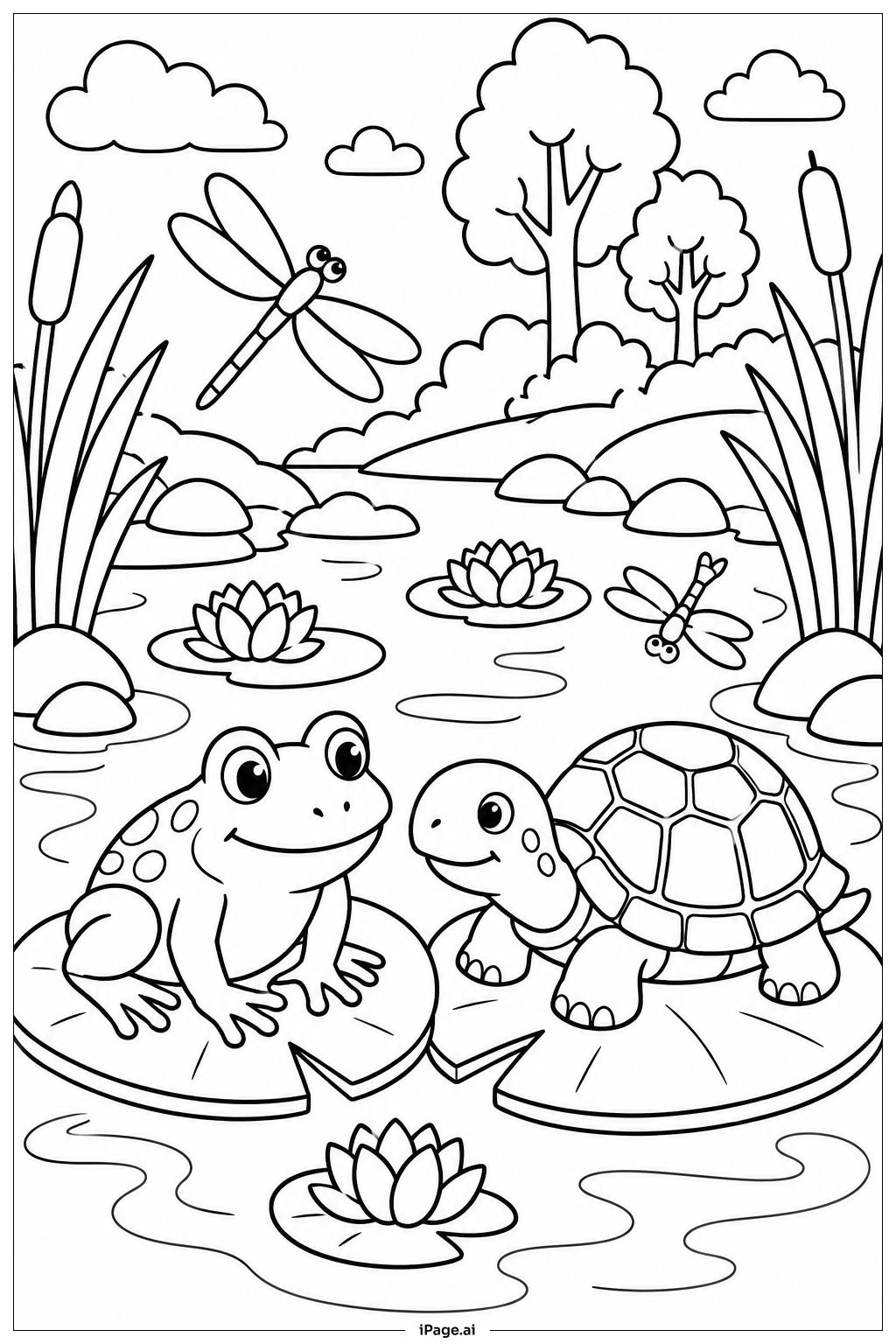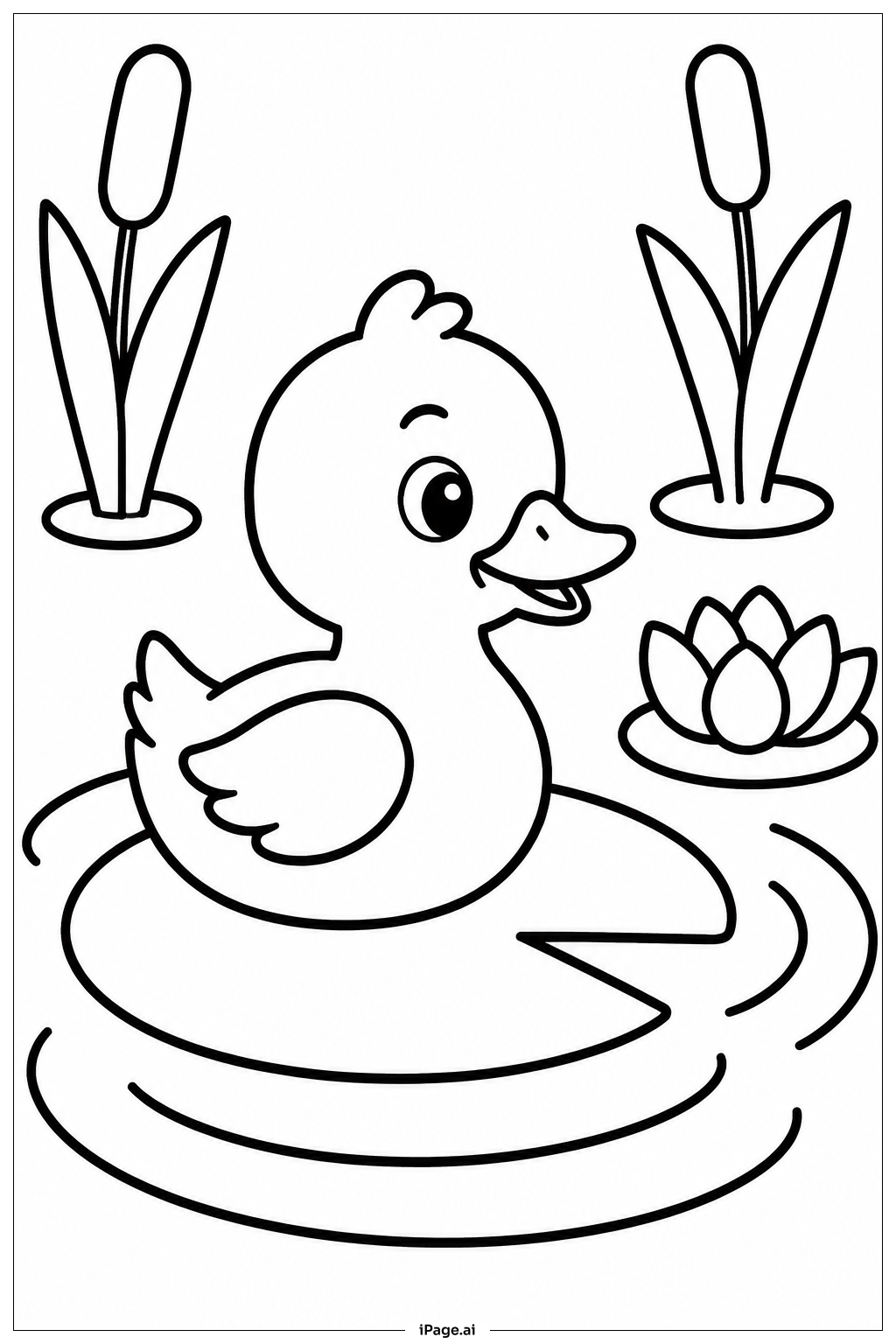
Coloring tips: How to color Lily Pad With Duckling And Reeds coloring page well?
Try using bright greens to color the Lily Pad with some shading to show its round shape. The duckling can be colored yellow or soft brown tones to make it look fluffy and warm. Use light blue or turquoise for the water to give a fresh feeling. The reeds can be different shades of green to show depth, from bright green for those in the front to darker green in the back. Don’t forget to add some white or light yellow highlights on the duckling's feathers and the Lily Pad to bring the image to life. Mixing light and shadow will make the scene more vibrant and fun.
Coloring challenges: Which parts are difficult to color and need attention for Lily Pad With Duckling And Reeds coloring page?
• Small Details: The duckling’s feathers and the veins on the Lily Pad require careful coloring to keep the tiny shapes clear and neat. Fine motor skills are needed to avoid coloring outside the lines.
• Layering Greens: The reeds and Lily Pad use many similar shades of green. It can be challenging to choose colors that differentiate the plant layers but still blend naturally to give depth.
• Water Texture: Capturing the gentle waves or reflections on the water requires subtle shading and blending, which may be tricky for younger colorists.
• Overlapping Elements: The reeds overlap the Lily Pad and the duckling, so careful coloring is needed to keep each object distinct and maintain the overall clarity.
• Maintaining Balance: Coloring with too many bright colors might make the scene look busy. Balancing calm tones and bright highlights is key.
Benefits of coloring books: Advantages of drawing Lily Pad With Duckling And Reeds coloring page
Coloring this Lily Pad With Duckling And Reeds image helps improve attention to detail and fine motor skills, especially when filling in small spaces like the feathers and leaf veins. It encourages creativity in choosing natural colors and learning about how light and shadow affect different shapes. The calm pond scene can also promote relaxation and focus as children immerse themselves in nature-inspired art. Moreover, working on layered plants and animals teaches spatial awareness. Overall, it’s a wonderful way to combine art with a gentle introduction to wildlife and natural environments.