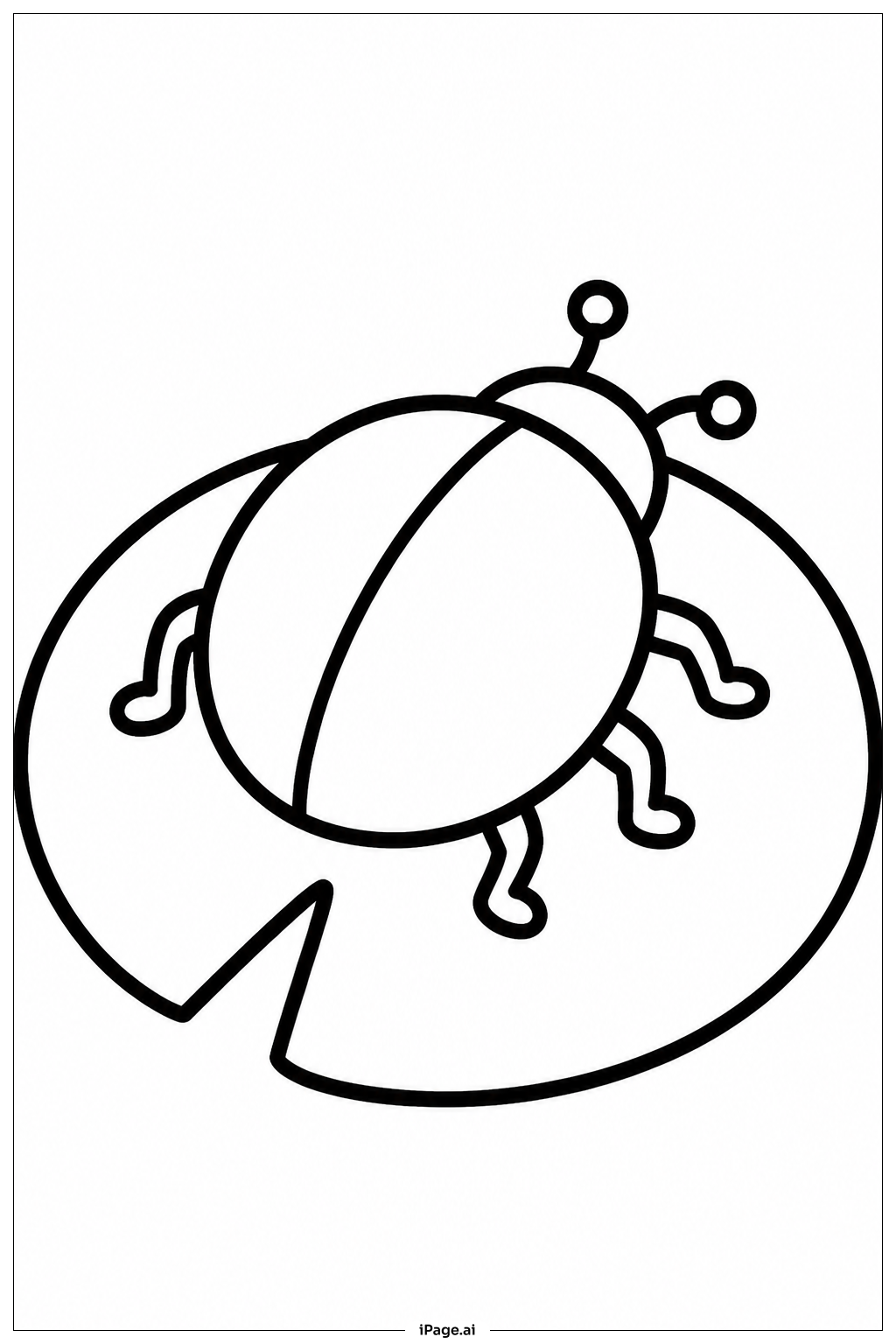
Coloring tips: How to color Ladybug On Lily Pad coloring page well?
To color this Ladybug On Lily Pad, start with bright red for the Ladybug’s back and black for its spots and head. For the Lily Pad, use different shades of green to add depth—try a light green for most of the leaf and a darker green for the veins. You can add a little yellow near the edges for a sunlit effect. The water can be colored in soft blues or turquoise to create a peaceful background. Feel free to add light reflections on the water by leaving some areas white or very light blue. Keep the colors simple and fun, perfect for children to enjoy bringing this nature scene to life.
Coloring challenges: Which parts are difficult to color and need attention for Ladybug On Lily Pad coloring page?
• Small Details: The Ladybug has many tiny spots and fine lines on its body which require careful coloring to stay inside the outlines.
• Texture on Leaf: The lily pad’s veins are detailed and need delicate strokes to show the natural leaf pattern without coloring too heavily.
• Smooth Color Blending: Creating smooth transitions between different shades of green on the Lily Pad can be a challenge, especially for younger children.
• Reflective Water: The subtle ripples and water effects call for soft blending or leaving white spaces, which can be tricky to balance with the solid colors of the Ladybug and leaf.
• Maintaining Clean Edges: Since the Ladybug is placed right on the Lily Pad, it can be difficult to color the edges clearly without overlapping colors accidentally.
Benefits of coloring books: Advantages of drawing Ladybug On Lily Pad coloring page
Coloring this Ladybug On Lily Pad helps develop fine motor skills through attention to small details like the Ladybug’s spots. It encourages using color blending and layering techniques on the leaf and water, boosting creativity and patience. The natural theme introduces children to elements of the environment and wildlife, making it educational as well as fun. Completing this image can improve concentration and focus, as the artist must carefully fill in different textures. Overall, it supports both artistic expression and nature appreciation for kids aged 4 to 16.