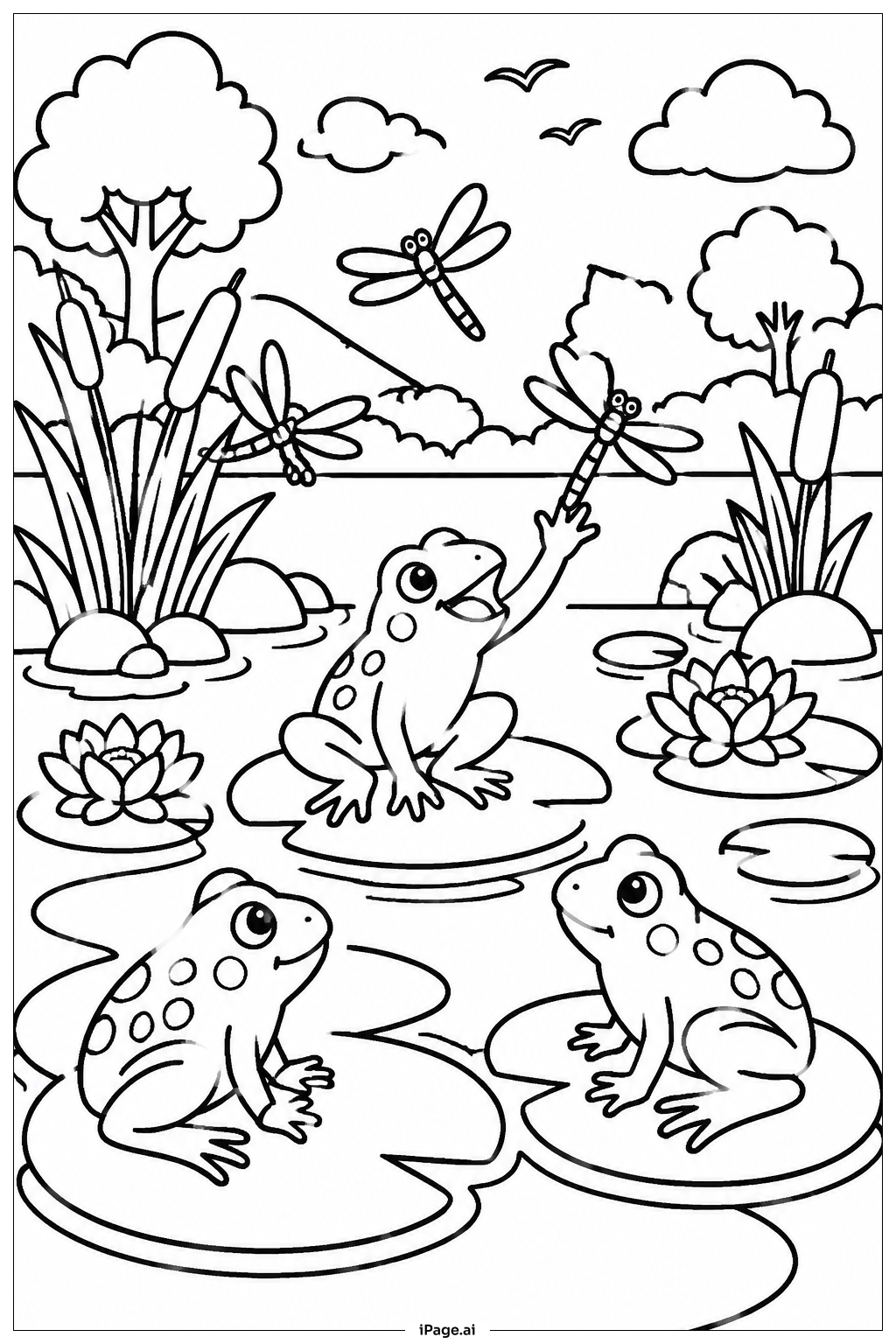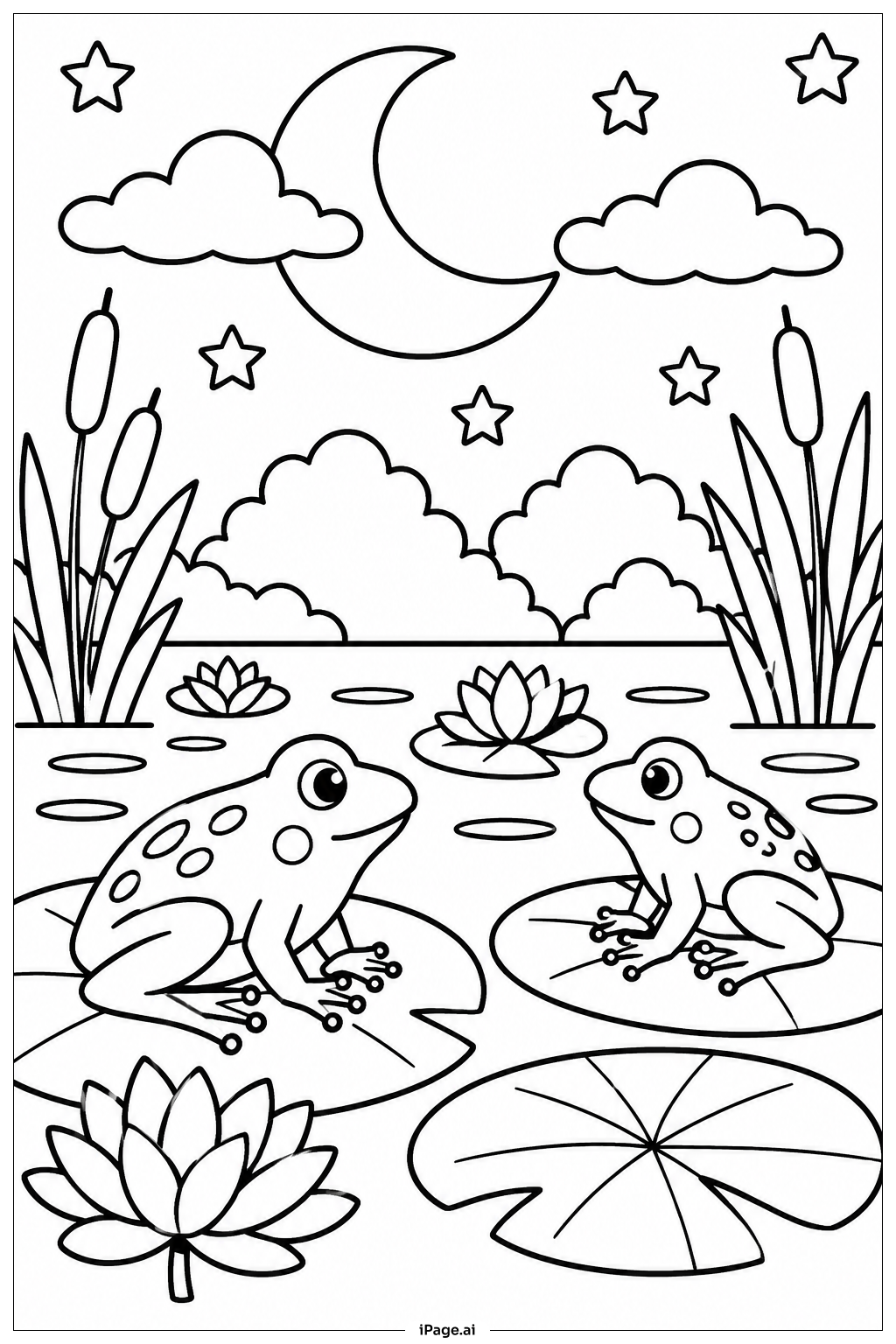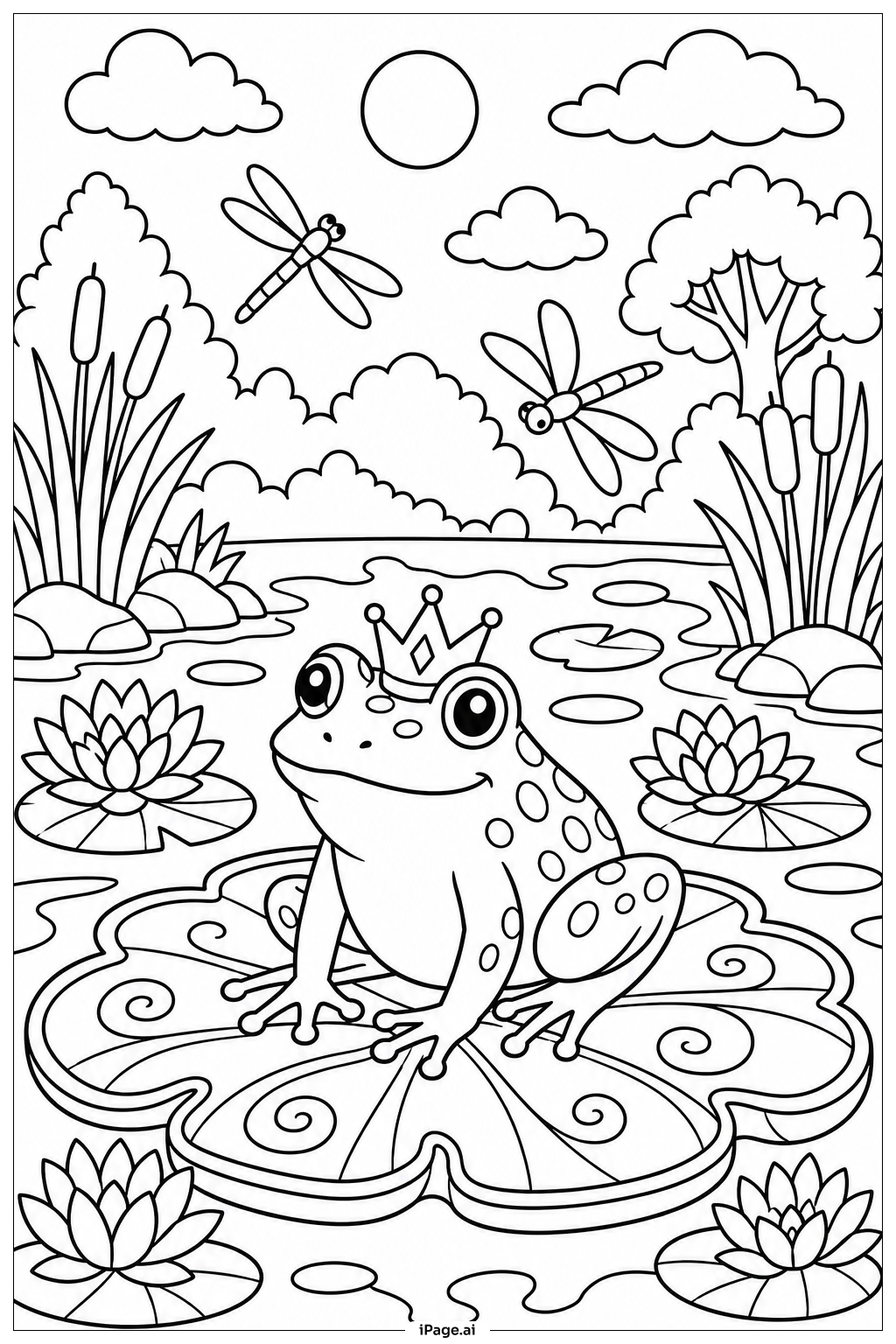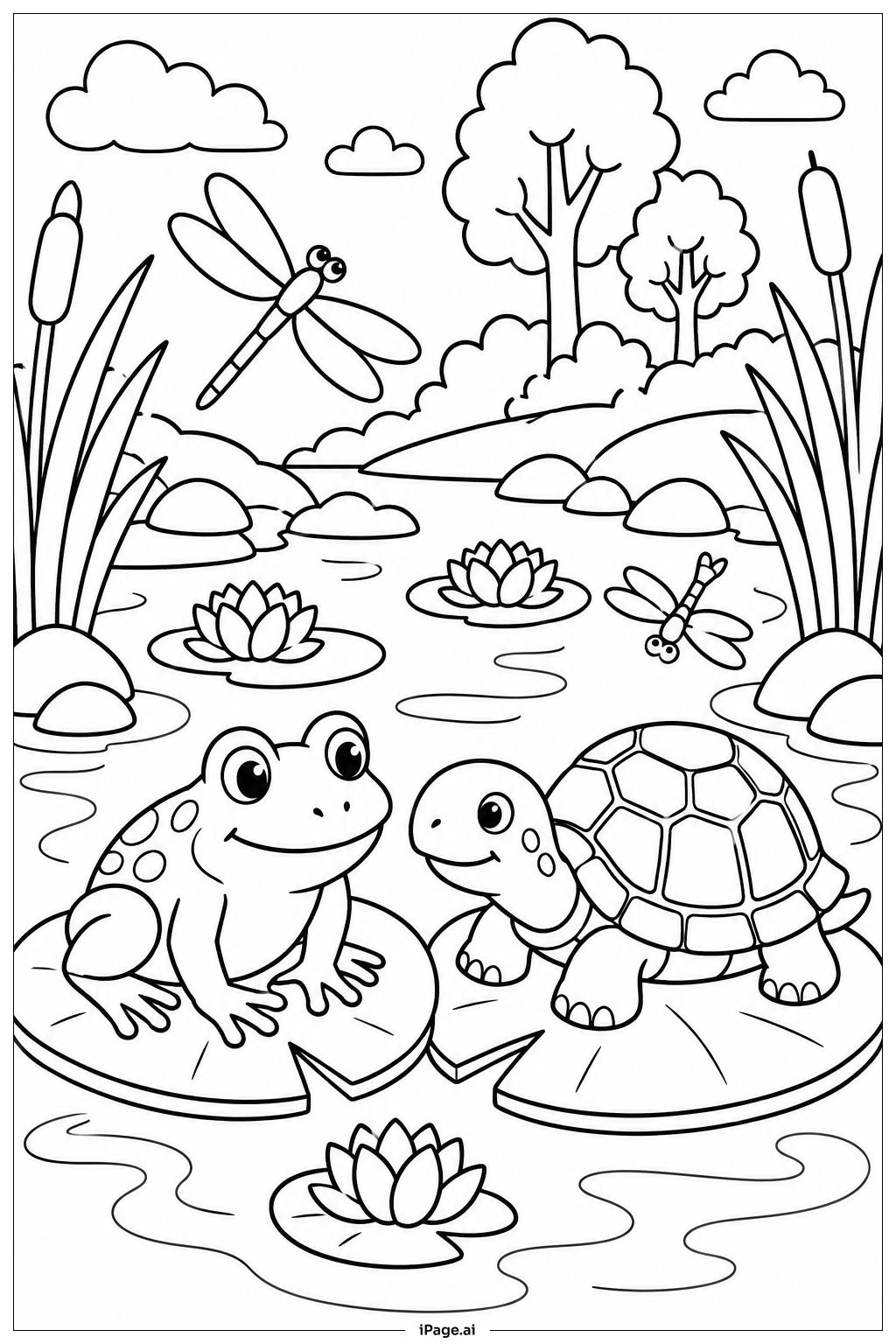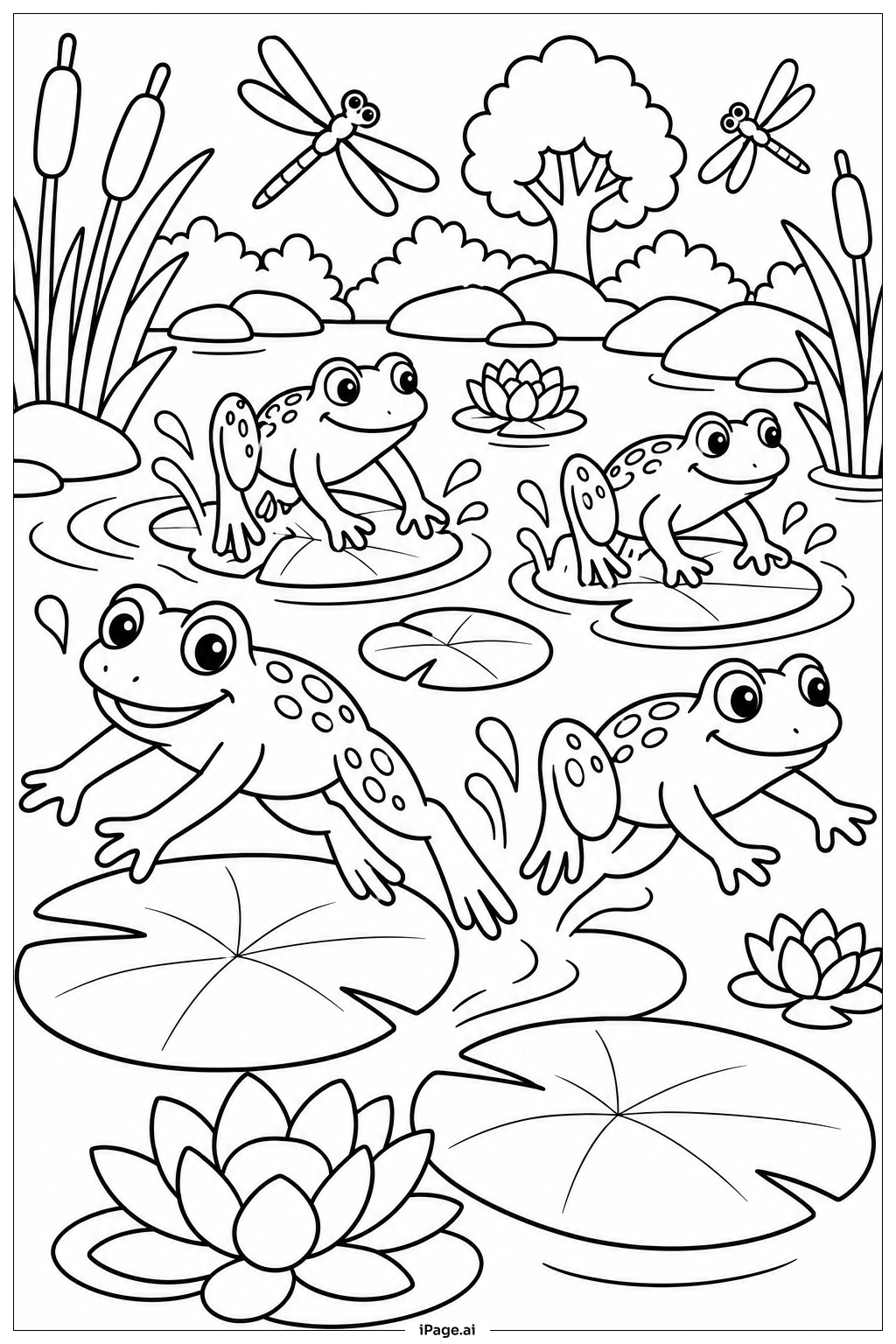
Coloring tips: How to color Frogs Racing Across Lily Pads coloring page well?
Use bright and cheerful colors to bring this scene to life. You could color the frogs in different shades of green, adding some spots or stripes to make each one unique. The Lily Pads can be done in varying greens, with lighter tones for the edges to show light reflection. For the water, try blues and soft purples to create a sense of depth and movement. Don’t forget to color the water lilies white, pink, or yellow to add pops of color. The tall grasses can be different shades of green and brown. Feel free to mix colors to highlight splashes and ripples around the frogs, making the race feel lively and fun.
Coloring challenges: Which parts are difficult to color and need attention for Frogs Racing Across Lily Pads coloring page?
• Small Details: The frogs have many little features like eyes, toes, and smiles which require precise coloring to bring out their personality.
• Water Effects: Capturing the ripples and splashes around the Lily Pads needs careful shading to show the water’s movement clearly.
• Layered Elements: The scene includes overlapping frogs and Lily Pads, so staying inside the lines and layering colors properly can be tricky.
• Color Variation: Using different shades of green for frogs and Lily Pads requires attention so colors do not blend into one another.
• Natural Textures: Coloring the grasses and water lilies to look realistic without making them too uniform can be challenging, especially for younger artists.
Benefits of coloring books: Advantages of drawing Frogs Racing Across Lily Pads coloring page
Coloring this image helps improve fine motor skills by requiring careful attention to small details and staying within lines. It encourages creativity through color choices and blending, allowing children to explore how different shades create depth and texture. The theme of friendly competition among frogs can inspire positive feelings about nature and play. Coloring water and plant elements supports understanding of natural environments and nurtures observational skills. Overall, this picture offers a fun and engaging way to build concentration, hand-eye coordination, and artistic expression for children aged 4 to 16.