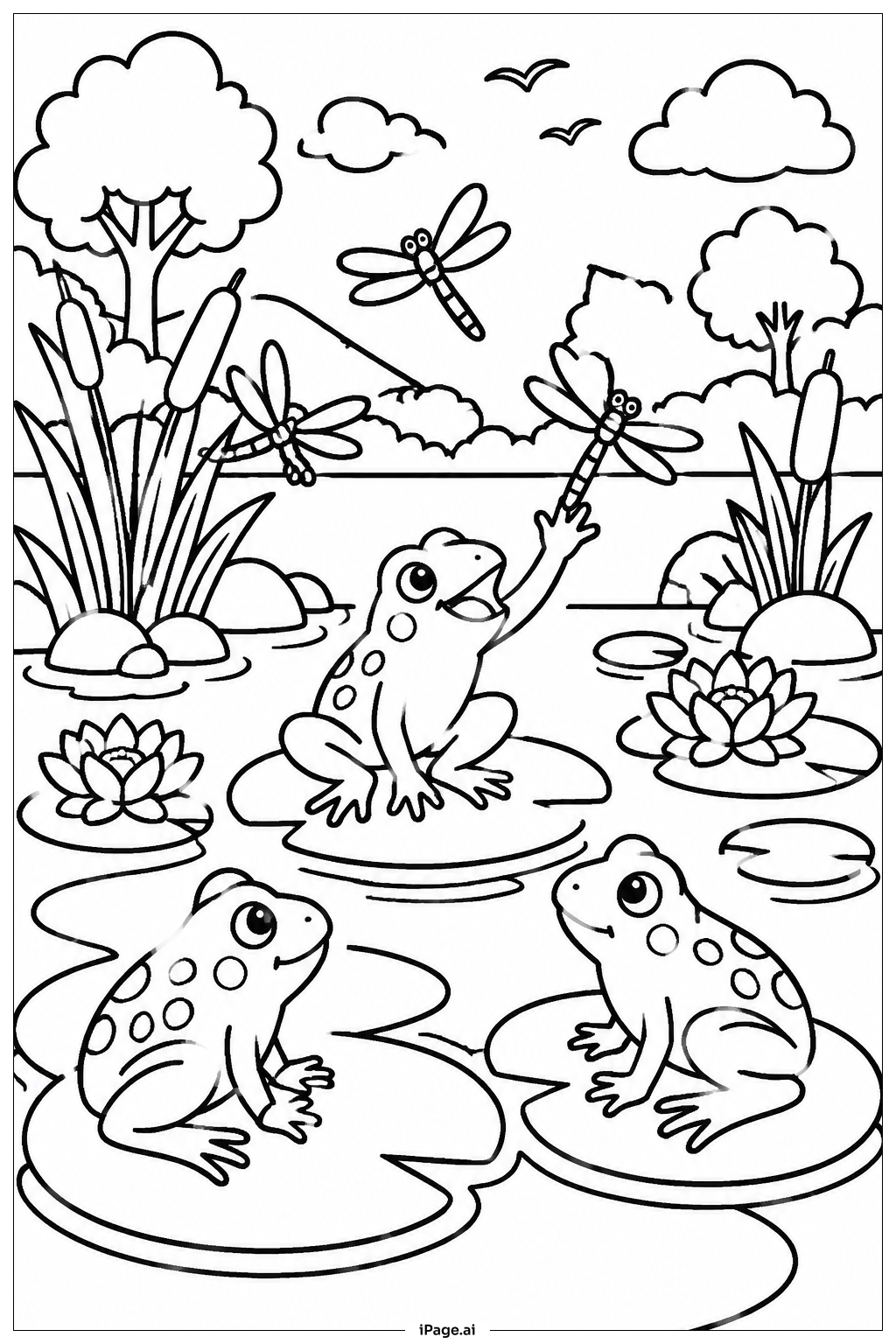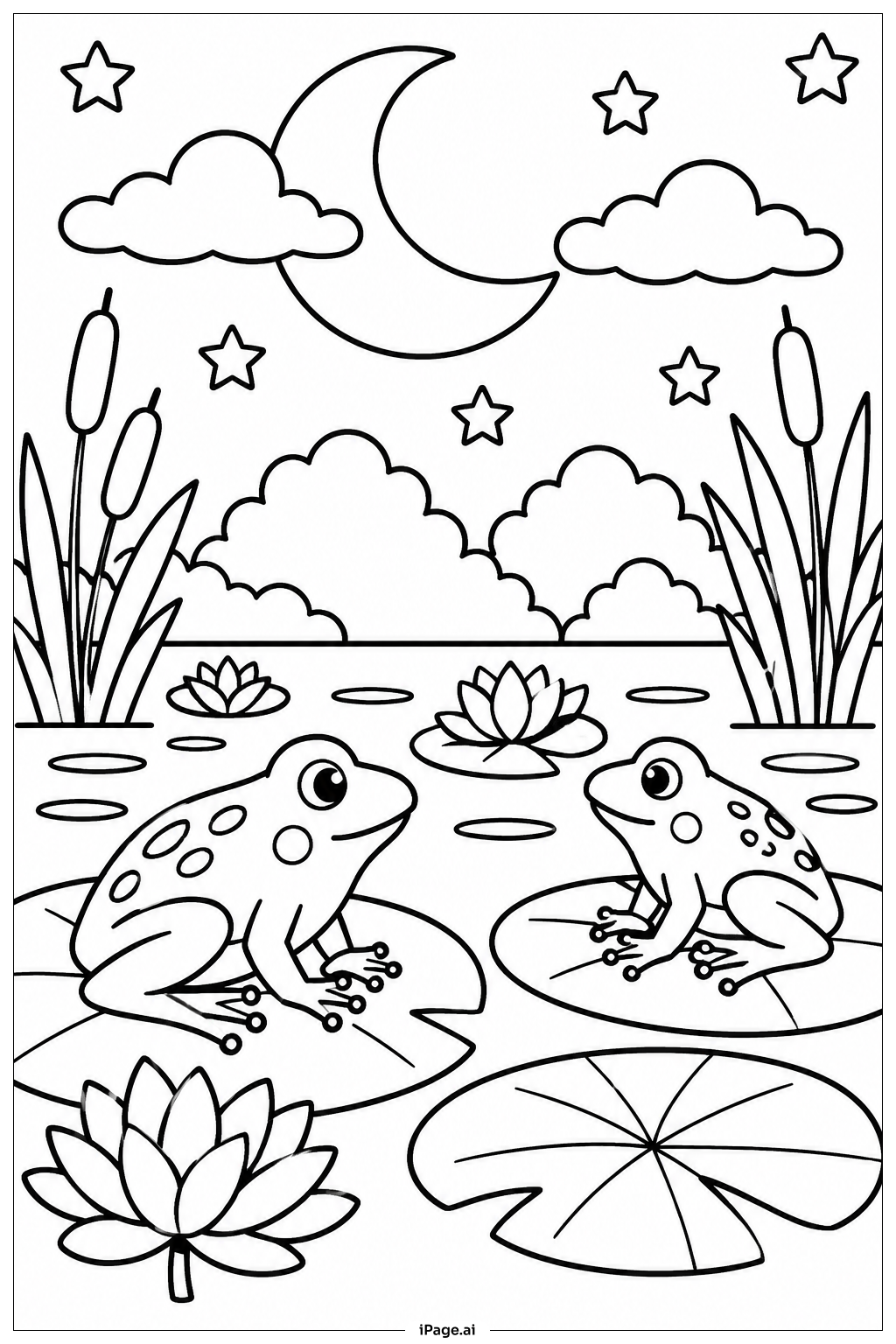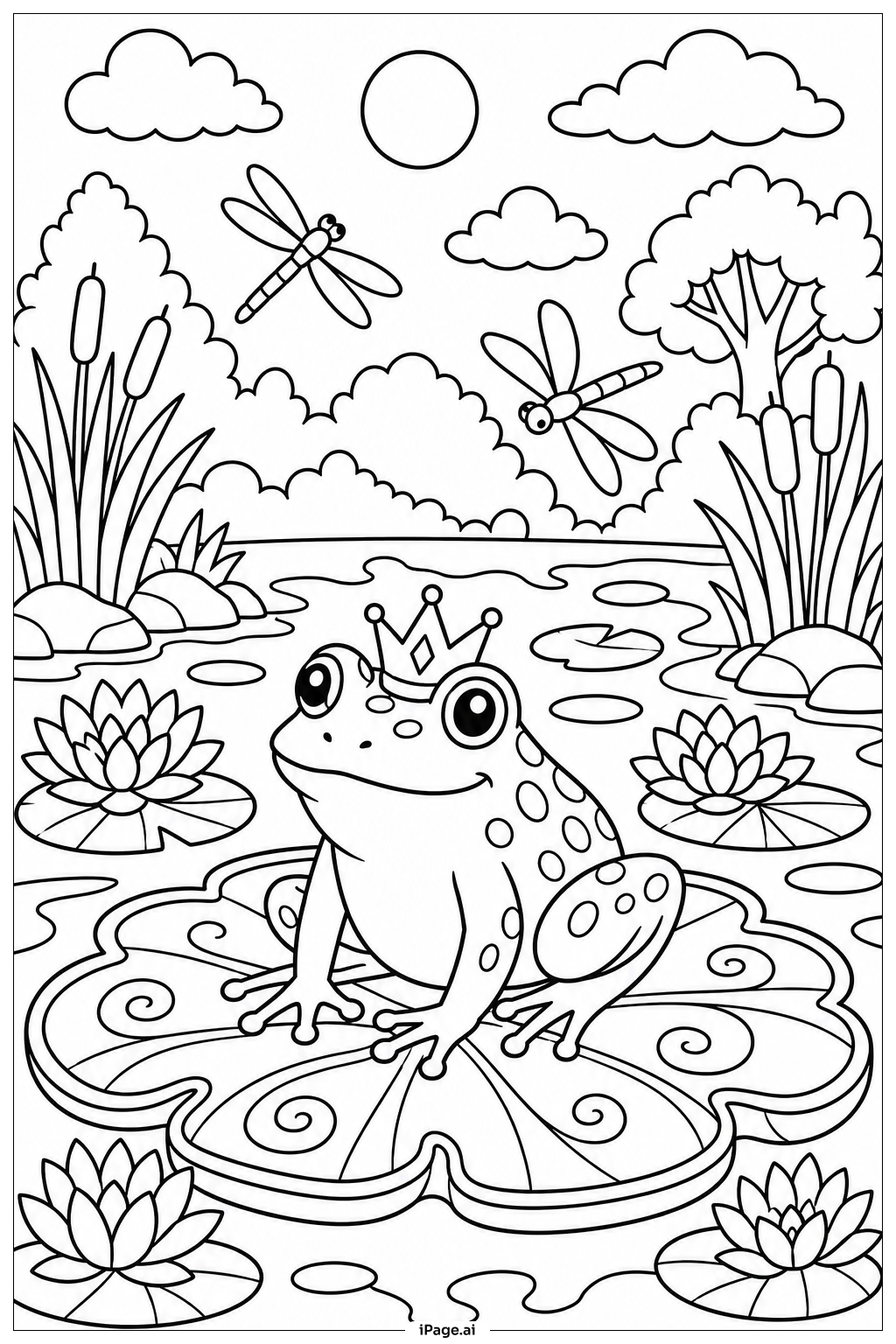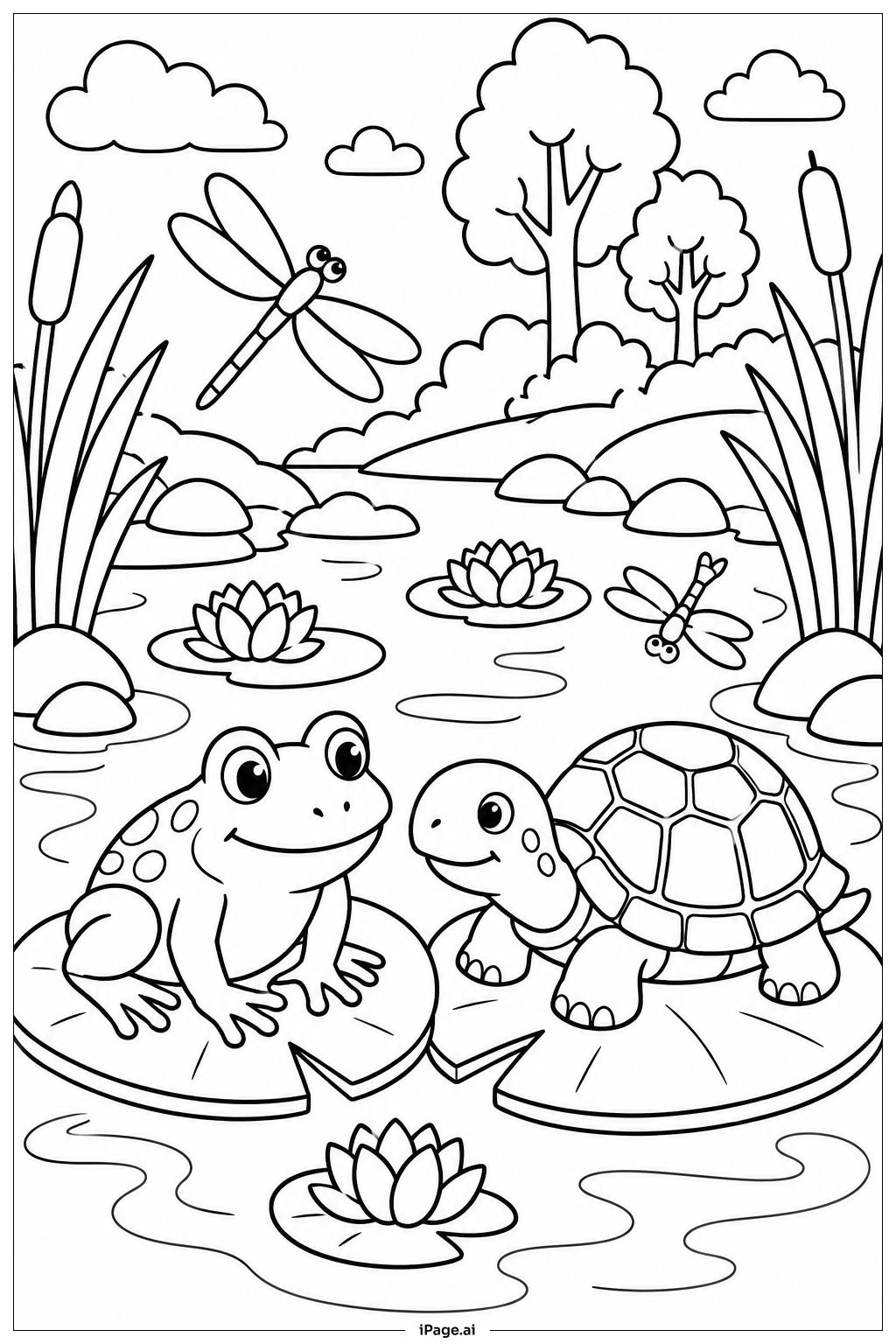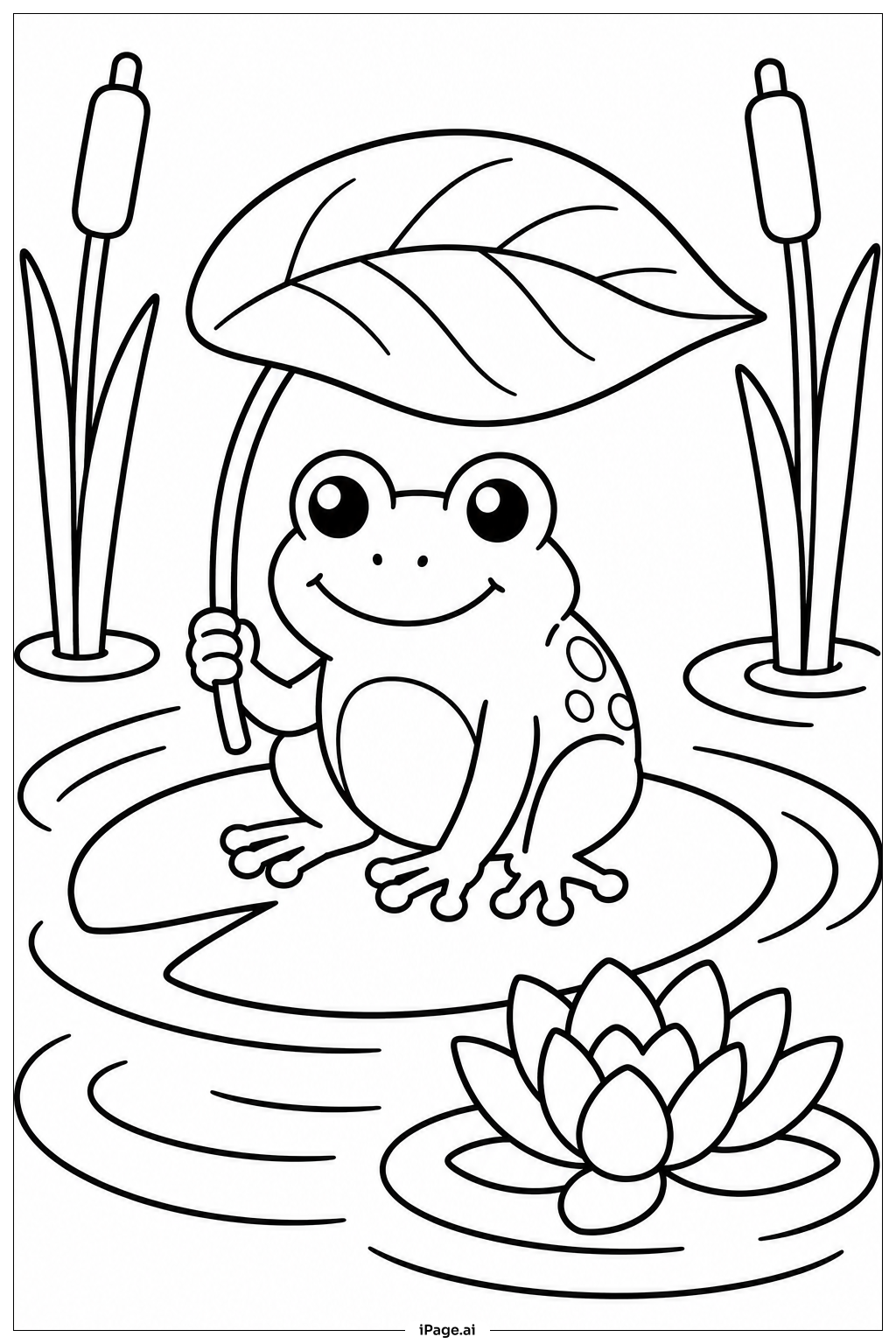
Coloring tips: How to color Frog With Leaf Umbrella On Lily Pad coloring page well?
Start with the frog's body using bright greens. Use a lighter green or yellow-green for the belly and a deeper, richer green for the back and legs. Add a touch of brown or olive for subtle skin texture. For the lily pad, use medium green with darker green veins traced carefully throughout. The leaf umbrella can be a vivid lime or emerald green to make it stand out. Color the water a soft blue or teal, and add light gray or pale blue for the falling raindrops. Give the frog's big eyes a warm golden or amber tone with dark pupils to bring them to life. Keep the overall palette fresh and nature-inspired. Kids can try mixing two shades of the same color to add depth, like a darker green along the edges of the lily pad and a lighter green in the center. Feel free to add your own creative touches, like colorful flowers on the lily pad or a rainbow peeking through the rain in the background.
Coloring challenges: Which parts are difficult to color and need attention for Frog With Leaf Umbrella On Lily Pad coloring page?
• Frog Skin Texture and Shading: The frog's body has subtle bumps and surface details that can be tricky to color smoothly. Younger colorists may find it hard to stay within the curved outline of the frog's rounded shape. Using short, gentle strokes and building up color in layers can help create a natural-looking skin tone without going outside the lines.
• Lily Pad Vein Details: The lily pad features a network of fine veins spreading from the center to the edges. These thin lines are easy to accidentally color over. To handle this, try using a fine-tipped marker or a sharpened colored pencil to trace along the veins carefully before filling in the surrounding areas with a lighter green.
• Leaf Umbrella Overlap: The leaf umbrella overlaps with both the frog and the background, creating multiple layered areas where colors meet. Choosing colors that are clearly different for each overlapping element, such as a bright lime for the leaf versus a deeper green for the frog, will help each part stand out clearly.
• Raindrop Placement: The small scattered raindrops are tiny and closely spaced in some areas. Coloring each drop neatly without smudging neighboring areas requires a steady hand and a fine-tipped tool. Light blue or gray works well, and leaving some drops uncolored or white can mimic the look of shiny falling rain.
• Water Surface Ripples: The ripples on the pond around the lily pad are made of thin curved lines. Blending soft blues while keeping the ripple lines visible takes patience, but the result gives the whole scene a lively, realistic feel.
Benefits of coloring books: Advantages of drawing Frog With Leaf Umbrella On Lily Pad coloring page
Coloring this image of a frog sheltering under a leaf umbrella on a lily pad offers many wonderful benefits for kids and adults alike. For young colorists, it builds fine motor skills as they practice staying within the curved outlines of the frog, lily pad, and falling raindrops. Carefully tracing small details like the leaf veins and water ripples also strengthens hand-eye coordination and concentration. The nature theme introduces children to pond life in a fun, creative way, sparking curiosity about frogs, lily pads, and rainy day scenes in the wild. Choosing colors for the frog, water, and leaf encourages creative thinking and color awareness. Kids learn how different shades of green can show depth and texture on natural surfaces. For older kids and adults, the layered details offer a satisfying coloring challenge that promotes focus and a calm, meditative state of mind. Completing the image builds a sense of achievement and boosts confidence. Sharing the finished artwork with friends or family also encourages self-expression and pride in one's creativity. Overall, this is a joyful, relaxing coloring experience that blends artistic learning with the simple pleasure of bringing a charming nature scene to life.