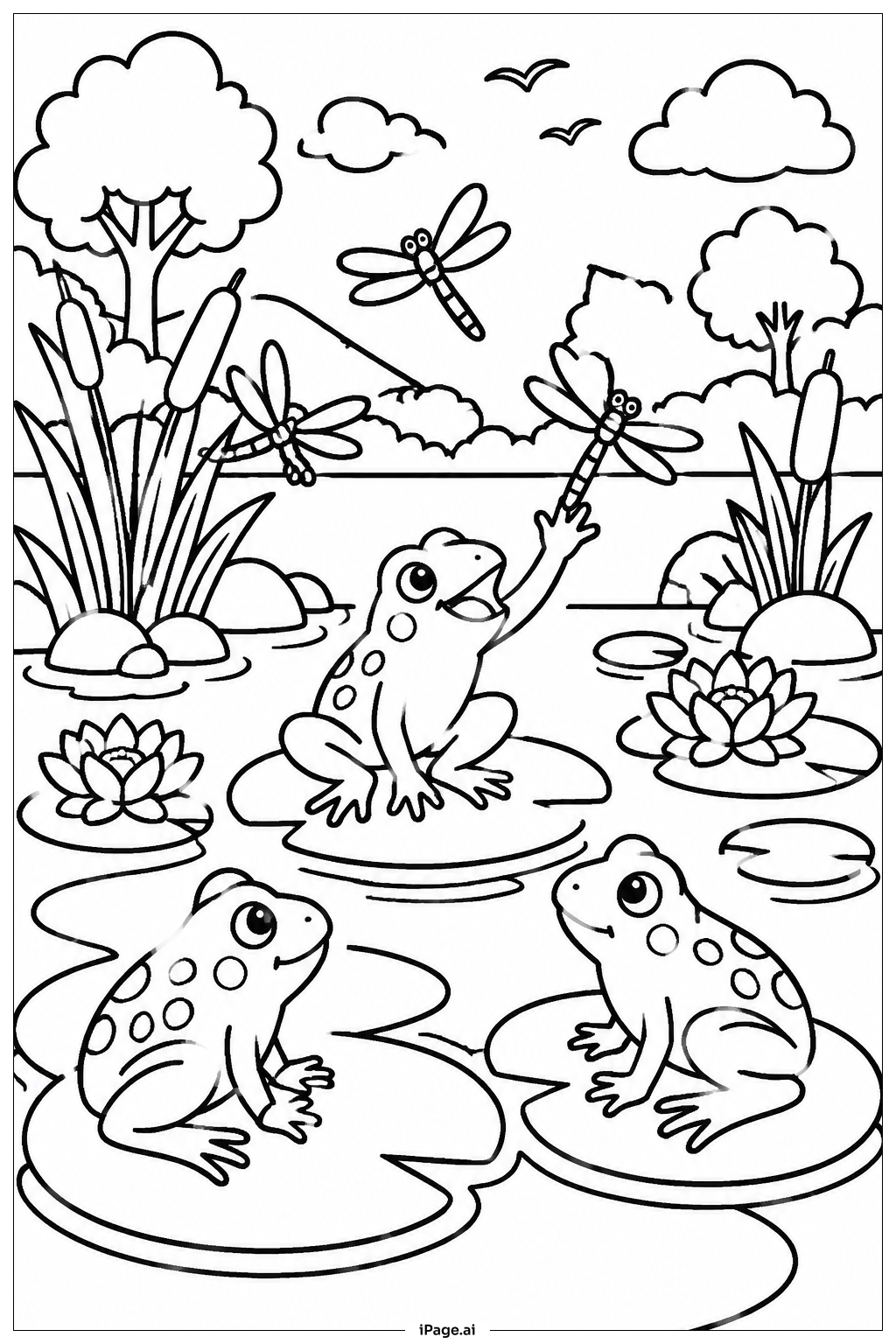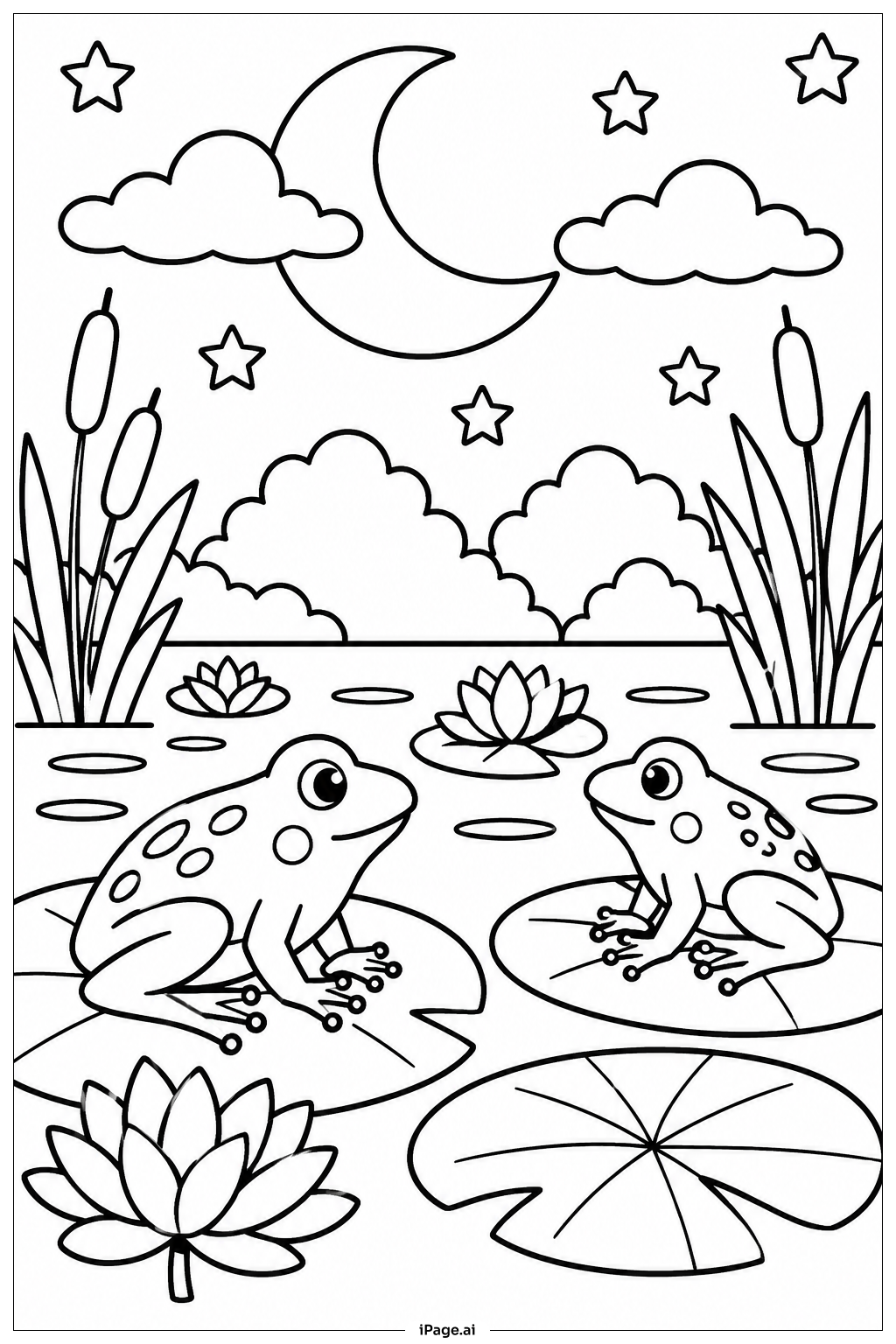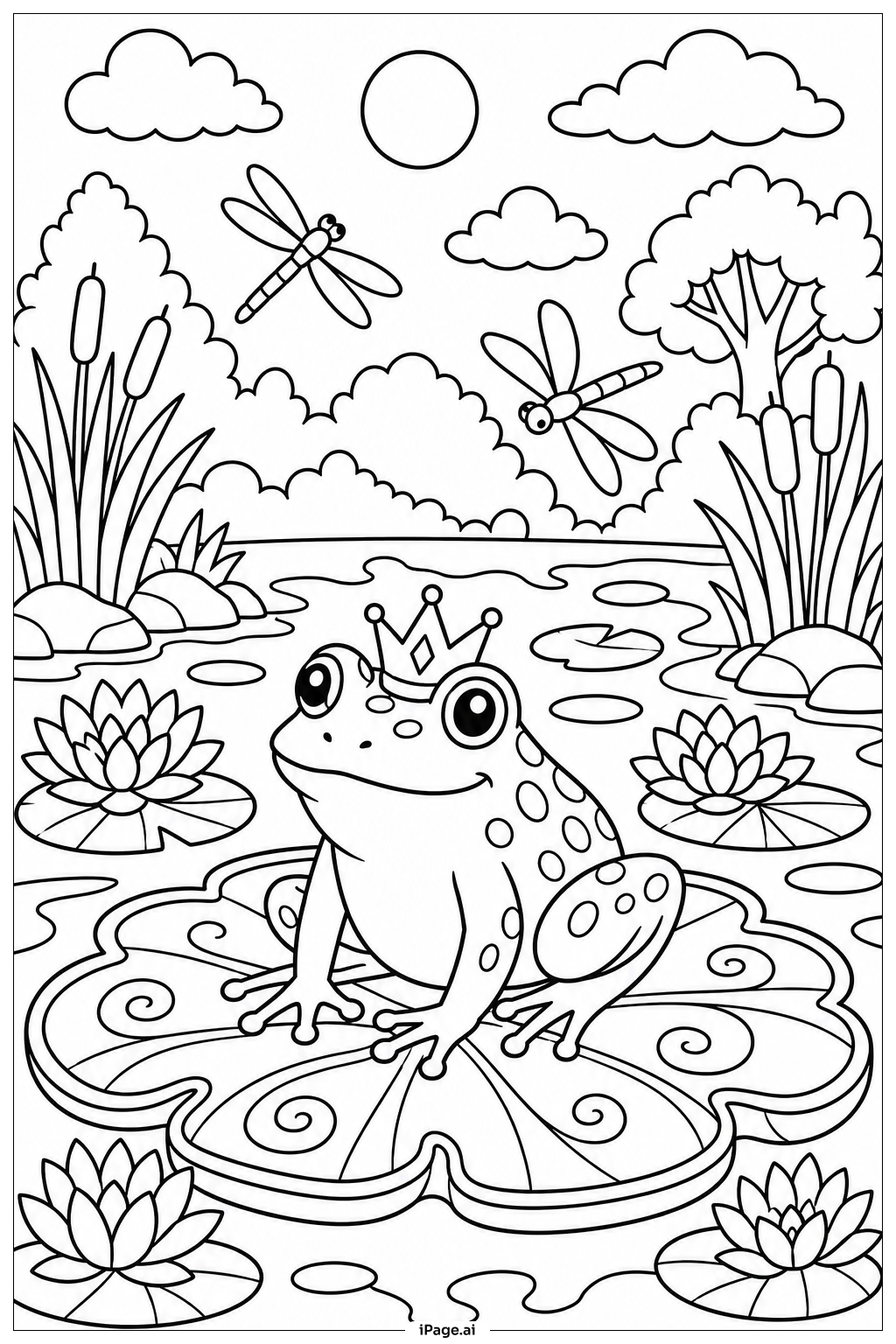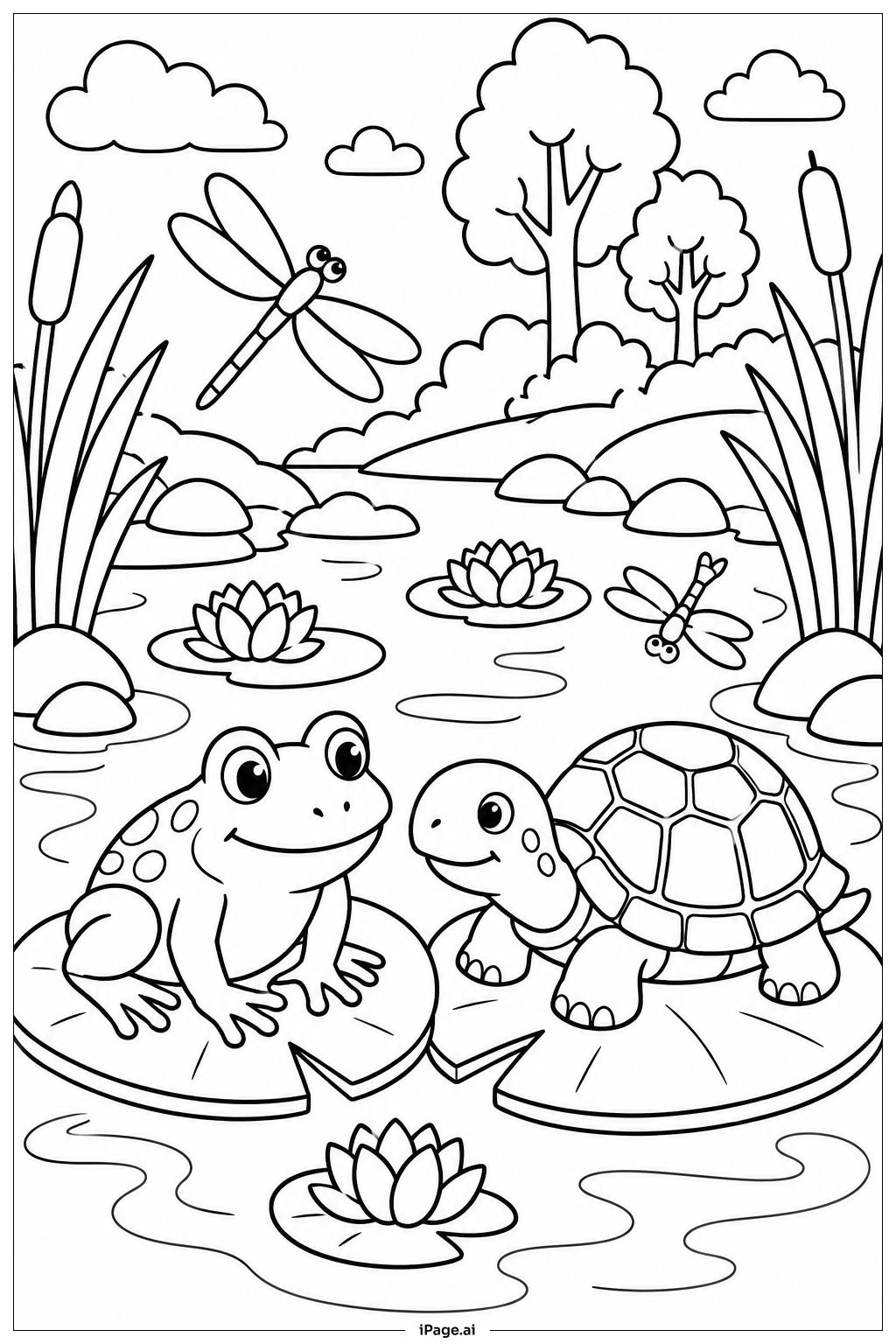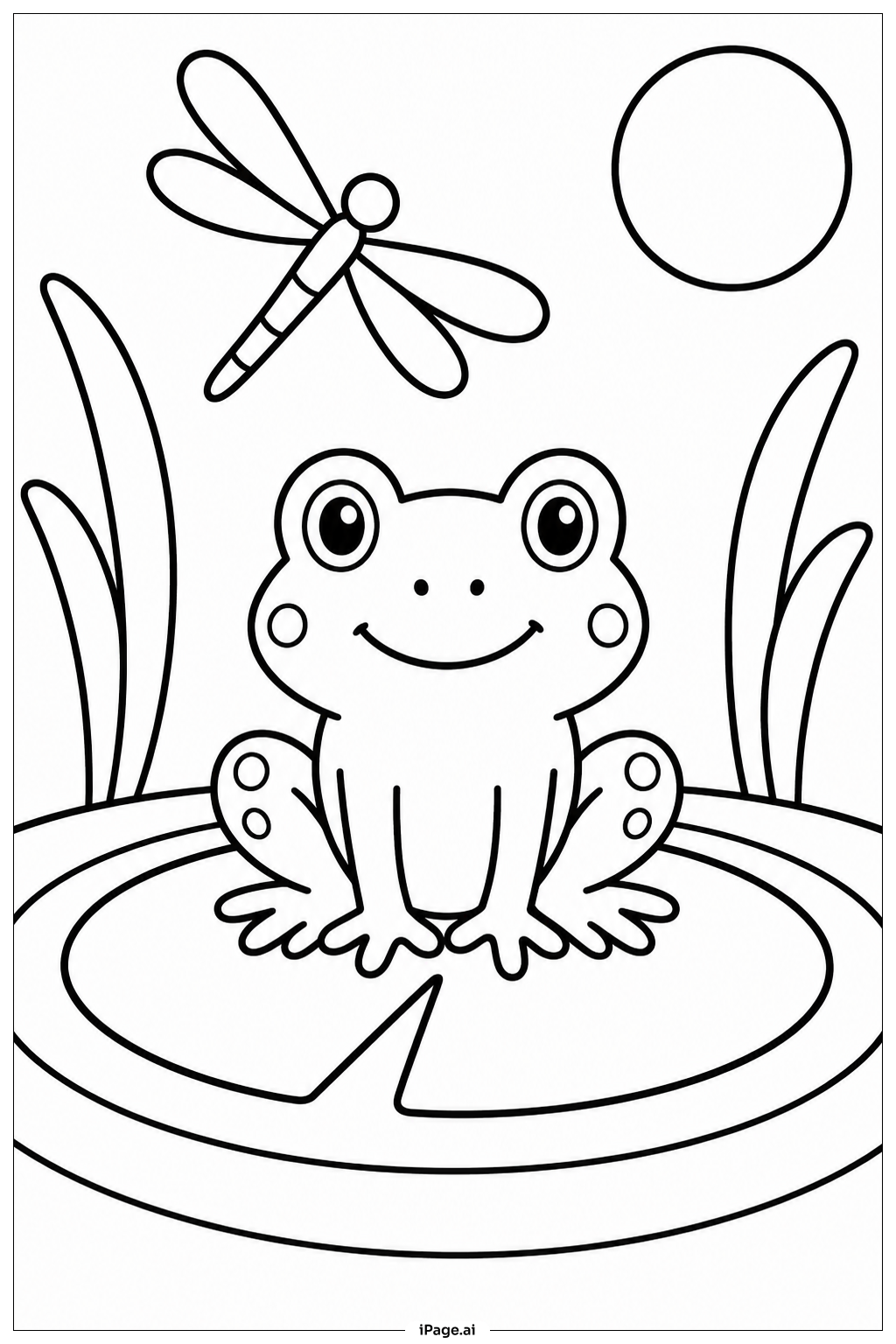
Coloring tips: How to color Frog With Dragonfly Over Lily Pad coloring page well?
Start with the frog's body using bright shades of green. Use a lighter green or yellow-green for the belly to give it a natural look. Add dark green or olive tones to the back for depth. Color the frog's big eyes with golden yellow or orange irises and black pupils to make them pop. For the lily pad, use medium green with darker green veins to show texture. The dragonfly looks great in bright, vivid colors. Try blue or teal for the body and use light blue or lavender for the wings to make them look thin and shimmery. Leave a little white space on the wings to suggest they are see-through. Color the water in soft blue or blue-green tones. Use slightly darker shades for ripples and shadows beneath the lily pad. Add touches of brown or dark green to the water plants for a realistic feel. Feel free to mix colors and experiment — there is no wrong choice when it comes to coloring in nature scenes like this one!
Coloring challenges: Which parts are difficult to color and need attention for Frog With Dragonfly Over Lily Pad coloring page?
• Dragonfly Wings: The dragonfly's four wings are thin and delicate, with intricate vein-like patterns inside. Coloring these tiny sections without going outside the lines takes a steady hand and a fine-tipped coloring tool. Using sheer or light colors here also helps keep the wings looking realistic and translucent rather than solid and heavy.
• Frog's Skin Texture: The frog's body has a slightly bumpy, uneven surface that needs more than one shade of green to look natural. Blending lighter tones on the belly and darker tones on the back and limbs can be tricky, especially for younger colorists who are still learning how to layer and blend colors smoothly.
• Lily Pad Details: The lily pad looks simple at first glance, but adding vein lines and subtle shading from the center outward takes patience and careful control. The small notch on the side also creates a tricky edge to color neatly without smudging into the water area.
• Water Ripples: The ripples around the lily pad are soft, curved lines that require gentle color graduation. Going too dark too quickly can make the water look muddy. Keeping a light touch and building up color gradually helps create a calm, natural water effect.
• Small Background Elements: The tiny bubbles and curling water plants in the background are easy to overlook but add a lot of life to the scene. These small details are difficult to color neatly due to their size, and they require a fine coloring tool and careful attention to stay within each outlined area.
Benefits of coloring books: Advantages of drawing Frog With Dragonfly Over Lily Pad coloring page
Coloring this pond scene offers a wonderful mix of fun and learning for kids of all ages. Here are some great reasons to pick up your colors and get started.
Builds focus and patience: Carefully coloring small details like the dragonfly wings and water ripples trains kids to slow down, concentrate, and work with care — skills that help in school and everyday life.
Grows creativity: Choosing colors for the frog, lily pad, and dragonfly encourages kids to think creatively and make their own artistic decisions. There is no single right answer, which builds confidence.
Teaches about nature: This image introduces children to pond life in a fun, hands-on way. Kids learn about frogs, dragonflies, and water plants while they color, sparking curiosity about the natural world.
Improves fine motor skills: Holding coloring tools and staying within lines strengthens the small muscles in the hands and fingers, which helps with writing and other detailed tasks.
Promotes calm and relaxation: The peaceful pond setting has a soothing quality. Focusing on coloring helps kids unwind, reduce stress, and enjoy a quiet, screen-free activity.
This charming scene is a joy to color at any skill level!