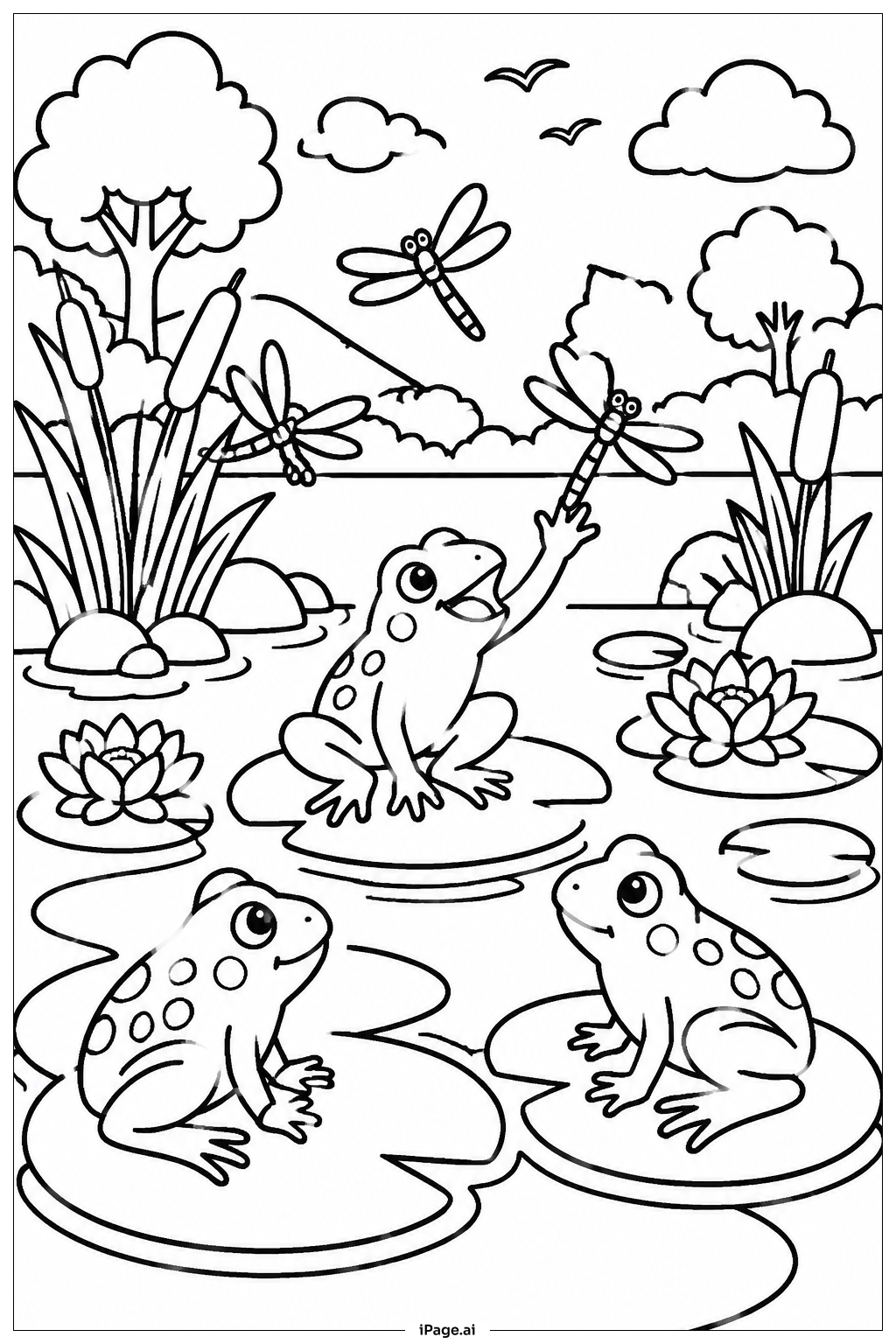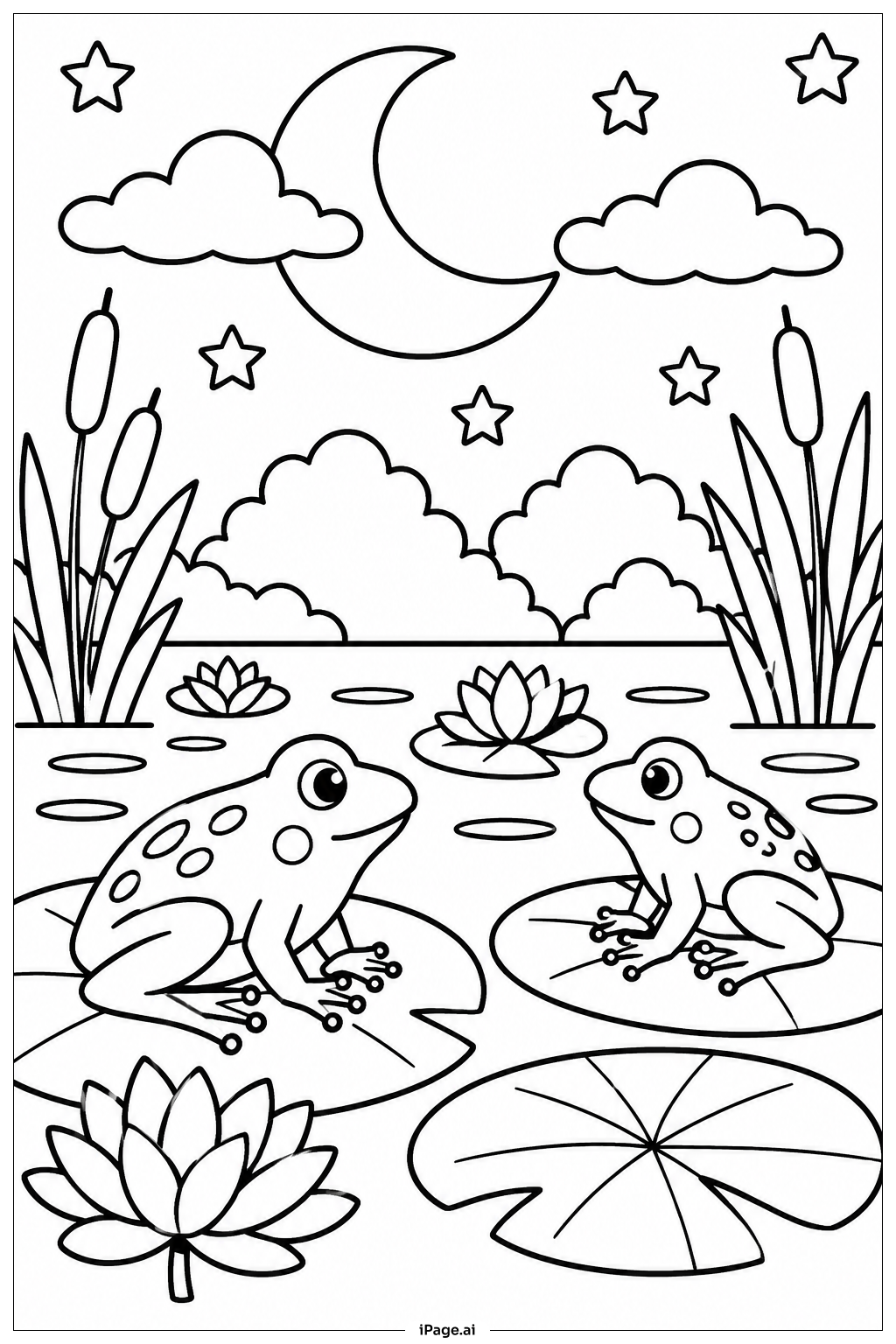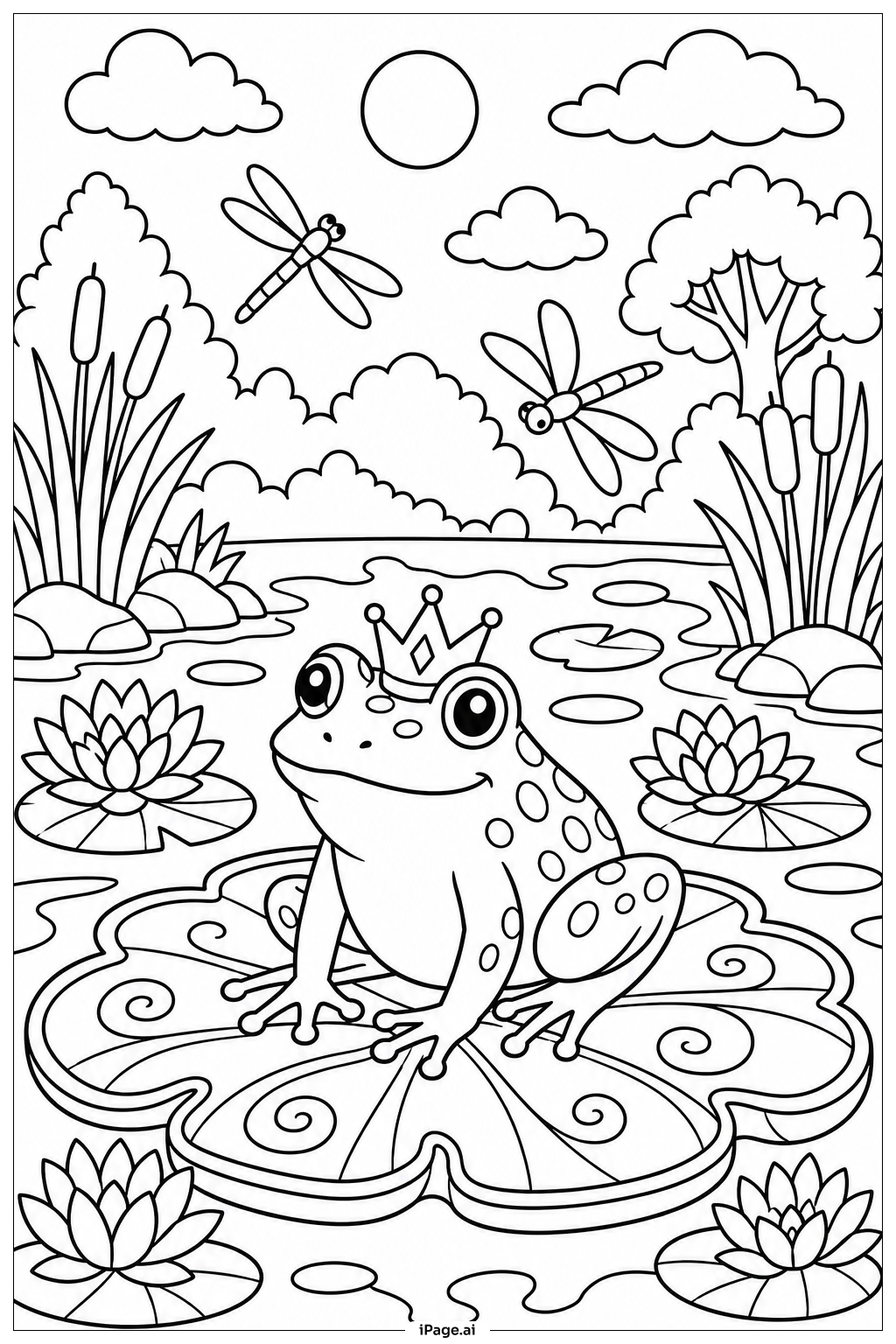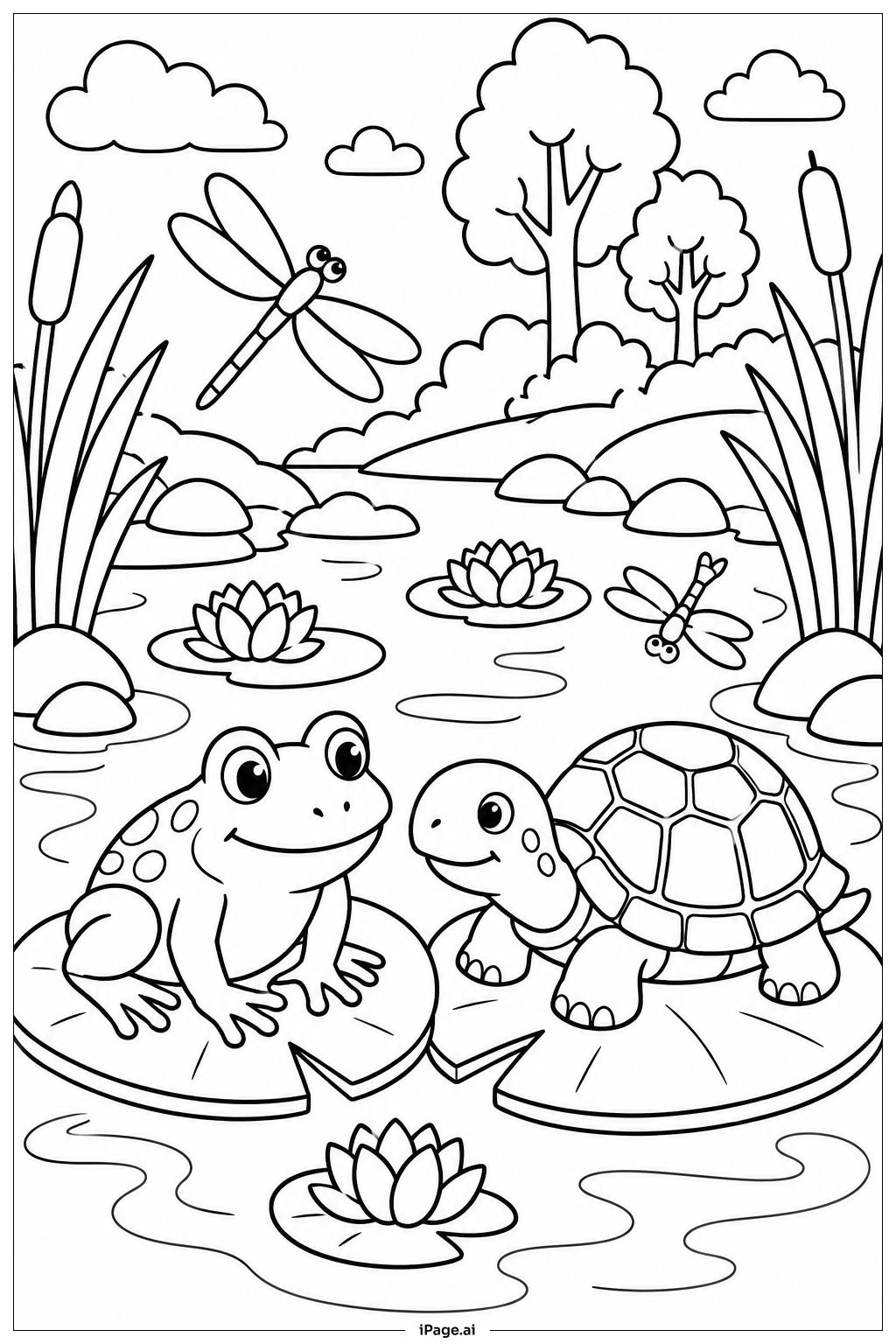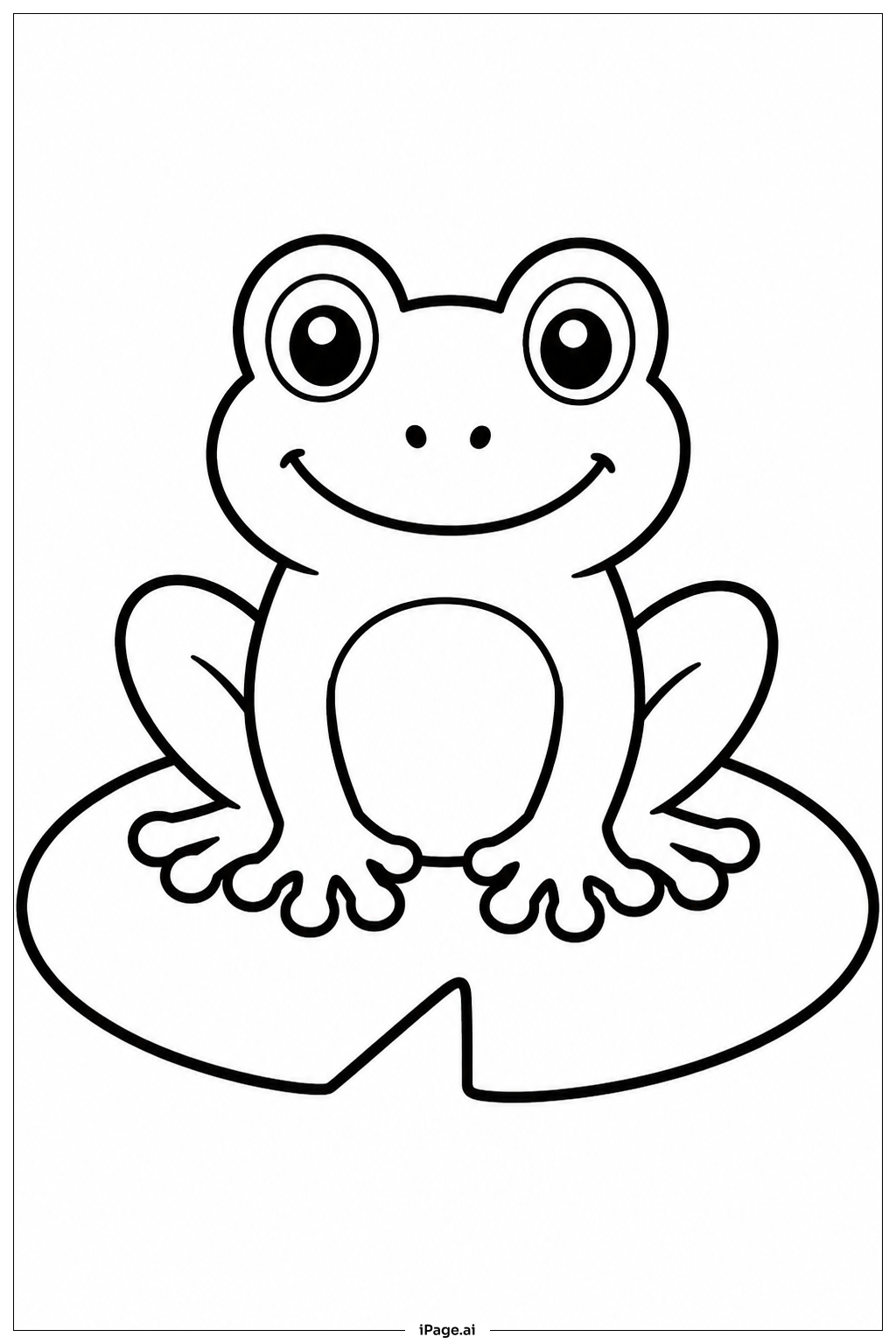
Coloring tips: How to color Baby Frog On Lily Pad coloring page well?
Start with the baby frog. Use bright green for its body and add a slightly lighter green or yellow-green on its belly to give it a soft, rounded look. Give the frog warm golden or orange tones around its big eyes to make them stand out.
For the lily pad, use a medium green as the base. Add darker green along the veins and edges to show depth and shape. Leave the center a bit lighter for a natural look.
Color the water in shades of blue and blue-green. Use long, gentle strokes to suggest ripples. You can add a little purple or gray to the deeper areas to make the water feel cool and calm.
For the flower bud, try soft pink or white with a light yellow at the tip. The background lily pads can be a slightly different shade of green to set them apart.
Use colored pencils or watercolor paints for smooth blending. This image is great for layering colors and practicing light and shadow. Take your time and enjoy the process!
Coloring challenges: Which parts are difficult to color and need attention for Baby Frog On Lily Pad coloring page?
• Frog Body Shading: The baby frog has a smooth, rounded body that requires careful shading to look three-dimensional. Blending two or three shades of green from darker on the sides to lighter in the center can be tricky for younger colorists. Take your time layering colors slowly to avoid harsh lines.
• Lily Pad Veins: The lily pad has many thin veins spreading across its surface. Coloring around these fine lines without covering them takes a steady hand and a sharpened pencil tip. If you color over them, you can try using a light yellow or white on top to bring them back.
• Water Ripples: Giving the water a sense of movement using only color is one of the hardest parts of this image. The ripple lines are close together, and switching between light and dark blue shades in those narrow spaces requires patience and a light touch.
• Small Droplets and Details: Tiny water droplets and small texture details on the lily pad and frog skin are easy to miss but add a lot of charm. Leaving these areas white or applying very light color helps them look realistic and polished.
• Background Depth: The background lily pads and flower bud need to look further away than the main frog. Using softer, less saturated colors for the background compared to the bright foreground colors helps create a natural sense of distance without blending everything together into a flat image.
Benefits of coloring books: Advantages of drawing Baby Frog On Lily Pad coloring page
Coloring this Baby Frog On Lily Pad image offers a wonderful mix of fun and learning for kids and beginners alike.
Working with the frog and lily pad encourages children to observe nature more closely. They begin to notice how frogs look, how lily pads float, and how water moves, building curiosity about the natural world around them.
The image includes a variety of shapes and details, from the smooth curves of the frog to the delicate veins on the lily pad. Filling these in carefully helps develop fine motor skills and improves hand-eye coordination, which supports everyday tasks like writing and drawing.
Choosing colors for the water, plants, and frog also sparks creative thinking. Kids learn how different shades of green, blue, and brown work together to create a believable pond scene, which builds basic color theory skills in a playful way.
The calming, nature-themed scene makes this a great stress-relieving activity for older kids and adults too. Focusing on small details helps quiet a busy mind and encourages mindfulness.
Finishing the picture gives colorists a real sense of accomplishment and pride, boosting confidence and motivation to keep creating. Overall, this image makes coloring a joyful, enriching experience for all ages.