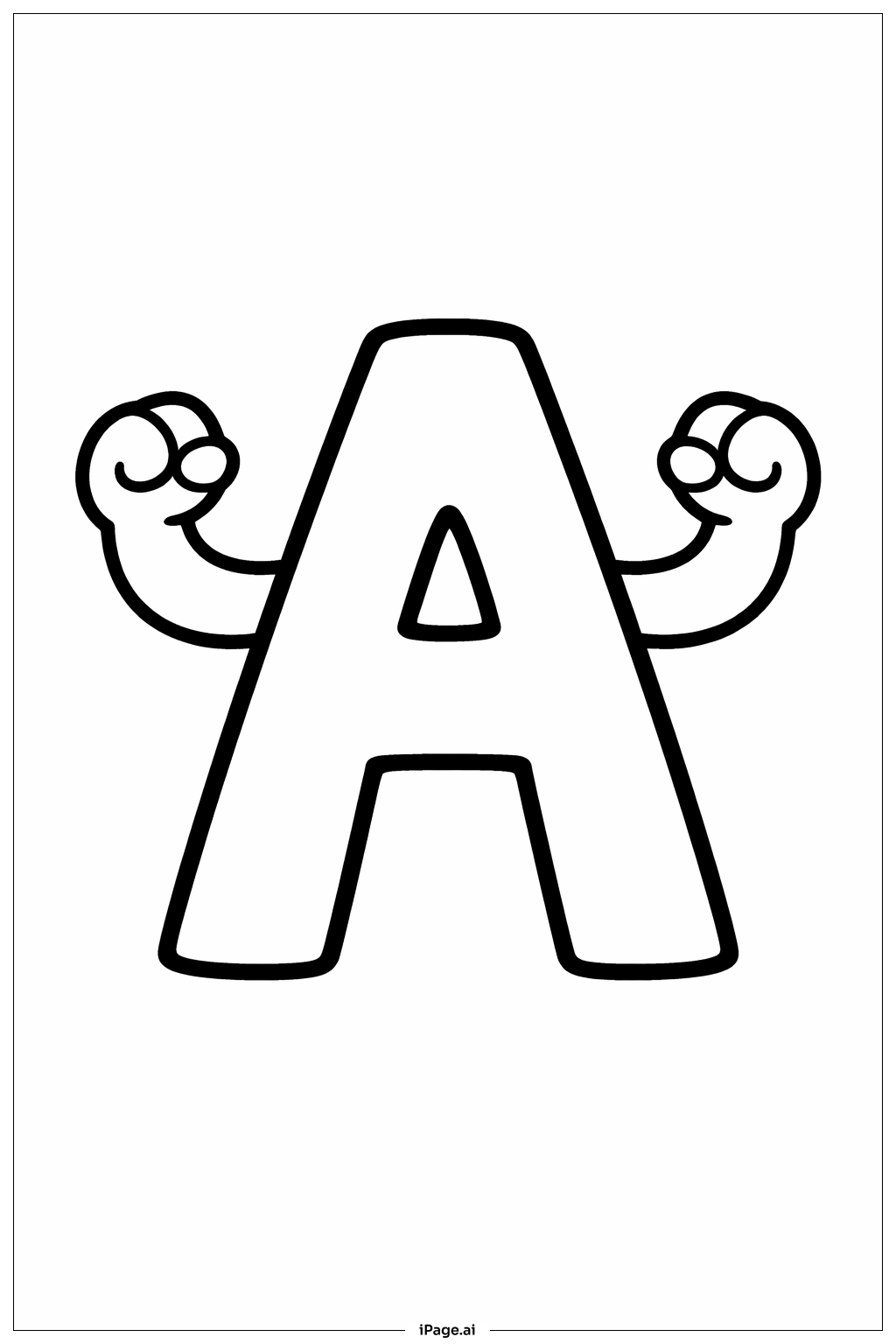
Coloring tips: How to color Letter A Arm coloring page well?
Start with the letter A itself. You can use a bold, bright color like red, blue, or yellow to make it stand out on the page. These are classic colors that help the letter feel strong and easy to read.
For the arm, use a skin tone that feels natural to you. There are many shades to choose from, like light peach, warm tan, or deep brown. Pick the one that feels right.
Add a little pink or rosy color to the elbow and knuckles to give the arm a lifelike look. You can also color any clothing on the arm, like a sleeve, using a fun pattern or your favorite color.
Try to keep your coloring inside the lines for a neat finish, but do not worry too much. Coloring should be fun. Use crayons, colored pencils, or markers depending on what you enjoy most. Light pressure with colored pencils lets you blend colors smoothly for a softer look.
Coloring challenges: Which parts are difficult to color and need attention for Letter A Arm coloring page?
• Staying Inside the Letter Outline: The large letter A has angled lines and a triangular crossbar in the middle. Coloring neatly inside these geometric edges without going over the lines can be tricky, especially for younger children who are still developing fine motor control. Take your time along the diagonal strokes and the small horizontal bar.
• Coloring the Arm with Realistic Skin Tones: The arm illustration requires a natural-looking skin tone, which means blending multiple shades smoothly. Getting the right color mix without making it look flat or patchy can be a challenge. Try layering a light base color first, then gently add a slightly darker shade to the elbow and inner arm areas.
• Handling Small Detail Areas: The hand and finger area of the arm may have small sections with tight curves. These narrow spaces are harder to fill cleanly and may require a sharpened colored pencil or a fine-tipped marker for accuracy. Rushing through these areas often leads to uneven coloring.
• Keeping Two Elements Visually Balanced: Since the page features both a letter and an illustration, choosing colors that work well together without one overpowering the other is a creative challenge. For example, if the arm is colored in warm tones, picking a cool color for the letter A helps both elements stand out clearly.
• Avoiding Smudging Between Sections: If using markers, colors from one section can bleed into a neighboring section before drying. Working from top to bottom and letting each area dry before moving to the next helps prevent unwanted smudges.
Benefits of coloring books: Advantages of drawing Letter A Arm coloring page
Coloring this Letter A Arm page offers a wonderful mix of learning and creative fun for children.
First, it supports letter recognition. Coloring the letter A helps children remember its shape and connect it to a real word, making early literacy more engaging and memorable.
Second, it builds fine motor skills. Carefully filling in the arm illustration and the letter outline requires steady hand movements, which strengthen the small muscles in the fingers and improve pencil control over time.
Third, it encourages creativity. Choosing colors for the arm, the sleeve, and the letter gives children a chance to express themselves and make their own artistic decisions.
Fourth, it improves focus and patience. Staying within the lines and working through different sections of the page helps children practice concentration in a relaxed, low-pressure setting.
Finally, finishing the page gives children a real sense of accomplishment. Seeing their completed, colorful artwork boosts confidence and motivates them to keep learning and creating. It is a simple activity with big developmental rewards.