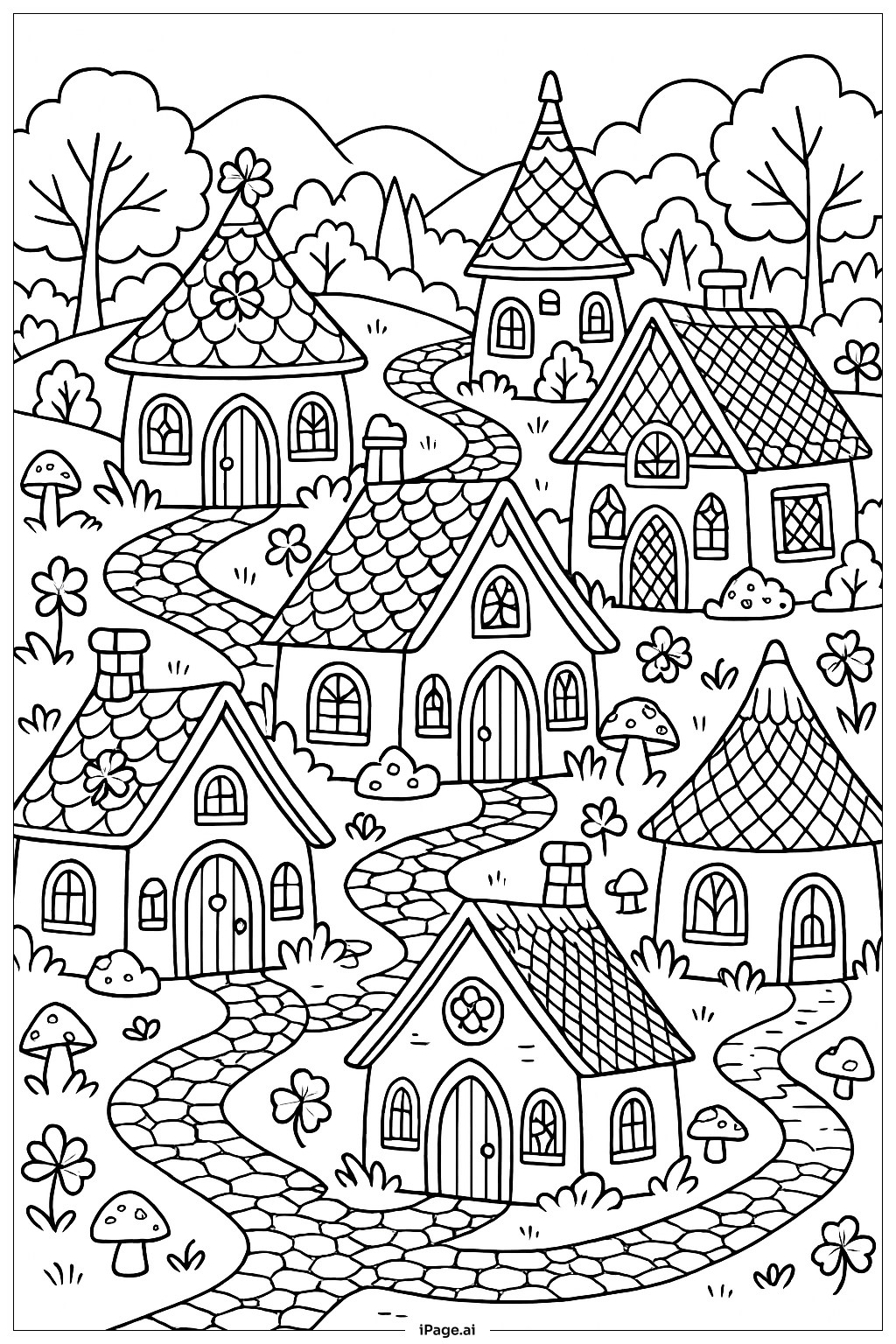
Coloring tips: How to color Leprechaun Village Scene coloring page well?
Start with the background elements first. Color the sky a soft blue and add a bright rainbow using red, orange, yellow, green, blue, and violet. Paint the hills in different shades of green to give them depth.
For the leprechauns, use bright green for their jackets and hats, and add gold buckles and buttons. Their skin can be a warm peach tone, and their beards can be orange or white.
Use warm browns for the mushroom house rooftops and wooden fences, and light tan for the cobblestone path. The mushroom caps can be red, orange, or purple to make them pop.
Fill the flowers with cheerful colors like yellow, pink, and lavender. Color the pots of gold a rich golden yellow. Use dark green for the clovers scattered around the scene.
Finish with the oak tree in deep brown with lush green leaves. Add soft shadows with slightly darker shades to make the scene feel three-dimensional and full of life.
Coloring challenges: Which parts are difficult to color and need attention for Leprechaun Village Scene coloring page?
• Tiny Character Details: The leprechauns are small figures packed with details — buckled hats, buttoned jackets, tiny shoes, and little beards. Coloring these without blending colors into one another requires a very fine-tipped pencil or marker. Children may find it tricky to stay within such small boundaries, so using a sharp colored pencil is strongly recommended for these areas.
• Complex Background Layers: The scene has multiple background layers — sky, rainbow, hills, and trees all overlapping. Keeping each layer visually distinct while maintaining a harmonious color flow takes planning. Coloring from back to front (sky first, then hills, then foreground elements) will help avoid confusion and muddy results.
• Cobblestone Path Texture: The winding cobblestone path is made up of many small, irregular stones. Each stone can be colored slightly differently — using light grey, tan, and soft brown — to create a realistic texture. However, coloring each individual stone without smearing nearby areas demands patience and a steady hand.
• Mushroom House Variety: There are several mushroom houses in the scene, each with its own cap shape and size. Choosing different but complementary colors for each one without making the scene look too chaotic is a creative challenge. Planning a color palette in advance helps keep the village looking unified and magical.
• Gold and Metallic Accents: Pots of gold, buckles, and lanterns need to look shiny and bright. Achieving a metallic gold effect using standard colored pencils or crayons can be difficult. Layering yellow with orange and leaving small white highlights can help simulate a glowing, reflective gold finish.
Benefits of coloring books: Advantages of drawing Leprechaun Village Scene coloring page
Coloring this Leprechaun Village Scene offers a wide range of wonderful benefits for children of all ages.
For younger children, the large shapes like rolling hills, the big oak tree, and mushroom houses provide easy, satisfying areas to fill in. This builds basic motor control and helps them learn to stay within lines — an important early childhood skill.
For older children, the intricate details of the leprechaun characters and cobblestone paths offer a real challenge. Working carefully through these sections improves focus, patience, and fine motor precision.
The wide variety of elements in this scene — characters, buildings, nature, and magical objects — encourages children to think creatively about color choices. Deciding which mushroom house gets which color or how to make the rainbow stand out sparks imaginative thinking and color theory awareness.
The folklore-rich setting also connects children to Irish cultural traditions and storytelling. Parents and teachers can use this coloring page as a starting point for fun conversations about leprechauns, St. Patrick's Day, and Irish mythology.
Finally, spending quiet, focused time on a detailed coloring page like this one is a great way to reduce stress and build a sense of calm. Finishing the full scene gives children a strong sense of accomplishment and pride in their creative work.